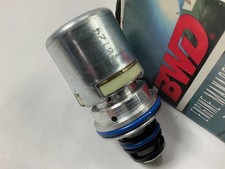
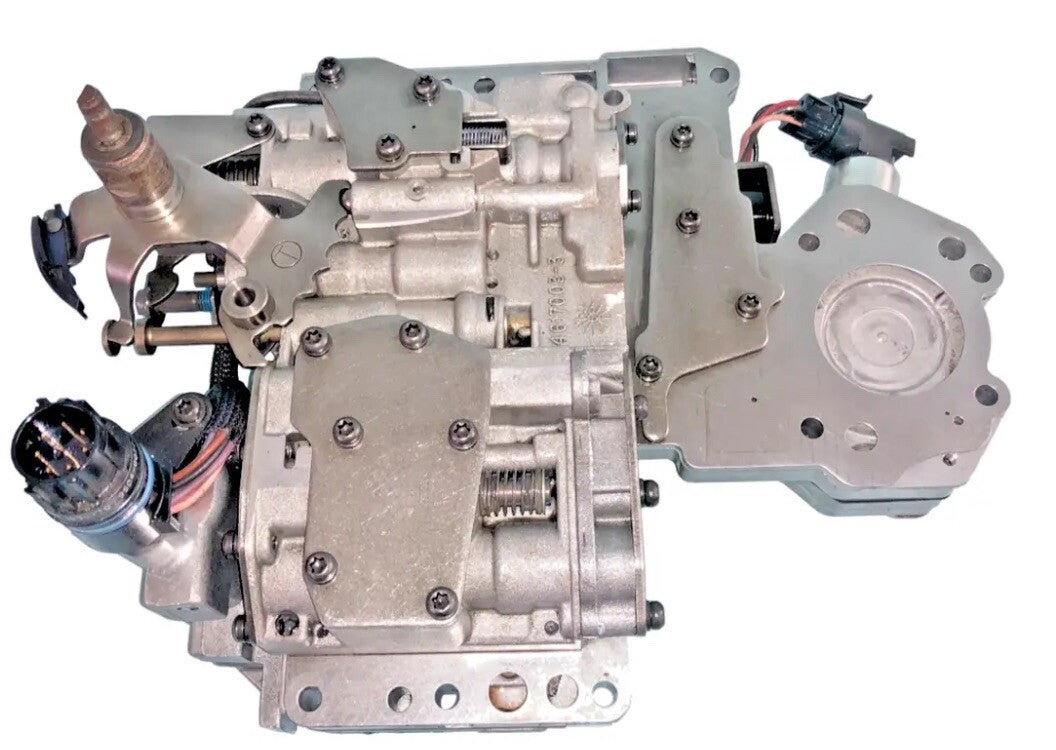
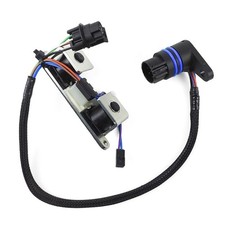
If your Jeep Grand Cherokee, Cherokee, Wrangler or Dodge Dakota with the 42RE or 44RE pulls away from a light in second, shifts 1-2 at a different speed every morning, or has a P1757 sitting in memory, the governor pressure solenoid is the first part to test. This listing is sold under the name pressure control solenoid, but the part itself is a BWD S9867 governor pressure solenoid, which interchanges with Chrysler 4617210, ACDelco 214-1768 and Echlin TCS602. It is new, old-stock inventory, so the box may show shelf wear while the solenoid inside is unused.
What the pressure solenoid does in a 44RE
The 42RE and 44RE do not have an electronic line pressure solenoid. Line pressure is still regulated hydraulically, by the pressure regulator valve working against throttle pressure from the kickdown linkage. What the electronics control is governor pressure, the signal that tells the 1-2 and 2-3 shift valves the truck is moving fast enough to upshift. The S9867 sits in the governor body on the valve body and bleeds that pressure on command. The PCM runs it on a duty cycle through the ground side, and it works backwards from what most people expect: more on-time means less governor pressure. A sensor next to it reports the actual pressure, and once the vehicle is past roughly 40 mph the PCM stops modulating the solenoid and lets governor pressure run high to hold the upper gears.
Symptoms of a failing governor pressure solenoid
- Starting off in second gear, especially after a hot highway run
- Shift points that drift from cold to hot or from one day to the next
- Early, mushy 1-2 shifts at light throttle, or late, flared shifts
- No downshift as you coast to a stop, so the next launch is in second or third
- No 2-3 upshift at wide-open throttle
- P1757 (governor pressure above 3 psi in gear at zero speed) or P1756 (governor pressure not equal to target at 15-20 psi)
How to confirm it before you buy
Start with the scan tool and watch desired versus actual governor pressure. At a stop in Drive, actual should sit at or near zero; when you accelerate it should follow the target closely. If actual stays high at a stop, the solenoid is not bleeding pressure, but a warped or leaking governor body can do the same thing, so tee a gauge into the governor port to confirm. Sensor codes P1762 through P1764 point at the transducer rather than this solenoid, and remember the relay that feeds the governor circuit only runs with the engine on, so key-on, engine-off circuit tests mislead. The governor solenoid symptoms guide walks through the same governor system used on the larger RE units, and the RE valve body testing guide covers bore wear that imitates a bad solenoid.
Fitment
The listing is for the 42RE and 44RE, the A500-family four-speed behind the 4.0L six, 3.7L V6 and smaller V8s in Jeep and Dodge Dakota/Durango applications. The 4617210 solenoid number is shared with the A518 family as well, so the same part also turns up on 46RE and 47RE governor bodies. What changes over the years is the pressure sensor beside it, not the solenoid: earlier units use an oval-plug metal transducer and later ones a rectangular plastic sensor, and this listing includes the solenoid only. Compare your old solenoid against the photo and the 4617210 interchange, or send us your year and VIN and we will check it. The full A500-family lineup is on our 44RE parts page.
Install notes
- Drain the fluid, drop the pan and remove the filter; the governor body is on the valve body and can be serviced in the vehicle.
- Unplug the solenoid and sensor, remove the governor body screws, and lift off the retainer, body and gasket together. The solenoid slides out of its bore once the retainer is off.
- Lube the new O-rings with ATF+4, push the solenoid in until it seats, fit a new gasket and torque the governor body screws to 35 in-lb.
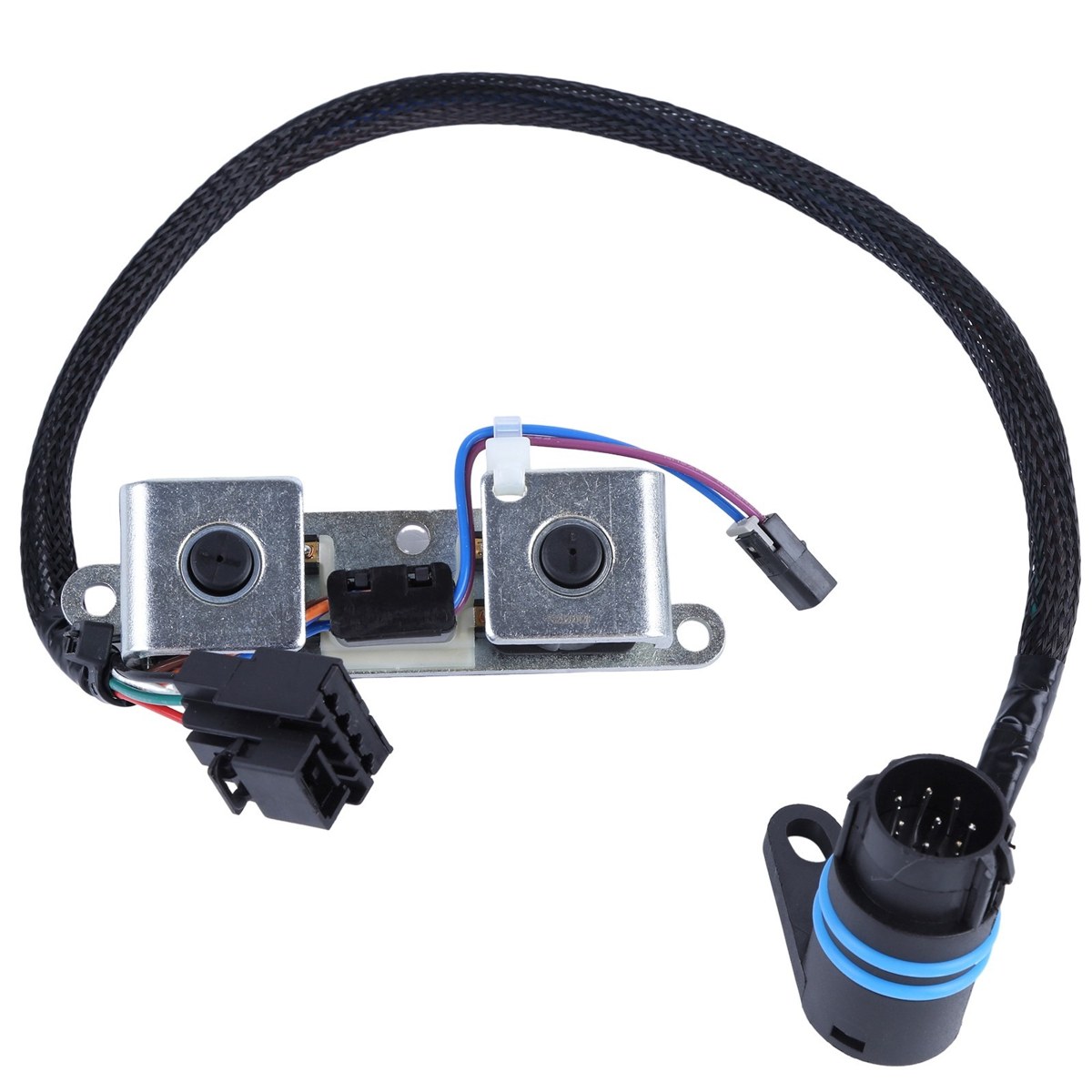
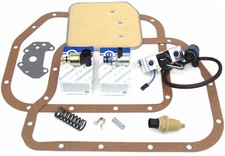
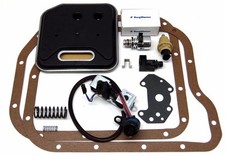
- If the sensor or OD/lock-up harness is also suspect, the 44RE master solenoid kit or the 2000-on solenoid kit replaces the whole electrical package in one pan drop.
- Install a new filter, refill with ATF+4, check the level hot in neutral, clear codes and road test through several full stops while watching governor pressure.
No programming is needed. If governor readings stay unstable with a new solenoid and a good sensor, the valve body itself is worn.