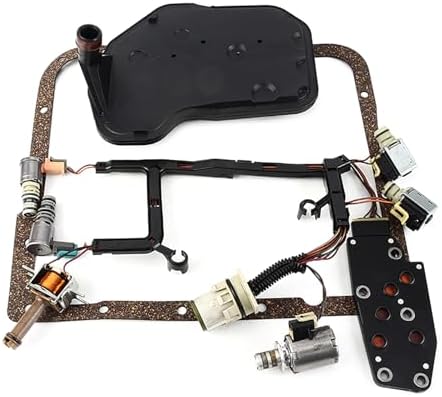
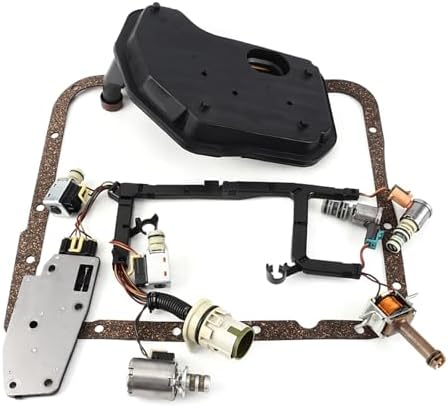
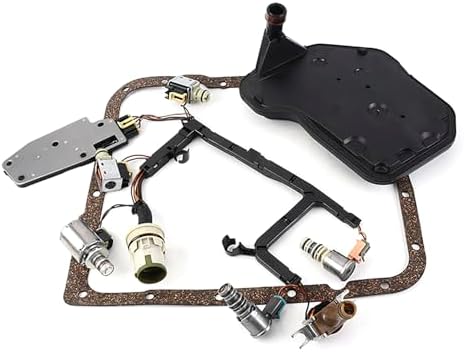
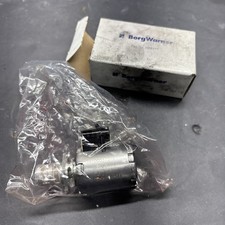
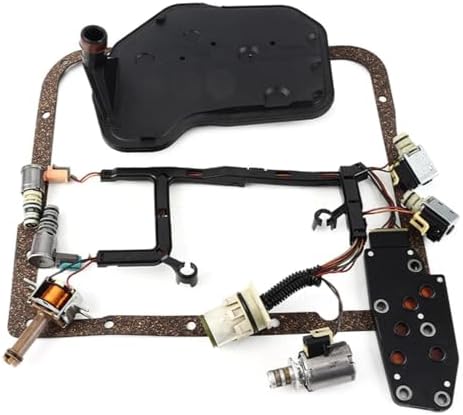
Harsh 1-2 shifts that slam the truck forward, soft shifts that flare, a converter that will not stay locked on the highway, or a P0748, P0960 or P0741 on the scan tool: those are the complaints that send 2003-2005 GM truck, van and SUV owners looking for a 4L60E solenoid kit. This one focuses on the solenoids that control pressure and lockup as well as the shift pair. It includes the EPC pressure control solenoid, the TCC and PWM solenoids, the 3-2 downshift solenoid, shift solenoids A and B, and a new internal wiring harness to connect them to the case.
What the solenoid kit does in a 2003-2005 4L60E
Most of the solenoids in a 4L60E are simple on/off valves. The EPC solenoid is the exception. The computer varies the current to it continuously to raise or lower line pressure, and line pressure decides how firmly every clutch and band applies. When the EPC wears, its output drifts, so the same shift that should feel crisp either bangs or slides. That is why EPC wear and P0748 are some of the best-known faults on this transmission. The TCC solenoid enables the converter clutch and the PWM solenoid controls how gradually it applies, so a weak one shows up as shudder, slip or no lockup. Shift solenoids A and B pick the gear, and the 3-2 solenoid controls the timing of the 3-2 downshift. Replacing all of them together with the harness means every part in the circuit starts with the same mileage.
Symptoms this kit is built for
- Harsh engagement or banging upshifts, or soft, slipping shifts, with P0748 or P0960 (pressure control circuit)
- Converter clutch stuck off, slipping or shuddering, with P0741
- Shift solenoid performance codes P0751 or P0756 and missed or late shifts
- A flare or bind on the 3-2 downshift when you get back into the throttle
- Cracked harness insulation or broken connector locks found while the pan is off
How to confirm it before you buy
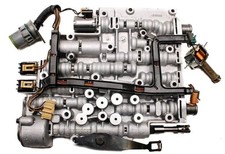
Pressure-related symptoms have two common sources: the EPC solenoid itself, or worn valve body bores leaking the pressure it commands. Start with the electrical side. Check the EPC circuit and solenoid resistance at the case connector using our EPC pressure control solenoid guide, and work through converter lockup problems with the TCC solenoid and P0740 guide. If the solenoids and wiring check out and the shift feel or TCC slip continues, the valve body needs a vacuum test. Sonnax has long pointed to bore wear in this family as a cause of shift-feel and lockup complaints that new solenoids alone will not fix.
Fitment
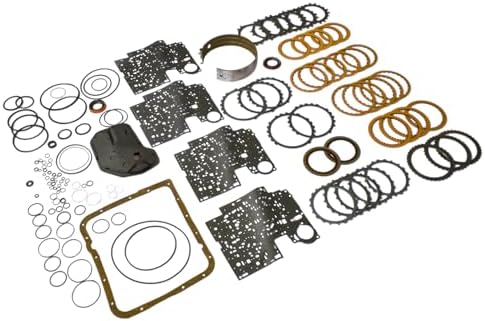
This listing is for GM 4L60E transmissions in 2003-2005 trucks, vans and SUVs. The listing notes that 2003-up units use a different TCC/PWM and harness arrangement from 1993-2002 transmissions, so an early truck needs a different kit. Confirm your build date and compare the connectors on your valve body to the photos before ordering, or send us your year and VIN to have it checked. The kit weighs 3.65 lb. Unlike some of our other kits, a filter and pan gasket are not listed as included, so order them for the same job. If you would rather get everything in one box, the 2003-2005 solenoid kit with harness, filter and pan gasket includes them. The full lineup is on the 4L60E parts page.
Install notes
- Drain and drop the pan, pull the filter, release the case connector and lift the old harness out.
- Remove the shift solenoid retaining clips, unbolt the EPC and 3-2 solenoids, then remove the TCC and PWM solenoids.
- Lube each new O-ring with ATF and push every solenoid fully home. A partly seated EPC leaks pressure and recreates the original complaint.
- Torque the valve body bolts to factory spec in sequence and route the harness through the original clips.
- Install a new filter and pan gasket, refill with Dexron VI, clear codes and run a shift relearn before the road test.
If the vacuum test shows bore wear, a 2003-2009 4L60E valve body is the cleaner fix than chasing individual valves.