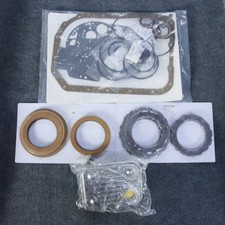
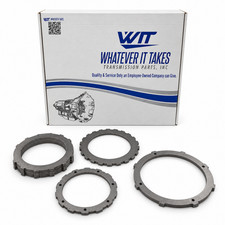
If your early-1990s Chevy or GMC 2500 or 3500, Suburban 2500 or full-size van has a 4L80E that now slips when it gets hot, bangs into Reverse, or slides through the 2-3 shift under a load, the clutch packs and seals have probably given up together. This new overhaul kit carries the Alto brand and supplies the clutch plates and soft parts for a complete rebuild of a 1991-1996 4L80E: friction plates, steel plates, sealing rings, metal-clad seals, gaskets, O-rings and a new filter. It is labeled 1990-96 because rebuild catalogs often round the range back to 1990, but the 4L80E entered production for the 1991 model year, so think of it as a kit for the first six years of the transmission.
What this overhaul kit does in an early 4L80E
Each of the 4L80E's clutch packs is a stack of alternating friction and steel plates squeezed together by a piston. When the frictions wear thin or the steels warp, the pack needs more pressure to hold, and the transmission starts to slip. Sealing rings and metal-clad seals keep that pressure inside the drums and the case, so once they harden or wear grooves, even a good clutch pack cannot get the oil it needs. Replacing the plates and every seal at the same time is what lets a worn early unit hold torque again behind a 454 or a 6.5 diesel.
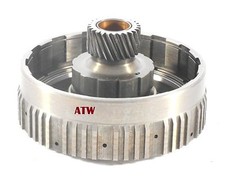
What this kit does not include matters just as much. There are no bands, bushings or bonded pistons in the box, so plan to measure the bushings, inspect both bands and check each piston before you order the rest of your parts.
Symptoms that point to an overhaul
- Slipping or flaring on upshifts once the fluid is hot
- Forward or direct clutch wear from towing, plowing or hauling campers
- Late or soft engagement after the truck sits overnight
- Dark, burnt-smelling fluid with friction material in the pan
- Low line pressure from worn bushings and sealing rings
- Fluid weeping from the pan, case connector or rear seal
How to confirm before you buy
An early 4L80E has solenoids, a harness and speed sensors that can all fake a mechanical failure. Scan for codes and look at the input and output speed readings first; our 4L80E speed sensor symptoms guide shows what a bad sensor looks like on a scan tool. Then pull the pan. Clutch material, varnish and a line pressure reading that stays low in more than one gear mean the unit needs this kit, not just a solenoid. The 4L80E common problems and fixes guide lays out the pressure test.
Fitment
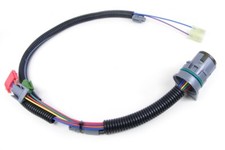
The kit fits the 4L80E built from 1991 through 1996 in Chevrolet and GMC trucks, Suburbans and vans. It does not fit the 1997-later center-lube units. Within the early years, two changes affect the parts you reuse. ATRA reports that GM introduced a new pressure control solenoid, shift solenoids, harness and connector in 1994. Sonnax notes that a low/reverse servo spacer kit fits 1996-later units only, so the 1996 low/reverse servo hardware differs from earlier years. Sonnax also identifies 1991-1996 valve bodies by two small holes that are missing on later bodies. If your build date falls near a changeover, send us the year and VIN and we will confirm the match. Browse the full early-unit lineup on our 4L80E parts page.
Install notes
- Let the frictions soak in clean fluid for 30 minutes before you stack them.
- Measure clutch pack clearance on every pack; new plates in a worn drum can still come up loose.
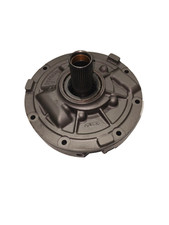
- Check the pump bushing and stator support while the pump is apart. The 4L80E pump for 1991-96 is the straight replacement if the gears or body are scored.
- Coat the sealing rings in assembly gel and confirm each drum still turns freely after installation.
- Refill with Dexron VI and check the level hot.
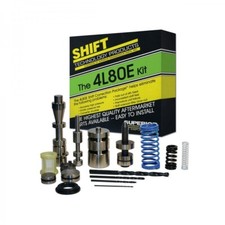
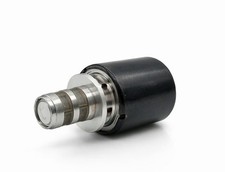
For a truck that tows, many rebuilders add a TransGo SK 4L80E shift kit while the valve body is off to firm the shifts and cut clutch slip time. On a 1994-1996 unit, replace the 1994-2003 pressure control solenoid at the same time, since a weak one lowers line pressure on brand-new clutches.