A whine that rises and falls with road speed, a gear that has simply gone missing, or glitter on the pan magnet after a long tow are the signs that send Ford heavy-truck owners looking for a planetary. This remanufactured planetary is listed for the E4OD and 4R100 family from 1989 through 2005, which covers the electronic four-speed behind F-Series and Super Duty pickups, the Excursion and E-Series vans with the 7.3L Power Stroke, 5.4L and 6.8L V10, and the earlier gas and diesel trucks that used the E4OD. Remanufactured gear parts let you replace a damaged gearset without paying for a new one or gambling on a used one with unknown heat history.
What the planetary does in a 4R100
The 4R100 and the E4OD before it use three gearsets. Up front sits the overdrive planetary: the overdrive one-way clutch and the coast clutch lock it at 1:1, and the overdrive clutch holds its sun gear for 4th. Behind that is a C6-style Simpson train, a forward planetary and a reverse planetary that share one sun gear. The ATRA application chart shows the forward clutch driving the forward set in every forward gear, the direct clutch and intermediate members working on the common forward-and-reverse sun gear, and the reverse planet carrier held by the low/reverse one-way clutch in 1st or the low/reverse clutch in manual 1 and Reverse.
The pinion gears ride on needle bearings and pins inside each carrier, with thrust washers on both sides. They live on lube oil. When the truck tows hot, or lube flow drops, those bearings wear first; the pinions develop end play, the gears start to sing, and in the worst case a pinion breaks up and sends metal through the whole unit. Sonnax lists OD planetary failure among the known E4OD problems and offers a melt-proof aluminum front lube/drainback valve kit to cure it, which tells you the overdrive set is the one most often starved.
Symptoms of a failing planetary
- Whine or howl that changes with road speed in one or more gears, often loudest in overdrive
- Loss of 4th, or loss of drive in one gear while others still work
- Bronze, steel or needle-bearing debris on the pan magnet and in the filter
- Clunks or vibration that started after a tow or an overheat
- Noise that is still there after the converter and rear axle have been checked
How to confirm it before you buy
Gear noise is easy to confuse with axle, driveshaft or converter noise, so narrow it down. Note which gear makes the sound and whether it changes when the overdrive is cancelled. Drop the pan and look at the debris: fine friction dust points at clutches, while needles, bronze washer material or chunks of steel point at a gear set. Scan for codes too, because solenoid and EPC faults can cause harsh or missing shifts that feel mechanical. Our E4OD and 4R100 common problems guide walks through those checks. Once the unit is apart, check each carrier for pinion end play, rough bearings and pitted teeth.
Fitment
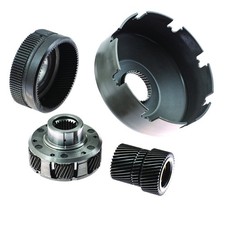
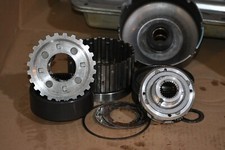
The listing covers 1989-2005, so it spans the E4OD (1989-1997) and the 4R100 that replaced it for 1998. The two share the same basic gear train, but Ford made running changes, and the listing does not state which planetary position or which Ford part number is included. The photo shows a carrier with its ring gear, a shell and a sun gear. Set the parts beside your old ones and match pinion count, spline count, ring gear tooth count and overall height before you install. If you are not sure, send us your year and VIN first. Our 4R100 vs E4OD guide explains what changed in 1998, and the E4OD and 4R100 collection lists the other parts for this unit.
Install notes
- Replace thrust washers and thrust bearings on both sides of each carrier, and check the bushings they ride on.
- Measure pinion end play on the carrier and confirm every pinion turns smoothly.
- If the old set failed from lack of lube, find the cause: check the pump, the lube circuit and the cooler before you button the unit up. A rebuilt 1989-1994 E4OD pump is listed for early units.
- Debris from a broken planetary goes everywhere, so flush the cooler and lines and replace the converter if it took in metal.
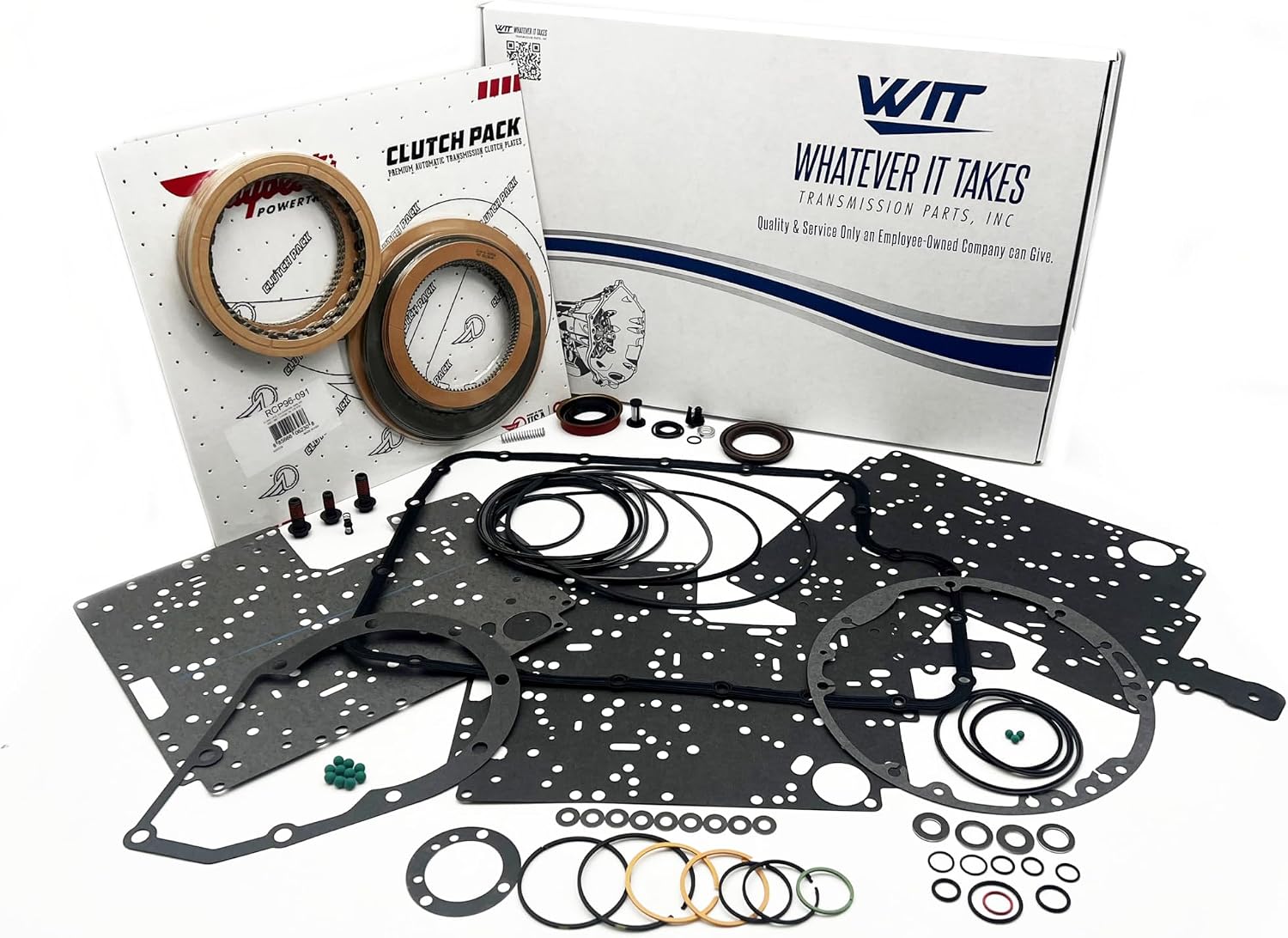
- Use a full seal and gasket set such as the 1990-1995 E4OD overhaul kit, and refill with MERCON V ATF.