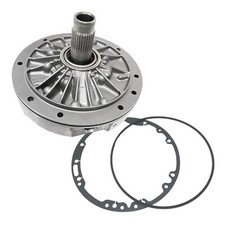
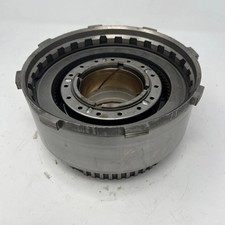
When a 1998-2005 Ford with the 4R100 whines in step with engine speed, takes a long time to pick up drive or reverse, or slips in every gear once it is hot, the front pump is the first suspect. This remanufactured 4R100 pump for 1998-2005 is for Super Duty pickups, Excursions, E-Series vans and F-53 chassis behind the 7.3L Power Stroke, 5.4L and 6.8L V10, and it replaces a worn pump as a complete assembly instead of a pile of loose gears and bushings.
What the pump does in a 4R100
The pump bolts to the front of the case and is driven by the torque converter hub. Its gears produce every bit of oil the transmission uses: line pressure for the clutches and band, converter charge, cooler flow and lube. In the 4R100 the pump also carries the torque converter clutch control valve in its body, which is why pump design and solenoid block design are tied together. For 1998 Ford moved to a common pump body and cover casting marked F81P that was used for three different assemblies: the E4OD, the 4R100 with on-off converter clutch control, and the 4R100 with PWM converter clutch control. The castings look alike, but the TCC valve hardware inside does not.
Symptoms of a worn 4R100 pump
- Whine or howl that rises and falls with engine RPM in every range
- Delayed engagement into drive and reverse, worse when the fluid is hot
- Slipping in all gears rather than in one shift, pointing at low line pressure
- Low readings on a line pressure gauge at idle and at stall
- Converter clutch drag or shudder when low pump volume starves converter release oil
- A leaking front seal or a worn pump bushing from converter hub wear
- Overheating under towing when cooler and lube flow fall off
How to confirm the pump is the problem
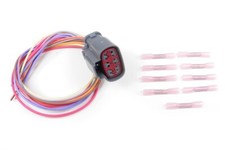
Put a gauge on the line pressure tap before you pull anything. Low pressure in every range points at the pump or the main regulator, while a single bad shift points elsewhere. Rule out the pressure control solenoid and its wiring, since a failed EPC circuit can also cause soft shifts and low pressure; our EPC solenoid symptoms guide shows how to separate the two. Check that the cooler is not restricted using our cooler line guide, because a blocked cooler cooks a fresh pump fast. Once the pump is out, a scored gear pocket, worn bushing or chewed gears confirm it.
Fitment
This pump is listed for the 1998-2005 4R100. The most important check is converter clutch type. A PWM pump uses a long sleeve with a valve in the TCC bore, so the end plug sits only about 1/4 inch below the pump cover edge. On an on-off 4R100 or an E4OD pump that plug sits more than an inch down. Look into your old pump's TCC bore and measure before you order. The solenoid block must match the pump design, not just the model year, or the converter clutch will not behave. All diesel 4R100s and many gas units ran PWM control, with only some gas applications on the on-off style. If you are unsure, send us your year and VIN and we will confirm. Other year ranges, such as the 1998-1999 4R100 pump, are listed separately, and every part for this family is on the E4OD and 4R100 collection page.
Install notes
- Fit a new front seal and confirm the pump bushing is fresh before installing.
- Inspect the converter hub. A grooved or rough hub will destroy the new seal and bushing quickly.
- Use a new pump gasket and O-ring, align the pump to the case and torque the bolts evenly.
- Set converter endplay. Sonnax recommends a minimum of about .035 to .040 inch on a 4R100 so release oil can keep the converter clutch off the cover.
- Prime the pump with MERCON V before first start and check fluid level hot after a road test.
- Match the solenoid block to this pump. If the old block is worn, replace it with the matching solenoid kit.
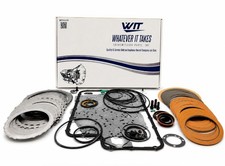
- If the old pump shed debris, the clutches likely took damage too; the 1998-up master rebuild kit covers the overhaul.
For the full breakdown of what changed from E4OD to 4R100, read 4R100 vs E4OD differences.