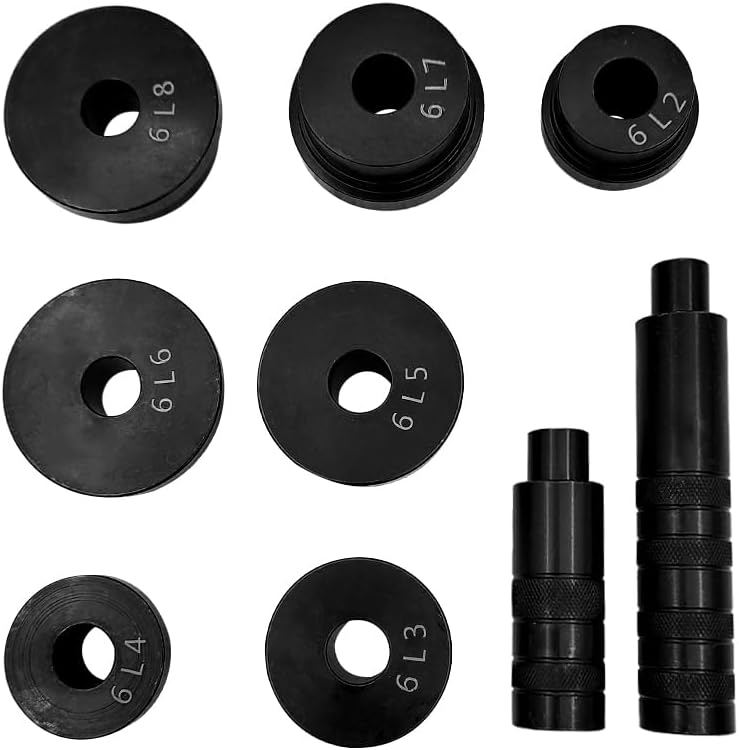
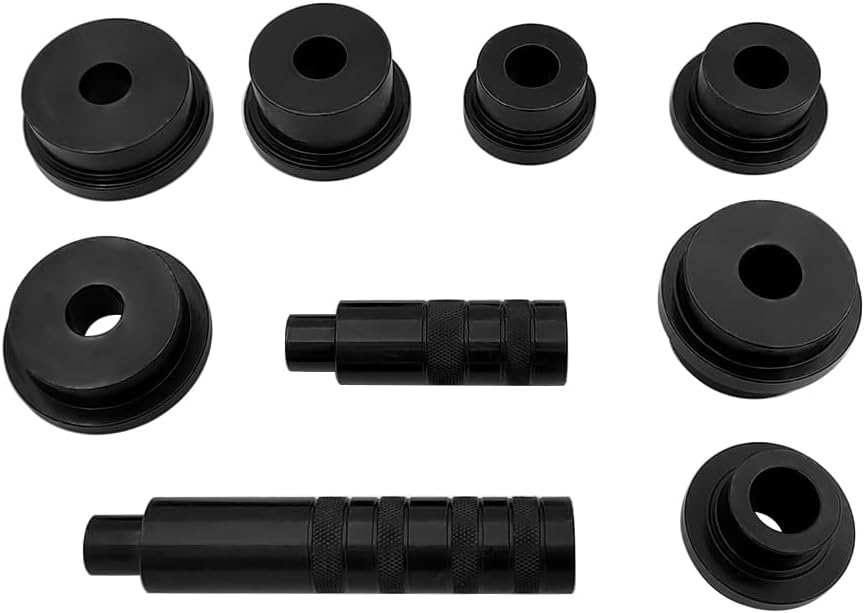
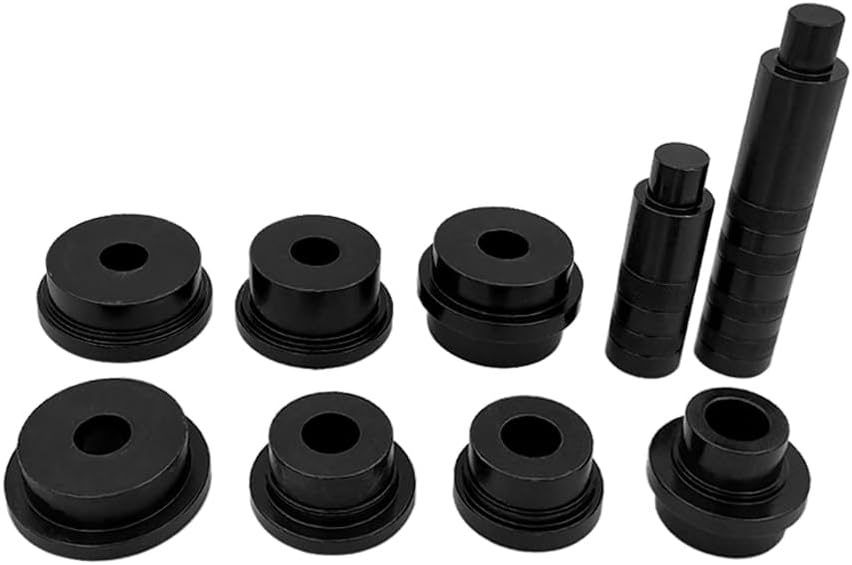
A 6L80 that comes back with a weeping front seal, a chewed converter hub or line pressure that sags once it gets hot often started with one bushing that went in a few thousandths crooked. This nine-piece kit is for the person rebuilding a GM 6L80 or 6L90 out of a 2006-up Silverado, Sierra, Tahoe, Suburban, Yukon, Escalade, Camaro or Corvette who wants to stop guessing with sockets. It is seven heat-treated steel mandrels and two driver handles in black oxide, built as a replacement for the 104BDMK and 6L80-Tool part numbers.
What a bushing driver does in a 6L80
The 6L80 is a clutch-to-clutch six-speed, and most of its rotating parts ride on plain bushings instead of roller bearings. Several of those bushings sit in aluminum: the case bore and the bores in the stator support and center support. Aluminum galls easily, and a bushing started at an angle shaves metal off the bore on its way down. A mandrel from this kit has a pilot that enters the bushing and a flat shoulder that bears on its face, so the load is spread around the whole rim and the bushing tracks straight down the bore. The point is not just a neat install. The bushings set the centerline of the shafts and drums, and in this unit several of them also help seal clutch feed oil, so a bushing that is cocked or egg-shaped moves the shaft off center and opens a leak path at the seal rings.
Symptoms of a bushing that went in wrong, or wore out
- Front pump seal that leaks again shortly after replacement, from a converter hub that is not running on center
- Polished wear on one side of the converter hub or a shaft journal
- Line pressure that is fine cold and drops as the fluid heats up and thins
- Converter clutch apply complaints and code P0741, which Sonnax ties to worn bushings in this family
- Burnt 3-5-R or 4-5-6 clutches that were starved of apply oil rather than worn out by mileage
- Bronze-colored particles on the pan magnet
How to confirm bushings before you buy parts
A 6L80 with low or erratic pressure can also have a tired pump, a worn valve body bore or a TEHCM fault, so rule those out first. Compare actual mainline pressure at the test port with what the TCM is commanding; if the pump cannot keep up, our 6L80 pump failure symptoms guide explains how to tell pump wear from a leak downstream. For the broader list of what puts these units on the bench, read 6L80 common problems and fixes. Once the case is apart, mic each shaft journal, bore-gauge each bushing, and look for a bushing that has walked from its original depth or spun in its bore.
Fitment
This kit is listed for the GM 6L80 and 6L90 six-speed automatics from 2006 on, in 2WD, 4WD, 4x2, 4x4, AWD and RWD Chevrolet, GMC, Cadillac and Hummer applications. It cross-references 104BDMK and 6L80-Tool. Drive layout does not change the bushing sizes inside the main case, so the same mandrels serve a truck and a Corvette unit. It is drivers only; no replacement bushings are in the box. If you are not certain which transmission you have, check the RPO code on the service parts label (MYC is the 6L80, MYD the 6L90) or send us your year and VIN. The rest of what we carry for this unit is on the 6L80 transmission parts page.
Install notes
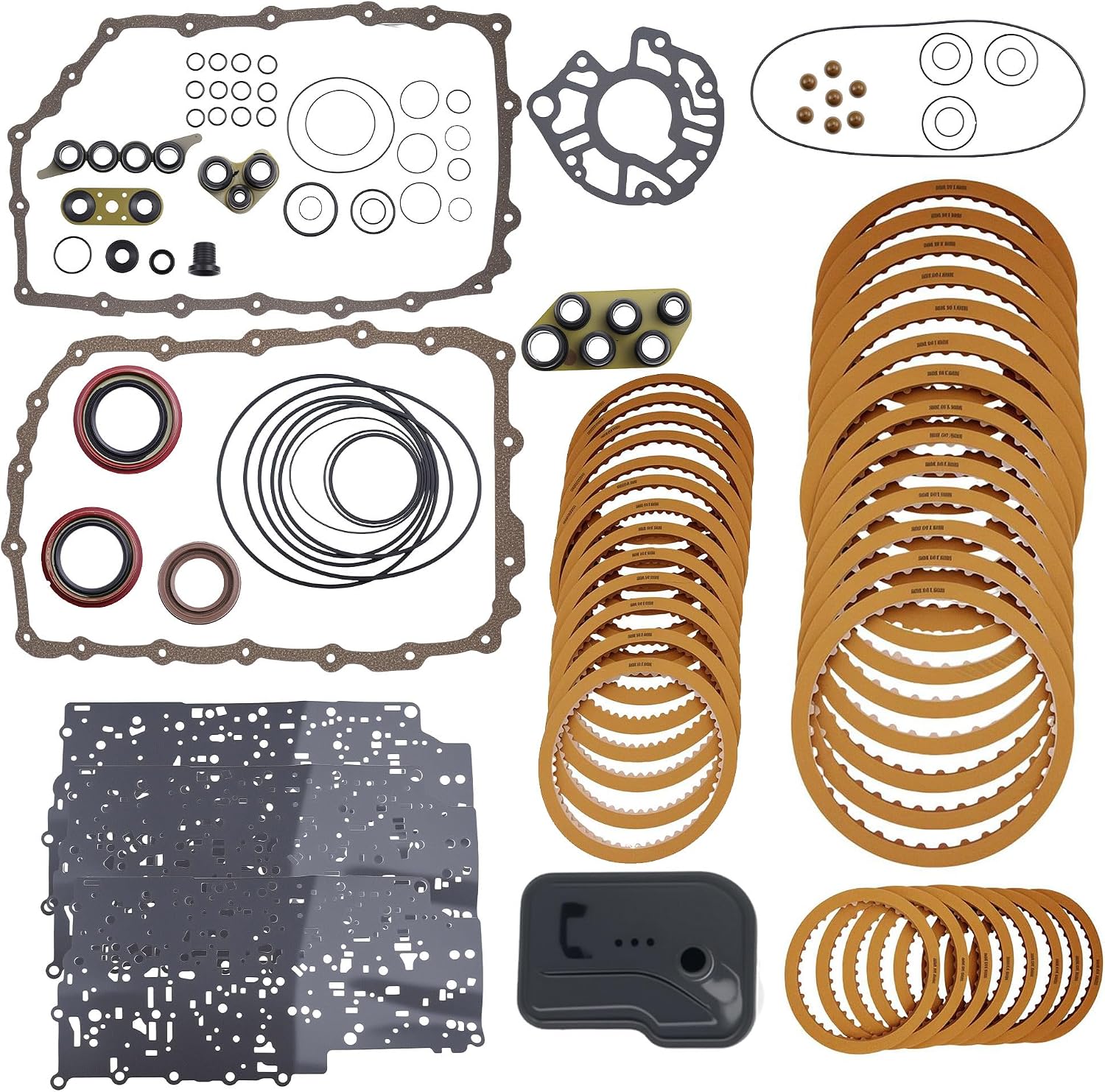
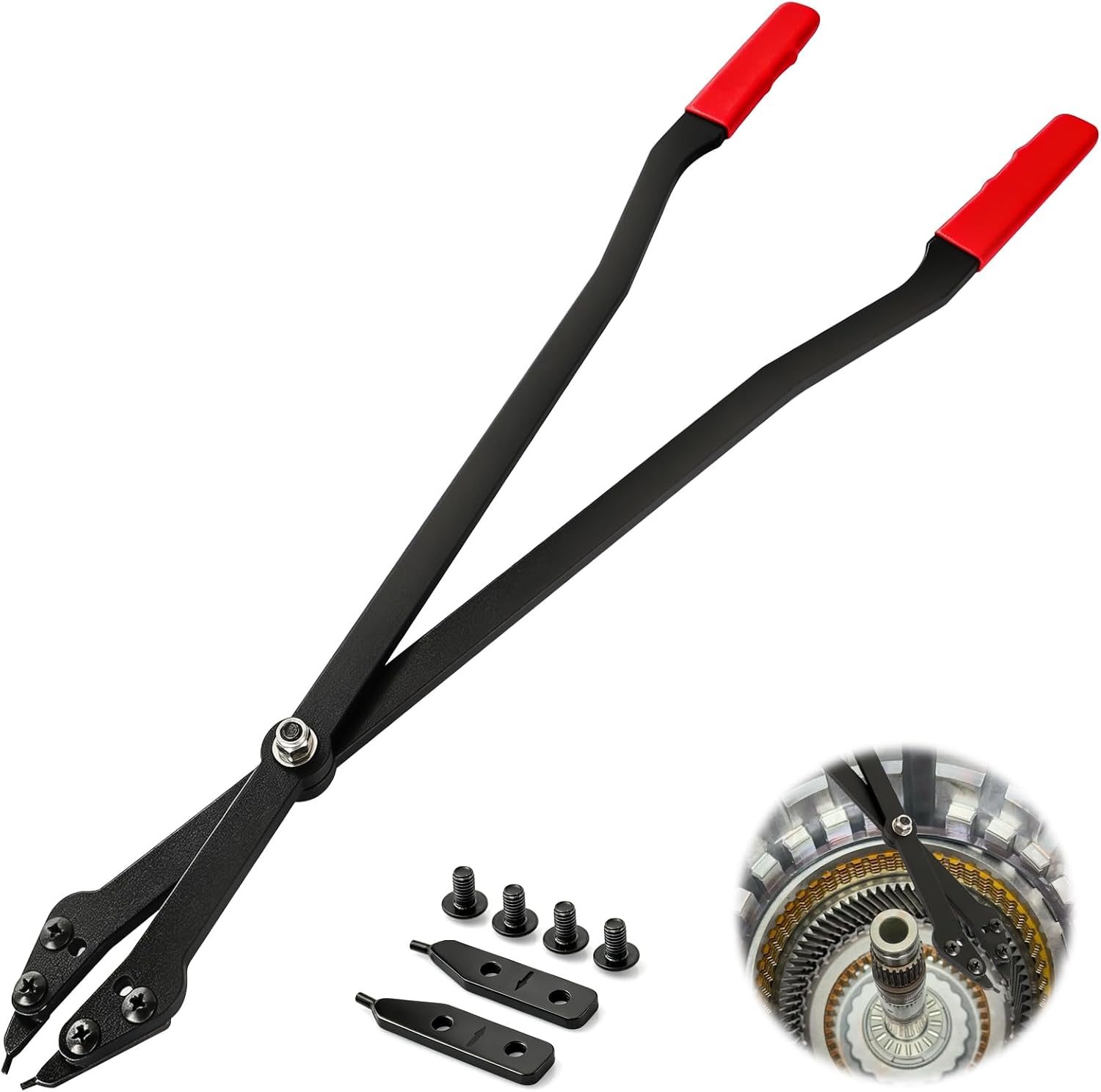
Collapse or pull the old bushing instead of punching it out through the bore, and write down its depth and which way any oil hole faced before it comes out. Clean the bore, then follow the Sonnax bushing guidance: dress the leading chamfer of each new bushing before it goes into an aluminum bore so it cannot gall, lightly lube it, and press it with an arbor press rather than hammering, because shock loads distort precision bushings. Support the housing on a flat machined face so the mandrel is the only thing taking load. Line up the oil hole, press until seated, then bore-gauge and spin the mating shaft by hand. Use these mandrels with the bushings in a complete kit such as the 6L80E master rebuild kit with frictions and filter, keep the 26 inch internal snap ring pliers handy for the drum retaining rings, and refill with Dexron VI before running a transmission adapt relearn.