The Corvette is the odd 6L80. In a Tahoe or a Silverado the Hydra-Matic six-speed (RPO MYC) bolts to the back of the engine. In a C6 Corvette it sits at the back of the car as the front half of a rear transaxle, fed by a shaft that runs through the torque tube. The geartrain, clutches, valve body and TEHCM are the same family as the truck units. What changes is how the car is driven, how hot the fluid runs, and how hard it is to check the level. Those are the things that decide what fails.
This guide covers the problems GM has published that name the Corvette, plus the high-mileage wear we see on hard-driven cars. For the transmission-wide list, see our 6L80 common problems guide. The sister performance car is covered in 6L80 Camaro problems.
The short version: The 6L80 was the Corvette automatic from 2006 through 2014 (GM PIP5429A lists Corvette 2006-2014, RPO MYC). In 2012 the automatic came only with the LS3. A first 2-3 shift that flares after the car sits is a known normal trait, not a failure (PIP5429A). If it will not move or slips, check the filter for a crack and inspect the pump (PI0488A). No Reverse and no 2nd right after a valve body swap means the wrong upper valve body went in (16-NA-130). High-mile and track cars wear the TCC regulator bore. Fluid is DEXRON-VI, about 6.5 quarts for a pan-and-filter service, and there is no dipstick.
First: Confirm You Have a 6L80
A 2006-2014 C6 or early C7 Corvette with two pedals is a 6L80, RPO MYC. The C6 Z06 and ZR1 were manual only. The 2012 owner manual's engine table shows the LS3 offered with automatic or manual, while the LS9 and LS7 are listed as manual only. Check the Service Parts Identification label for MYC before you order parts. On the 2014 car GM puts that label under the carpet on the passenger side of the hatch/trunk area.
The 2015 and later Stingray went to the 8L90 eight-speed. That unit has its own light-throttle shudder bulletins and a different fluid story, so do not mix the two. If you are not sure which one you have, our 6L80 vs 8L90 guide walks through it.
1. The First 2-3 Shift Flares After the Car Sits
This one shows up on Corvette forums all the time, because Corvette owners notice everything. The car sits overnight or for a few hours. The first 2-3 upshift slips or flares for a split second. Every shift after that is crisp.
GM covers it in Preliminary Information PIP5429A, "2-3 Upshift Slip or Flare," which lists the 2006-2014 Corvette with MYC. GM says air gets trapped in the 3-5-R clutch assembly while the car sits. The first 2-3 shift purges that air, and the shifts after it are normal. GM says to confirm it by doing a garage shift into Reverse before Drive. That purges the air and the flare goes away. GM calls this a NORMAL trait that will not hurt durability, and says no repair should be made.
There is a second, cold version. With ATF at or below 85°F (30°C), the 2-3 can flare until the fluid warms. The bulletin's fix is an adapt drive. Note the throttle position where the flare happens on a scan tool. Get the ATF to at least 104°F (40°C). Then make several 2-3 shifts at that throttle so the adapts can learn the shift. Do not sell a valve body or clutches for this. If the flare happens hot, on every 2-3, and gets worse over time, that is a real 3-5-R clutch or valve body problem. Treat it as a slip, not a PIP5429A case.
2. No Movement or Slipping: Check the Filter, Then the Pump
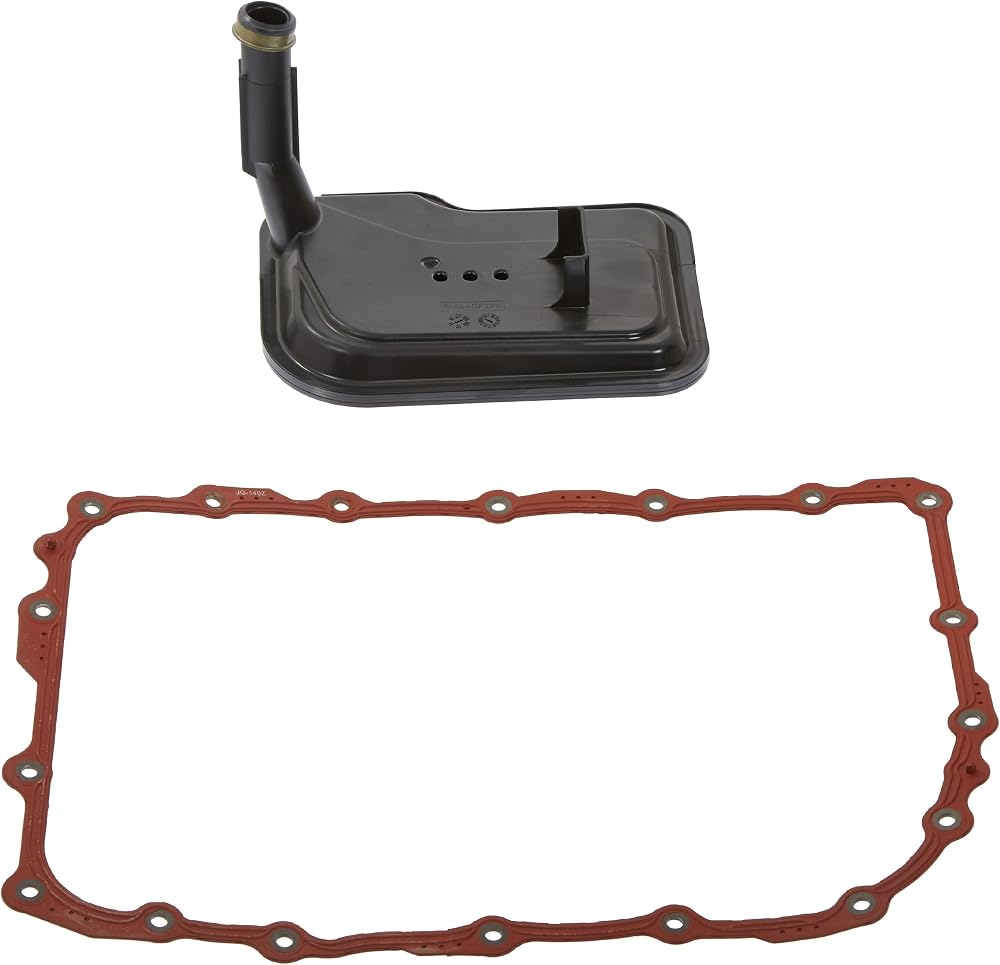
If a Corvette comes in with no forward, no reverse, or a slip, GM Preliminary Information PI0488A names the 2010-2012 Corvette (6L80 or 6L90, RPO MYC or MYD). It tells the tech to look hard at the fluid filter when diagnosing a confirmed no-forward, no-reverse or slip. The filter may be cracked or split.
A cracked filter is not the whole repair. A split filter can let the pump suck air and debris. So the bulletin says that if you find one, take the pump apart and look for:
- A scored pump rotor or pump vanes
- A scored pump cover or rotor pocket
- A cracked pump slide
GM also says to check the clutches for damage. On a Corvette that has spent its life at high rpm, we would add this: if the pump is scored, the car has been running on low line pressure. Check the clutch packs before you button it up. A new filter on a burnt unit only buys a few weeks.
For bench diagnosis, start with line pressure on a gauge and look at TCC slip and commanded versus actual gear on the scan tool. Our 6L80 no-movement diagnosis guide covers the full checklist.
3. No Reverse, No 2nd After a Valve Body Replacement
This is the most common way an independent shop gets burned on a Corvette 6L80. Somebody replaces the valve body or the TEHCM assembly with a unit pulled for "6L80/6L90" and the car comes back with no Reverse and no 2nd. Sometimes the input and output speed sensor signals (ISS/OSS) are missing too.
GM Service Bulletin 16-NA-130, "No Reverse, No Second After Upper Valve Body Replacement," names the Corvette from 2006 on. The cause is the wrong upper valve body. Upper valve bodies are unique by transmission RPO. The oil holes that feed the center support, the Low and Reverse clutch and the 2-6 clutch sit in different places on each one, and so do the speed sensor mounts. The wrong body will not line up with the feed holes or the sensors.
How to check: the upper valve body has four posts on top, marked A, B, C and D. The post for its RPO is milled off. A milled C post means MYC, which is the correct body for a 6L80 Corvette. A milled D is an MYD (6L90) body and will not work. Check this on the bench before the valve body goes in, not after the car fails a road test.
4. Heat, TCC Wear and the Track-Day Car
The Corvette's real enemy is heat. The 2012 owner manual says the TRANSMISSION HOT IDLE ENGINE message comes on, with four chimes, if fluid temperature goes above 270°F (132°C) or rises fast. The transmission may change shifts or apply the converter clutch to cool itself. GM says to drive slower and let the fluid cool to at least 230°F (110°C). The manual also recommends Sport mode or paddle shift for performance or competitive driving. If the message shows up on flat roads in normal driving, GM says the car may need service.
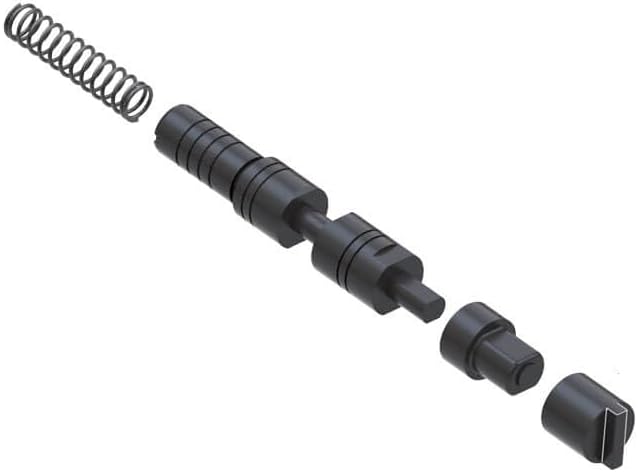
Every trip past 270°F breaks down the DEXRON-VI and wears the converter clutch lining. Over time the TCC regulator valve wears its bore in the valve body. Sonnax lists these symptoms for a worn 6L80-family TCC regulator, which its 104740-46K kit is built to fix:
- Overheated fluid
- Failsafe mode
- Harsh shifts and a harsh TCC apply
- Loss of fuel economy
- P0741 or P0742
- High TCC slip rpm
Sonnax says to replace the valve if the bore fails a vacuum test at the indicated ports or if wear is visible. On the scan tool, watch TCC slip speed with the converter commanded on in 4th through 6th. A healthy unit holds steady, low slip. A worn regulator lets slip climb and swing. That extra slip is more heat, which wears the bore more. For the full test, see our 6L80 TCC shudder diagnosis guide and P0741 fix.
5. Fluid: No Dipstick, and a Real Severe-Service Schedule
Both the 2012 and 2014 Corvette owner manuals say the same thing. There is no dipstick, a leak is the only reason fluid goes low, and checking or changing the fluid uses a special procedure GM recommends leaving to the dealer. The fluid is DEXRON-VI. The 2012 manual lists 6.2 L (6.5 qt) for an automatic pan-and-filter service. It also warns that the wrong fluid can damage the transmission and may not be covered by warranty.
The interval is where Corvette owners get caught. The 2014 manual's normal schedule has no automatic transmission fluid change at all through 150,000 miles. The severe schedule calls for a fluid and filter change at 45,000, 90,000 and 135,000 miles. GM's severe list includes "high speed or competitive driving," along with hot city traffic and hilly terrain. A Corvette that sees autocross, track days or hard back-road runs is a severe-service car by GM's own definition. We would not let one go past 45,000 miles on the original fluid.
Because there is no dipstick, the level is set at a check plug at a set fluid temperature with the engine running. Do it on a level lift with a scan tool reading trans fluid temperature. A Corvette that is a quart low will slip and run hot long before it sets a code. Exact temps and steps are in our 6L80 fluid type and capacity guide.
A Quick Diagnostic Order for a Corvette 6L80
- Confirm MYC on the RPO label. Make sure it is not an 8L90 car.
- Scan for codes and look at trans fluid temp history. Ask the owner about track use or a hot-trans message.
- Set the fluid level correctly at the check plug, at the right temperature. Smell and look at the fluid.
- If the only complaint is the first 2-3 after a cold soak, do the Reverse-before-Drive test (PIP5429A) and stop there if it clears.
- For no movement or slipping, drop the pan and check the filter for cracks. If it is cracked, inspect the pump (PI0488A).
- If the valve body was replaced recently, check the milled post on the upper body (16-NA-130).
- With TCC complaints or P0741/P0742, watch TCC slip and vacuum-test the TCC regulator bore.
FAQ
What years of Corvette have the 6L80 transmission?
The 6L80 (RPO MYC) was the Corvette automatic from 2006 through 2014. GM PIP5429A lists the 2006-2014 Corvette with MYC. The 2015 and later Stingray moved to the 8L90 eight-speed, which has different problems and bulletins.
Why does my Corvette's 2-3 shift slip on the first shift of the day?
GM PIP5429A says air gets trapped in the 3-5-R clutch while the car sits, and the first 2-3 shift purges it. A shift into Reverse before Drive purges the air and stops the flare. GM calls this a normal trait that does not hurt durability and says no repair should be made.
How much transmission fluid does a 6L80 Corvette take?
The 2012 Corvette owner manual lists 6.2 liters (6.5 quarts) of DEXRON-VI for a pan removal and filter replacement. There is no dipstick, so the level is set at the check plug at the specified fluid temperature with the engine running.
How often should I change the fluid in a 6L80 Corvette?
Under GM's normal schedule there is no fluid change through 150,000 miles. Under the severe schedule, which includes high speed or competitive driving, the 2014 owner manual calls for a fluid and filter change at 45,000, 90,000 and 135,000 miles. Any Corvette that sees track days or hard driving should be on the severe schedule.
Why is there no Reverse after a valve body replacement on my Corvette?
GM bulletin 16-NA-130 says the most likely cause is the wrong upper valve body. Each one is unique by RPO, and the milled post on top tells you which: a milled C post is MYC, the correct body for a 6L80. The wrong body misplaces the oil feeds to the center support, Low and Reverse clutch and 2-6 clutch, and can drop the speed sensor signals.
Sources
- General Motors — 2012 Chevrolet Corvette Owner Manual (hosted by GM). Backs: no dipstick and the special check/change procedure, DEXRON-VI, the 6.2 L (6.5 qt) pan-and-filter capacity, the LS3 automatic/manual and LS9/LS7 manual-only pairings, the paddle shift behavior, and the TRANSMISSION HOT IDLE ENGINE message at 270°F (132°C) with the 230°F (110°C) cool-down. 2012 Corvette owner manual (PDF)
- General Motors — 2014 Chevrolet Corvette Owner Manual (hosted by GM). Backs: no automatic fluid change on the normal schedule through 150,000 miles, the severe-schedule fluid and filter change at 45,000 / 90,000 / 135,000 miles, the severe conditions including high speed or competitive driving, DEXRON-VI, and the Service Parts Identification label location. 2014 Corvette owner manual (PDF)
- General Motors — Preliminary Information PIP5429A, "2-3 Upshift Slip or Flare," September 26, 2022 (hosted by NHTSA). Backs: 2006-2014 Corvette MYC coverage, the trapped-air cause in the 3-5-R clutch, the Reverse-before-Drive purge, the 85°F (30°C) cold condition, the 104°F (40°C) adapt drive and the "no repair attempts" instruction. GM PIP5429A (PDF)
- General Motors — Preliminary Information PI0488A, "Diagnostic Information for Transmission No Forward, No Reverse, Slips, Cracked/Split Fluid Filter," February 2012 (hosted by NHTSA). Backs: 2010-2012 Corvette coverage (MYC/MYD), the cracked filter inspection, and the pump rotor, vane, cover, pocket and slide inspection plus clutch check. GM PI0488A (PDF)
- General Motors — Service Bulletin 16-NA-130, "No Reverse, No Second After Upper Valve Body Replacement," March 2023 (hosted by NHTSA). Backs: Corvette coverage from 2006, the wrong-valve-body cause, missing ISS/OSS signals, the A/B/C/D milled-post identification and the center support feed hole differences. GM bulletin 16-NA-130 (PDF)
- Sonnax — TCC Regulator Valve Kit 104740-46K (6L45/6L50/6L80/6L90). Backs: the worn TCC regulator symptoms (overheated fluid, failsafe, harsh shifts and TCC apply, lost fuel economy, P0741/P0742, high TCC slip rpm) and the vacuum test trigger. Sonnax 104740-46K