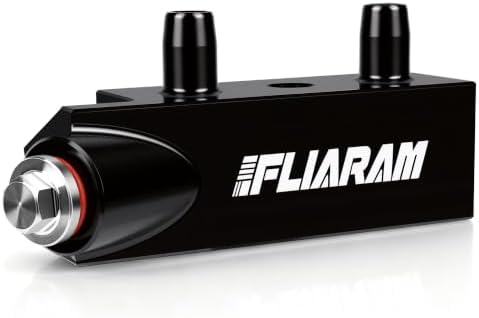
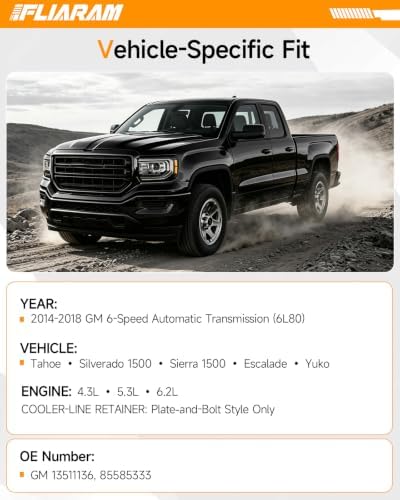
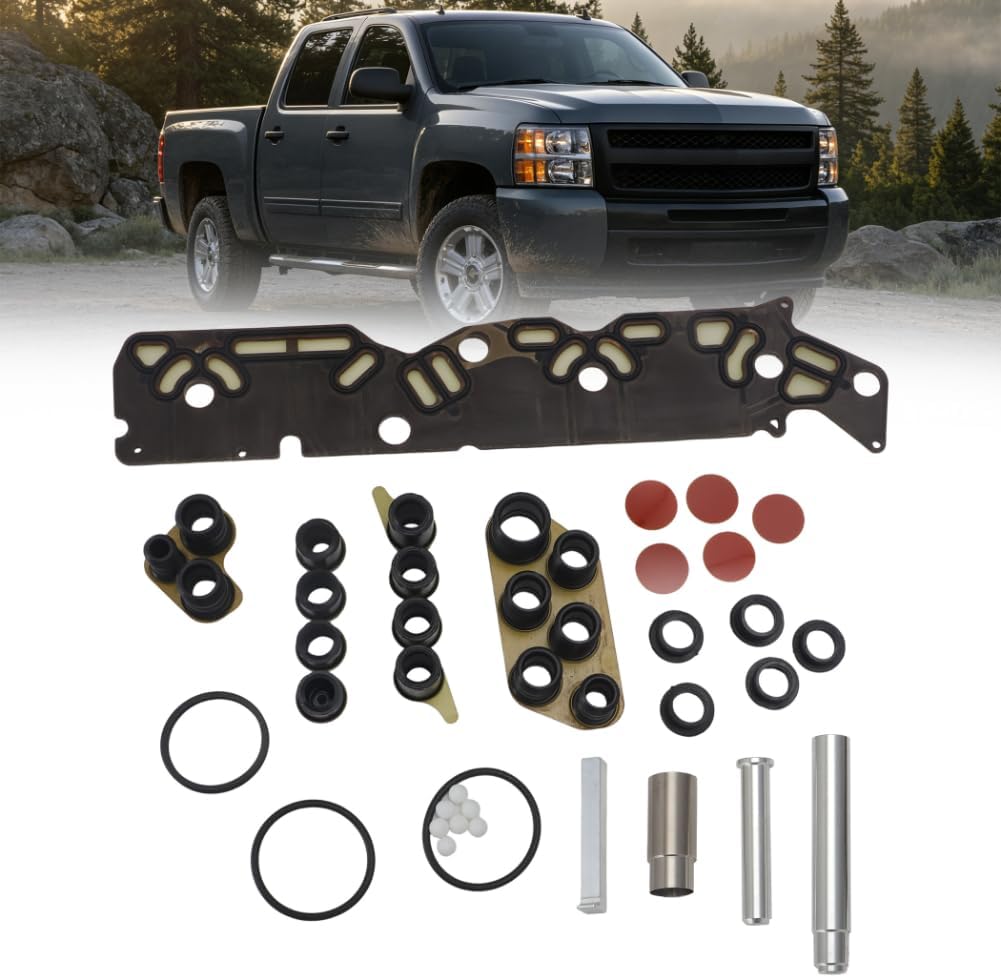
This billet thermal bypass valve is for owners of 2014-2018 Chevrolet Silverado 1500, GMC Sierra 1500, Tahoe, Yukon and Cadillac Escalade models with the 6L80 six-speed who are seeing the gauge creep up when the truck works hard. It takes the place of the factory valve, GM 13511136 and 85585333, at the point where the 3/8 inch cooler lines connect, and it is built for the 4.3L, 5.3L and 6.2L trucks of that generation.
Why the 6L80 has a bypass valve at all
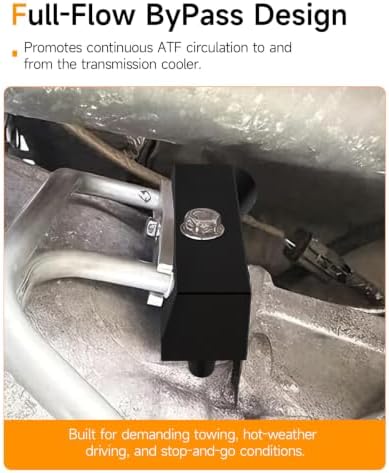
GM fitted these trucks with a thermostatic valve so a cold 6L80 would warm up fast. Below its opening temperature, the valve sends returning ATF back into the transmission instead of out to the radiator cooler. Once the element senses warm fluid, it opens and the cooler joins the circuit. That is fine while it works, but the element can stick or open lazily, and the factory valve's internal passages are restrictive even when open. GM itself changed course here: according to GM TechLink, the original valve was not fully open until about 194 F, the revised service valve is fully open near 158 F, and technicians were told to replace it during repairs for harsh shifts, delayed shifts, shudder, noise or vibration. This billet version skips the thermostat entirely, so ATF passes through the cooler continuously from start-up.
Symptoms that point to the bypass valve
- Trans temperature that keeps climbing on a long pull or in stop-and-go heat even though the radiator and cooler are clean
- Shift quality that gets worse as the truck heats up: harsher upshifts, a delay into gear, or converter shudder at cruise
- Fluid that darkens and smells scorched between services
- A level check that never reads right, because the cooler has not filled while the valve is closed
- Over time, heat-driven 3-5-R and 4-5-6 clutch wear and torque converter clutch shudder, the 6L80's best-known failures
How to confirm it first
Monitor transmission fluid temperature with a scan tool during a warm drive and feel the two cooler lines carefully once the fluid is up to temperature. A stuck-closed valve leaves the line to the cooler and the return line at very different temperatures, and the trans temp keeps rising instead of leveling off. Check fluid level and condition before blaming the valve. If the truck also throws pressure or solenoid codes such as P0716, P0717 or P0751, the problem is likely in the valve body or TEHCM rather than the cooler circuit; our 6L80 common problems guide and 6L80 Escalade common problems guide lay out how to tell them apart.
Fitment
Fits 2014-2018 GM 6L80 applications: Silverado 1500, Sierra 1500, Tahoe, Yukon and Escalade with the 4.3L, 5.3L or 6.2L. It replaces GM 13511136 and 85585333 and connects to 3/8 inch cooler lines with a plate-and-bolt retainer. It does not fit trucks with quick-connect or clip-retained cooler lines, which appear on some early trucks in this range. Look at how the lines attach to your current valve before ordering, or send your year and VIN and we will check it. Diesel, 8L90 and 2019-up trucks are not covered by this listing. See the full range of parts for this transmission on our 6L80 parts page.
Install notes
- Let the truck cool fully; ATF in the cooler lines stays hot long after shutdown.
- Remove the line retainer bolt, separate the lines from the factory valve, and remove the valve. Catch the fluid that drains out.
- Fit the new valve with fresh line seals or reuse good ones, torque the retainer snugly, and check that both lines are fully seated.
- Top off with Dexron VI and set the level hot by the GM check procedure. The cooler now fills from start-up, so expect to add some fluid.
- The removable service plug is O-ring sealed and magnetic; inspect it at every fluid change for metal that signals clutch or bearing wear.
If high temps have already pushed the fluid past its life, pair this valve with a 2014-2018 6L80 transmission cooler when the original is clogged or leaking. If heat has already caused pressure switch faults, the 6L80 pressure switch repair kit is the usual repair for TEHCM-related shift complaints.