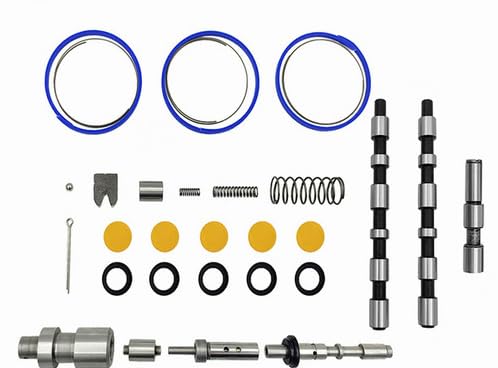
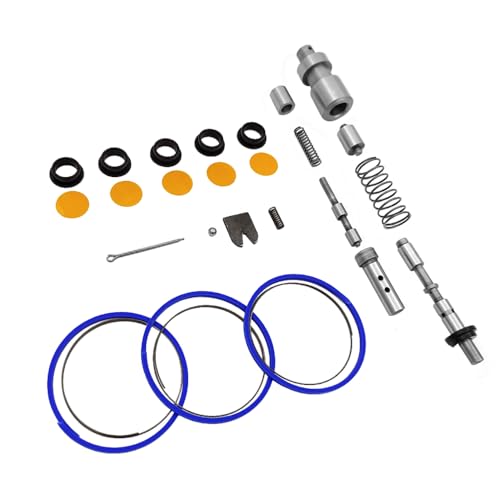
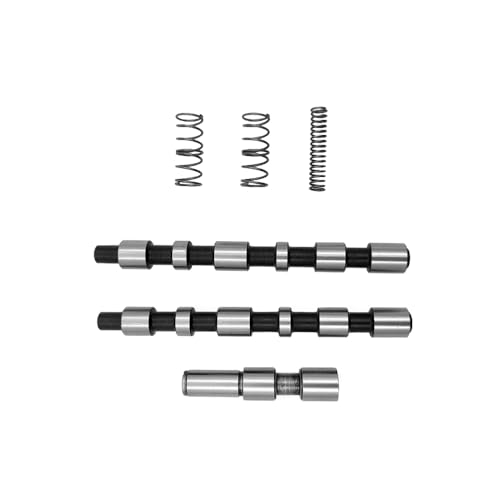
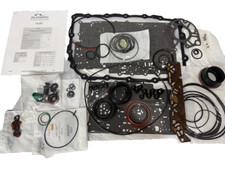
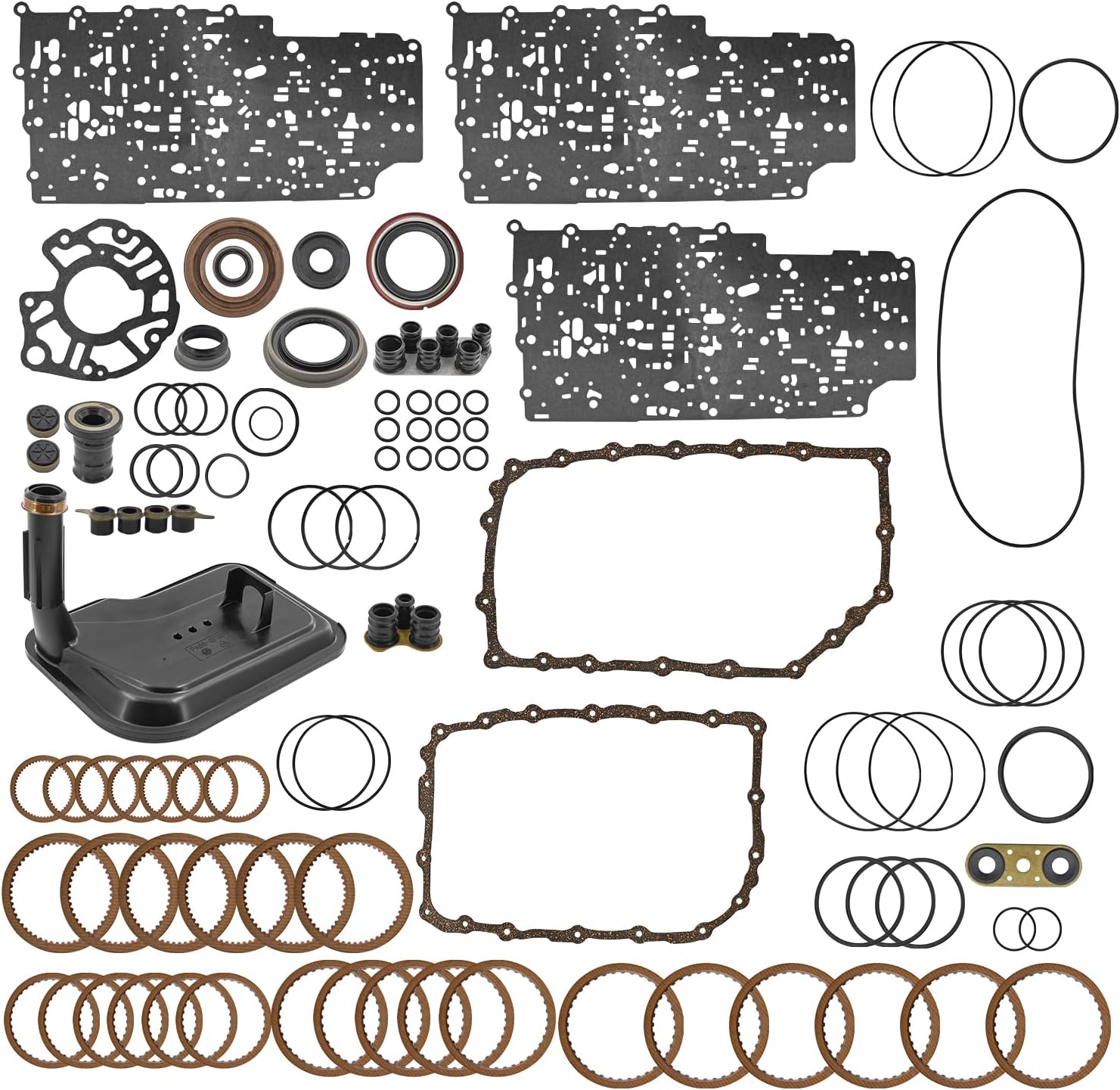
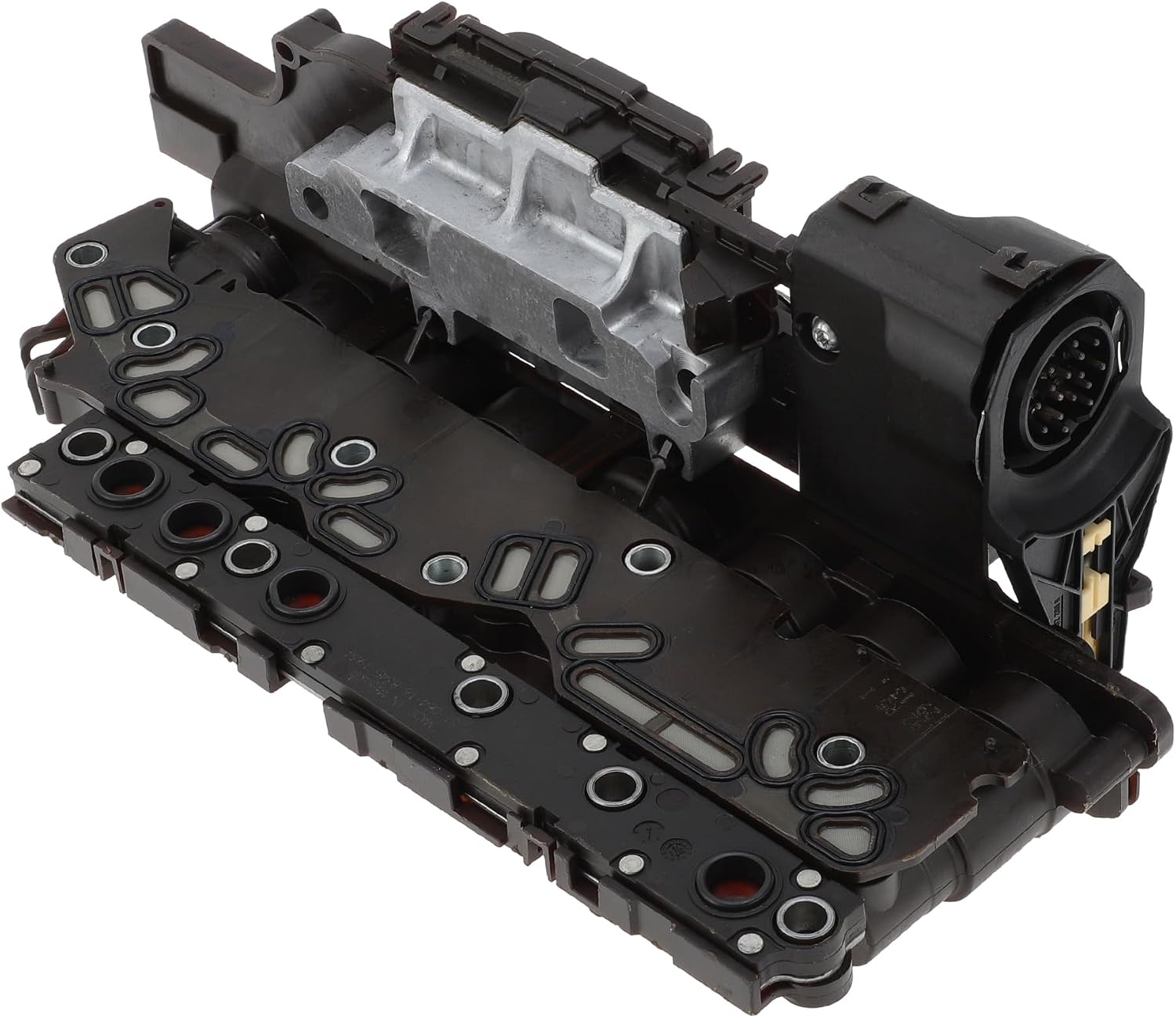
If your Silverado, Sierra, Tahoe, Yukon, Escalade, Camaro or Corvette with the 6L80 has started flaring between gears, shuddering when the converter locks, or setting clutch pressure and ratio codes after someone already replaced the solenoids, the problem is often worn bores inside the control valve body. This kit lets you rebuild that valve body on the bench instead of buying a complete assembly. In the box: replacement steel spool valves, a TCC regulator valve, new springs, sleeves, end plugs and a retainer, a checkball, cup seals, filter screens, and three seal rings with backup rings. It is listed for the 6L80, 6L90, 6L45 and 6L50, 2006 and up.
What the valve body does in a 6L80
The 6L80 is a clutch-to-clutch six-speed. There are no bands, so every shift is one clutch releasing while another applies, and the timing is set by pressure control solenoids in the TEHCM feeding clutch regulator valves in the valve body. Each regulator valve rides in an aluminum bore, and after enough heat cycles the bore wears oval. Oil that should stroke a clutch leaks past the valve instead, so the computer commands a pressure the clutch never sees. The TCC regulator valve works the same way for the converter clutch; when its bore leaks, apply pressure drops and the converter slips or shudders. A new solenoid cannot fix that, which is why these units often come back a few months after a solenoid or TEHCM job.
Symptoms this kit addresses
- Flare or slip on upshifts, especially once the fluid is hot
- Harsh or delayed engagement into Drive or Reverse
- Converter clutch shudder at light throttle, or TCC slip codes
- Clutch and ratio codes the listing ties to this repair: P0729, P0731 through P0735, P0751/P0752, P0756/P0757, P0761/P0762 and P0776/P0777
- Burnt 3-5-R or 4-5-6 clutches on a unit that was rebuilt recently
How to confirm before you buy
Start with fluid level and condition, then read codes and freeze frame data. A solenoid circuit code (open or short) is an electrical problem; a performance or ratio code with clean circuits points at hydraulics. Our 6L80 valve body testing guide walks through separating the two, and the 6L80 common problems guide covers the converter and clutch failures that look similar. One caution from Sonnax: on this family the main pressure regulator and its boost valve live in the pump, not the valve body. If line pressure itself is low or erratic, a valve body kit will not cure it, so check pump-side wear too.
Fitment
The kit is listed for 2006-and-later 6L80, 6L80E, 6L90, 6L90E, 6L45 and 6L50 units, which covers the GM full-size trucks and SUVs, Cadillac, Camaro and Corvette applications. GM changed the valve body castings around 2010 (Sonnax identifies early and late upper castings 9404 and 0955), and the two complete assemblies do not interchange, so compare the valves in the kit to your originals bore by bore before you commit. If you would rather replace the whole unit, see the 6L80 control valve body with TCM, or browse the 6L80 collection. Send us your year and VIN if you want fitment checked.
Install notes
- Work on a clean mat, one bore at a time, so springs and valves never get mixed between bores.
- Clean each bore, install the new valve and spring in the original orientation, and seat the end plug and retainer fully.
- Vacuum test the regulator bores before and after; a bore that still will not hold vacuum needs reaming for an oversized valve.
- Replace the seal rings and screens while it is apart and torque the valve body bolts to spec.
- Refill with Dexron VI and reset adapts, then run the clutch fast learn with a capable scan tool.
- If friction material is in the pan, pair this with a 6L80 overhaul kit rather than reusing burnt clutches.