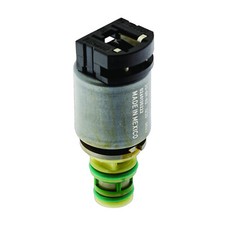
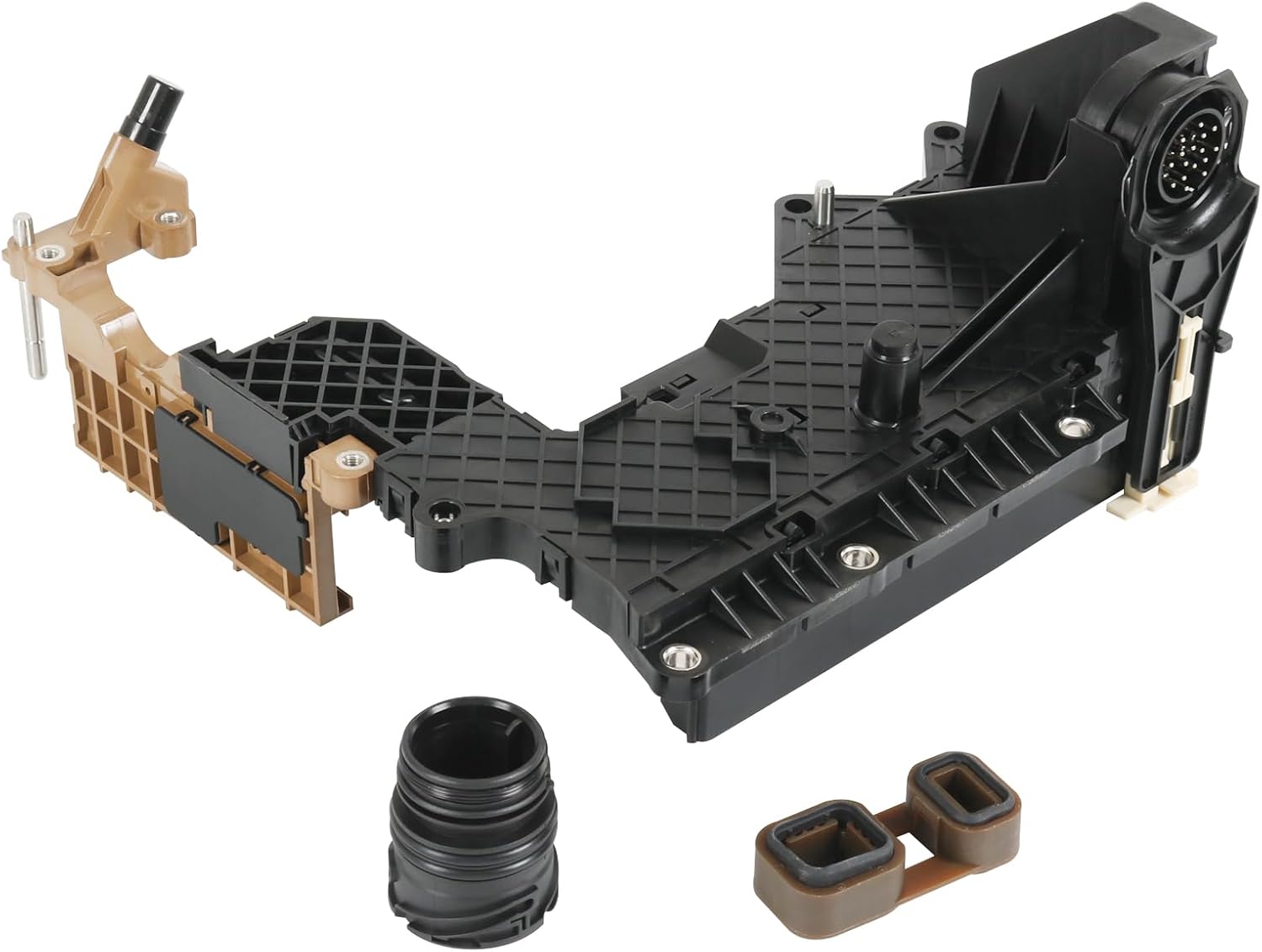
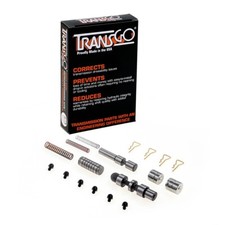
The 6R75 is the heavier-duty sibling of the 6R60, used behind the 5.4L V8 in the 2007-2008 Ford Expedition and Lincoln Navigator. These are big SUVs that tow boats and campers, and heat is what ages a pressure control solenoid. If yours clunks into gear, shifts hard everywhere, or has a pressure control code, this single new 6R75 EPC solenoid is the targeted fix. It is Bosch-built with the black connector and cross-referenced to Ford 6L2P-7G383-BD.
The pressure control solenoid's job in a 6R75
Line pressure in a 6R75 has to hold a 5.4L's torque with a heavy trailer behind it, and this solenoid is what sets it. Its output pressure acts on the main regulator valve, which sets the base line pressure every clutch apply starts from. The computer raises line pressure as throttle and load increase and lowers it at cruise for smooth shifts. It is a normally high design, so the less current the computer sends, the higher the pressure. If the solenoid loses its signal, line pressure goes to maximum: the transmission stays protected, but every shift turns harsh. The 6R75 uses the same first-generation valve body design as the 6R60 and the 2009-2014 6R80.
Signs the solenoid is the problem
- Harsh engagement into Drive or Reverse that does not ease as the fluid warms
- Hard upshifts at light throttle, pointing to maximum pressure from an open circuit
- Slipping or flaring when towing or climbing, from a solenoid that regulates too low
- P0960, P0961, P0962 or P0963 stored for pressure control solenoid A
- Limp mode with the wrench light on
Rule out the look-alikes first
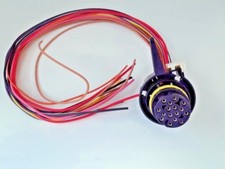
A 6R75 problem you should not try to fix with this part is a harsh 2-1 downshift below about 10 mph as you roll to a stop. On 2007-2008 Navigators with the 5.4L built on or before April 17, 2008, Ford traced that to engine computer calibration; the fix is a reflash, and it can survive a full overhaul. For other complaints, verify fluid level hot, clear up any engine codes, and compare solenoid resistance at the case connector against the reading at the solenoid itself to rule out the internal harness. If the harness checks bad, our 6R75 internal wiring harness is the correct repair instead. The Expedition shift problems guide and the pressure control solenoid symptoms guide lay out the full test sequence for this solenoid design.
Fitment
The listing covers the 6R60, 6R75 and 6R80 from 2006 on. For the 6R75 that means the 2007-2008 Expedition and Navigator 5.4L; from 2009 those SUVs used the 6R80. Ford updated solenoid part numbers during production, so match the black connector, snout and part number on the solenoid you remove. Look for the band number (1 to 5) printed by the barcode and install a solenoid with the same band, since the computer's shift calibration is written around it. To have us check fitment, send your year and VIN with the order. See all parts for this family on our 6R75 and 6R80 parts page.
Install notes
Work from underneath with the pan and filter off and the valve body loosened. On a high-mileage tow vehicle, take the chance to look for dark, burnt fluid or clutch material in the pan, which tells you whether a solenoid alone is enough. Lubricate and install a new O-ring, seat the solenoid fully, and torque fasteners to Ford's specification. Refill with Mercon LV such as our Motorcraft Mercon LV quarts and set the level at operating temperature. Clear codes, reset the adaptive tables and expect a few drives of relearning before shifts settle. If the 2-1 complaint above is also present, have the computer reprogrammed during the same visit.