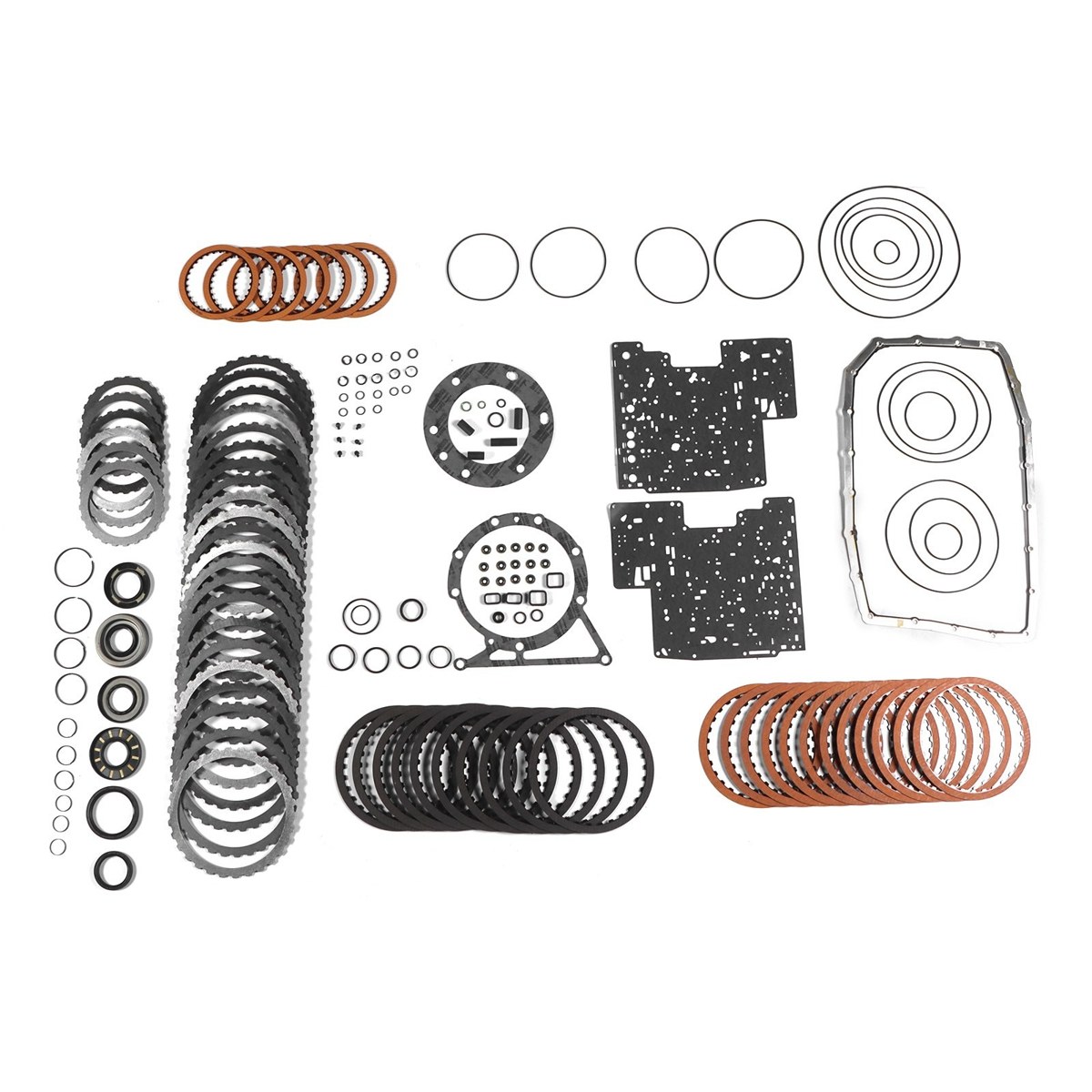
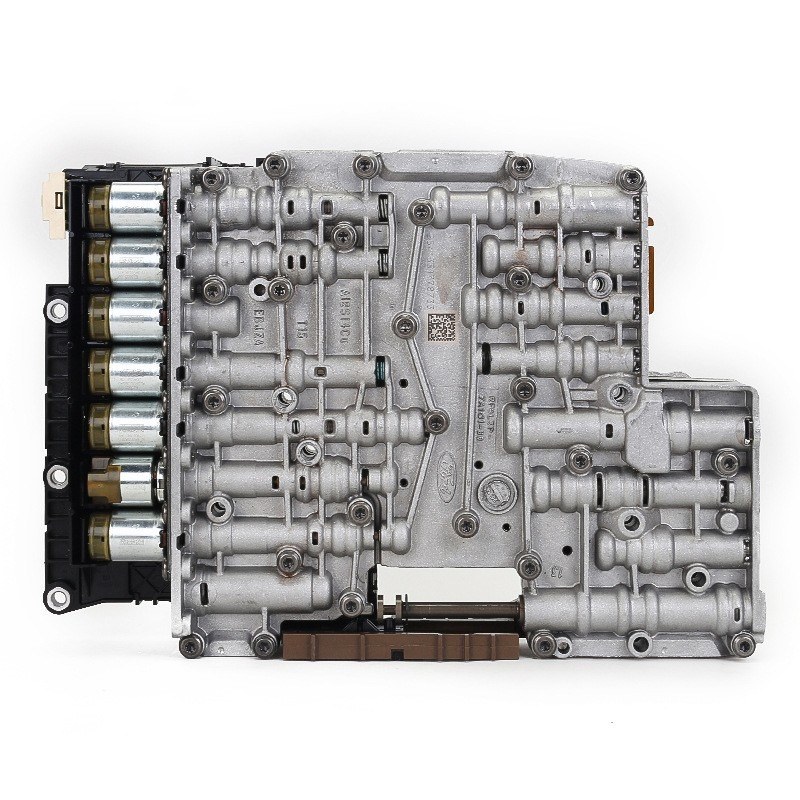
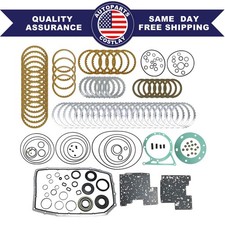
Despite the shift kit name, this 2009-2014 6R80 listing is pictured as a full master rebuild kit: two sets of friction plates, a large stack of steel plates, both valve body separator gaskets, the molded pan gasket, the pump and support gaskets, lip seals, O-rings and sealing rings. It is new, not used, and it is aimed at the first generation of 6R80 trucks and cars, the 2009-2014 F-150, Expedition, Navigator and the 2011-2014 Mustang, whose transmission now slips, flares between gears or engages slowly because the clutch packs are worn out.
What a master rebuild kit renews in a 2009-2014 6R80
The 6R80 makes six forward gears by applying two of five clutches at a time. A, B and E drive parts of the Lepelletier gearset and C and D hold parts of it to the case. Each pack is clamped by a piston that is only as good as its seals, and each pack only holds if the frictions still have material and the steels are flat. When a pack wears it rarely shows up in just one gear, because every clutch works in more than one range. A master kit is the soft-parts answer: frictions and steels for the packs, plus every gasket and seal that keeps apply pressure where it belongs.
This year range has one internal split builders must respect. GEARS Magazine reports that for 2011 Ford added a one-way clutch on the rear planetary, so the D clutch releases at about 3 mph instead of holding first gear by itself, and the case and C/D support changed with it. A 2010 unit and a 2013 unit can differ in plate count.
Symptoms that call for this kit
- Engine flare on upshifts, worst when towing or hot
- Delayed engagement into Drive or Reverse after sitting
- Gear ratio codes with clean speed sensor signals
- Burnt fluid and friction debris on the pan magnet
- Seal leaks that drop line pressure on a high-mileage unit
How to confirm before you buy
Not every slipping 6R80 needs clutches. Ford recall 16S19 covers 2011-2012 F-150s that could drop into first on an intermittent output speed sensor signal, and TSB 13-6-8 covers 2011-2013 units that launch in 5th with a zero speedometer, both traced to the lead frame. Check recalls on your VIN, read codes, and watch commanded gear against actual ratio on a road test. If the ratio slips while sensor data stays clean, the packs are worn. The 6R80 Expedition shift problems guide and the 6R80 won't shift into overdrive guide cover the electrical side.
Fitment
The listing is for 2009-2014 6R80 units. Because the 2011 one-way clutch change altered the C and D packs, count the frictions and steels in each pack as you strip it and compare them with the kit before you start assembly. If you would rather confirm first, send us your year and VIN. Builds from 2015 on use different parts; see the full 6R80 parts collection for later kits and the 6R80 master rebuild kit 2009-2014 as an alternative listing for this range.
Install notes
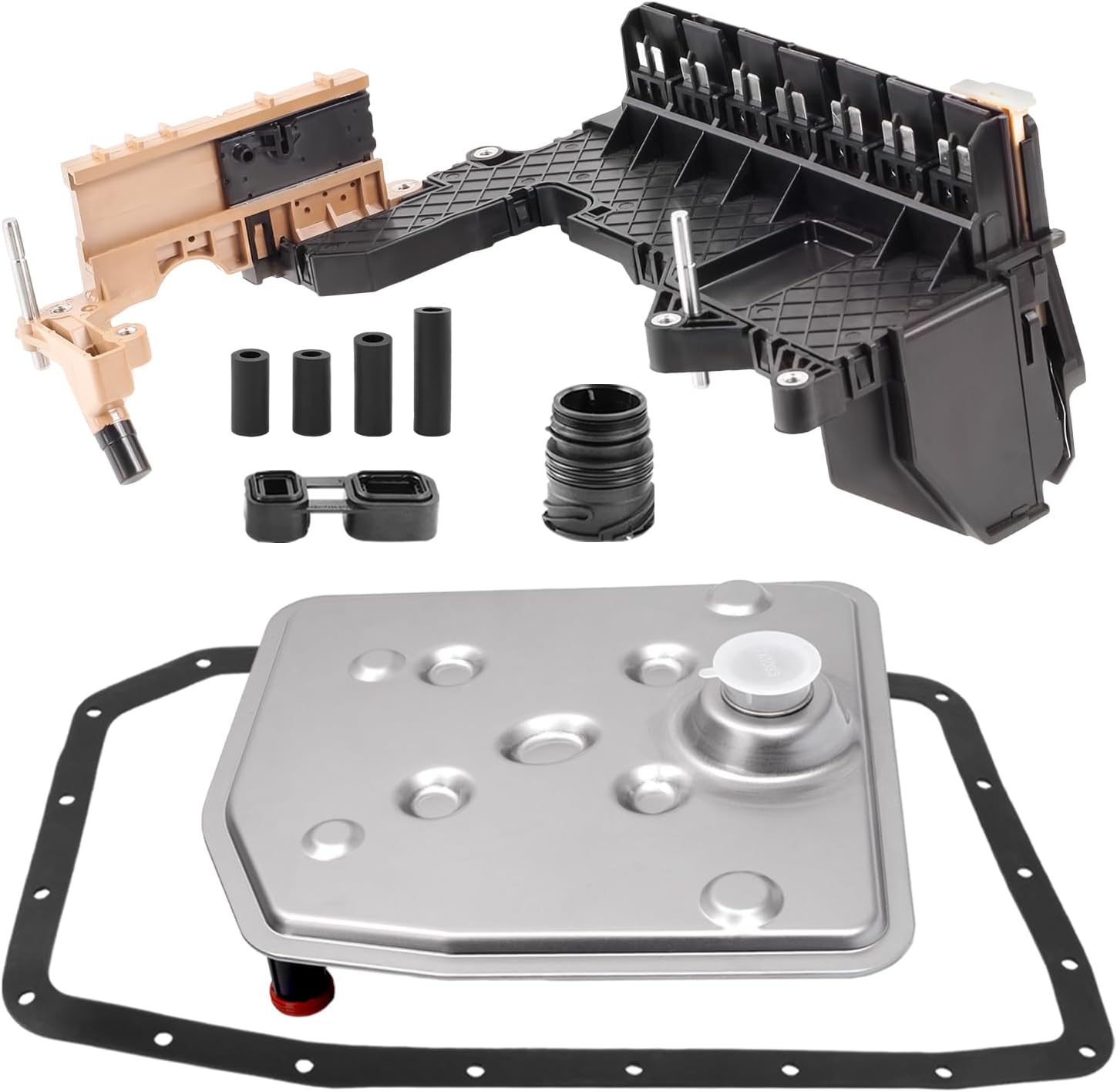
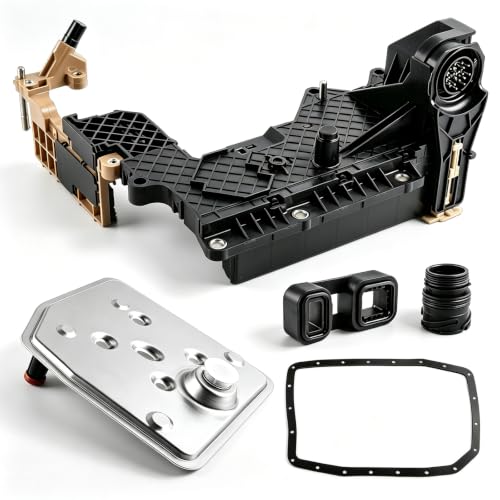
Soak new frictions in Mercon LV before assembly, lube every lip seal, and air-check each clutch circuit before the valve body goes back on. Set pack clearances with selective plates. The valve body comes off for a rebuild anyway, so this is the time to deal with the lead frame and solenoids: the 6R80 lead frame kit addresses the recall-prone part, and the 2011 6R80 solenoid kit replaces drifted solenoids. Fill with Mercon LV, enter the solenoid strategy code into the PCM if solenoids were replaced, clear adaptive tables and drive the relearn.