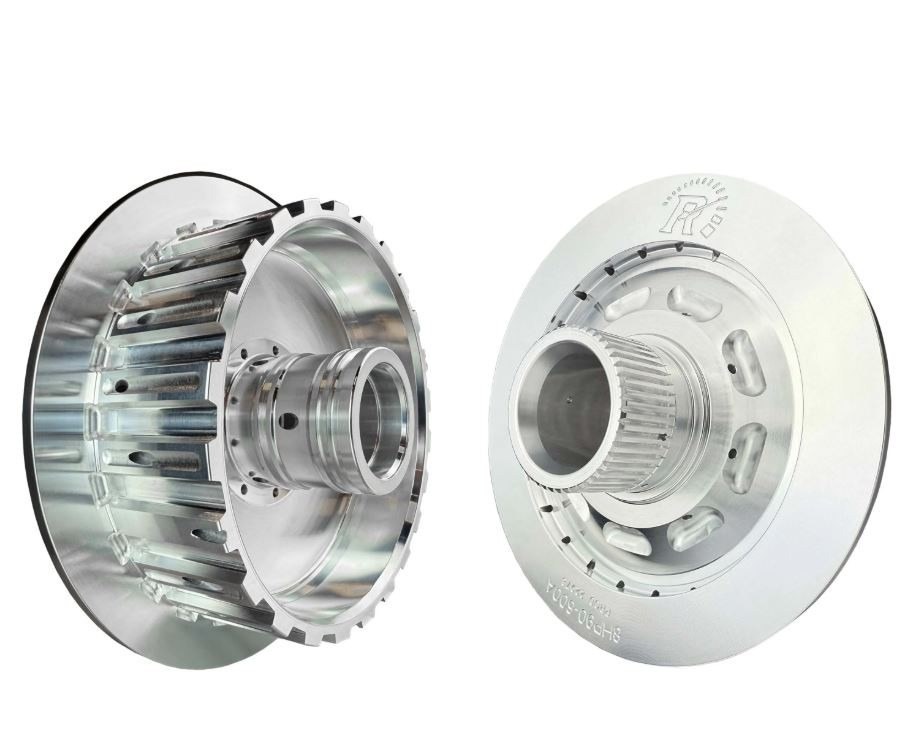
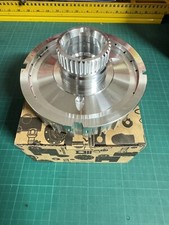
If your ZF 8HP90 flares or slips on the shifts into 2nd, 3rd, 4th, 6th or 8th, or you are building one to hold more torque than the factory hardware was designed for, the E clutch drum is a part worth looking at closely. This is a new RevMax ZeroFlex E clutch drum and hub, part number 8HP90-600A (interchange RV329574DHD), machined from billet 7075 aluminum. It is a hard-part upgrade for rebuilders and for owners of high-output cars and trucks who want the E pack carried by something stiffer than a stock drum.
What the E clutch drum does in an 8HP90
The 8HP90 is the heavy-torque member of ZF's first-generation 8HP family, which GEARS Magazine groups with the 8HP45, 8HP55, 8HP70 and Chrysler 845RE. Like its smaller relatives it builds eight forward speeds and reverse from four planetary gearsets, two brakes (A and B) and three rotating clutches (C, D and E), with three elements applied in every gear. Sonnax's ZF8 apply chart shows clutch E on in 2nd, 3rd, 4th, 6th and 8th and off in 1st, 5th, 7th and reverse. That means the E pack is engaged for most of the time a vehicle spends in traffic and at highway cruise, and it is swapped in and out on many of the shifts you feel.
The drum is the rotating housing the E plates spline into. When it flexes, cracks at the web or wears its spline teeth, the pack cannot hold even with correct apply pressure, and the result is slip, flare and burnt frictions. A billet drum like this one is made to resist that flex under the torque that the engines backing an 8HP90 produce, especially after tuning.
Symptoms that point to the E clutch or its drum
- Slip or RPM flare in 2nd, 3rd, 4th, 6th or 8th while 1st, 5th, 7th and reverse stay firm
- Flare on the 1-2, 5-6 or 7-8 upshift, the three shifts that bring clutch E on
- Clutch slip or gear ratio faults that return soon after adaptations are reset
- Aluminum particles or burnt friction material on the pan magnet and in the filter
- A fresh rebuild that slips in the E gears because the original drum was reused
How to confirm before buying
Rule out the cheap causes first. BMW's 8-speed diagnosis bulletin SI B24 02 13 calls for a fluid level check on every complaint and warns against resetting the transmission adaptations before the problem is verified. Low fluid alone can produce slips that look like a failed clutch. Next, look at control: a sticking pressure regulator or a weak line pressure solenoid can starve any pack, and our ZF8HP pressure control solenoid guide walks through those tests. The ZF8HP common problems guide covers the road test and scan data to log. When slip lines up only with the E gears and fluid and solenoids check out, the E pack and drum are the repair.
Fitment
This drum is listed for the ZF 8HP90 under part number 8HP90-600A. It is not the part for an 8HP45, 8HP70 or a second-generation 8HP; those units use different drums, including our 8HP70 E clutch drum. Read the tag on your transmission case to confirm it is an 8HP90, and compare this drum against the one you remove before final assembly. If you are not sure which unit you have, send us the year, make, model and VIN before ordering. Every first-generation 8HP part we carry is grouped on the ZF 8HP collection page.
Install notes
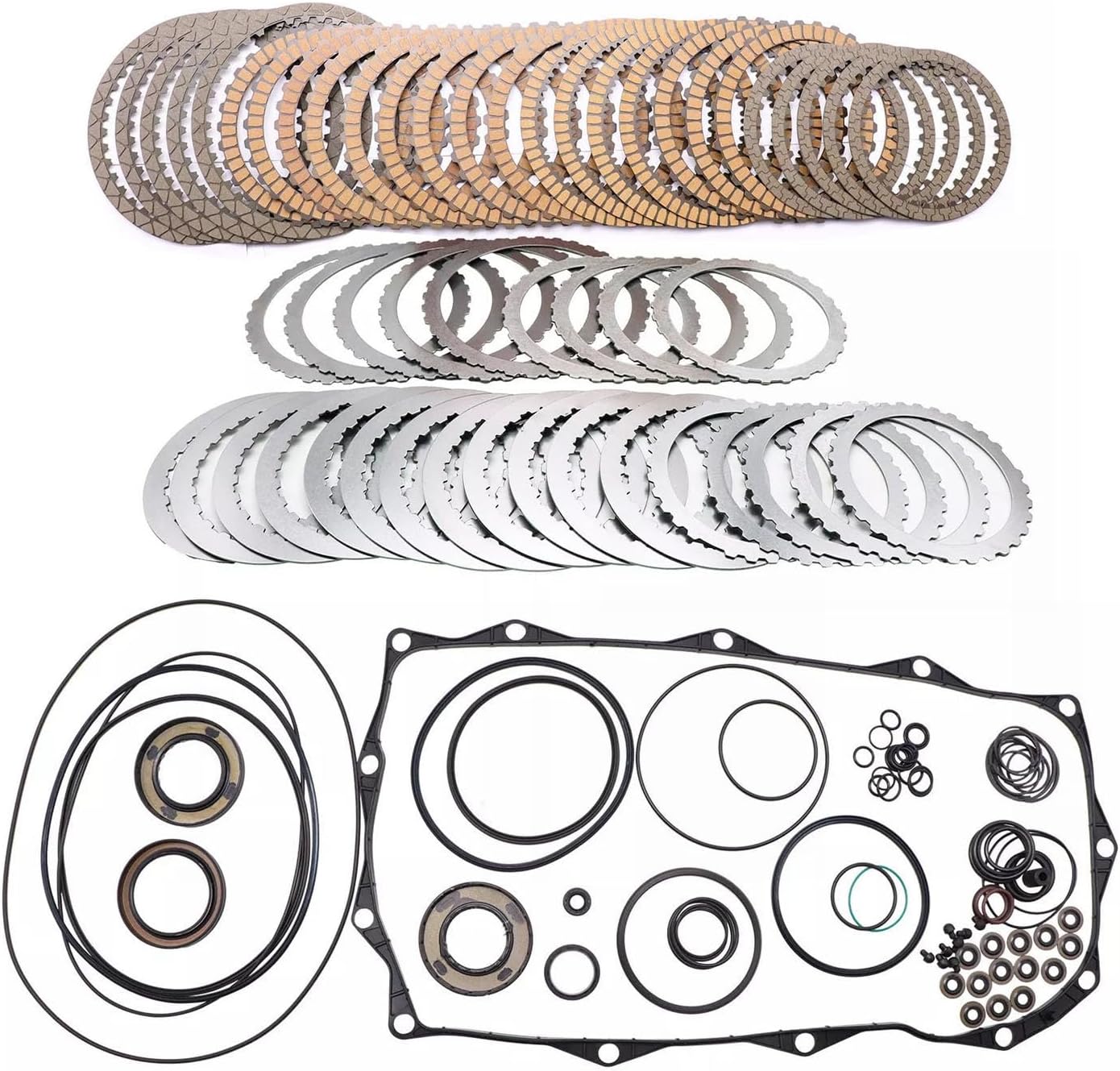
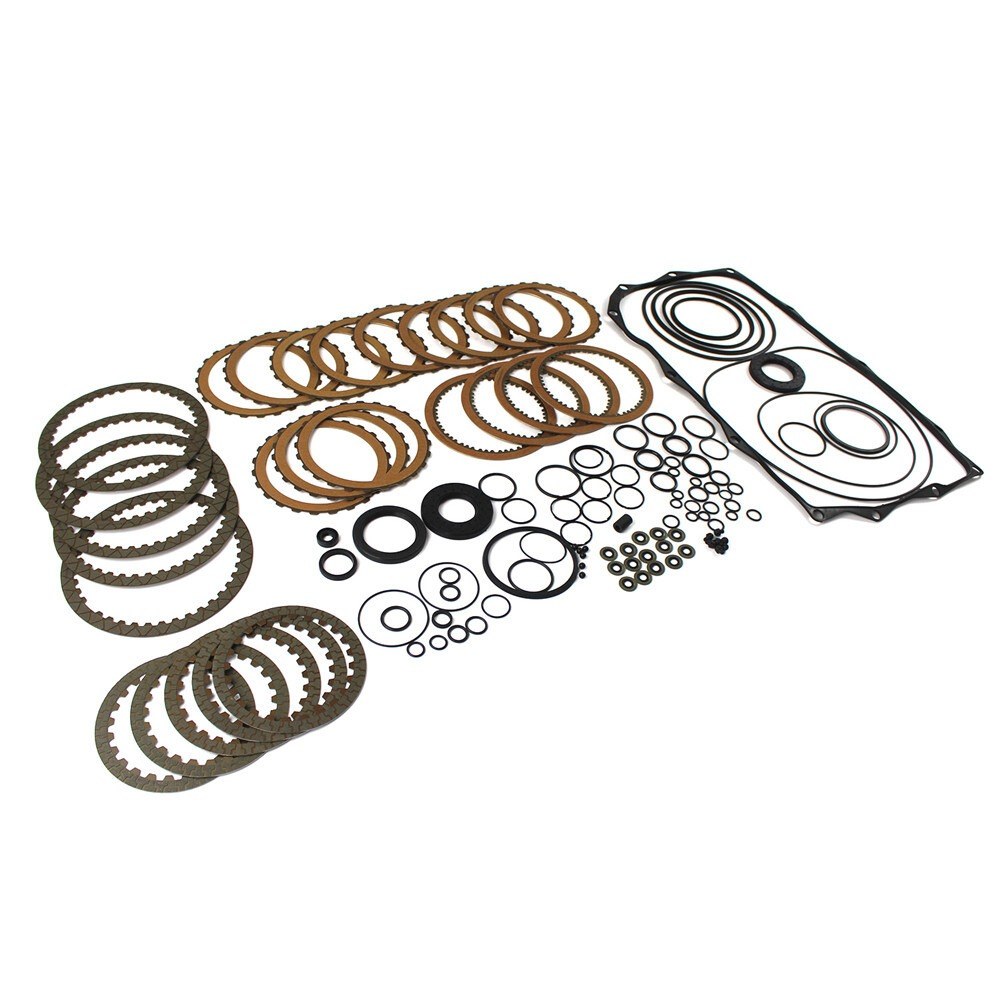
- This is an internal hard part, so it goes in during a teardown. Install a new E clutch pack and new piston and sealing ring seals at the same time.
- Inspect the bushing and sealing ring surfaces the drum rides on, and air-check the E piston before the drum goes back in.
- Set E clutch clearance to the specification for your unit, not by feel.
- Fill only with ZF LifeguardFluid 8 or an approved equivalent, and set the level with ZF's procedure: engine running, fluid between 30 and 50 C, filled until it just runs from the fill hole.
- Reset and relearn the transmission adaptations with a capable scan tool after the rebuild, then road test through every gear.
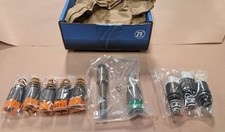
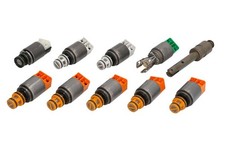
If the valve body or solenoids are part of the problem, replace them in the same job with the 8HP90 solenoid kit or the 8HP90 pressure control solenoid, so a new drum is not burned up by low apply pressure.