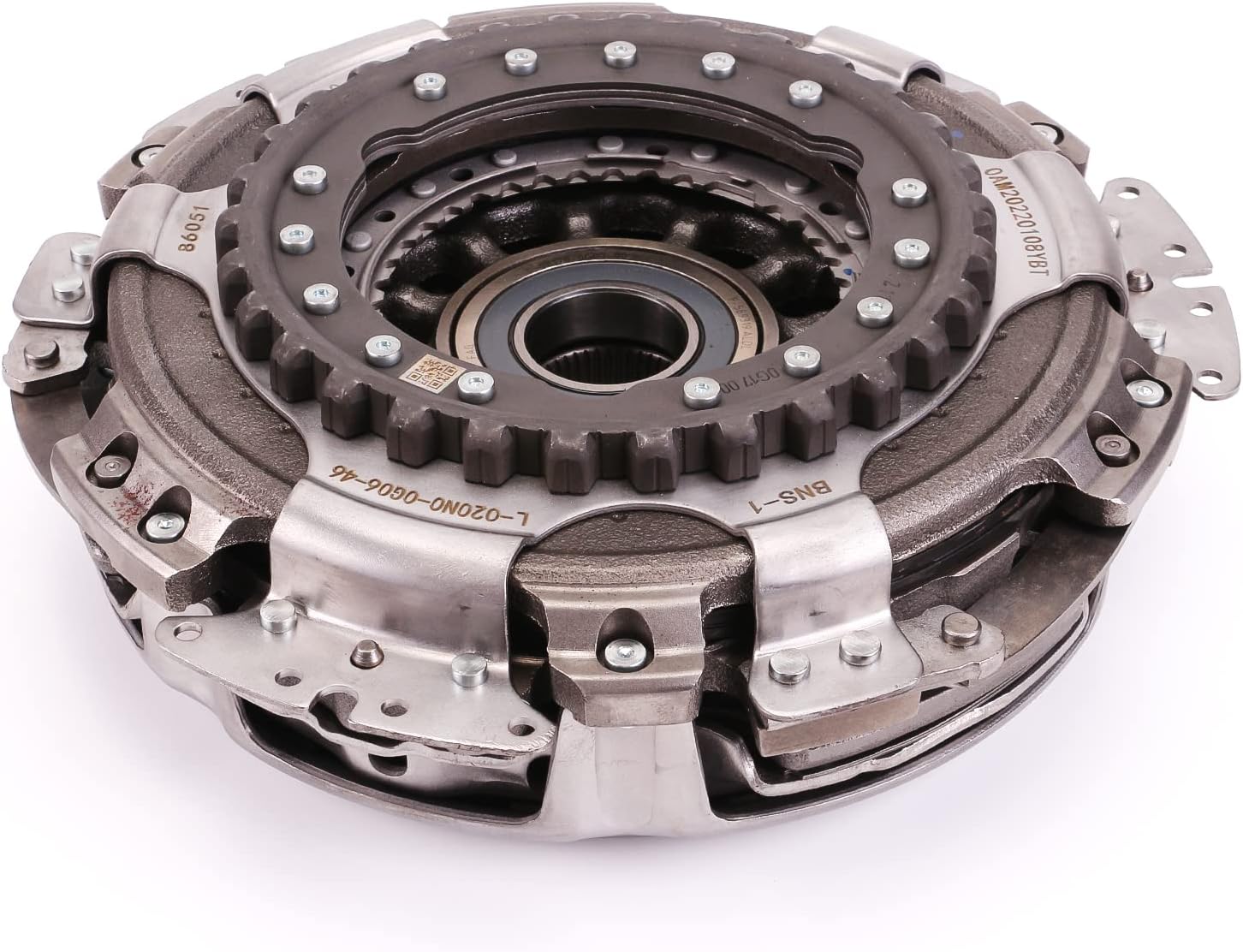
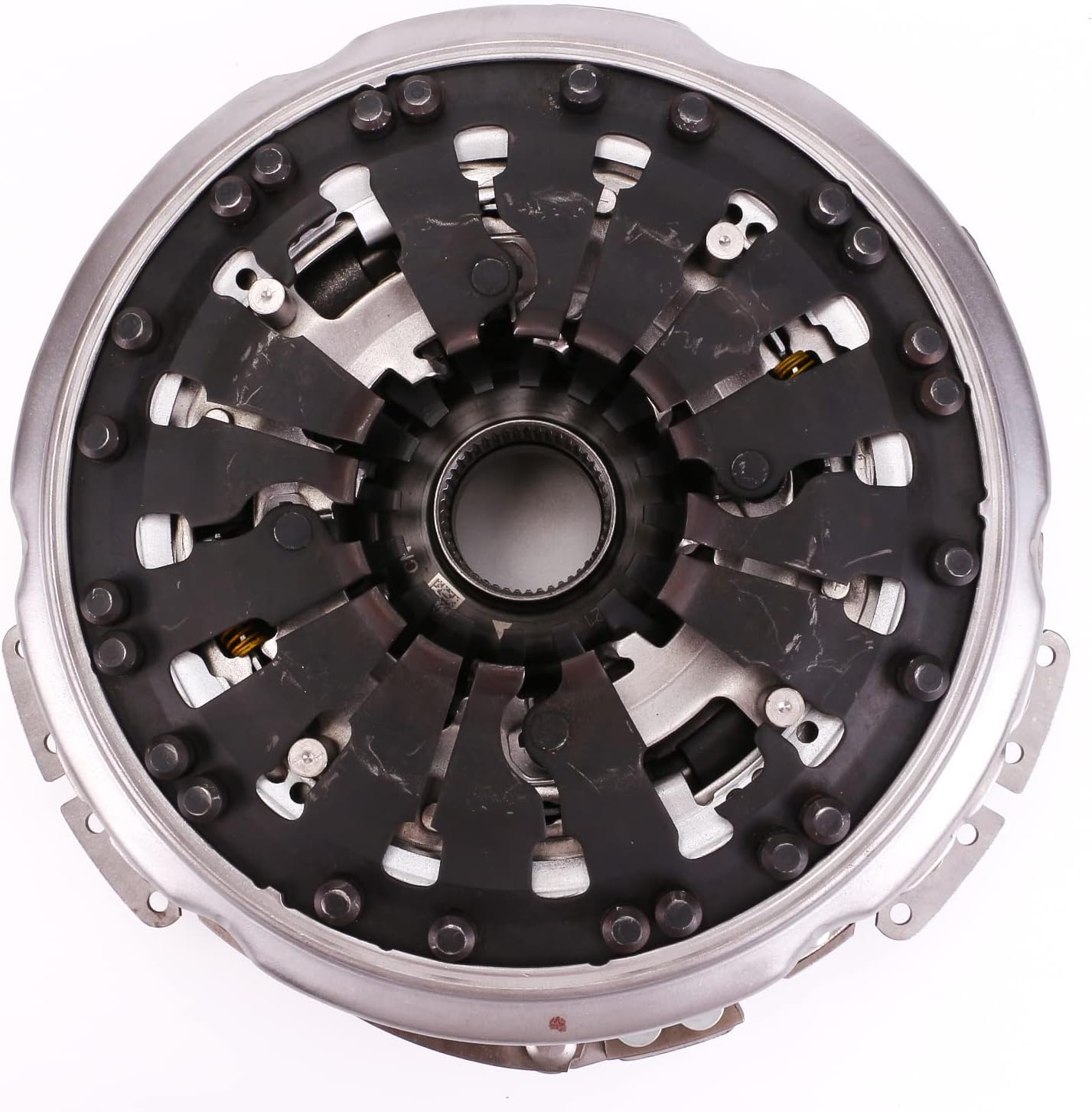
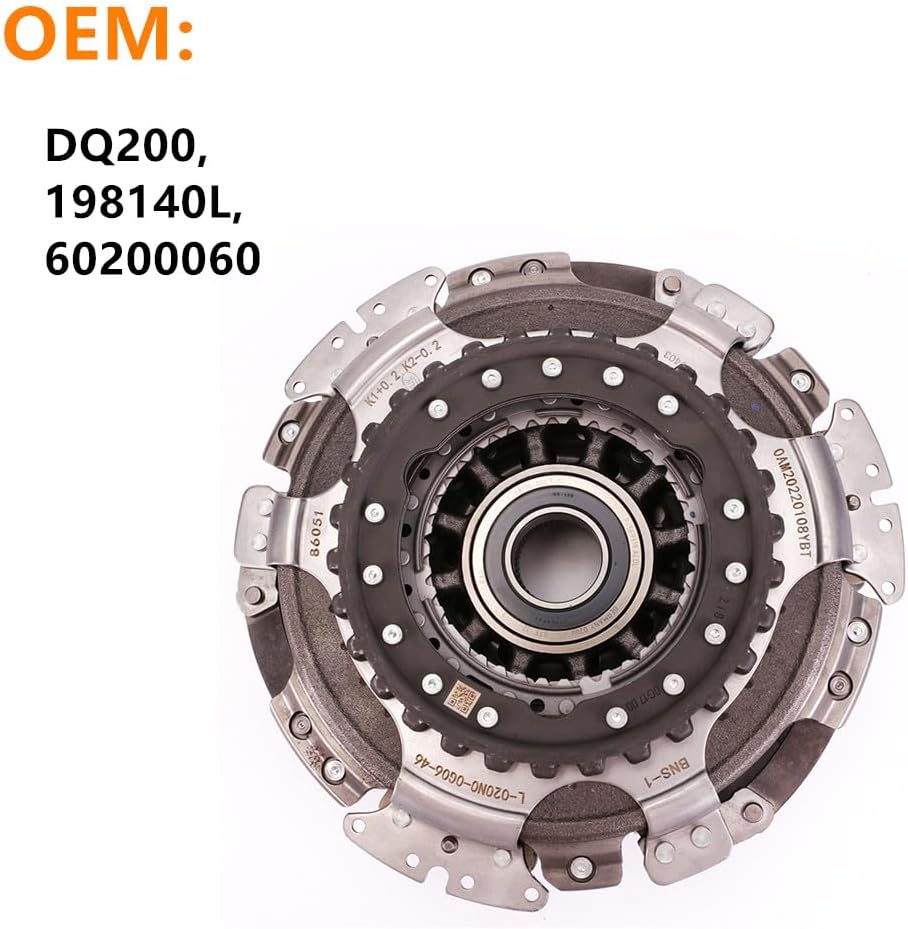
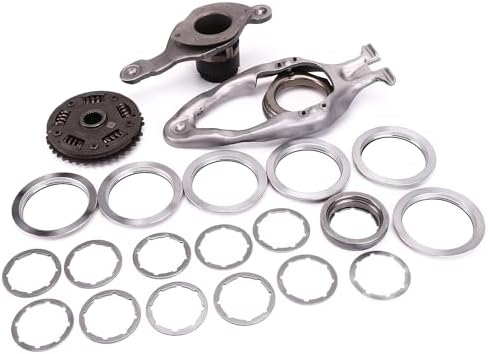
A DQ200 that shudders when you pull away from a light, slips on a hill, or flashes the gear display and drops into neutral usually has a worn clutch. This is the complete dual clutch assembly for the seven-speed 0AM gearbox, cross-referenced to 602000600 and 198140L. It replaces both clutches and both pressure plates as one unit on 1.4L, 1.6L and 1.8L TSI Volkswagen, Audi and Skoda models.
What the dual clutch does in a DQ200
The DQ200 is the dry-clutch member of the Volkswagen Group DSG family. It has no torque converter and the clutches do not run in oil. The assembly bolts to a dual-mass flywheel on the engine and drives two input shafts. One clutch carries the odd gears and the other carries the even gears and reverse. The mechatronic unit preselects the next gear and then uses hydraulic actuators and engagement levers to release one clutch as it applies the other. Because the clutch linings run dry, they wear like a manual clutch. Gears Magazine puts average DQ200 clutch life at about 80,000 km (roughly 50,000 miles), and stop-and-go driving and crawling in traffic shorten that. The assembly shown is stamped 0AM and ships at about 24 pounds.
Symptoms of a worn DQ200 clutch
- Shudder or judder pulling away from a stop, worst in first and reverse
- Slip or flare on hills or under hard throttle
- Harsh or delayed engagement into first or second
- Gear indicator flashing, sometimes with the car refusing to move or holding one gear
- Clutch wear or clutch temperature faults stored in the mechatronic unit
Not every judder is the clutch. The DQ200 is also known for mechatronic and accumulator failures, and the transmission module opens both clutches and puts the car in neutral when sensor data is missing or does not add up. A pressure fault can feel very similar to clutch failure.
How to confirm before you buy
Read the transmission faults with a VW-capable scan tool and look at the clutch adaptation and wear values. If the codes point to hydraulic pressure, such as an accumulator or pump-run fault, fix the mechatronic first. The DQ200 accumulator repair kit covers that failure. Our DSG pressure testing guide explains how to tell a pressure problem from a slipping clutch, and our DSG overheating guide covers the clutch-temperature protection that triggers in heavy traffic.
Fitment
The listing covers the 0AM seven-speed dry DSG behind 1.4L, 1.6L and 1.8L TSI engines in the VW Golf, Jetta, Passat and Polo, the Audi A1 and A3, and the Skoda Fabia, Octavia and Superb. Many of those models were never sold in North America with this gearbox. The Jetta Hybrid is the most common US example. The 2.0L GTI and A3 with a wet DSG use the DQ250 and will not accept this clutch. VW has changed DQ200 clutch numbers over the years, so match the number on your old clutch or your gearbox code to 602000600, or send us your year and VIN to check before ordering. Browse every DSG part on our DSG and S tronic page.
Install notes
- The gearbox has to come out. Once it is apart from the engine, remove the input shaft retaining ring and pull the old clutch with the correct puller.
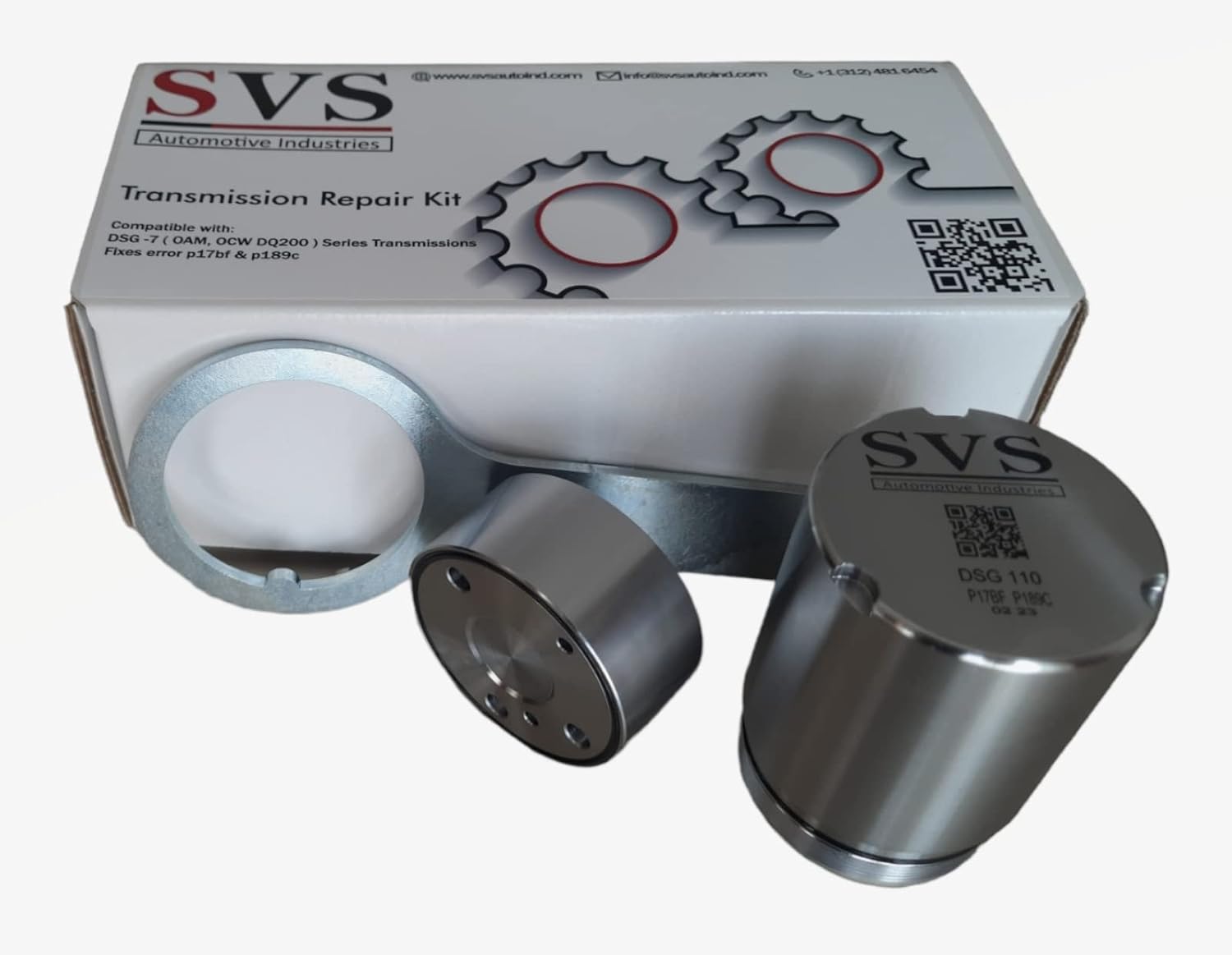
- Special tools are not optional on a DQ200. An 0AM dual clutch installer and remover tool pulls the old unit and presses the new one on square.
- Shims set the free play of each clutch. Measure and select them following the service procedure for your gearbox. Do not reuse the old shims without measuring.
- Replace the engagement levers and release bearings at the same time. Our DQ200 release lever kit covers the levers that wear against the new clutch.
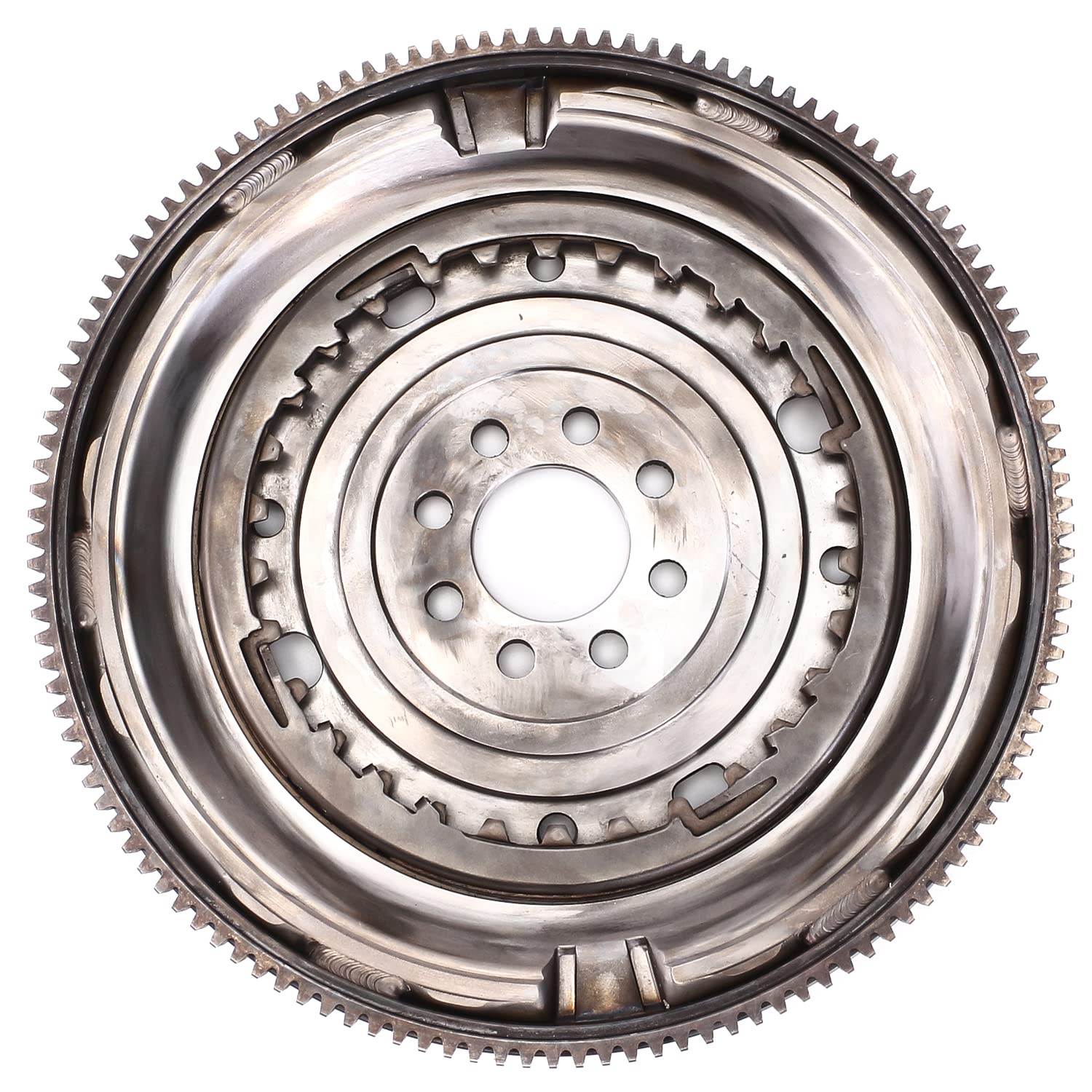
- Inspect the dual-mass flywheel. Worn damper springs let the two masses move too far and cause rattle and judder. Replace it if there is play, matching the tooth count of your existing flywheel.
- The clutch runs dry, so it needs no fluid. Check the separate mechatronic oil level while you are there.
- After installation, run the clutch basic setting with the oil at 30-60 C, the selector in P, the engine off and the brake held, then complete the adaptation test drive. Until that is done the car will not shift properly.