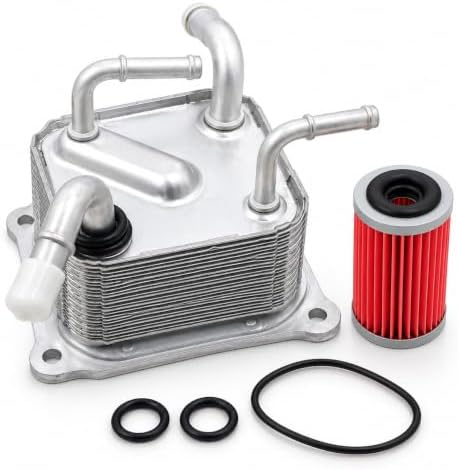
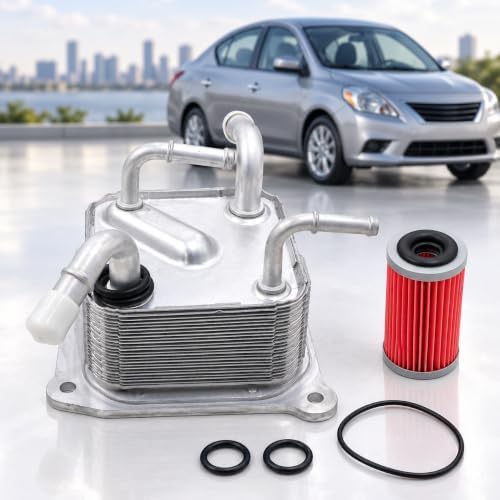
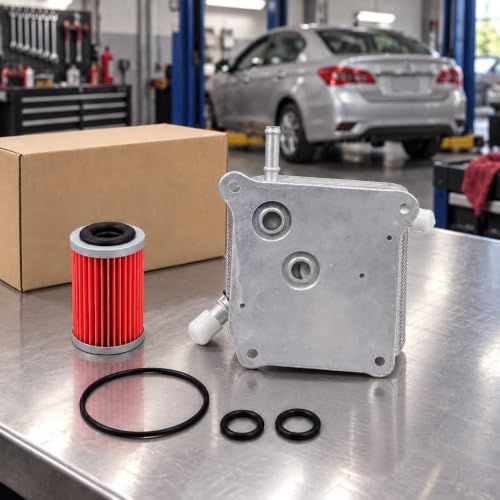
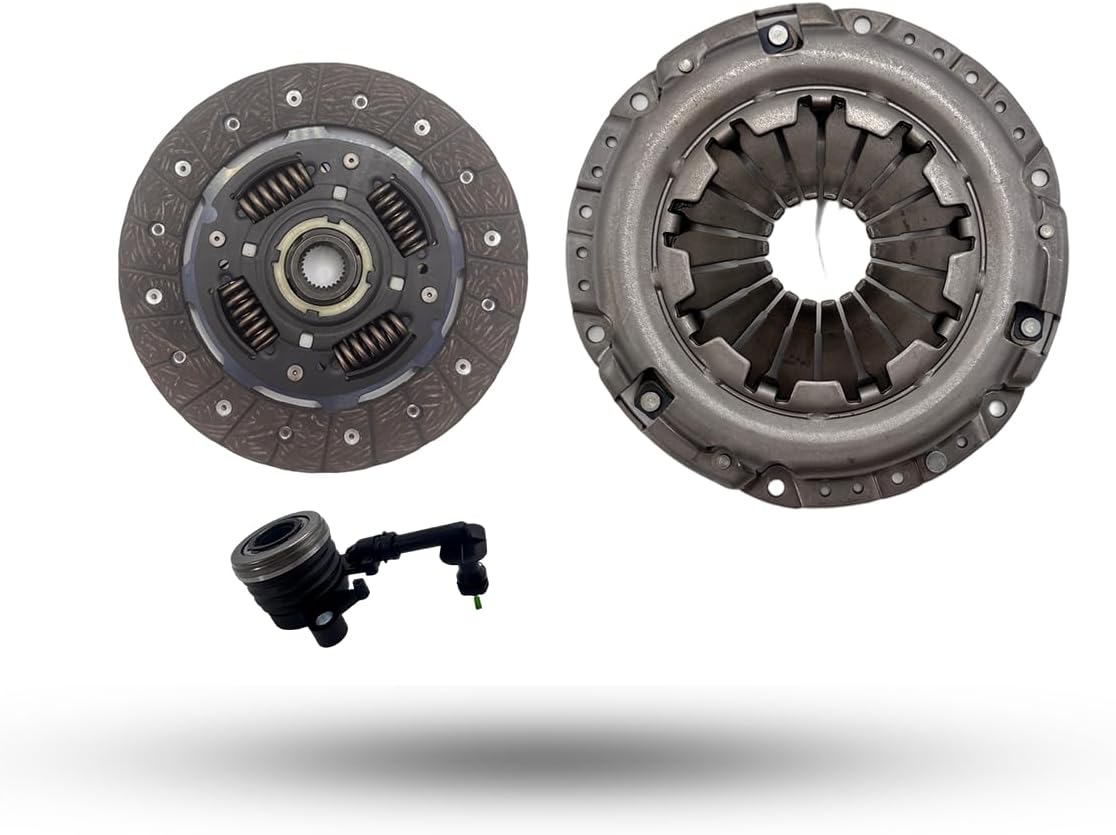
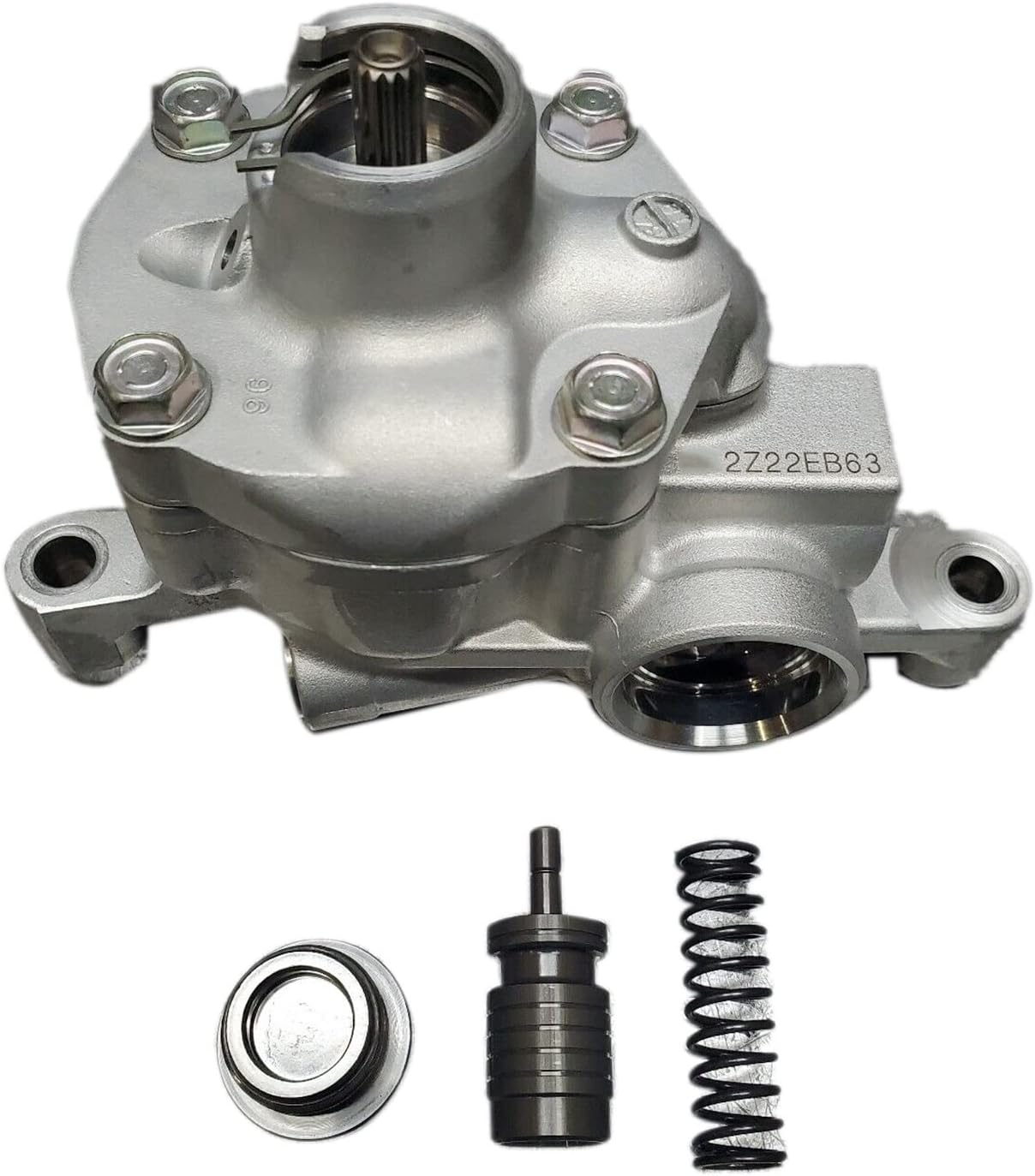
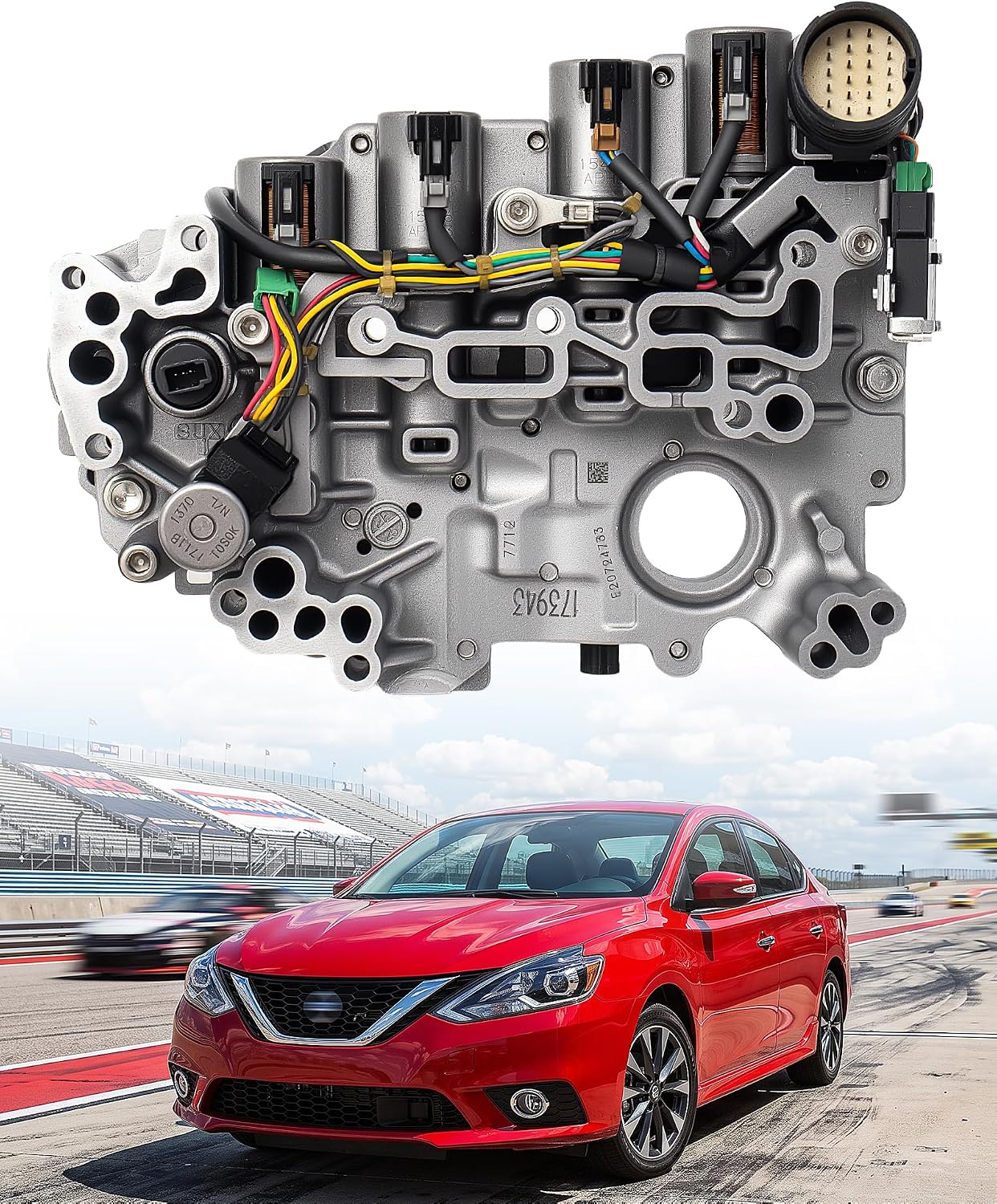
A 2012-2017 Nissan Versa 1.6L that loses power on the highway, shudders once it is hot, or shows milky CVT fluid often has a problem at the small cooler bolted to the side of the transmission. This kit replaces that part and the filter behind it: the CVT oil cooler assembly (replaces Nissan 21606-3JX2C), the cartridge filter (replaces 31726-3JX0A), and the O-rings shown. Changing the cooler is a bolt-on job and costs far less than a transmission. Nissan's own bulletin on these cars says not to replace the entire CVT when only the oil warmer/cooler is needed.
What the cooler does on a JF015E
The Versa's JF015E (Nissan RE0F11A) uses a plate-type heat exchanger that Nissan calls the CVT oil warmer/cooler. Engine coolant runs through one set of passages and CVT fluid through the other. On a cold start it warms the fluid toward operating temperature quickly. On the highway it pulls heat out. Fluid temperature matters a great deal on this unit: the TCM uses it to decide when idle neutral control can run and when to protect the belt and pulleys. When the cooler restricts flow or stops shedding heat, the TCM pulls power to protect the belt and pulleys. The cartridge filter sits on the case next to the cooler circuit and catches fine metal from the belt and sheaves. A drain and fill never reaches it.
Symptoms of a failing cooler or filter
- Loss of power or reduced speed after sustained highway driving, hill climbing or hot weather, which returns to normal once the car cools
- Shudder or judder that gets worse as the transmission heats up
- Milky or pink-tinted CVT fluid, or a coolant level that drops with no external leak
- Fluid weeping at the cooler mounting face from hardened O-rings
- Whine and delayed engagement from a restricted cartridge filter
How to confirm before you buy
Check both fluids first. Coolant in the CVT fluid, or CVT fluid in the coolant reservoir, means the cooler has failed internally. Replace it right away and flush the transmission, because coolant ruins the clutch frictions and the belt. If the fluids are clean, scan for codes, then watch fluid temperature on a scan tool during a highway drive. A temperature that keeps climbing points to the cooler circuit. Our CVT limp mode causes guide separates heat-related power loss from sensor and pressure faults. If the unit still shudders with normal temperatures, read the Jatco CVT problems and fixes guide before buying more parts.
Fitment
Listed for the 2012-2017 Nissan Versa sedan with the 1.6L HR16DE engine and the JF015E CVT, in 1.6 S, 1.6 SV and 1.6 SL trims, plus the 1.6 S Plus from 2013-2017. Manual-transmission Versas do not use this part. Nissan's 2014 bulletin lists the earlier cooler as 21606-3JX0C; 21606-3JX2C is the later number. Some Versa Note and hatchback builds use different parts, so compare the numbers on your old cooler and filter before ordering, or send us your year and VIN. Other parts for this unit are on our CVT collection page.
Install notes
- Let the engine cool fully. Drain the coolant and the CVT fluid, then disconnect the coolant hoses at the cooler.
- Remove the four mounting bolts and lift the cooler off. Clean the case mounting face; do not let old O-ring material fall into the ports.
- Replace the cartridge filter and its seal while the cooler is off.
- Lube the new O-rings with fresh Nissan NS-3 CVT fluid, seat the cooler, and tighten the bolts evenly.
- Refill and bleed the cooling system with Nissan-specification coolant mixed no stronger than 50 percent. A richer mix sheds heat poorly.
- Refill with NS-3 only and set the level hot to the Nissan procedure. Overfilling also raises fluid temperature. Reset the CVT fluid deterioration counter.
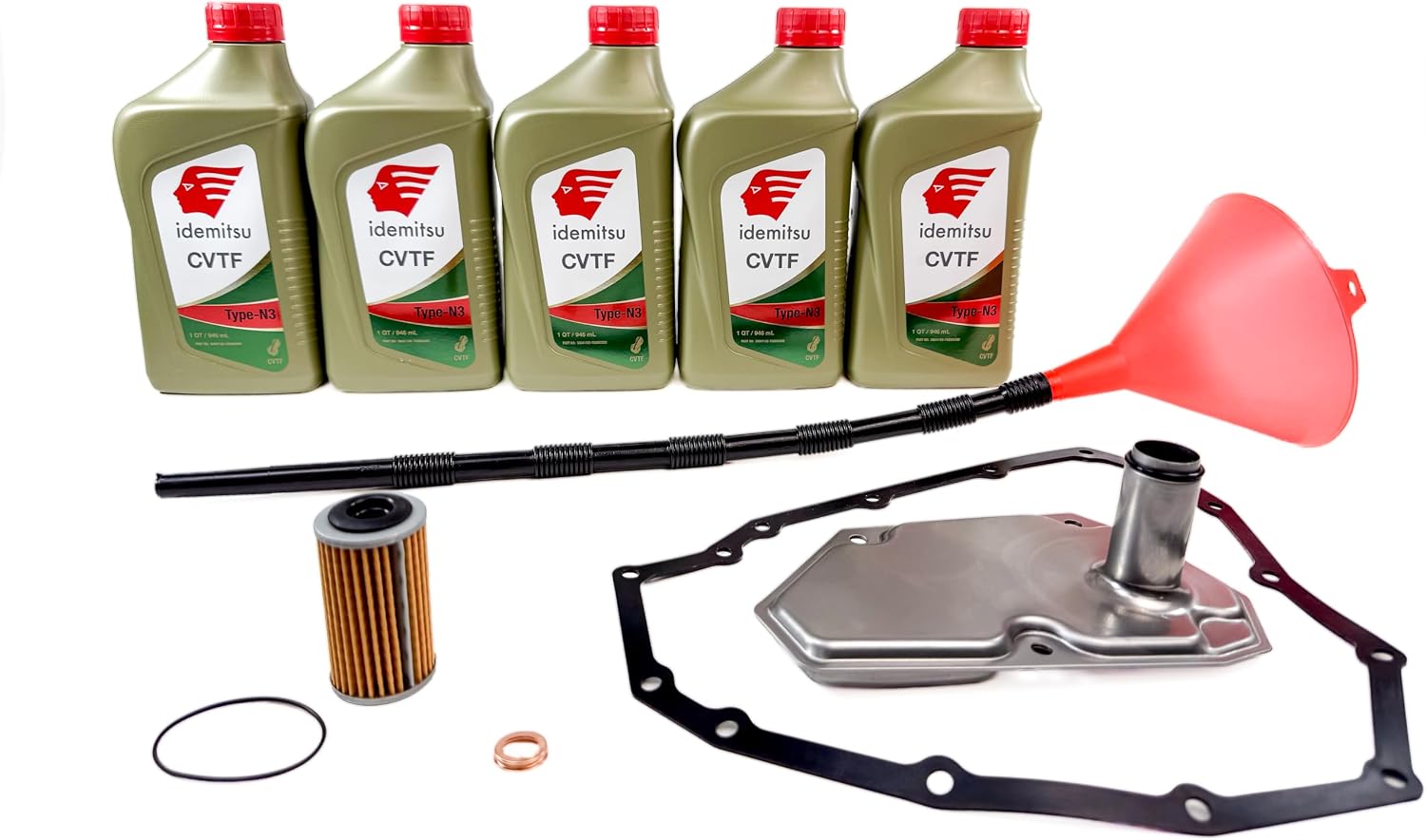
If coolant got into the transmission, plan on a full fluid and filter service as well. The JF015E service kit with NS-3 fluid has the sump filter and pan gasket. A unit that kept slipping after contamination may need the JF015E clutch pack kit.