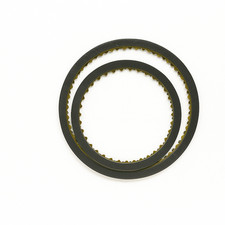
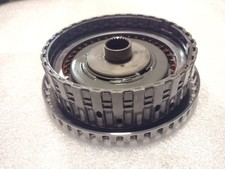
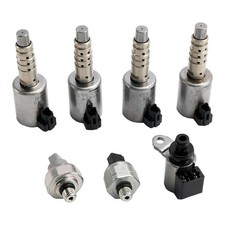
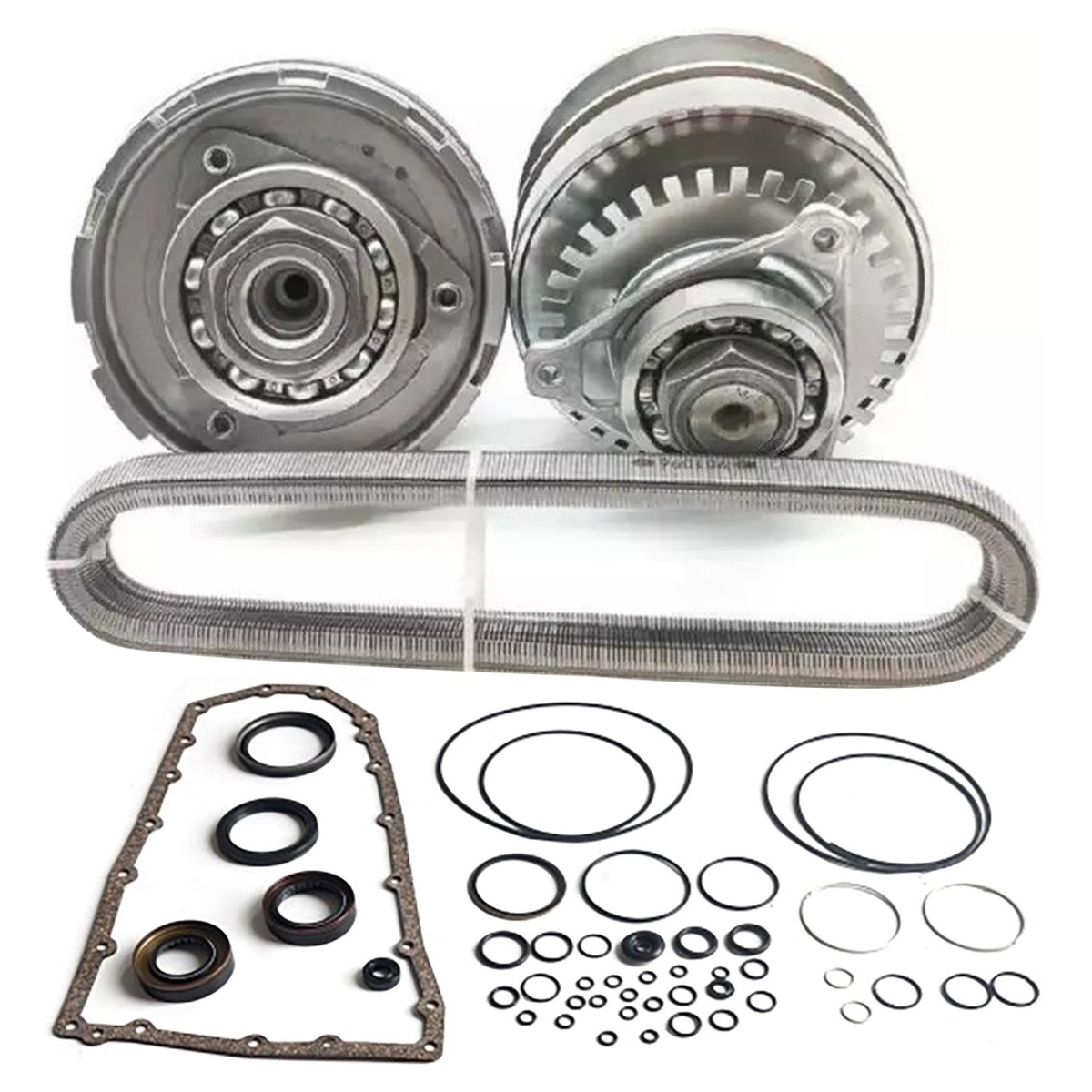
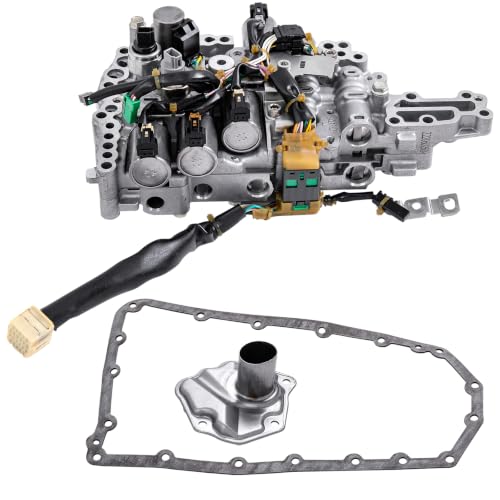
A 3.5L Nissan Altima or Pathfinder that hesitates before it pulls into Drive, a Murano that flares on take-off, or an Infiniti QX60 that crawls backwards into Reverse with the engine revving are classic friction complaints in the Jatco JF017E CVT. If the unit is already on the bench and the plates in the forward clutch or reverse brake came out glazed, flaked or burnt, this JF017E clutch module is the friction set to re-line them. It is new, and the listing photo shows the friction plates with their internal teeth and grooved lining. It is a parts-level item for a rebuild, not a bolt-on fix for a car still in the driveway.
What the clutch module does in a JF017E
Jatco built the JF017E, which Nissan calls the RE0F10E, as the high-torque member of its CVT8 family for the 3.5L V6. GEARS Magazine points out that it uses a steel chain between the pulleys instead of the push belt in the four-cylinder units. The chain and pulleys handle every forward ratio, but they cannot reverse direction. That job belongs to a planetary gearset mounted ahead of the pulleys and two friction elements: the forward clutch, which locks the planetary for Drive, and the reverse brake, which holds one member of the planetary so the output turns backwards.
Once either element is applied it stays clamped for as long as the car is in that range. There are no gear changes to share the load, so the plates see full V6 torque every time you leave a stop. A healthy pack does not slip at all. When the lining wears thin, glazes from heat, or starts to delaminate, the pack slips on every launch, cooks the NS-3 fluid around it, and sends friction dust through the filter, the valve body and the pulley cylinders. Fresh frictions restore the holding capacity, but only if the piston behind them seals and the clearance is set correctly.
Symptoms of worn JF017E frictions
- Delay of a second or more after shifting into Drive or Reverse, longer once the fluid is hot
- Engine flare from a stop before the car catches, then a bump as the pack finally grabs
- Reverse that slips on an incline while Drive still feels mostly normal, or the opposite
- Dark NS-3 with a burnt smell well before a normal service interval
- Black friction paste on the pan magnet and a loaded filter
- A rebuilt unit that came back slipping because the old plates were reused
How to confirm it is the frictions
Engagement trouble in this CVT is not always the plates. Sonnax ties wear in the JF016E and JF017E valve body, including the pump flow control and primary pulley reducing valve bores, to delayed engagement and chatter, and a sticking select solenoid produces the same delay with perfect frictions. Check fluid level and condition first, scan the TCM for pressure sensor and solenoid codes, and compare engagement time cold versus hot. A delay that grows with temperature and a pan full of black friction material point to the packs. A clean pan with a delay points to hydraulics. Our CVT harsh or delayed shifts walkthrough lays out the order of tests, and the Jatco CVT Nissan problems guide covers the chain, pulley and valve body failures that often ride along with burnt frictions.
Fitment
This clutch module is listed for the JF017E (RE0F10E). Per GEARS Magazine, that unit sits behind the 3.5L V6 in the 2013-2018 Altima and Pathfinder, the 2015-2018 Murano and Quest, and the 2014-2018 Infiniti QX60. The listing does not break fitment down by year, so count and measure the plates you remove, compare tooth count, outside diameter and thickness to the new set, and check them before you order a full kit. The four-cylinder JF016E looks similar but is a different unit. If you are not sure which transmission you have, read the tag on the case or send us the year and VIN before buying. Every part we carry for this family and other Jatco CVTs is on the CVT parts collection page.
Install notes
- Soak every new friction in clean NS-3 CVT fluid for at least 30 minutes before assembly so the lining is saturated.
- Inspect the drum before the plates go in. A cracked spline, a loose hub bushing or a stepped ring land will leak apply oil and burn new frictions in short order. A replacement JF017E clutch drum is the fix if yours fails inspection.
- Replace the piston seals at the same time. The JF017E overhaul kit supplies the gaskets and seals a teardown requires.
- Stack the pack in the order it came out and set clearance with a feeler gauge or dial indicator. Too tight drags, too loose delays engagement.
- Install a new filter, fill with NS-3 only, and set level at the specified temperature.
- Have the TCM learn values reset with a capable scan tool after the rebuild, then road test cold and hot.
If the pan held metal as well as friction dust, the chain and pulleys need a look too, and the JF017E master rebuild kit covers that larger job.