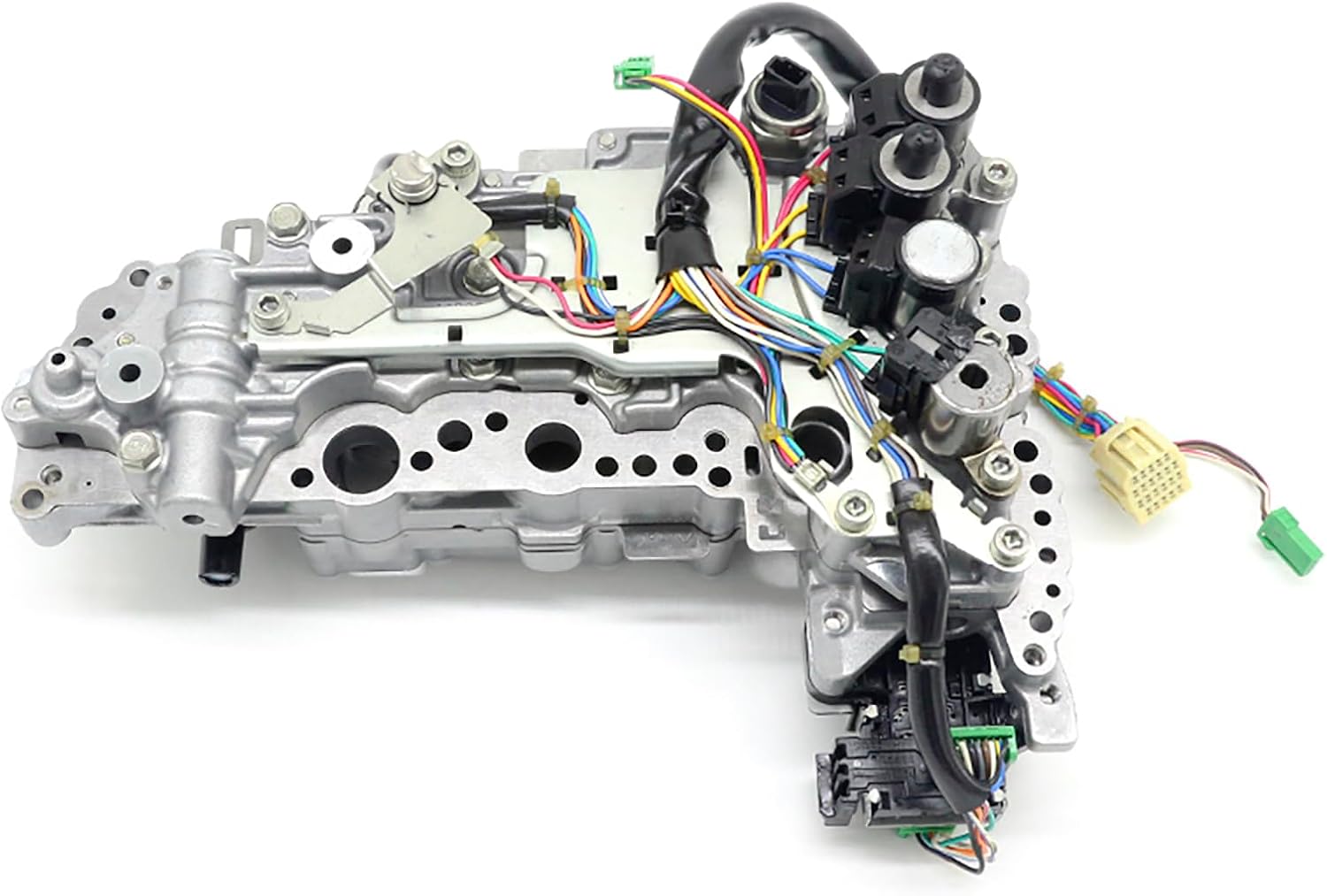
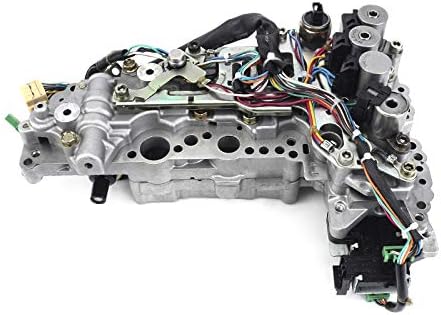
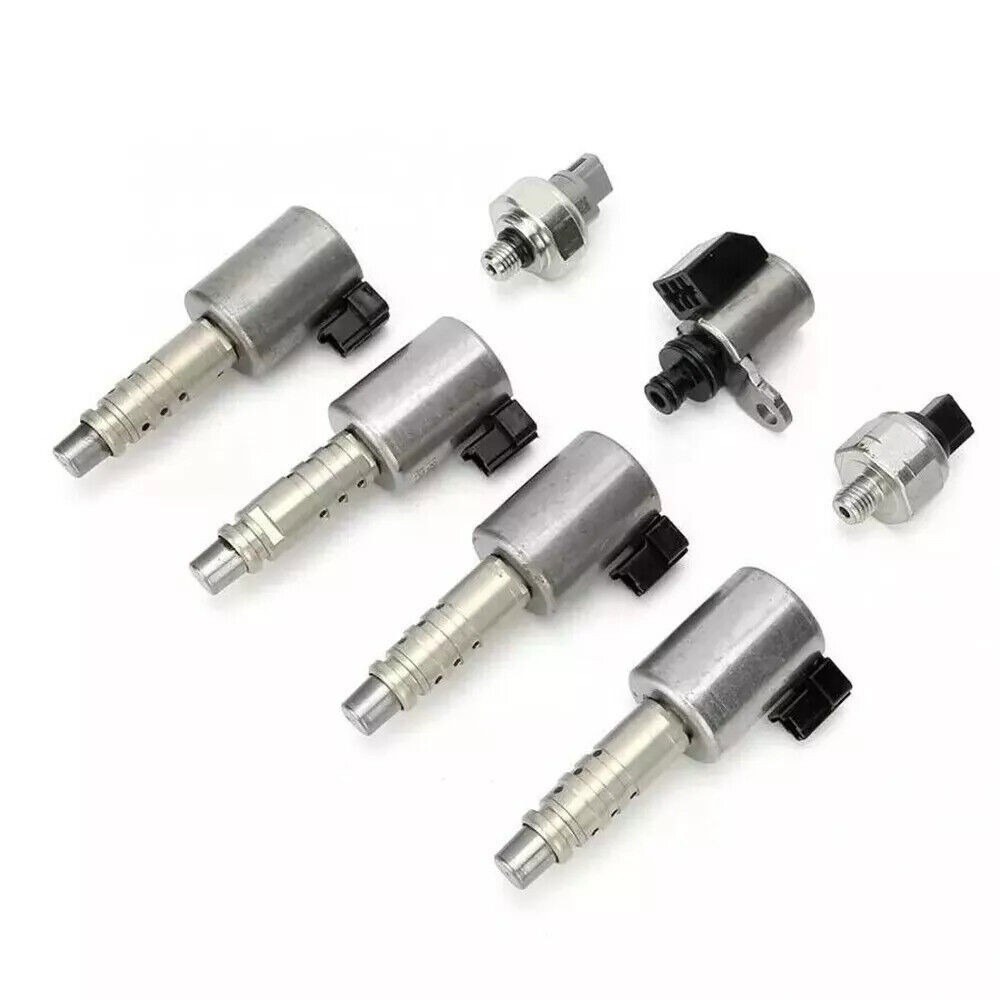
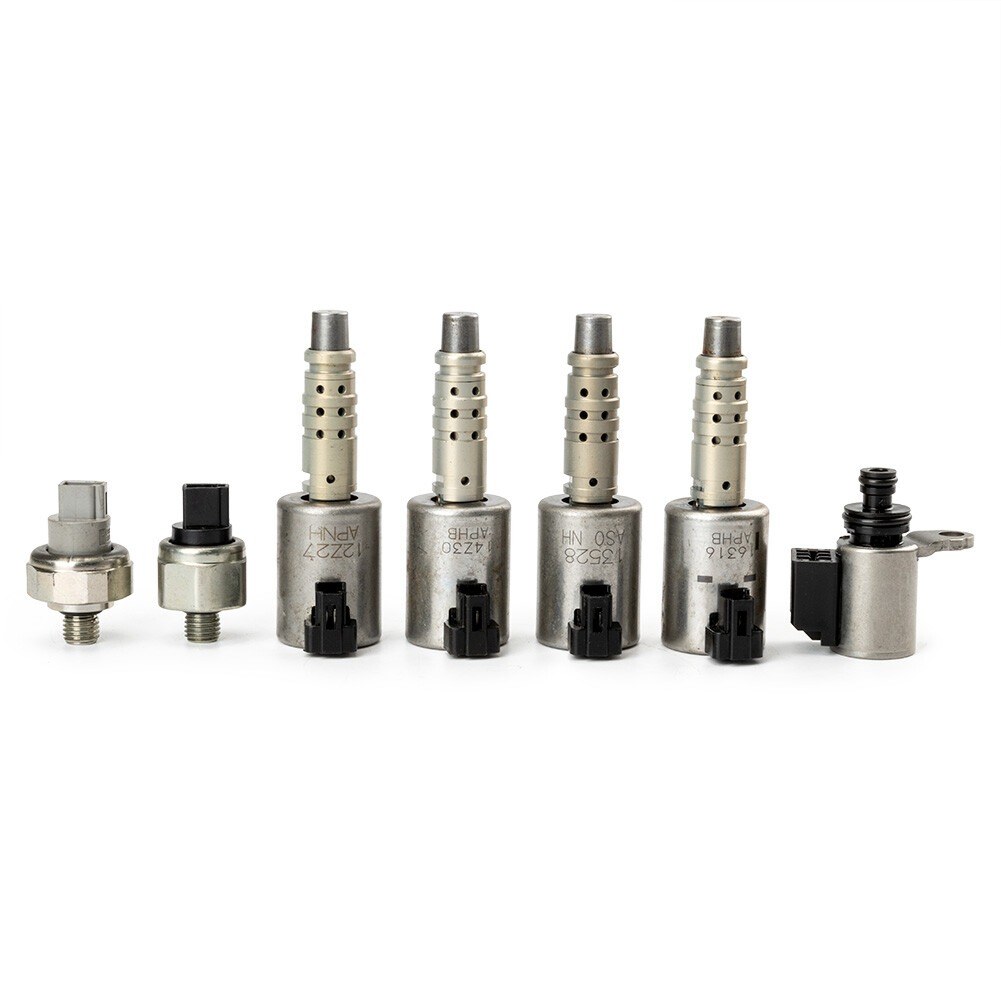
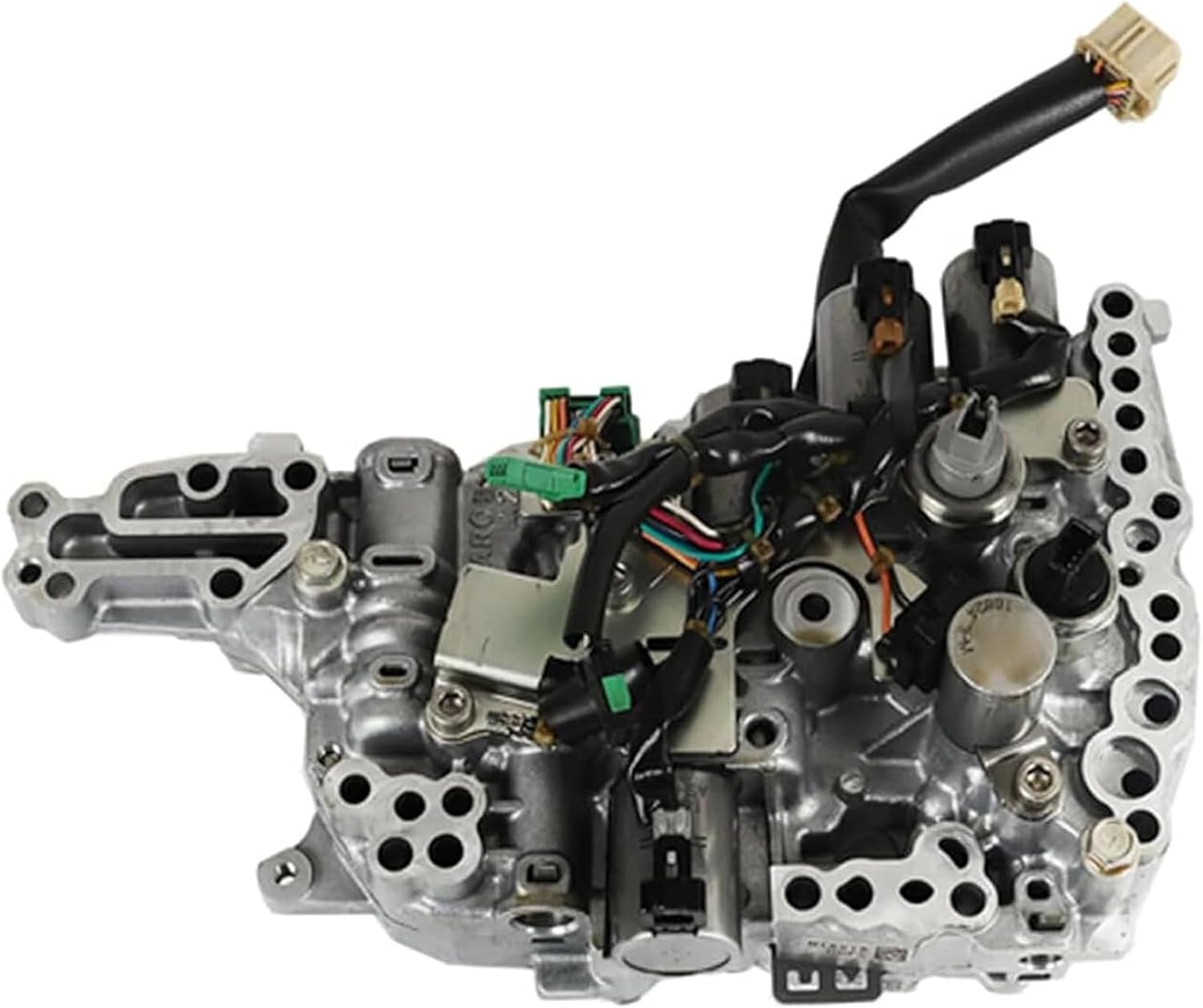
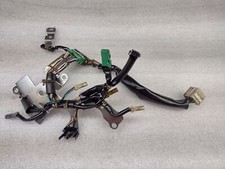
This is the complete valve body for Nissan's older RE0F09A CVT, also cataloged as the JF010E and JF009E depending on casting, used behind the 3.5L V6 in the 2007-2011 Murano and Maxima and the 2.5L four-cylinder in the 2007-2011 Altima, 2006-2011 Sentra, 2010-2011 Rogue and 2008-2011 X-Trail. It ships complete with the internal shift solenoids and the stepper motor that sets pulley ratio and line pressure already installed, so there is no separate solenoid kit to source or core to send out for this platform.
What the valve body and stepper motor do in a RE0F09A
On this generation of Jatco CVT, the valve body routes pump pressure through the primary and secondary pulley circuits and the torque converter clutch circuit, while the stepper motor is the component that physically repositions the ratio-control valve to change the pulley diameter as the car accelerates. Because Nissan services the valve body, solenoids and stepper motor as one assembly on the RE0F09A rather than as separate replaceable parts, a fault in any one of the three usually means replacing the complete unit instead of chasing an individual solenoid.
Symptoms of a failing RE0F09A valve body or stepper motor
- Harsh or delayed engagement shifting out of Park into Drive or Reverse
- Hesitation or an RPM surge on acceleration before the ratio catches up
- Chatter or shudder under acceleration, particularly from a stop
- The transmission defaulting into a fixed limp-home ratio
- The pulley ratio appearing frozen at one position regardless of throttle input
How to confirm it before you buy
A sticking stepper motor and a worn secondary pulley control valve bore produce overlapping symptoms on this transmission, so confirm the cause with a scan for stored pressure or ratio codes and, if a shop can run one, a line pressure or vacuum test rather than swapping parts on a guess. See our CVT limp mode diagnostic guide for the general troubleshooting order on an electronically controlled CVT, and our CVT slipping under load guide if the complaint is loss of power under throttle rather than at idle.
Fitment
This valve body fits the RE0F09A/JF010E/JF009E as built for the 3.5L V6 in the 2007-2011 Murano and Maxima, and for the 2.5L 4-cylinder in the 2007-2011 Altima, 2006-2011 Sentra, 2010-2011 Rogue and 2008-2011 X-Trail. Nissan used both the JF010E and JF009E castings on this platform with different valve body hardware across model years and engine sizes, so confirm the exact transmission code stamped on your unit, or send us your year, make, model and engine and we will verify the correct version before it ships. This platform predates the newer JF016E/JF017E family used in the 2013-and-up Altima, Rogue, Murano and Pathfinder - those use a different valve body and are not interchangeable with this one. See the full CVT parts collection for both families.
Install notes
Drop the pan and check the fluid condition before pulling the old valve body - dark or metallic fluid on this generation often points to pump or pulley wear beyond the valve body itself, which changes what else needs attention while the transmission is open. Because the stepper motor and solenoids come installed on this assembly, there is nothing to transfer from the old unit except the wiring connector. Torque the valve body bolts in the manufacturer's sequence, refill with the fluid Nissan specifies for this CVT, and run a full drive cycle so the TCM can relearn the new unit's baseline before calling the job done. If your fluid showed heavy wear debris, pair this valve body with the JF010E/RE0F09A master rebuild kit covering the belt and pulleys rather than replacing the valve body alone, and if you are unsure whether your car has this older platform or the newer JF016E/JF017E, compare against the JF016E valve body listing before ordering.