P0751 gets misread in a very specific way: techs see the word solenoid and buy a solenoid. Then the truck comes back still starting off in second gear, still with the same code, and now with a fresh part in it and a customer who is out money.
The word that matters here is not solenoid. It is performance. This code does not say the solenoid failed. It says the transmission did not end up in the gear the computer asked for. On a 4L60E there is a very good hydraulic reason that happens, and once you know the mechanism the diagnosis takes twenty minutes instead of a week.
Related reading: 4L60E shift solenoid electrical codes P0753 and P0758 and 4L60E line pressure specs and testing.
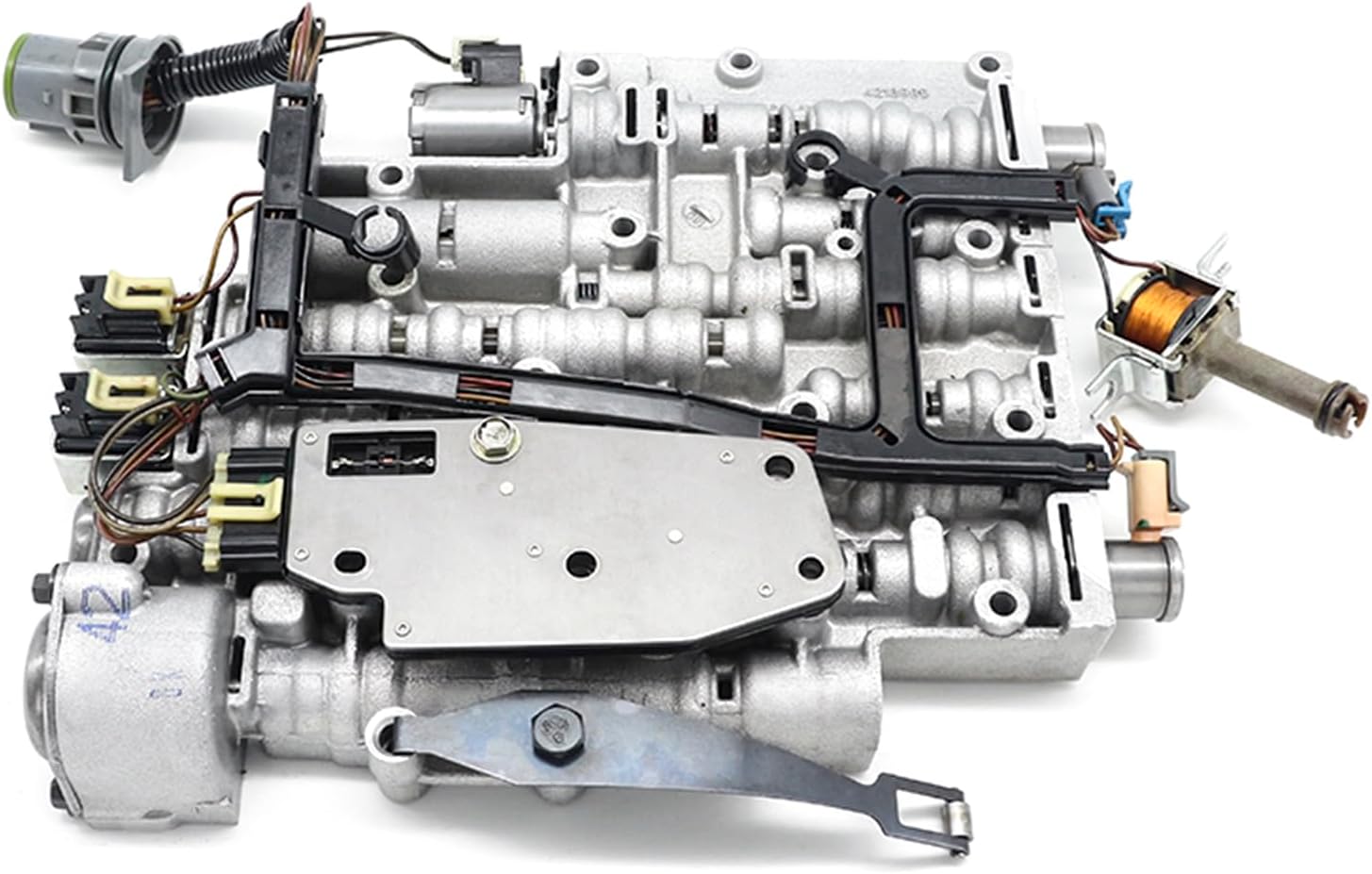
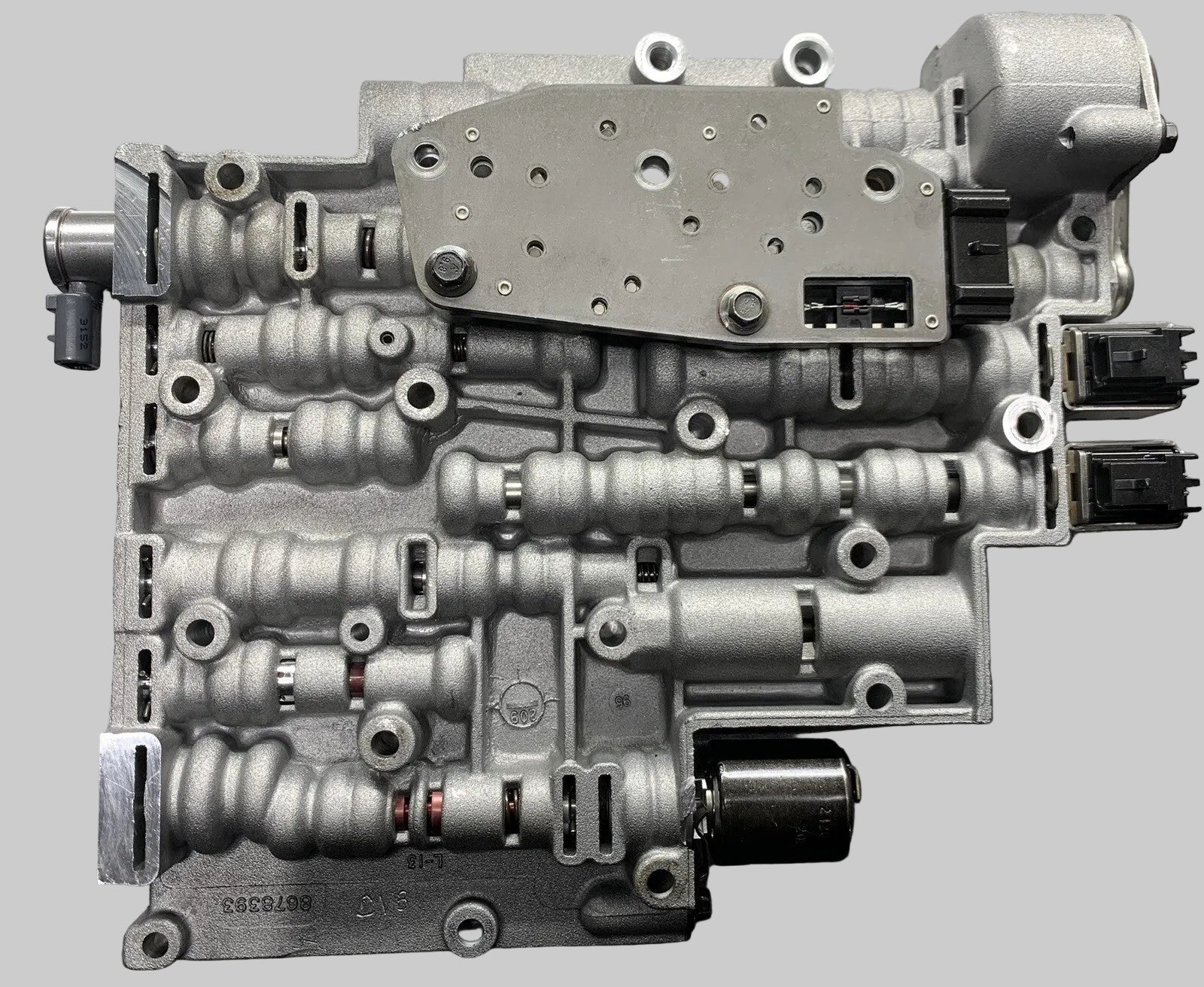
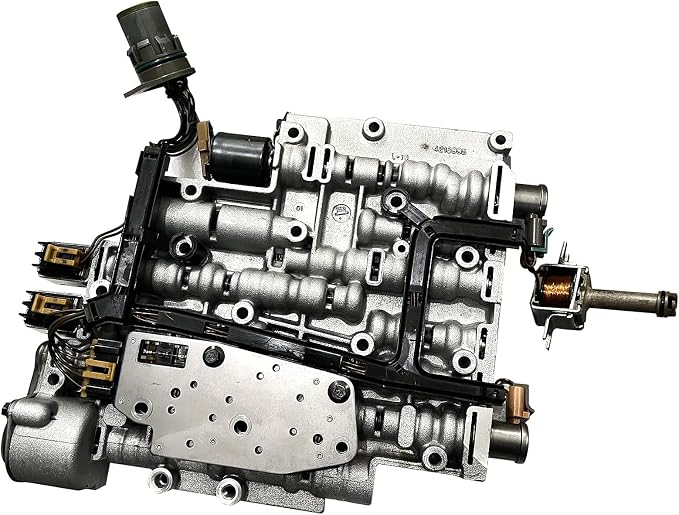
What Actually Sets P0751
P0751 is Shift Solenoid A Performance or Stuck Off. On a 4L60E, shift solenoid A is the 1-2 shift solenoid, ACDelco part number 24230298, and it works with shift solenoid B to select all four gears through a simple on-off pattern:
- 1st gear - solenoid A on, solenoid B on
- 2nd gear - solenoid A off, solenoid B on
- 3rd gear - solenoid A off, solenoid B off
- 4th gear - solenoid A on, solenoid B off
The PCM never measures whether the solenoid worked. It measures the result. Per ATRA's technical staff, the control module uses input and output speed sensor signals to calculate the actual gear ratio, then compares that against the shift schedule to identify mechanical problems in the shift solenoid valves, the valve body, or the transmission itself. On a 4L60E the ratios are 3.06 in first, 1.63 in second, 1.00 in third and 0.70 in fourth. Command first, read back 1.63, and you have a ratio mismatch. That is P0751 - a symptom report, not a diagnosis.
The Mechanism: Why a 4L60E Defaults to Second Gear
Wayne Colonna laid it out in Transmission Digest: the 4L60E valve body is in second gear by default when the engine is off. First gear is not the resting state. It has to be actively created. Once the engine starts and line and AFL pressure have built to 48 psi or more, that pressure overcomes the tension of the 1-2 shift valve spring and strokes the valve into the first gear position.
That inverts how most people think about this unit. First gear costs pressure; second gear is free. Colonna states the consequence directly: any deficiency in line or AFL pressure that lets pressure drop below 48 psi is going to create second gear starts.
That is your P0751. The PCM commands solenoid A on for first, the solenoid energizes correctly, but there is not enough pressure at the 1-2 shift valve to move it. The valve stays where the spring left it, the truck takes off in second, the ratio monitor sees 1.63 when it expected 3.06, and the code sets against a solenoid that did exactly what it was told.
The same customer complaint has a tell worth listening for. Colonna's case truck, a 1993 Chevrolet 1500 with the 5.0L, would start off in first on an initial cold start but then stay in second at a stop, or after being shifted to Park or Reverse and back to Drive. That warm-only, restart-only pattern is a marginal pressure story, not a dead solenoid story. A dead solenoid does not care how hot the fluid is.
The Three Real Causes of a Solenoid Performance Code
ATRA publishes a short and complete list. There are exactly three things that cause a solenoid performance code:
- A solenoid stuck open or closed
- A blocked valve body or a stuck shift valve
- A failed transmission clutch, brake, or gear
Only the first is a part you can buy at the counter. ATRA also names the trap that gets shops on this family of codes: a performance code that sets because a solenoid is not receiving the pressure it needs to control its circuit, with nothing wrong with the solenoid itself. They call those ghost codes, and the recommended first move is a line pressure test rather than a parts order. That maps onto the 4L60E perfectly, because this unit has a well-documented pressure supply problem.
Cause one, and it is usually this one: actuator feed limit bore wear
The AFL valve is the regulator that feeds the solenoids. Sonnax describes its job on the 4L60-E, 4L65-E and 4L70-E plainly: it is a solenoid feed regulator valve that supplies the EPC solenoid and the shift solenoids. In their Hydraulics Fundamentals series they put a number on it - in the 4L60-E and 4L80-E, line pressure is regulated to approximately 115 psi and fed to the shift solenoids, the pressure control solenoid, the TCC solenoid, the 3-2 control solenoid, and the 2-3 shift valve lineup.
The OE valve has a large reaction area on its spring end, which side-loads it in the bore, and the EPC solenoid's oscillation of the torque signal and AFL oil increases that valve action further. The result is a worn bore in an aluminum casting, and Sonnax states the consequence in exactly the terms you need: as the bore wear increases, oil pressure is reduced to the shift solenoids, which causes solenoid and ratio codes. The same leak drops line pressure at the same time.
The published symptom list on the Sonnax AFL valve kit reads like a P0751 work order: wrong gear starts, solenoid performance codes, erratic line pressure, clutch failure, band failure, no 4th, harsh shifts, and 2nd gear starts. Their vacuum test guide flags the same valve with the same symptoms, and adds gear ratio codes under the 1-2 shift valve itself.
The fix is not a solenoid. It is kit 77754-09K, a hardcoat anodized aluminum valve with annular grooves to resist side-loading, running in a wear-resistant full-contact sleeve that gives it 54 percent more support than the OE valve had. It installs with tool kit 77754-TL, which also services the 4L80-E.
Cause two: the 1-2 shift valve itself is sticking
Even with correct pressure, a valve that binds in a worn or varnished bore will not stroke. Sonnax's vacuum test guide lists the 1-2 shift valve directly, with wrong gear starts and gear ratio codes as its symptoms. Do not skip it because the AFL valve is the more famous failure - test both while the valve body is on the bench. The 2-3 shift and 2-3 shuttle valve lineup earns a look on the same pass, since it shares that symptom set and is addressed with kit 77754-62K.
Cause three: something mechanical downstream
This is where Colonna's case truck ended up, and it is a good lesson in not stopping at the valve body. That 1500 had already had both shift solenoids replaced, an entire replacement valve body installed, and the spacer plate solenoid feed orifices opened to .035 in. None of it fixed the second gear starts, and line pressure measured a correct 62 psi in Drive at idle, which ruled out line pressure, the AFL valve, and the forward accumulator piston.
On a follow-up road test the transmission bound up in manual low. That sent the tech to the 1-2 accumulator, where the piston was missing its rubber seal entirely. With the seal gone, accumulator pressure fed past the second accumulator piston straight into the band apply circuit and applied the band. Install the seal, and the complaint was gone.
A band that is applied while the unit is trying to start in first will produce a wrong-gear-start complaint and a ratio code. If your pressures check good and your valves test good, the answer is mechanical.
4L60E 1-2 Shift Solenoid (Shift Solenoid A), OEM 24230298, 1993-2008
If your electrical testing actually condemns the solenoid, this is the correct OE-number part for shift solenoid A on 1993-2008 4L60E, 4L65E and 4L70E units. Replace A and B as a pair while the pan is down - they share a part number and they have the same hours on them. If your testing points at pressure instead, fix the AFL bore first; a new solenoid will not hold a valve that has no oil behind it.
View the 1-2 shift solenoid →Want the A and B set, valve body kits, or the internal harness? Browse the full 4L60E parts collection.
The Electrical Checks Still Worth Doing
P0751 presumes the circuit is electrically intact. But a solenoid intermittently losing current will produce a ratio fault without necessarily setting an electrical code first, so five minutes with a voltmeter is cheap insurance. ATRA's Mike Brown walked this circuit in GEARS using a 2003 Hummer H2, and the layout applies to every electronically controlled 4L60E:
- Power comes from the ignition switch through the ING 0 fuse, a 10-amp fuse in the I/P fuse block.
- That single feed reaches the case connector at pin E, and from there supplies the TCC, TCC PWM, 1-2, 2-3 and 3-2 shift solenoids. Five solenoids on one power wire.
- The PCM completes each circuit by supplying ground on that solenoid's own case connector terminal. Shift solenoid A grounds through terminal A; solenoid B grounds through terminal B.
Two warnings from that article are worth taping to the toolbox. First, never use a test light on a computer circuit - test lights illuminate on as little as eight volts, well below what a shift solenoid needs to function. Use a voltmeter. Second, do not assume the power side is good just because only one solenoid code is stored; many modules stop checking other circuits as soon as the first code sets, so a shared power fault can present as a single code.
To isolate the power side, monitor voltage at pin E while the fault occurs, or tap the pin E feed and jump it to battery positive through a 10-amp fuse. If the problem disappears, the original feed has resistance in it. Note that with that jumper installed you cannot shut the engine off until you remove it.
One more failure mode from the same article, common on any unit that has been out of the vehicle: the installer pinches the harness between the bellhousing and the block and the wires break inside the insulation. If the code appeared right after a swap, look there first.
On the Bench: Numbers to Test Against
Casting wear that will cause a wrong gear start is usually invisible to the eye. Sonnax's position is that valves should be vacuum tested in their rest position, and that a low vacuum reading indicates wear. Their vacuum test plate kit 77754-VTP seals the whole casting and gives you dedicated ports, but a hand pump on the individual test locations in their published 4L60-E guide will get you there. Test, at minimum, the actuator feed limit valve, the 1-2 shift valve, the 2-3 shift and shuttle valves, and the pressure regulator valve - the AFL and PR valves are the two that drag every other circuit down with them when they leak.
When you air check the unit, ATRA's guidance is to use only 25 to 30 psi. Full shop air will force a marginal seal closed and tell you the circuit is good when it is not.
One scan-tool item worth logging while the vehicle is still together: GM's adaptive pressure system compensates for a leaking circuit long before it gives up and sets a code. Dan Tucker's write-up of GM transmission adaptive pressure systems, illustrated on a 4T65-E, puts the normal maximum adjustment range at roughly -29.75 to +29.75 psi either side of the programmed target, with P1811, Maximum Shift Adapts Exceeded, at the end of that road. Adapt cells sitting near the rail, or swinging wildly from one cell to the next, mean the computer has been papering over a hydraulic problem for a while.
Working a 4L60E this week?
Shift solenoids, EPC and TCC solenoids, valve body kits, internal harnesses, filters and DEXRON VI — the parts to fix P0751 right, shipped from the USA.
Shop 4L60E parts →A Diagnostic Order That Works
- Read every code and note whether you also have an electrical code. A P0753 alongside P0751 means chase the circuit first; the ratio fault is downstream of it.
- Check fluid level and condition before anything else. Low or aerated fluid cannot build the 48 psi the 1-2 shift valve needs. Burnt fluid with friction material in it moves you to teardown.
- Put a gauge on the line pressure tap. This is the highest-value five minutes on the whole job. Colonna's benchmark is 62 psi in Drive at idle. Low pressure, or a bouncing needle, sends you at the AFL and pressure regulator valves instead of the solenoid.
- Verify command against result on the scan tool. Watch commanded gear, shift solenoid A and B states, and calculated gear ratio together from a stop. Commanded first, solenoid A commanded on, ratio reading 1.63 is the classic second-gear-start signature.
- Test the electrical side with a voltmeter, not a test light. System voltage at pin E key on, and a clean ground path through terminal A.
- Pull the valve body and vacuum test. AFL valve, 1-2 shift valve, 2-3 shift and shuttle valves, pressure regulator valve. Inspect the spacer plate feed orifices while it is off.
- If pressure and valves both check clean, go mechanical. Air check at 25 to 30 psi and inspect the 1-2 accumulator piston and its seal. Colonna's truck failed exactly here, after the valve body had already been replaced.
The Fix, and Doing It Once
Match the repair to what the testing proved, not to what the code named.
If the AFL bore tested low, ream it and install 77754-09K with tool kit 77754-TL. If the pressure regulator valve is also worn - and on a high-mileage unit it usually is, since Sonnax calls PR valve bore wear common on the 4L60/E family - address it on the same pass with oversized valve 77917-07 rather than pulling the valve body twice. If you are already this deep, the Sure Cure kit SC-4L60E bundles the AFL valve kit, the oversized PR valve, an O-ringed boost valve, the 1-2 accumulator spring, a pinless accumulator piston kit and D-ring servo seals into one package with instructions.
If the electrical testing genuinely condemned the solenoid, replace A and B together - same part number, same hours, and the labor is already spent. Know which unit you are on before you order: Sonnax identifies 1995-and-later PWM/EC3 units by the 13-pin case connector, a PWM TCC solenoid and a PWM pump, five solenoids total, while 1993-1994 non-PWM units use a 12-pin case connector and carry only a 3-2 solenoid in the valve body, four solenoids total.
Refill with DEXRON VI, the current specification for the 4L60E family and backward compatible with the older DEXRON III fill these units left the factory with. Figure roughly 5 to 6 quarts for a pan and filter service and about 11 to 12 quarts for a dry fill. Set the level hot, in gear, on level ground.
Then duplicate the complaint rather than driving around the block. Come to a complete stop, put it in Park and back into Drive, and pull away again - warm. That restart-from-a-stop sequence is what exposes a marginal 1-2 shift valve, and it is the exact condition Colonna's customer was describing. Watching calculated gear ratio drop to 3.06 on that launch is your proof the repair worked. The absence of a light on the dash is not.
FAQ
What does P0751 mean on a 4L60E?
P0751 is Shift Solenoid A Performance or Stuck Off, and the word that matters is performance. It is not an electrical code. The PCM compares input speed sensor and output speed sensor data to calculate actual gear ratio, then compares that against the gear it commanded. When it commands shift solenoid A on for first gear and the ratio it reads back is 1.63:1 instead of 3.06:1, it sets P0751. The solenoid can be brand new and electrically perfect and still set this code.
Why does my 4L60E start off in second gear with a P0751?
Because second gear is the 4L60E's mechanical default. Per Transmission Digest, the valve body sits in second gear with the engine off, and it takes 48 psi of line and actuator feed limit pressure to overcome the 1-2 shift valve spring and stroke the valve into first. Any deficiency that lets pressure fall below 48 psi at that valve gives you a second gear start, and the ratio monitor sees that as shift solenoid A failing to do its job.
Will replacing shift solenoid A fix a P0751?
Sometimes, but it is not the odds-on bet. Per ATRA, a solenoid performance code has exactly three causes: a solenoid stuck open or closed, a blocked valve body or stuck shift valve, and a failed clutch, brake, or gear. Two of those three are not the solenoid. Sonnax lists solenoid performance codes and second gear starts as published symptoms of actuator feed limit bore wear, which starves the shift solenoids of feed oil. Test line pressure before you buy parts.
How do I tell P0751 apart from P0753?
P0753 is Shift Solenoid A Electrical, which means the PCM sees an open, a short, or a circuit problem in the solenoid's power or ground path. P0751 is a performance code, meaning the circuit is electrically fine but the transmission did not end up in the commanded gear. Different codes, different diagnostic trees. If you have both, chase the electrical code first, because the ratio fault is a downstream result of a solenoid that never got current.
What line pressure should a healthy 4L60E show?
In the Transmission Digest case study on a 1993 Chevrolet 1500, 62 psi in Drive range at idle was called out as the correct value and used to rule out a line pressure, AFL valve, or forward accumulator problem. That is your idle baseline. Sonnax notes that the AFL valve regulates roughly 115 psi of feed oil to the shift solenoids, EPC solenoid, TCC solenoid, 3-2 control solenoid, and the 2-3 shift valve lineup, so an AFL problem drags both numbers down together.
Shop 4L60E parts →
Sources
- Transmission Digest — "Fixing 4L60-E 1-2 shift issues," Wayne Colonna (July 5, 2022). Backs the core mechanism of this article: that the 4L60E valve body is in second gear by default with the engine off, that it takes 48 psi of line and AFL pressure to overcome the 1-2 shift valve spring and stroke the valve into first, and that any deficiency letting pressure fall below 48 psi produces second gear starts. Also backs the 62 psi correct line pressure reading in Drive range used to rule out line pressure, AFL valve and forward accumulator problems, the .035 in. spacer plate solenoid feed orifice size, and the case-study fix in which a missing 1-2 accumulator piston rubber seal fed accumulator pressure past the second accumulator piston into the band apply circuit on a 1993 Chevrolet 1500. transmissiondigest.com
- Sonnax — "Hydraulics Fundamentals Part VII: AFL/Solenoid Modulator Valves" (April 20, 2020). Backs the function of the actuator feed limit valve as the regulator supplying the solenoids, the figure that GM 4L60-E and 4L80-E line pressure is regulated to approximately 115 psi and fed to the shift solenoids, pressure control solenoid, TCC solenoid, 3-2 control solenoid and the 2-3 shift valve lineup, the large reaction area and resulting side-loading that makes the bore susceptible to wear, and the statement that worn AFL bores in the 4L60-E produce low actuator feed and line pressures with flooded or starved solenoid feed. sonnax.com
- Sonnax — Actuator Feed Limit Valve Kit 77754-09K (GM 4L60-E, 4L65-E, 4L70-E). Backs the published symptom list for AFL bore wear used throughout this article — wrong gear starts, solenoid performance codes, erratic line pressure, clutch failure, band failure, no 4th, harsh shifts and 2nd gear starts — the stated cause that actuator feed limit bore wear results in low pressure at the shift and EPC solenoids, the mechanism by which the EPC solenoid's oscillation of the torque signal and AFL oil increases valve action, and the repair specification: hardcoat anodized aluminum valve with annular grooves running in a full contact sleeve for 54 percent more support, installed with tool kit 77754-TL. sonnax.com
- Sonnax — "GM 4L60-E, 4L65-E, 4L70-E Vacuum Test Guide" (January 21, 2013; revised 2026). Backs the bench-test approach and the valve-by-valve symptom mapping: that OE valves are tested in their rest position and a low vacuum reading indicates wear; that the 1-2 shift valve is associated with wrong gear starts and gear ratio codes; that the actuator feed limit valve is associated with wrong gear starts, solenoid performance codes, erratic line pressure and 2nd gear starts and is repaired with 77754-09K; that the 2-3 shift and 2-3 shuttle valves share the wrong-gear-start and gear-ratio-code symptoms and are repaired with 77754-62K; and the pressure regulator valve replacement number 77917-07. sonnax.com
- GEARS Magazine (ATRA) — "A Logical Approach to Solenoid Circuit Testing," Mike Brown (December 2016). Backs the 4L60-E solenoid circuit layout used in the electrical section: power from the ignition switch through the 10-amp ING 0 fuse in the I/P fuse block to case connector pin E, feeding the TCC, TCC PWM, 1-2, 2-3 and 3-2 shift solenoids; the PCM supplying ground on the individual solenoid terminals of the case connector; the warning never to use a test light on a computer circuit because test lights illuminate on as little as eight volts; the caution that many modules stop checking other circuits once the first code sets, so a shared power fault can present as a single code; the pin E bypass test through a 10-amp fuse; and the pinched-harness failure between bellhousing and block after a unit has been out of the vehicle. gearsmagazine.com
- GEARS Magazine (ATRA) — "Performance Codes: Knowing Where to Start," Mike Brown. Backs the definition of a performance code as distinct from an electrical code, the three published causes of a solenoid performance code (a solenoid stuck open or closed, a blocked valve body or stuck shift valve, and a failed clutch, brake or gear), the ghost-code concept in which a performance code sets because the solenoid is not receiving the pressure it needs rather than because the solenoid failed, the recommendation to run a line pressure test as the starting point, the control module's use of input and output speed sensor signals to calculate actual gear ratio and compare it against the shift schedule, and the 25 to 30 psi air check limit. gearsmagazine.com
- Sonnax — The Sure Cure Kit SC-4L60E. Backs the unit identification detail used in the repair section — that 1995-and-later PWM/EC3 4L60-E, 4L65-E and 4L70-E units are identified by a 13-pin case connector, PWM TCC solenoid and PWM pump for five solenoids total, while 1993-1994 non-PWM units use a 12-pin case connector with only a 3-2 solenoid in the valve body for four solenoids total — and backs the kit contents referenced (AFL valve kit, oversized pressure regulator valve, oversized boost valve, 1-2 accumulator spring, pinless accumulator piston kit, D-ring servo seals). sonnax.com
- Sonnax — "Playing TAPS on Pressure Systems," Dan Tucker (May 14, 2005). Backs the GM transmission adaptive pressure discussion: that the module adapts line pressure on a cell-by-cell basis, that the normal maximum adjustment range is roughly -29.75 to +29.75 psi either side of the originally programmed pressure, and that DTC P1811 Maximum Shift Adapts Exceeded sits at the end of that range. Illustrated on a 4T65-E in the original article. sonnax.com
Shop 4L60E shift solenoids, EPC and TCC solenoids, valve body and shift kits, internal harnesses, filters and DEXRON VI — shipped fast from the USA.
Shop 4L60E parts →