A fluid change on a gas Silverado 2500 with the 4L80E is not complicated, but it is easy to do wrong in three specific ways: the wrong fluid, the wrong interval, and a level set by quarts poured instead of by the dipstick. Every one of those has a factory answer, and none of them is the number on the back of a jug at the parts counter. This is the job the way I do it at the bench, with each spec traced to GM paperwork.
First, make sure you are working on a 4L80E. GM's 2005 transmission diagnostic document lists the 4L80E "when used with" the 4.8L, 6.0L (LQ4) and 8.1L (L18) in the Silverado, Sierra, Suburban, Express and others. In a 2500 that is almost always the 6.0L Vortec. A Duramax 2500HD of the same years has an Allison, and the 2006 Silverado owner manual gives the Allison its own fluid section, its own check procedure and its own maintenance line. Nothing below applies to the Allison. The RPO label in the glovebox and the ID tag on the case settle it; our 4L80E identification guide shows where to look.
The short version: DEXRON-VI. About 7.7 quarts (7.3 L) for a pan and filter service, 13.2 quarts (12.5 L) dry. Pan bolts 18 ft-lb, drain plug 25 ft-lb. Filter GM 24212452, pan gasket GM 08677743. Change it every 50,000 miles on GM's severe schedule, which a 2500 with a GVWR over 8,600 lb is on by definition. Set the final level hot, at 180-200 F, engine running, in park.
The Fluid: DEXRON-VI, Even If the Truck Came With DEXRON-III
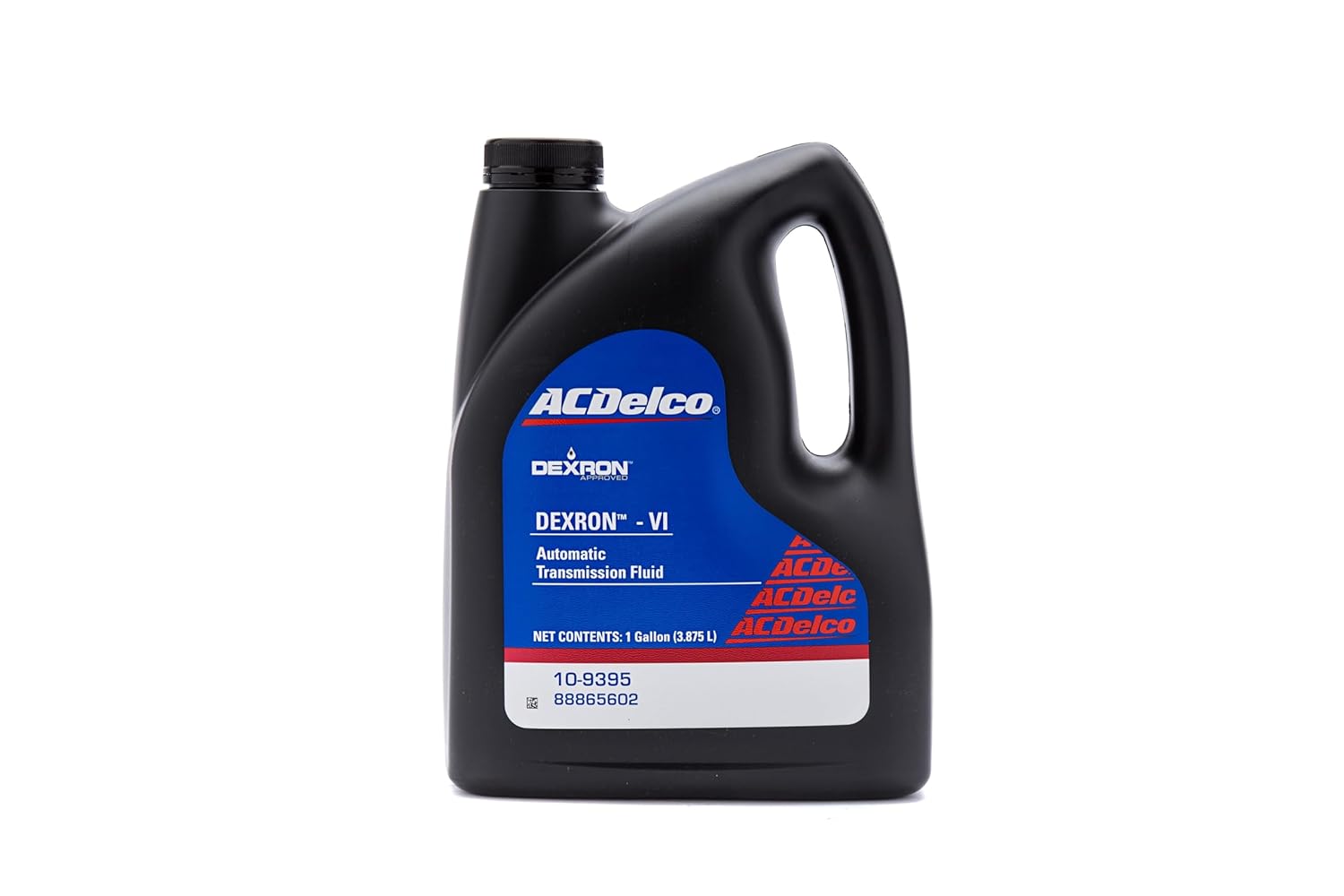
The 2006 Silverado owner manual's Recommended Fluids and Lubricants table lists the automatic transmission as taking DEXRON-VI Automatic Transmission Fluid. Earlier 2500s were factory filled with DEXRON-III, and that is where the confusion comes from. The answer is still DEXRON-VI for every 4L80E, and the reason is GM's own launch of the fluid.
Transmission Digest covered that launch: GM introduced DEXRON-VI in an April 2005 press release, built it around the then-new 6L80, and made it a factory fill on April 4, 2005. The same article noted that all DEXRON-III licenses were expiring that month. In other words, there is no currently licensed DEXRON-III. A bottle that says "suitable for DEXRON-III applications" is a claim by the blender, not a GM approval. Chevrolet Performance's spec sheet for the 4L85E Supermatic, the heavy-duty version of this same transmission, lists the fluid as DEXRON-VI as well.
Why it matters more on a 2500 than a half-ton: the fluid is doing the most work in exactly the trucks that tow. ATRA's GEARS magazine points out that the additive package is only about 5 to 15 percent of an ATF, and that package is what wears out with time and temperature. Heat is what a 2500 makes. A fluid change is really an additive-package change, and that is the argument for doing it on schedule instead of waiting for a shift complaint.
One thing to warn the customer about on a high-mileage truck: fresh fluid can change shift feel. If a 200,000-mile unit develops a soft or late shift right after a service, the fluid did not cause it. It stopped hiding a worn valve body bore. That is a valve body conversation, not a reason to go back to old fluid.
The Interval: Your 2500 Is Probably Already on the Severe Schedule
GM's 2006 Silverado maintenance schedule has two lines for non-Allison automatics. Normal service: change the fluid and filter at 100,000 miles. Severe service: change it at 50,000, 100,000 and 150,000 miles. The footnote that decides which one applies is the part most owners never read. GM calls for the severe schedule if the vehicle's Gross Vehicle Weight Rating (GVWR) is over 8,600 lb, or if it is mainly driven under one or more of these conditions:
- Heavy city traffic where the outside temperature regularly reaches 90 F (32 C) or higher.
- Hilly or mountainous terrain.
- Frequent trailer towing.
- Taxi, police or delivery type use.
Read the GVWR on the label in the driver's door opening. If it is over 8,600 lb, GM has already put the truck on the 50,000-mile schedule regardless of how it is driven. If it is right at the line, the next three bullets usually decide it: a 2500 that tows a camper, plows, or lives on a job site is a severe-service truck. For plow trucks I go shorter than 50,000. A winter behind a blade is hours of low-speed, high-load work with the grille blocked, and the miles on the odometer understate what the fluid saw.
| Item | Spec | Source |
|---|---|---|
| Fluid | DEXRON-VI | GM 2006 Silverado owner manual; Chevrolet Performance 4L85E sheet |
| Pan removal refill | 7.3 L (7.7 qt), approximate | Chevrolet Performance 4L85E sheet |
| Dry fill (unit and converter) | 12.5 L (13.2 qt), approximate | Chevrolet Performance 4L85E sheet |
| Oil pan to case bolts | 18 ft-lb (24 N-m) | Chevrolet Performance 4L85E sheet |
| Drain plug (if equipped) | 25 ft-lb (34 N-m) | Chevrolet Performance 4L85E sheet |
| Cooler pipe connector nut to case | 28 ft-lb (38 N-m) | Chevrolet Performance 4L85E sheet |
| Filter / pan gasket | GM 24212452 / 08677743 | Chevrolet Performance 4L85E sheet |
| Fluid temperature for the level check | 180-200 F (82-93 C) | GM 2006 Silverado owner manual |
| Interval, severe (GVWR over 8,600 lb, towing, hills, heat) | Every 50,000 miles | GM 2006 Silverado owner manual |
| Interval, normal | 100,000 miles | GM 2006 Silverado owner manual |
How Much Fluid to Buy
GM does not print a transmission capacity in the owner manual. The capacity table covers the engine, cooling system and fuel tank, and the transmission section tells you to fill to the dipstick instead. The Chevrolet Performance sheet gives the working numbers: about 7.7 quarts after a bottom pan removal, and about 13.2 quarts dry. Both are marked approximate, and that word matters.
For a pan and filter service I put two gallons on the bench. That covers the 7.7 quarts with a little left for the hot top-off. If you are doing a cooler-line exchange to get closer to a complete change, plan on three to four gallons, because you are pushing out what was in the converter, cooler and lines on top of the pan. The honest way to know how much to put back is to measure what came out: drain into a marked container, start the refill with that number, then finish on the dipstick.
The Job, Step by Step
1. Drain and drop the pan
Most stock 4L80E pans have no drain plug. Loosen all the pan bolts, remove the ones on one end, and let the pan tip down and drain at a corner. If the pan has a plug, pull it first. Catch everything in a clean container so you can read it.
2. Read the pan before you clean it
This is the part a quick-lube skips. Fine gray paste on the magnet is normal. Look harder for these:
- Bronze or brass flakes point at bushings or thrust washers.
- Steel chips or roller pieces on a 2500 often mean the overdrive roller clutch, a common failure on plow and tow trucks.
- Heavy friction material in the bottom of the pan means clutches are already burning.
- Dark, burnt-smelling fluid tells you the truck has been running hot.
If you find any of the first three, fresh fluid will not fix it. Tell the owner before you refill, and see our Silverado 2500 4L80E common problems guide for what each one usually means.
3. Filter and seal
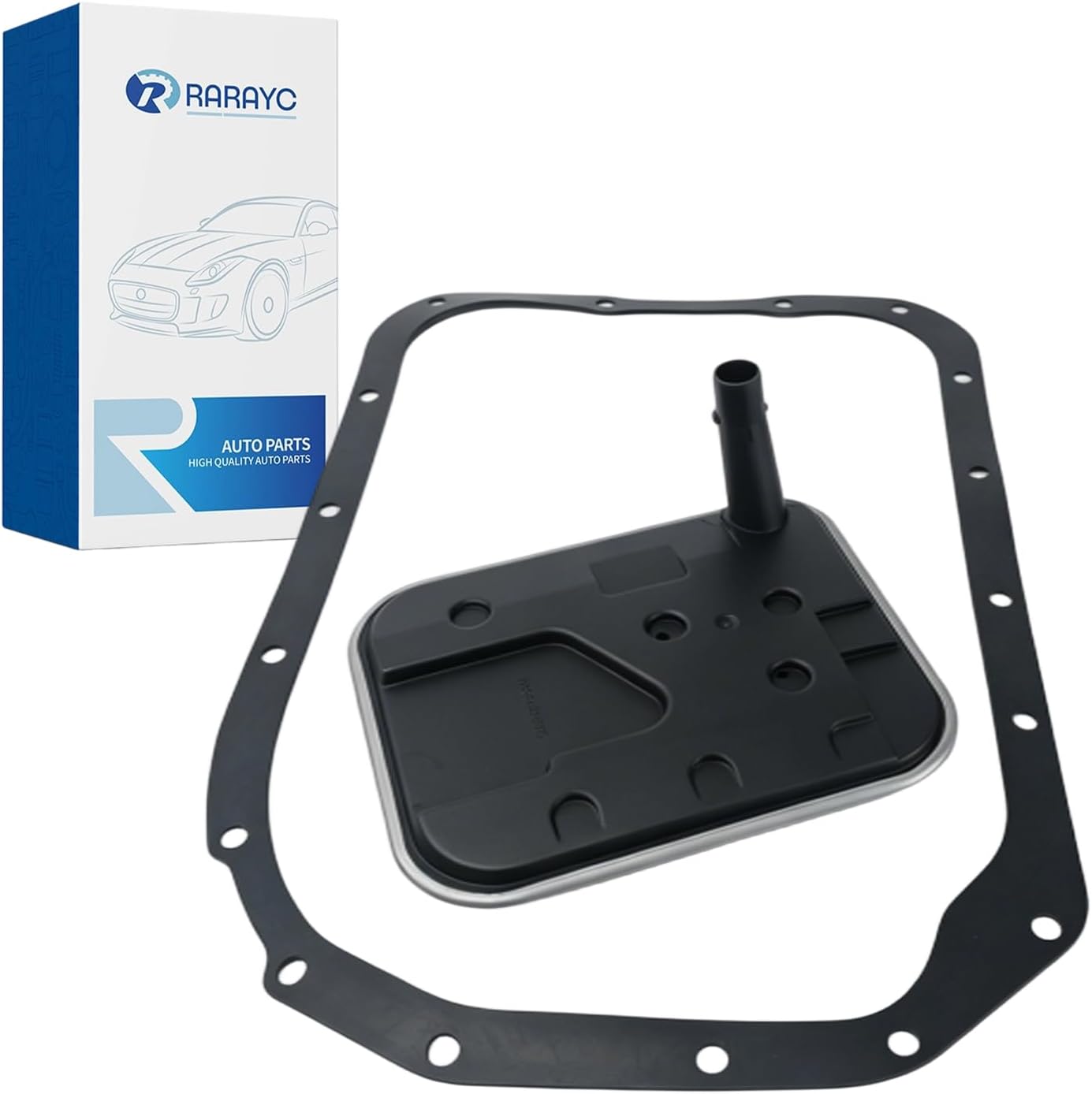
Pull the filter straight down. The filter neck seal often stays in the case. Make sure the old seal is out before you install the new filter, or the new one will not seat and the pump will suck air. Use the filter that matches the pan depth. GM's 4L85E sheet lists 24212452 for the filter and 08677743 for the gasket. The deep-pan 2500/3500 trucks take the deep filter; a shallow filter in a deep pan can uncover its inlet on a hill or a hard stop.
4. Clean the pan rail and reinstall
Clean the case rail and the pan flange. Straighten the flange around the bolt holes if a previous installer over-tightened it. Torque the pan bolts to 18 ft-lb in a crisscross pattern. That is a low number, and over-tightening is how pan gaskets leak.
5. Refill and set the level hot
Put in close to what came out, then start the truck. The final level comes from GM's hot-check procedure in the 2006 owner manual, and skipping steps will throw the reading off by more than you are trying to measure:
- Get the fluid to 180-200 F (82-93 C). GM says to drive about 15 miles if it is above 50 F outside, or in third gear until the temperature gauge moves and then stays steady for 10 minutes if it is colder.
- If the truck was towing, in heavy hot traffic, driven at high speed for a while, or it is above 90 F outside, wait 30 minutes before checking.
- Park level, engine running, parking brake set, shifter in park.
- With your foot on the brake, move the shifter through each range, pausing about three seconds in each, then return to park.
- Let it idle at least three minutes, then pull the dipstick, wipe it, push it back in all the way, wait three seconds and pull it again.
- Read both sides and use the lower reading. The level must be in the HOT or cross-hatched area.
GM says it takes "generally less than one pint" to bring a low reading into the HOT area. That is the resolution you are working at. Add a little, recheck, and stop when it is in range. GM also says to check at least twice and get the same reading. If you cannot get repeatable readings, GM points to the transmission breather hose as the first thing to check for a clog.
Use the Scan Tool for the Temperature
The level is only accurate at the right temperature, so do not guess. Watch the transmission fluid temperature (TFT) PID while you warm the truck up. On a healthy truck it climbs steadily with the engine and settles in the 180-200 F window on a normal drive.
GM's 2005 4L80E diagnostic document shows why a bad sensor can fool you. Code P0711 runs two tests: a stuck sensor, where TFT does not change more than 2.25 C after the engine has warmed and the truck has been driven, and an unrealistic jump of more than 20 C. P0712 flags a TFT circuit shorted low (reads hot) and P0713 an open or short high (reads cold). Several of the transmission's other tests only run with TFT between about 20 C and 130 C. If TFT still reads near ambient after a 15-mile drive, fix the sensor or harness before you trust the hot check. Otherwise you will be reading a cold dipstick and overfilling it.
Flush the Cooler or Not?
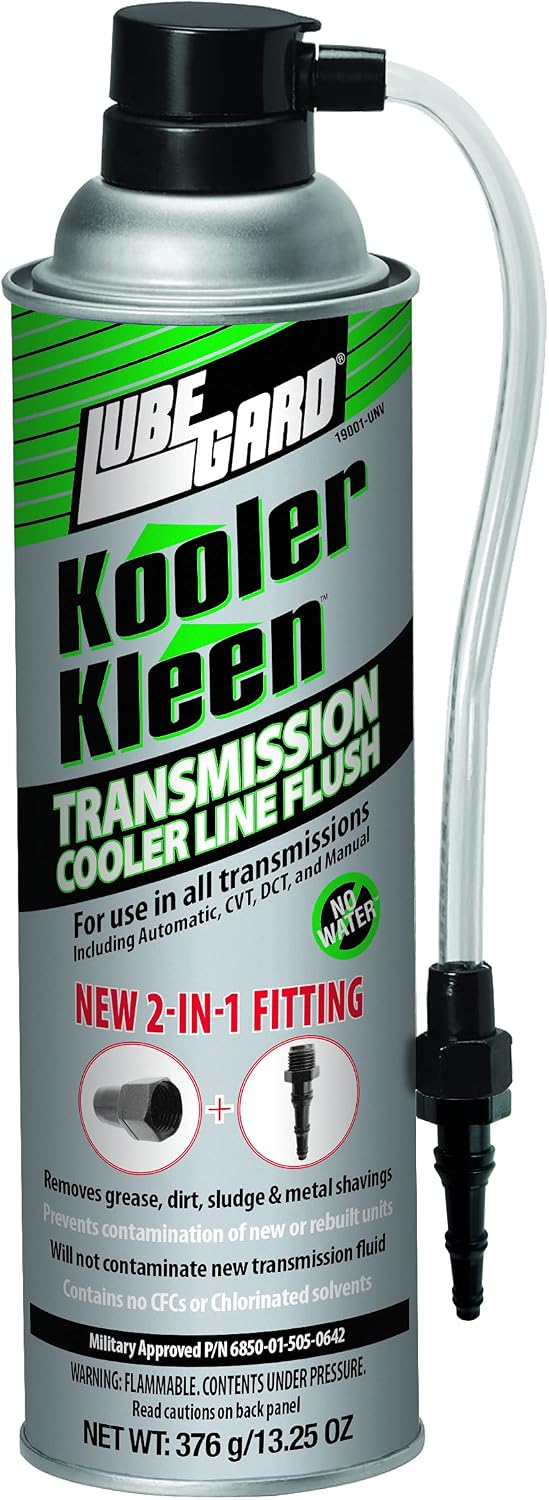
On a routine service with clean fluid, no. A pan drop plus a hot level check is the job. If the pan showed metal or heavy friction material, or the truck had a failure, the cooler and lines are full of that debris and they will feed it right back into the transmission.
The Chevrolet Performance install sheet says to always flush out the cooler and lines, at a minimum with brake cleaner and compressed air, whenever a transmission goes in. Transmission Digest makes the same point: contaminated coolers and lines are a common cause of a replacement transmission failing early. TD recommends an aerosol cooler flush caught in a clear container so you can see how much debris comes out. If there is a lot of metal, replace the cooler. If it is clean, add an inline filter on the return line.
One 4L80E detail: GM's sheet notes the return cooler line fitting is unique to the 4L80 family. If you cut into a line or change a fitting, use the correct parts. GM lists 8637742 and 24205178 for converting to standard inverted flare, and warns that the wrong fitting in the case can ruin the transmission. Cooler nut to case torque is 28 ft-lb. Our 4L80E cooler line replacement guide covers the fittings, and 4L80E flush vs drain and fill covers getting a complete change: 7.7 of roughly 13.2 quarts means a pan drop swaps a bit more than half the fluid.
4L80E Deep Pan Filter and Gasket Kit, 1999-2006 GM 2500/3500
The deep-pan filter and gasket for Silverado and Sierra 2500/3500 trucks, Suburban, Express and Savana. Everything the pan service needs except the fluid.
Shop the deep pan filter kit →Need a different part? Browse the full 4L80E parts collection.
Keep the numbers at the bench. Our free transmission fluid spec chart lists the correct ATF for the 4L80E and dozens of other units, so nobody tops off a work truck with the wrong fluid.
FAQ
What transmission fluid does a Silverado 2500 4L80E take?
DEXRON-VI. The 2006 Silverado owner manual lists DEXRON-VI for the automatic transmission, and GM made DEXRON-VI the replacement for DEXRON-III when it launched the fluid in 2005. Earlier trucks that came with DEXRON-III should also be serviced with DEXRON-VI, since DEXRON-III licenses have expired.
How many quarts does a 4L80E take for a fluid change?
About 7.7 quarts (7.3 liters) after a bottom pan removal and about 13.2 quarts (12.5 liters) dry, per GM's Chevrolet Performance 4L85E spec sheet. Both numbers are approximate. Buy two gallons for a pan and filter service, put back about what drained out, and set the final level on the dipstick with the fluid hot.
How often should I change the 4L80E fluid in a Silverado 2500?
GM's 2006 Silverado schedule calls for every 50,000 miles on severe service and 100,000 miles on normal service. Severe service applies automatically if the GVWR is over 8,600 lb, or if the truck mainly tows, works in hills, or runs in heavy traffic above 90 F. Most 2500s fall under severe, and plow trucks deserve an even shorter interval.
How do you check 4L80E fluid level correctly?
Check it hot, at 180-200 F. Park level with the engine running and the parking brake set, move the shifter through each range for about three seconds, return to park, and idle at least three minutes. Read both sides of the dipstick, use the lower reading, and keep it in the HOT or cross-hatched area. GM says a low reading usually needs less than one pint.
Sources
- General Motors — 2006 Chevrolet Silverado Owner Manual. Backs: DEXRON-VI as the automatic transmission fluid; the 50,000-mile severe and 100,000-mile normal fluid and filter intervals; the severe-service footnote (GVWR over 8,600 lb, 90 F city traffic, hills, towing, taxi/police/delivery); the 180-200 F check temperature and the full hot-check procedure; "less than one pint" to top off; the breather check; and the separate Allison sections. GM: 2006 Chevrolet Silverado owner manual (PDF)
- General Motors / Chevrolet Performance — Supermatic Transmission (4L85E 19300175) Specifications. Backs: DEXRON-VI; 7.3 L (7.7 qt) pan removal and 12.5 L (13.2 qt) dry capacities; pan bolt, drain plug and cooler nut torque; filter 24212452 and gasket 08677743; flushing the cooler and lines on every install; and the unique return cooler fitting (8637742 / 24205178). Chevrolet Performance 4L85E spec sheet (PDF)
- General Motors — 2005 4L80E Transmission Diagnostic Parameters (OBD). Backs: 4L80E use with the 4.8L, 6.0L (LQ4) and 8.1L (L18) in the Silverado and Sierra; the P0711 stuck and unrealistic TFT tests (2.25 C and 20 C); the P0712 and P0713 circuit faults; and the roughly 20-130 C TFT enable window. GM 2005 4L80E diagnostic parameters (PDF)
- Transmission Digest — "The Path of Least Resistance: The Future of Transmission Fluids." Backs: GM's April 2005 DEXRON-VI introduction, factory fill from April 4, 2005, development around the 6L80, and the expiration of DEXRON-III licenses. transmissiondigest.com
- Transmission Digest — "To Flush or Not to Flush." Backs: contaminated coolers and lines as a cause of early replacement-transmission failure, using an aerosol flush into a clear container to judge contamination, replacing a heavily contaminated cooler, and adding an inline return-line filter. transmissiondigest.com
- ATRA GEARS Magazine — "The One-Two-Threes of ATFs, Part I." Backs: additive packages making up roughly 5-15 percent of ATF, and additive degradation with time and temperature. gearsmagazine.com