The 4R100 showed up in 1999 as Ford's heavy rework of the E4OD, bolted up behind the 7.3-liter Power Stroke in Super Duty trucks and Excursions through 2003, and behind the 5.4L and 6.8L gas V8/V10 a little longer. A lot of these trucks are past 200,000 miles now, still working for a living, and most of what takes one down is not a mystery. It is a short list of wear points that show up in the same order on enough of these units that the pattern is documented, not guessed at. This is that list, not a generic "check your fluid" article.

Fluid: get the spec right before anything else
Get the fluid spec right first. Ford's 2002 Expedition owner guide lists the 4R100 as a MERCON unit (Motorcraft XT-2-QDX), not MERCON V, and warns that MERCON and MERCON V are not interchangeable in a unit that calls for MERCON. Original MERCON has since been discontinued, and Ford's own FCSD Chemicals and Lubricants listing covers the service path: Motorcraft MERCON V (XT-5-QMC 1-quart case of 12, XT-5-5Q3M 5-quart, XT-5-DMC 55-gallon drum, FIR No. 184629) is Ford's recommendation for electronically controlled automatics and is approved for units that were previously serviced with MERCON. So today a 4R100 gets MERCON V, never a dual-label MERCON/MERCON V bottle of unknown origin. What it should never run is MERCON SP, MERCON LV, MERCON ULV or Type F; those specs belong to different transmission families and the frictions in a 4R100 were not engineered against them.
On capacity, the same Ford owner guide lists the 4R100 at 15.0 L (15.9 qt) in 4x2 and 15.5 L (16.4 qt) in 4x4 form for the 2002 Expedition. That is total system capacity; a pan drop only gets part of it because the converter and cooler circuit hold the rest, so plan on more than one drain-and-fill to really change the fluid on a high-mileage unit. Check the level the way Ford specifies: on a level surface at normal operating temperature, 150-170 F (66-77 C), which takes about 20 miles of driving. Ford is blunt that an overfill can cause shift and engagement concerns and possible damage, so add in half-pint (250 mL) steps. On a truck that tows or hauls regularly, a pan-and-filter service at roughly 30,000-mile intervals is cheap insurance against the heat that kills these units. The exact pan bolt torque and bolt-pattern sequence for this unit are covered in depth in our 4R100 pan bolt torque spec guide -- worth a look before you pull the pan, since a stripped or warped pan is a self-inflicted leak that did not need to happen.
One more owner-guide detail that saves a comeback: Ford notes the 4R100 uses an adaptive shift strategy held in battery-powered memory. Disconnect the battery or swap it and the transmission has to relearn, with optimal shifting returning within a few hundred miles. Tell the customer before they decide the service made the shifts worse.
The rear case bushing: the wear point most shops never look at
This is the one that catches high-mileage units quietly, because nothing on a scan tool points at it. Sonnax documents that the factory rear case bushings in the 4R100 and E4OD tend to wear out prematurely, and lists the causes as lack of lubrication, excessive journal clearance, or simply too much load for the bearing area -- exactly the conditions a truck that tows heavy, idles long, or has gone a long time on tired fluid will produce. Left unaddressed, Sonnax notes the bushing can go past ordinary wear and spin out in its bore, damaging the case itself, which turns a bushing job into a case-repair job.
The OE design uses two bushings in that bore. Sonnax's fix is a one-piece replacement -- part 36008B or 36008D for a bore that is still within spec, or the oversized 36008C where the bore has already been damaged and needs to be machined first -- installed with tool T36008A. The one-piece design gives more bearing surface area and better lubrication than the factory two-bushing setup, which is the point: this is a wear pattern Sonnax engineered a specific fix for because the factory part was not holding up. On any 4R100 that is apart for other work past 100,000-150,000 miles, this bore is worth checking even if nothing has set a code for it yet.
The TCC apply-pressure problem behind repeat converter failures
If you only remember one thing from this article, make it this one, because it is the failure that gets misdiagnosed into an expensive, repeating comeback. Transmission Digest ran a detailed case study from Sonnax VP of Technical Development Bob Warnke covering a 2000 model year 7.3L diesel 4R100 that burned through four converters in a row. The telltale sign during a test drive: the TCC apply feels longer and softer than normal, and the truck comes back with overheated fluid or converter codes 1728 or 1744.
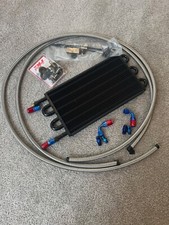
Here is why it happens specifically on this unit. The 4R100 uses a modulated torque converter clutch circuit -- unlike the E4OD's simple on-off TCC -- where fluid from the TCC regulator valve goes unrestricted to the converter-apply piston, while the release oil between the piston and the cover exhausts past the turbine hub with no orifice at all. That design gives the apply side priority pressure by default. But it means any restriction in the cooler circuit becomes far more critical on the 4R100 than on an E4OD, because there is less margin built into the hydraulics to begin with. A partially restricted cooler, a leaking or stuck-open external pressure-bypass checkball (which is supposed to open at roughly 60 psi of cooler head pressure to protect lube flow), or reduced pump volume will all starve the TCC piston of the pressure it needs to control slip as engine torque rises -- and a slipping TCC under load is exactly what cooks a converter.
The mistake shops make is swapping the converter, refilling with fresh fluid, and sending the truck out -- which looks like a fix until the same symptoms come back in a week, because the actual restriction in the cooler circuit was never found. Warnke's recommended diagnostic is to check cooler flow and head pressure together, not fluid condition alone; a unit with a real restriction will show low or uneven flow and head pressure that will not come up to spec even with a known-good converter installed. If you are chasing a 4R100 with recurring TCC or overheating complaints, test the cooler circuit before you order another torque converter.
The sun shell: a rebuild-specific trap, not a driving symptom
This one will not show up as a road symptom, but it will bite a rebuild if you mix parts across years without checking which generation you actually have. Transmission Digest's November 2002 Tech/Talk documents a running change Ford made during the 2000 model year: a redesigned sun shell with tabs added to the center of the slots, which support the direct drum directly for the clearance needed between the direct and forward clutch housings. That redesign eliminated the need for the No. 8 thrust washer that earlier units required between the forward and direct drums, and it required a new installation tool for assembly.
The practical risk at high mileage is a mismatched rebuild: dropping a late-design sun shell into a case with an early-design direct-clutch housing (or the reverse) and getting the end clearance wrong because the No. 8 washer either got left out when it was needed, or installed when the tabbed shell already handles that clearance on its own. On any 4R100 built right around the 2000 model-year changeover, confirm which generation of sun shell and direct-clutch housing is actually in the case before assuming either part is correct.
The checklist, in order
- Confirm fluid type and condition. MERCON V only. Smell and look at it -- burnt or dark, debris-laden fluid is a sign the TCC or a clutch pack has already been cooking.
- Service the pan and filter on a real interval if the truck tows or hauls, not just when a symptom shows up. See the pan bolt torque guide linked above before you pull it.
- Test cooler flow and head pressure any time there is a TCC complaint, overheating, or a repeat converter -- before replacing the converter again. Watch for codes 1728 and 1744.
- Check the rear case bushing bore any time the unit is apart for other work on a high-mileage truck, even without a specific symptom pointing at it.
- If rebuilding, identify which sun shell and direct-clutch housing generation is actually installed before deciding whether the No. 8 thrust washer belongs in the stack.
- Keep the cooler circuit clean generally -- most of what fails early on a 4R100 traces back to heat, and a healthy cooler is the cheapest insurance against all of the above.
The rear case bushing kit that addresses the Sonnax wear pattern above
If the rear case bore is showing the wear pattern Sonnax documents, replacing both OE bushings with a single upgraded bushing kit is the straight fix before it spins and damages the case.
4R100 Case Bushing Kit at CoreTransmissionParts →Also there: the full 4R100 parts collection, including remanufactured pumps, torque converters and cooler line kits.
FAQ
What transmission fluid does a high-mileage 4R100 need?
Motorcraft MERCON V, sold under Ford part numbers XT-5-QMC (1 quart), XT-5-5Q3M (5 quart) and XT-5-DMC (55-gallon drum). Ford's own FCSD Chemicals and Lubricants listing specifies MERCON V for Ford, Lincoln and Mercury vehicles that call for MERCON V or MERCON-type fluid, including electronically controlled automatic transmissions like the 4R100, and says it can be used in units previously serviced with the original MERCON spec. Do not substitute MERCON SP, MERCON LV, MERCON ULV or Type F -- those are for different transmissions entirely.
Why do some 4R100 transmissions keep coming back with burnt converters?
Per Transmission Digest's Bob Warnke, the 4R100 uses a modulated torque converter clutch circuit where the apply oil has unrestricted priority to the TCC piston while the release oil exhausts past the turbine hub with no orifice. On a unit with a restricted cooler circuit or a stuck-open bypass checkball, there is not enough pressure at the piston to control slip as engine torque rises -- the TCC apply goes soft, the fluid overheats, and converter codes 1728 or 1744 show up. Swapping converters without checking cooler flow and head pressure together just repeats the comeback.
What is the rear case bushing problem on the 4R100?
Sonnax documents the factory rear case bushings in the 4R100 and E4OD wearing out prematurely from insufficient lubrication, excessive journal clearance, or too much load for the bearing area. Left unchecked, a worn bushing can spin in its bore and damage the case itself. Sonnax's fix is a one-piece replacement bushing (36008B or 36008D for a standard bore, or the oversized 36008C where the bore has to be machined) installed with tool T36008A in place of the two-bushing OE setup.
Does the 4R100 sun shell design matter for a high-mileage rebuild?
Yes if you are mixing parts across model years. Transmission Digest's November 2002 Tech/Talk documents a running change Ford made during the 2000 model year: a new sun shell with tabs added to the center of the slots, which support the direct drum directly and eliminate the need for the No. 8 thrust washer between the forward and direct drums. A rebuilder putting an early-design direct-clutch housing with a late-design sun shell, or vice versa, will get the clearance wrong -- check which generation of parts is actually in the case before assuming the washer is needed or not needed.
When does a high-mileage 4R100 need a rebuild instead of just service?
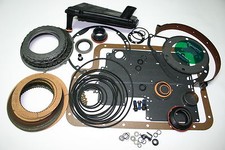
Fluid and filter service, a clean cooler circuit, and catching the rear case bushing or sun shell issues early can keep a 4R100 running well past 150,000-200,000 miles, especially behind a 7.3-liter Power Stroke that rarely abuses the transmission with high RPM. Once you see a spun case bushing, repeated converter codes 1728/1744 that a cooler and converter swap does not fix, or burnt clutch material in the pan, the wear has moved past what a service interval prevents and it is rebuild-kit territory.
Sources
- Sonnax — "Rear Case Bushing" (part numbers 36008B, 36008D). Backs the factory rear case bushings in the 4R100 and E4OD wearing out prematurely from lack of lubrication, excessive journal clearance, or too much load for the bearing area, and the one-piece replacement bushing installed with tool T36008A in place of the OE two-bushing design. sonnax.com
- Sonnax — "Oversized Rear Case Bushing" (part number 36008C). Backs the failure mode where an unaddressed worn bushing spins out and damages the case bore, requiring the bore to be machined before the oversized one-piece bushing is installed. sonnax.com
- Transmission Digest — "4R100: Repeated Converter Failure," Bob Warnke (Sonnax VP of Technical Development, TASC Force), published June 1, 2006. Backs the 2000 model year 7.3L diesel case study of four repeat converter failures, diagnostic codes 1728/1744, the TCC piston apply-pressure mechanism unique to the 4R100's modulated converter clutch circuit versus the E4OD's on-off circuit, the external pressure-bypass checkball opening at roughly 60 psi of cooler head pressure, and the recommendation to check cooler flow and head pressure together before replacing a converter. transmissiondigest.com
- Transmission Digest — "November 2002 Issue," Transmission TECH/TALK. Backs Ford's running change during the 2000 model year that added tabs to the center of the 4R100 sun-shell slots, eliminating the need for the No. 8 thrust washer between the forward and direct drums, and requiring a new installation tool for assembly. transmissiondigest.com
- Ford Customer Service Division (FCSD) Chemicals and Lubricants — official Motorcraft MERCON V product listing. Backs the MERCON V specification and part numbers (XT-5-QMC, XT-5-5Q3M, XT-5-DMC) Ford recommends for Ford, Lincoln and Mercury vehicles requiring MERCON V or MERCON-type fluid, including electronically controlled automatic transmissions, and that it may replace fluid previously serviced with the original MERCON spec. fcsdchemicalsandlubricants.com
- Ford Motor Company — 2002 Expedition Owner Guide (Maintenance and specifications; Driving: shift strategy). Backs the 4R100 fluid spec as Motorcraft MERCON (XT-2-QDX), the warning that MERCON and MERCON V are not interchangeable where MERCON is required, the 4R100 capacities of 15.0 L (15.9 qt) 4x2 and 15.5 L (16.4 qt) 4x4, the fluid check at 150-170 F on a level surface after about 20 miles, the overfill warning and 250 mL add increments, and the battery-disconnect adaptive relearn. Ford owner guide (archive.org PDF)