Mustang owners describe 4R70W shift problems differently than truck owners do. A truck owner says "it slips when I tow." A Mustang owner says the 1-2 feels lazy, the 2-3 hangs and then bangs in, the car shifts like a brick since the battery was replaced, or that it started shifting at 25 mph the week after the 4.10 gears went in. Some of those are failing hydraulics. Some of them are the computer doing exactly what it was told. Telling the two apart is most of the job.
This guide covers the automatic SN95 and New Edge cars through 2004, with the 3.8L V6 and the 4.6L SOHC V8, before Ford moved the Mustang to the 5R55S. I work the complaint in the same order every time: fluid, what the PCM is learning or being told, wiring, line pressure, then the specific valve body and accumulator wear points Sonnax and Transmission Digest have documented. Sources are at the bottom.
Step 1: fluid level and type, checked hot
Ford's 2002 Mustang owner guide lists Motorcraft MERCON V (XT-5-QM) for the automatic. The capacities are different by engine: 13.1 L (13.9 qt) behind the 3.8L V6 and 12.0 L (12.8 qt) behind the 4.6L V8. Ford flags both as approximate dry-fill numbers that vary with cooler size, and says the final level should be set on the dipstick, not by counting bottles. A pan drop only gives you a fraction of that back, so a basic service is a few quarts, not thirteen.
The same guide gives the check procedure: level surface, fluid at normal operating temperature of 66-77 C (150-170 F), which takes about 20 miles (30 km) of driving. It also says plainly that MERCON and MERCON V are not interchangeable, and that an overfill "may cause shift and/or engagement concerns." I mention that last part because Mustangs get topped off cold in driveways more than any other car I see. An overfilled 4R70W foams after a hard run, and foamy oil gives you soft, late shifts that come and go.
- Low: flares on the 1-2 and 2-3, worst on hard corners and launches when the oil sloshes off the filter pickup.
- Overfilled or foamy: soft shifts after highway or track use, fluid out the vent.
- Burnt with friction material in the pan: you are past a shift problem. Go to the Mustang 4R70W slipping guide.
Step 2: is it the adaptive relearn?
The 4R70W in these cars runs adaptive shift strategy. The PCM trims EPC pressure over time to hold shift times where Ford wants them, and that learned trim lives in keep-alive memory. Disconnect the battery, replace it, or clear the PCM, and the learned values are gone. Ford's owner guide is direct about it: after a battery disconnect the transmission "must relearn its adaptive strategy" and "may shift firmly," and Ford calls that normal.
So before I do anything else on a "suddenly harsh" Mustang, I ask whether the battery, PCM or any fuse was touched recently. If it was, the honest fix is to drive it through a range of light and moderate throttle shifts for a few days and let it relearn. If it is still harsh after a week of normal driving, or it gets worse instead of better, then it is a real problem and you move on.
Step 3: gear and tire changes move the shift points
This is the most Mustang-specific item on the list. The PCM does not measure road speed directly. It reads output shaft speed and converts it to vehicle speed using the axle ratio and tire size it was calibrated with. Shift points, converter lockup and the speedometer all hang off that number.
Swap a 2.73 or 3.27 axle for 3.73, 4.10 or 4.30 gears without updating the calibration and the output shaft spins faster at any given road speed. The PCM thinks the car is going faster than it is, so every upshift comes early, lockup comes early, and the speedometer reads high. Owners report exactly this on Mustang forums: "shifts too fast after the gear swap," upshifts that feel like they happen at a walk. Larger or smaller rear tires do the same thing in a smaller dose.
Nothing in the transmission is wrong, and no valve body or shift kit fixes it. The fix is to correct the axle ratio and tire size in the PCM calibration with a dealer tool or a custom tune. I see the opposite mistake too: a car with a correct calibration and a real hydraulic problem, where someone keeps reflashing the PCM to "fix" a worn bore. A quick sanity check: if your GPS speed and the speedometer disagree, look at the calibration first.
Step 4: codes, harness and the connector generation
Pull stored and pending codes, then road test with a scan tool logging commanded gear, shift solenoid states, commanded EPC, transmission fluid temperature, throttle position and output shaft speed. Several shift solenoid codes at once nearly always point to the shared 12-volt solenoid supply, a connector or a chafed wire, not several dead solenoids.
Mustangs straddle a harness change. ATRA's 2009 seminar interchange notes show that from 1993-1997 the 4R70W used a white case connector with soft wiring, and from 1998 on it went to a black connector with a separate hard plastic harness. The solenoids do not interchange between the two, and ATRA warns that installing the wrong harness "can create multiple codes and erratic shifts." A 1996-1997 car and a 1998-2004 car need different parts. Check what is in the case before you order.
On modified cars, follow the external harness along the transmission. Long-tube headers and aftermarket X-pipes put hot metal closer to that harness than Ford ever planned, and a melted section gives you intermittent codes and wrong-gear starts that look like a valve body problem.
Step 5: line pressure and line rise
With the electrical side proven, put a gauge on the line tap. Idle pressure only tells you the pump and regulator can make oil. Shift firmness on a 4R70W comes from line rise: as throttle opens, the PCM changes the EPC command and line should climb. Unplug the EPC solenoid and line should go to maximum.
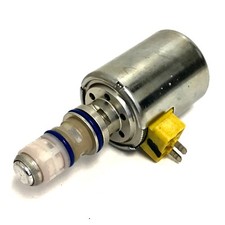
Transmission Digest's "I Lost My EPC" explains the classic failure. Wear in the pressure regulator valve bore lets the EPC signal leak into a passage that routes back to the pump inlet, so EPC pressure drops or disappears when the unit is hot. You get minimal line rise, sliding shifts and slip at medium to heavy throttle, and an EPC reading near zero at any throttle, even unplugged. A new EPC solenoid changes nothing. Their quick check is compressed air into the TV pressure port with the pan and filter off: air out around the EPC solenoid is normal, air out of the filter opening means the bore is worn into the suction side.
On a Mustang this matters more than on a stock truck, because a lot of these cars now make more torque than the factory calibration expected. A worn PR bore that a stock V6 could live with will burn the forward and direct clutches behind a supercharged 4.6.
Step 6: match the shift complaint to the wear point
Once fluid, calibration, wiring and pressure check out, the remaining complaints map to specific hydraulic wear. Sonnax's AODE/4R70W vacuum test guide and parts data line up with what Mustang owners actually describe:
| Mustang complaint | Likely cause | Sonnax repair |
|---|---|---|
| Soft, lazy 1-2, 1-2 slip | Weak or broken 1-2 accumulator springs (2001-up) | 76948-10K heavy duty 1-2 accumulator spring kit |
| Erratic shifts, 2-3 neutral, no 2nd, neutral after 4th | Solenoid regulator valve bore | 76948-14K (oversized 76948-47K) |
| 2-3 that binds, hangs or bangs in (2001-up) | Separator plate bow, forward-to-direct cross leak | 76507F-01K retainer plate kit |
| 4-3 neutral, no 4th, burnt OD band (2001-up) | Overdrive servo regulator valve and sleeve | 76948-29K |
| Soft shifts, low line rise, throttle buzz | Pressure regulator valve and bore | 76948-17K (1996-up) |
| Delayed engagement into gear | Manual valve bore wear | 76948-46 oversized manual valve |
The soft 1-2: start at the accumulator
The 1-2 accumulator cushions the intermediate apply. When its springs weaken or break, the shift loses its back pressure and turns soft and long, and under load it slips. Sonnax lists soft shifts, 1-2 slip and broken springs for its 76948-10K kit, which fits 2001-and-later 4R70W, 4R70E, 4R75E and 4R75W units. Two details from their parts data trip people up: use only the two springs in the kit (a green inboard and a yellow outboard), and some OE applications carry a blue inner spring that the kit does not use. Throwing the old blue spring back in on top of the new pair is a common way to get a 1-2 that is harsher than anybody wanted. While the cover is off, look at the accumulator bore. A scored case bore leaks 2nd clutch oil and no spring fixes that.
The 2-3 that hangs and then bangs: 2001-2004 cars
The forum description of a 2002 GT with "a lag and a hard jolt" on the 2-3 is one I hear a lot. On 2001-and-later units Sonnax documents the reason. Ford deleted the two-bolt stiffener plate under the 2-3 accumulator, along with the capacity modulator valve, and without that clamping force forward clutch oil pushes the separator plate up. Sonnax measured the plate bowing up to .011 in. at normal forward clutch pressure, which lets forward clutch oil cross into the direct circuit. A dragging direct clutch in 1st and 2nd and a fight between the two clutches on the 2-3 is the result.
Their tell: lay the upper gasket over the lower and you see a heavy valve body imprint everywhere except around the 2-3 accumulator. The fix is the 76507F-01K retainer plate kit, drilled and tapped into the valve body and separator plate using the lower gasket to locate the holes. Any 2001-2004 Mustang valve body on my bench gets one.
Erratic shifts after new solenoids
Shift solenoids do not make pressure. They exhaust or hold a regulated feed from the solenoid regulator valve, and when that bore wears, solenoid pressure drops and wanders. It drives exactly like a bad solenoid, the solenoids ohm out fine, and a new set changes nothing. Vacuum test the bore before you buy a second solenoid kit.
A word on shift kits
Almost every used automatic Mustang I see has had a shift kit at some point. A shift kit changes how hard the shift feels. It does not seal a worn bore, and a firm shift laid over a leaking circuit just hides the leak until the clutches burn. If you want a firmer car, fix the wear points first, set the calibration for your gear and tire, and then add firmness on purpose.
My Mustang 4R70W shift checklist
- Fluid: MERCON V, checked hot at 150-170 F, not overfilled, condition noted.
- Relearn: any battery, fuse or PCM work recently? Give it a week of normal driving.
- Calibration: axle ratio and tire size match the car. Compare speedometer to GPS.
- Codes and wiring: right connector generation (white 1996-1997, black 1998-up), harness clear of headers and exhaust.
- Pressure: idle line, line rise with throttle, max line with EPC unplugged.
- Hydraulics: 1-2 accumulator springs and bore, solenoid regulator and PR bores vacuum tested, retainer plate kit on 2001-up.
- Burnt fluid or slip under load means rebuild, not a valve body.
Sonnax Heavy Duty 1-2 Accumulator Spring Kit (76948-10K)
For a 2001-2004 Mustang with a soft, slipping 1-2 and a healthy accumulator bore, this is the spring set Sonnax lists for exactly that complaint. Sold by our sister store, CoreTransmissionParts.
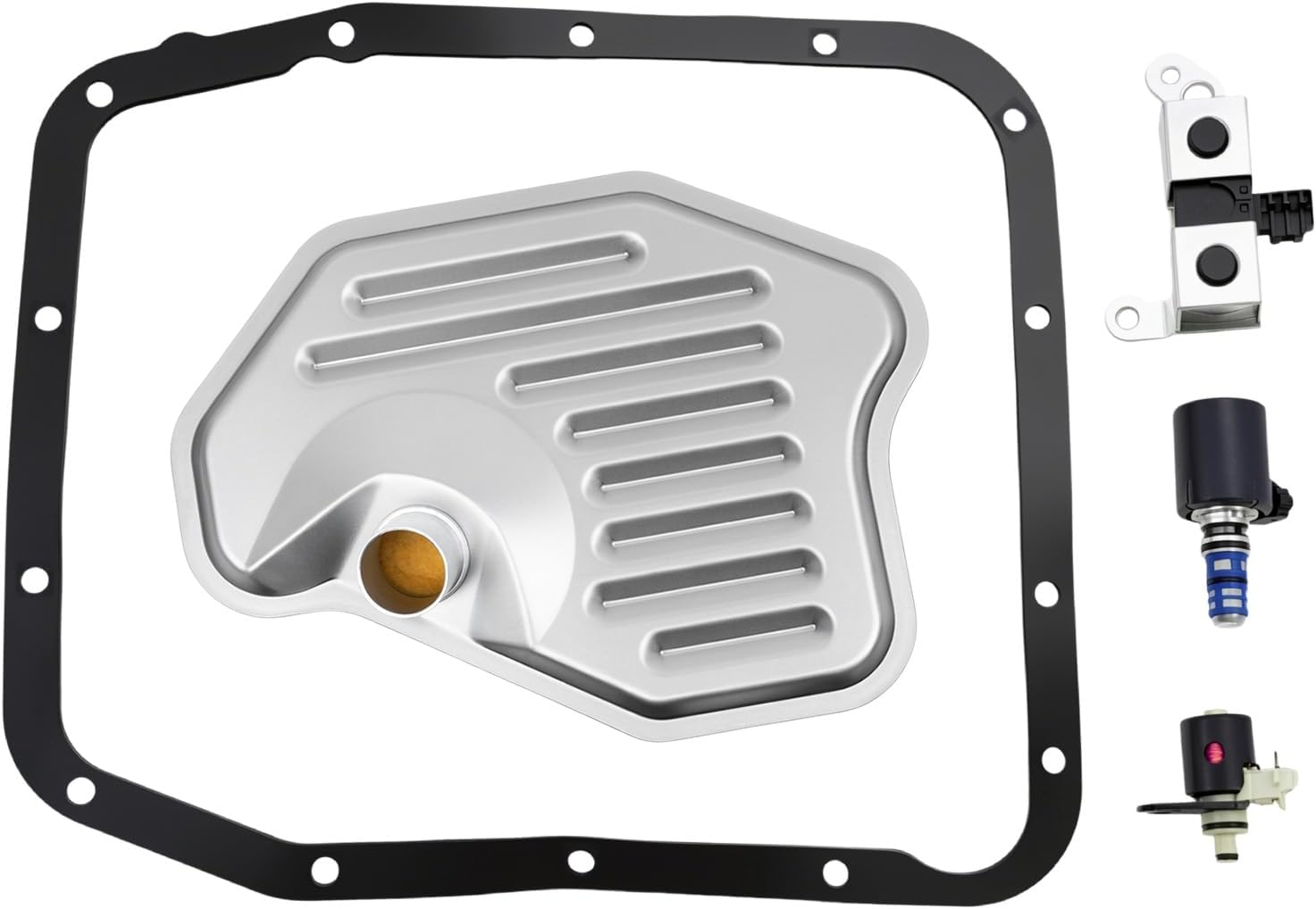
Shop the part for this fix →Need something else? The 4R70W parts collection has the solenoid regulator, OD servo regulator and retainer plate kits, Mustang filters and pan gaskets, and complete rebuild kits.
Need parts for this job?
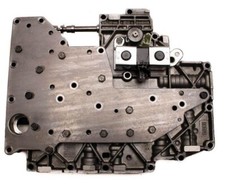
Our 4R70W parts page carries 2001-2008 valve bodies, shift solenoid and filter kits, EPC solenoids, internal harnesses for both connector generations, and master rebuild kits. Checkout is on site.
FAQ
Why does my Mustang 4R70W shift hard after replacing the battery?
Disconnecting the battery erases the adaptive shift values the PCM has learned. Ford's Mustang owner guide says the transmission must relearn its adaptive strategy afterward and may shift firmly, and calls that normal. Drive it normally for several days; if it stays harsh or gets worse, diagnose it as a real fault.
Why does my Mustang shift too early after a rear gear change?
The PCM converts output shaft speed to road speed using the axle ratio and tire size in its calibration. With deeper gears and no recalibration, the output shaft spins faster at any speed, so the PCM thinks the car is going faster and upshifts early, and the speedometer reads high. The fix is updating the axle ratio and tire size in the PCM, not transmission parts.
What transmission fluid and how much does a 4R70W Mustang take?
Ford's 2002 Mustang owner guide specifies Motorcraft MERCON V. Approximate dry-fill capacity is 13.1 liters (13.9 quarts) behind the 3.8L V6 and 12.0 liters (12.8 quarts) behind the 4.6L V8. Set the final level on the dipstick with the fluid at 150-170 F, and do not mix MERCON with MERCON V.
What causes a soft or slipping 1-2 shift in a 4R70W Mustang?
After low fluid and low line rise, the 1-2 accumulator is the usual suspect. Sonnax lists soft shifts, 1-2 slip and broken springs for its 76948-10K heavy duty 1-2 accumulator spring kit for 2001-and-later units. Inspect the accumulator bore at the same time, because a scored bore leaks 2nd clutch oil and new springs will not fix it.
Related guides
- 4R70W Mustang Common Problems and Fixes
- 4R70W Mustang Slipping: Causes and Fix
- 4R70W Shift Solenoid Symptoms, Testing and Replacement
- 4R70W Harsh Shift Causes
- 4R70W Won't Shift Into Overdrive
Sources
- Ford Motor Company, 2002 Mustang Owner Guide, Maintenance and Specifications. Backs Motorcraft MERCON V (XT-5-QM), 13.1 L (13.9 qt) for the 3.8L automatic and 12.0 L (12.8 qt) for the 4.6L automatic as approximate dry-fill, checking at 66-77 C (150-170 F) after about 20 miles, MERCON and MERCON V not interchangeable, overfill causing shift and engagement concerns, and the adaptive strategy relearn and firm shifts after a battery disconnect. Ford's host blocks direct access, so this links the Internet Archive copy. web.archive.org (PDF)
- Sonnax, Heavy Duty 1-2 Accumulator Spring Kit 76948-10K. Backs the soft shift, 1-2 slip and broken spring symptoms, fitment to 2001-later 4R70E/4R70W/4R75E/4R75W, the green and yellow spring pair, and the note that the OE blue inner spring is not used. sonnax.com
- Sonnax, "Ford 4R70E/4R70W/4R75E/4R75W/AODE Vacuum Test Guide." Backs the symptom lists for the solenoid regulator kits 76948-14K/47K, overdrive servo regulator kit 76948-29K, pressure regulator kit 76948-17K and oversized manual valve 76948-46. sonnax.com
- Sonnax, "4R70W/4R75W 2001-Later Forward/Direct Clutch Problems: The Easy Valve Body Fix." Backs the 2001 deletion of the 2-3 accumulator stiffener plate and capacity modulator valve, separator plate bow up to .011 in., the forward-to-direct cross leak, the gasket imprint check, and the 76507F-01K retainer plate kit. sonnax.com
- Transmission Digest, Wayne Colonna, "I Lost My EPC." Backs pressure regulator bore wear killing EPC pressure when hot, minimal line rise and sliding shifts, EPC near zero even unplugged, and the compressed-air test at the TV port. transmissiondigest.com
- ATRA, 2009 Technical Seminar Manual, Ford 4R70W/4R75E interchange information. Backs the 1993-1997 white soft-wire case connector versus the 1998-on black connector with a separate hard plastic harness, non-interchangeable solenoids, and the wrong-harness warning. atracom (PDF)