The Suburban 2500 is the 6L90 most shops see the least and misdiagnose the most. It is a three-row SUV on the outside, so people treat it like a Tahoe. Underneath, the gas 2500 carries the heavy-duty 6L90 behind a 6.0L V8 and a 3.73 axle, rated by GM to pull up to 9,600 lb. It gets parts from the wrong truck, fluid checked the wrong way, and a towing life that cooks clutches. This guide covers what actually fails, which GM bulletin or tech article backs it, and the reading that confirms it.
If the vehicle is a Silverado or Sierra 2500HD, see 6L90 Silverado 2500 common problems instead; the HD pickups have their own bulletins. For the older four-speed Suburbans, see 4L80E Suburban 2500 common problems.
The short version: Confirm it is a 6L90 first. The 2008 model year is a crossover, so read the RPO label (MYD, not MT1). On a 2008 or early 2009 truck, a harsh 2-3 or a lazy Reverse goes straight to GM bulletin 09-07-30-004J: air check the 1-2-3-4 / 3-5-R housing weld and look at the pump cover seal rings. Slipping or no Forward when cold, with or without P2723/P2724, starts at the No. 1 check ball. No line rise (stuck near 60-68 psi) is a TEHCM line pressure solenoid or pump problem, not a clutch problem. Check the fluid on the dipstick at 160-200 F, and service it every 50,000 miles if the truck tows.

Is It a 6L90? The 2008 Crossover Year
Do this before anything else. GM's 2008 Suburban owner manual covers the whole line, and its capacity table lists the 4L60-E/4L70-E, the 4L80-E at 7.7 qt and the 6L90 at 6.3 qt in the same table. So a 2008 Suburban 2500 can be either a four-speed 4L80E or the six-speed 6L90. GM bulletin 09-07-30-004J backs this up: it lists the 2008 Suburban and the 2008 Yukon XL among the vehicles with the 6L80 or 6L90. The 2008 book lists no 6L80, so those 2008 Suburbans are 6L90 trucks. Pull the glovebox label: MYD is the 6L90, MT1 is the 4L80E.
From 2009 the picture is cleaner. The 2009 manual lists the 4L60-E, the 6L80-E and the 6L90-E, and the 2011 manual lists only the 6L80-E and 6L90-E. Half-ton Suburbans get the 6L80. The 2500 gets the 6.0L and the 6L90.
| Spec (GM Suburban owner manuals) | Value |
|---|---|
| Transmission (2500 series, 6.0L V8) | Hydra-Matic 6L90, RPO MYD |
| Fluid | DEXRON-VI |
| Pan removal and filter replacement | 6.0 L / 6.3 qt (6L80 in the 1500: 5.7 L / 6.0 qt) |
| Axle ratio, 2500 6.0L | 3.73 |
| Max trailer, 2011 2500 | 9,600 lb 2WD / 9,400 lb 4WD (9,300 lb 4WD in 2009) |
| GCWR, 2500 | 16,000 lb |
| Transfer case fluid (4WD, 2011) | DEXRON-VI, 1.5 L / 1.6 qt |
| ATF change interval (2011) | 50,000 mi severe service, 100,000 mi normal |
The junkyard trap
Because there are far more half-ton Suburbans and Tahoes in salvage yards, 6L80 parts end up in 2500 Suburbans. Sonnax's no-movement analysis lists the result of mixing them the other way, a 6L90 valve body on a 6L80, as a no Reverse condition, and wrong separator plates give no Forward or no 3rd and Reverse. Match part numbers, not appearances. The same goes for a used TEHCM: Sonnax notes that an incorrect part number or a program file that does not match the VIN can cause no movement or no upshift.
Problem 1: Harsh 2-3, Slipping Reverse on 2008-2009 Trucks
GM bulletin 09-07-30-004J names the 2008 Suburban directly. The customer complaints it lists: slip or no Reverse, delayed Reverse engagement, a MIL with P0776, P2715 or P2723, harsh 2-3, harsh 4-5 or slip in 5th, and slipping when passing. Two separate causes are covered.
Cracked 1-2-3-4 / 3-5-R housing weld (2006-2008 units). The test works with the housing assembled or apart. Brush soap compound on the weld, hold your thumb over the air bleed passage, put air into the 3-5R clutch feed hole and watch for bubbles. Bubbles mean a new housing, no repair. GM lists the complete assembled housing for 2007-2008 MYD units as part number 24238695.
Leaking pump cover seal rings (2006 through early 2009). These units used a one-piece 1-2-3-4 and 3-5-R clutch fluid seal ring. GM says it can leak and cause a harsh 2-3, usually at low mileage. A two-piece ring went into production in December 2008, and its pump cover has a notch in the ring grooves for the tab. If the truck has one-piece rings, replace them with new one-piece rings; do not install one-piece rings on a notched two-piece cover. Ring orientation matters, and a backwards install brings the harsh 2-3 right back.
The drum leak tester below is made for exactly this air check, and it is cheaper than finding the crack after the unit is back in the truck. More on the Reverse side in 6L80/6L90 3-5-R clutch failure.
Problem 2: No Forward or Slipping in First When Cold
A Suburban that will not pull away cold, slips in Drive, or drops into neutral in first gear and then works fine warm is a classic 6L-series pattern. GEARS Magazine (ATRA) traces it to the No. 1 check ball in the upper valve body, part of the 1-2-3-4 clutch circuit. The ball wears from 0.250 in. down to 0.180 in. or less, then sticks in the spacer plate or blows through it, and the 1-2-3-4 clutch cannot apply.
It may set P2723 or P2724, or nothing at all. Know what the TCM does when it does set them, because the driver will describe it to you:
- P2723 (1-2-3-4 clutch ratio incorrect, three times): maximum line pressure, adapts frozen, Tow/Haul and tap shift disabled, and the transmission limited to Reverse and 5th. That is the "it takes off in a high gear" complaint.
- P2724 (clutch commanded off with input above 150 rpm in 1st): limited to 2nd below 1,400 rpm output speed, or 4th above it.
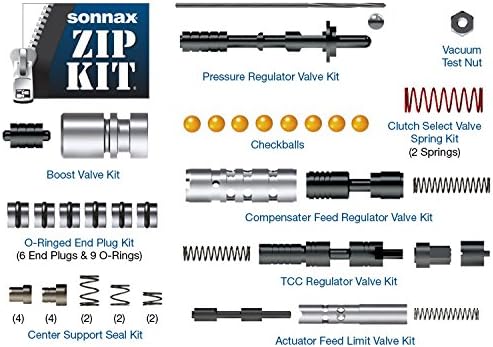
Pull the valve body and gauge the ball before ordering a TEHCM or tearing the unit down for the low one-way clutch. Replace every check ball while it is apart. Sonnax adds two more no-Forward causes worth ruling out at the same time: a stuck 1-2-3-4 clutch regulator valve, and clutch select valves installed backwards (valves go in first, springs outboard). Line pressure usually reads normal with all of these. See 6L90 no movement diagnosis for the full list.
Problem 3: No Line Rise, Burnt Clutches, Shudder on Apply
A heavy SUV that tows will burn clutch packs fast if line pressure does not rise with throttle. Put a gauge on it. Sonnax gives the readings that sort it out:
- About 60-68 psi with no rise at all, and no change when the connector is unplugged: the TEHCM line pressure solenoid is stuck in exhaust.
- Under about 30 psi at idle: the pressure regulator boost valve retaining pin may be missing from the pump.
- No movement and no pressure: pump pressure relief ball and spring missing, which shows up on rebuilt pumps, or a TEHCM filter gasket left out.
If the complaint is shudder during converter apply or while coasting to a stop, Sonnax points at the pump's TCC control valve, which can stick and can be air checked in the vehicle with the valve body off. A temporary no-move right after programming is also normal per Sonnax: key out, scan tool off, open and close the driver door, and give it 15-20 minutes before you condemn anything.
When the unit does come apart, Sonnax notes the OE 1-2-3-4 piston has such a high failure rate that most shops replace it on every rebuild, and a broken 3-5-R drum weld shows up as a slipping Reverse with 3rd and 5th complaints. That is the same housing GM's bulletin covers.
Problem 4: Heat When Towing
A 2500 Suburban at 16,000 lb GCWR is working the 6L90 harder than almost any other application. GM put the tools for watching it in the truck. The driver information center shows TRANS TEMP, and if fluid overheats the cluster displays TRANSMISSION HOT IDLE ENGINE with a chime. GM's instruction is to stop and idle until the message clears, and its manual warns that driving on overheated fluid can damage the transmission.
For a customer who tows, the questions to ask are simple. Are they using Tow/Haul? GM says it works best when the truck and trailer weigh at least 75 percent of GCWR. What does TRANS TEMP read on a grade? And when was the fluid last changed? A truck that runs hot on every hill with clean fluid and good cooler flow needs more cooler. Our 6L90 towing upgrades guide covers the options.
Before adding cooler, prove the one you have is getting flow. The 6L90 routes fluid through an external thermal bypass valve (TBV), and a TBV that sticks closed keeps fluid out of the cooler entirely. GM TechLink's six-speed overheating procedure: drive to about 190 F on the scan tool, confirm the pan reads close to that with an infrared thermometer (more than 15 F apart points at the fluid temperature sensor in the TEHCM), then measure the TBV and both cooler lines about 6 inches from the valve. If both lines are below pan temperature and the TBV is hotter than the pan, the valve is not opening. TechLink also notes GM's revised TBV fully opens at 158 F instead of 194 F and is stamped "70" on the bottom. For shift complaints that change with heat, see 6L90 Suburban shift problems.
Fluid Service: It Has a Dipstick, So Use It Right
The 2011 Suburban has a transmission dipstick at the rear of the engine compartment on the passenger side. GM's check procedure, condensed:
- Engine running, level ground, parking brake on. Move the shifter through every range, about three seconds each, back to Park.
- Idle at 500-800 rpm for at least one minute, then read TRANS TEMP on the DIC.
- Cold check only at 80-90 F, and only to confirm it is safe to drive. Read the lower level on both sides of the stick and keep it in the COLD band.
- Hot check at 160-200 F, which is the accurate one. The level should sit in the HOT cross-hatch. Low usually takes less than a pint.
A pan and filter service is 6.3 qt of DEXRON-VI. GM bulletin 23-NA-224 notes the 6L-series filter kit 24236933 is being replaced by filter 24236517 and seal 24225347 sold separately, and that the seal must be replaced every time the filter comes out. Order both. On 4WD trucks the 2011 transfer case also takes DEXRON-VI, 1.6 qt, on the same 50,000 mile severe schedule when towing. Cost and labor details are in 6L90 fluid change cost.
Shop 6L90 rebuild kits, valve body kits, filters and tools for the Suburban 2500 — shipped fast from the USA.
Shop 6L90 parts →Shop the 6L90 24236517 filter kit → All 6L90 parts
Keep the numbers at the bench. Our free transmission fluid spec chart lists the correct ATF for the 6L90 and dozens of other units, so nobody tops off a Suburban with the wrong fluid.
FAQ
Which Suburban has the 6L90 transmission?
The 2500 series. GM's 2009 and 2011 Suburban owner manuals list the 6L80-E and 6L90-E, and the 2500 with the 6.0L V8 is the 6L90 truck; half-ton Suburbans use the 6L80 or, on earlier years, a 4L60-E. The 2008 model year is a crossover, so read the RPO label: MYD is the 6L90 and MT1 is the 4L80E.
How much transmission fluid does a 6L90 Suburban take?
GM's 2011 Suburban manual lists 6.0 liters or 6.3 quarts of DEXRON-VI for a pan removal and filter replacement. That is a service fill, not a dry fill. Set the final level on the dipstick with the fluid at 160-200 F on the TRANS TEMP display.
Why does my 2008 Suburban 2500 have a harsh 2-3 shift or slip in Reverse?
GM bulletin 09-07-30-004J covers the 2008 Suburban for exactly that. A cracked weld on the 1-2-3-4 / 3-5-R clutch housing causes slip or no Reverse and harsh shifts, and the one-piece pump cover seal rings used until December 2008 can leak and cause a harsh 2-3. The housing is air checked with soap on the weld before parts are ordered.
How often should the 6L90 fluid be changed in a Suburban 2500?
GM's 2011 schedule is every 50,000 miles for severe service, which includes frequent trailer towing, hot city traffic and hilly or mountain driving, and every 100,000 miles for normal service. Most 2500s were bought to tow, so the 50,000 mile interval is the realistic one.
Sources
- General Motors — 2011 Chevrolet Suburban Owner Manual. Backs: 6L80-E 5.7 L / 6.0 qt and 6L90-E 6.0 L / 6.3 qt pan and filter capacities, DEXRON-VI, transfer case DEXRON-VI 1.5 L / 1.6 qt, the dipstick location and cold (80-90 F) and hot (160-200 F) check procedure, the 50,000 / 100,000 mile ATF intervals, TRANS TEMP and TRANSMISSION HOT IDLE ENGINE, Tow/Haul at 75 percent of GCWR, and the 2500 3.73 axle, 9,600 / 9,400 lb trailer and 16,000 lb GCWR ratings. 2011 Suburban owner manual (PDF)
- General Motors — 2008 and 2009 Chevrolet Suburban Owner Manuals. Backs: the 2008 capacity table listing the 4L80-E (7.7 qt) and the 6L90 (6.3 qt) with no 6L80, the 2009 table listing the 4L60-E, 6L80-E and 6L90-E, and the 2009 2500 4WD 9,300 lb trailer rating. 2008 Suburban owner manual (PDF) and 2009 Suburban owner manual (PDF)
- General Motors — Service Bulletin 09-07-30-004J, "Slips in Reverse or Third, Delayed Reverse or Drive Engagement, DTC P0776, P2715, P2723, Harsh 2-3 Shifts," February 2014 (hosted by NHTSA). Backs: 2008 Suburban and 2008 Yukon XL coverage, the condition list, the cracked 1-2-3-4 / 3-5-R housing weld and soap and air test, MYD housing 24238695, and the one-piece to two-piece seal ring change in December 2008. GM 09-07-30-004J (PDF)
- General Motors — Service Bulletin 23-NA-224, "Information on 6L50 (MYB), 6L80 (MYC) and 6L90 (MYD) Automatic Transmission Oil Filter and Seal Kit Part Number," December 2023 (hosted by NHTSA). Backs: kit 24236933 replaced by filter 24236517 and seal 24225347, and the seal replaced any time the filter is removed. GM 23-NA-224 (PDF)
- Sonnax — Jim Mobley, "GM 6L45/50, 6L80/90 No Movement Conditions: Analysis & Repair Tips." Backs: the post-programming no-move reset, wrong TEHCM part number or program file, 60-68 psi no line rise, under-30 psi boost valve pin, pump TCC control valve shudder, the 6L90 valve body on a 6L80 and separator plate mismatches, clutch select and clutch regulator valve faults, the 1-2-3-4 piston failure rate and the 3-5-R drum weld. sonnax.com/tech_resources/1216
- ATRA / GEARS Magazine — "What's Old Is New Again: 6L45/6L50/6L80/6L90 No Forward, Slips Moving Forward" (August 2024). Backs: the No. 1 check ball wearing from 0.250 in. to 0.180 in., its place in the 1-2-3-4 clutch circuit, and the P2723 and P2724 set conditions and failsafe actions. GEARS: no forward, slips moving forward
- GM TechLink — "6-Speed Transmission Overheating Conditions Diagnosis," October 2022. Backs: the 190 F test drive, pan vs scan tool comparison and 15 F sensor threshold, the TBV and cooler line temperature checks, and the 194 F vs 158 F TBV with the "70" stamp. gm-techlink.com