The Suburban 2500 shares its 4L80E with the 3/4-ton pickup, but it does not live the same life. It is a heavy, long-wheelbase wagon that spends its time pulling a camper or a boat with a full load of people inside, and most of the ones that come through the door are 4WD. That combination changes which problems show up and how you chase them. GM's 2005 transmission diagnostic document for the 4L80E lists the Suburban and Yukon XL by name, "when used with" the 4.8L, 6.0L (LQ4) and 8.1L (L18), and the 2006 Suburban owner manual lists the 6.0L and the 8.1L Vortec among its engines. In a 2500 you will almost always find one of those two.
If you want the plow-truck and roller-clutch side of this transmission, that is covered in our Silverado 2500 4L80E problems post. This one sticks to what is different about the Suburban: where the speed signal comes from on a 4WD truck, what goes wrong when the wrong output carrier goes back in after a rebuild, which valve body belongs in which year, and how GM's heat warnings work in this vehicle.
The short version: On a 1994-and-later 4WD Suburban 2500 the output speed sensor lives on the transfer case, not the transmission. A transfer case swap, a bad transfer case sensor or a wrong output carrier after a rebuild will show up as late shifts, gear-ratio codes or P0502/P0503. Valve bodies changed in 1997 and again in 2004, so match the casting to the year. GM sets TRANSMISSION HOT at about 265 F and TRANS HOT IDLE ENGINE at about 275 F; normal is 180-200 F.
First: Confirm It Is a 4L80E
Before any diagnosis, make sure you are working on the right transmission. Through the GMT400 and GMT800 years, the gas Suburban 2500 is a 4L80E truck. The GMT900 years are where people get caught: GM's 2008 Suburban owner manual lists fluid capacities for the 4L60-E/4L70-E, the 4L80-E and the 6L90 in the same table, because the book covers the whole Suburban line. Pull the RPO label from the glovebox. MT1 is the 4L80E. If you see a six-speed code, you are reading the wrong article; our 4L80E vs 6L90 post covers how to tell them apart on the truck.
| Item | GM spec (Suburban owner manuals) |
|---|---|
| Transmission fluid | DEXRON-VI (2006 manual) |
| 4L80-E pan-drop refill | 7.7 qt (7.3 L) (2008 manual) |
| Transfer case fluid | 2.0 qt (1.9 L); AUTO-TRAK II on the automatic transfer case |
| Normal fluid temperature | 180-200 F (82-93 C) |
| TRANSMISSION HOT / protection mode | About 265 F (130 C), clears below 260 F (127 C) |
| TRANS HOT IDLE ENGINE | About 275 F (135 C) |
| Fluid and filter change | Severe service every 50,000 mi; normal service at 100,000 mi |
Note the transfer case fluid line. On an AutoTrac Suburban the transfer case uses its own fluid, not ATF. Do not top it off out of the same bottle you used for the transmission.
1. Late Shifts and Speedometer Problems: The Speed Signal Lives on the Transfer Case
What the driver says: it holds 1st and 2nd way too long, the speedometer is wrong or jumps around, or the check engine light is on for a vehicle speed sensor. Sometimes it started right after a transfer case was replaced.
Why it happens on a Suburban: the 4L80E reads output speed differently depending on the drivetrain and the year. Per a Transmission Digest technical bulletin from March 2001, starting with the 1994 model year GM eliminated the output shaft speed sensor on all K (4x4) trucks, and the speed-sensor exciter ring on the output carrier went with it. From then on, a 4WD Suburban gets its output speed signal from a sensor on the transfer case. 1993-and-earlier K models and every 2WD truck still need a working sensor in the transmission case and a carrier with the ring.
That means on a 1994-up 4WD Suburban, a bad transfer case speed sensor, a damaged tone wheel in the transfer case, or a connector problem at the transfer case all look like transmission problems. The PCM shifts on output speed. Give it a bad number and it shifts at the wrong time.
What the PCM watches: GM's 2005 4L80E diagnostic document defines P0502 (vehicle speed sensor low input) as output speed under 50 rpm while the engine is running, the selector is out of Park/Neutral, throttle is 10% or more and input speed is above 1,400 rpm. P0503 (vehicle speed sensor loss) flags an unrealistic drop in output speed of more than 1,000 rpm while in a drive range. Both tests are blocked for 2 seconds after a 4WD Low change, which tells you GM knew the transfer case shift can upset the signal.
How I check it:
- On the scan tool, compare vehicle speed with the speedometer and with a GPS speed on a road test. A clean signal tracks smoothly; a failing sensor drops out or spikes.
- Watch input speed and output speed together in each gear. In 3rd they should be equal, since 3rd is 1:1.
- On a 1994-up 4WD truck, start at the transfer case sensor and its connector, not the transmission.
- If the transfer case was swapped, make sure the replacement is from a truck with the same output speed setup. A unit from a different application can give the wrong pulse count.
4L80E Input and Output Speed Sensor Set, OEM 24203876
The case-mounted sensors for the 4L80E: input speed on every truck, and output speed on 2WD and pre-1994 4WD. On a 1994-up 4WD Suburban the output signal comes from the transfer case, so test that one first.
Shop the speed sensor set →Need a different part? Browse the full 4L80E parts collection.
2. Gear-Ratio Codes After a Rebuild: The Wrong Output Carrier
What the driver says: the transmission was just rebuilt or replaced, and now it shifts late, runs at maximum line pressure, or sets a gear-ratio code. The shop already replaced the sensor.
Why it happens: because 1994-up 4WD units do not use the exciter ring, there are 4L80E output carriers in circulation with no ring. Wayne Colonna of ATSG explained in Transmission Digest ("Repeat Performance, Not by Popular Demand") that carriers without the ring were sometimes reused in 2WD units that needed one. The park lugs sit close enough to the sensor to make a signal, but it reads about half the real speed: roughly 6 mph when the truck is doing 12. The result is very late shifts. Colonna notes shops would replace the speed ratio adapter and even the computer before finding it.
The March 2001 Transmission Digest bulletin gives the scan tool picture: line pressure at maximum, code 85, P0730 or P1871 for an undefined gear-ratio error, a 1st gear ratio that reads zero, 2nd reading 2.48 (which is really a 1st gear ratio), 3rd reading 1.09 with input and output speeds not matching, and 4th reading 0.78.
This matters on a Suburban for two reasons. A 4WD Suburban transmission that goes into a 2WD truck, or a 2WD unit that gets a carrier pulled from a 4WD core, will have this problem. And a pre-1994 4WD Suburban needs the ring too. The check is simple: pull the case output speed sensor and look into the hole. If there is no ring, you found it.
The fix: install an output carrier with the exciter ring wherever the vehicle uses the case-mounted output sensor. On a 1994-up 4WD truck, the case hole should have a plug, and the signal comes from the transfer case.
3. Wrong-Year Valve Body or Harness
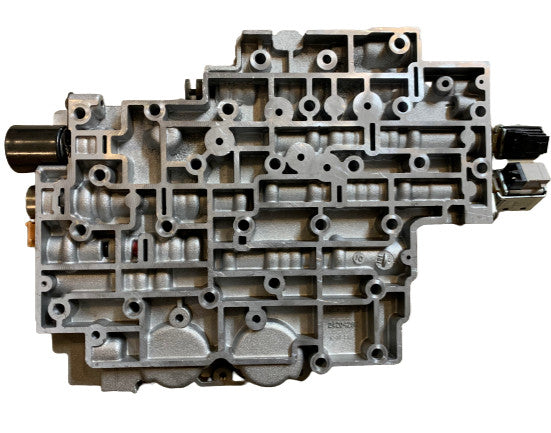
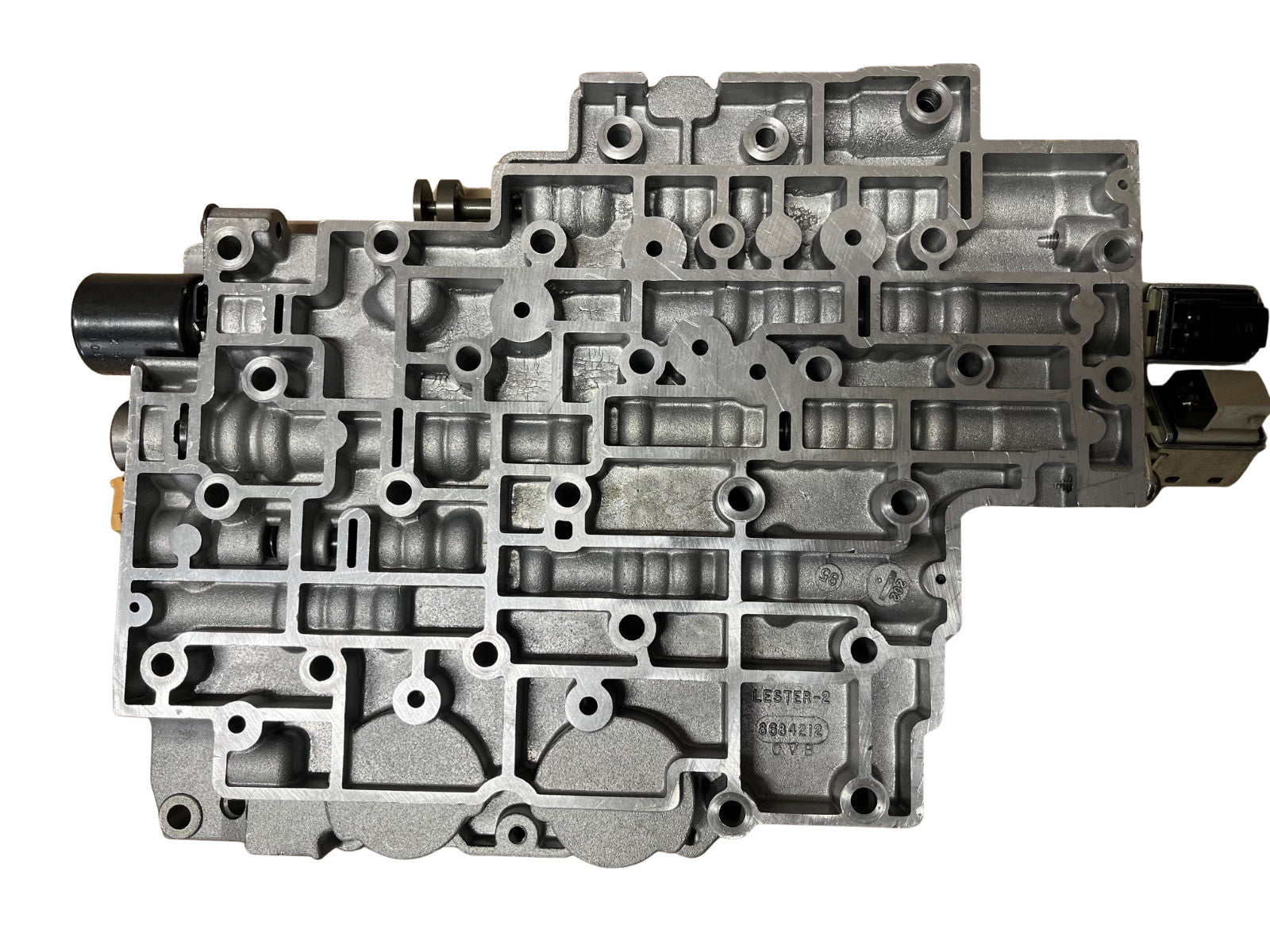
Suburban 2500s cover the whole 4L80E production run, so swapped transmissions and mixed parts are common. Sonnax's 4L80-E valve body identification guide breaks them down by year: GM026 for 1991-1992 with a screw-in temperature sensor (used only in 1991), GM027 for 1992-1996 with the temperature sensor moved into the internal wiring harness, GM028 for 1997-2003, and GM029 for 2004-later, which has the late-style EPC solenoid with the silver canister. Sonnax gives a quick visual check: 1991-1996 bodies have two small holes on the upper right side that 1997-later units do not, and the lube hole moved on 1997-2003 units.
Put a 1997-later valve body on an early case, or the wrong-generation harness on the wrong body, and you can get pressure and shift complaints that no amount of solenoid swapping will fix. Match the valve body to the case year, and match the internal harness to the valve body. On a high-mileage truck with solenoid codes that keep coming back, the bores are usually worn; our 4L80E valve body wear guide covers the vacuum test and the fix.
4. Heat: The Long-Haul Suburban Problem
A Suburban 2500 does its towing at highway speed for hours, often with a family and luggage aboard. That is a heat problem more than a shock-load problem. GM's 2006 Suburban owner manual gives the limits clearly:
- Normal: 180 F to 200 F (82 C to 93 C) on the transmission temperature gage.
- About 265 F (130 C): the message center shows TRANSMISSION HOT and the transmission enters a protection mode that changes the shift pattern. It returns to normal below 260 F (127 C).
- About 275 F (135 C) or more: TRANS HOT IDLE ENGINE with a chime. GM tells the driver to pull off, set the parking brake, put it in Park and idle until it drops below 260 F, and to call a dealer if it keeps running above 265 F.
The same manual lists what pushes it there: towing, hot weather, hauling a large or heavy load, overloading, low or high fluid level, and restricted airflow to the radiator and auxiliary transmission cooler. It also says to use Tow/Haul when the transmission is running hot. If a customer tells you the protection-mode shift pattern shows up on every trip to the lake, do not just change the fluid. Check the level hot, check cooler airflow and cooler flow, and find out how heavy that trailer really is.
Service it on the severe schedule. GM's 2006 Suburban maintenance schedule calls for a transmission fluid and filter change every 50,000 miles under severe service, which it defines as heavy city traffic where it regularly reaches 90 F, hilly or mountainous terrain, frequent trailer towing, or taxi, police or delivery use. Normal service is a change at 100,000 miles. Most Suburban 2500s fall under severe. Use DEXRON-VI, and finish the fill on the dipstick with the fluid hot; the manual notes that it generally takes less than a pint to go from low to full on a hot check, so overfilling is easy. More cooling fixes are in our 4L80E overheating guide.
5. The Codes Every 4L80E Shares
Everything that goes wrong in a pickup 4L80E can also go wrong in a Suburban. GM's 2005 diagnostic document lists P0741 (TCC stuck off, set at 125 rpm or more of converter slip with TCC commanded on in 2nd or 3rd), P0894 (transmission component slipping, 100-550 rpm of slip with the TCC locked in 4th), the shift solenoid codes P0751-P0758, and P0711-P0713 for the fluid temperature sensor. A stuck or erratic temperature sensor reading matters more than usual on a Suburban, because the PCM uses that reading to decide when to go into hot mode. Our P1870 TCC slip guide and the 4L80E speed sensor symptoms post go deeper on those.
When It Is Time for a Rebuild
If the pan has metal or a lot of friction material, or the truck has spent time above 265 F, rebuild it. On a Suburban, add these to the usual list: confirm the output carrier has or does not have the exciter ring to match the truck, put back a valve body and harness from the correct year, flush the cooler and lines, and test the transfer case speed sensor before the truck leaves. Skipping the carrier check is how a good rebuild comes back with late shifts the first week.
Keep the numbers at the bench. Our free transmission fluid spec chart lists the correct ATF for the 4L80E and dozens of other units, so nobody tops off a tow rig with the wrong fluid.
FAQ
Does my Suburban 2500 have a 4L80E or a 6L90?
Gas Suburban 2500s from the 1990s through the mid-2000s generally use the 4L80E; GM's 2005 4L80E diagnostic document lists the Suburban and Yukon XL with the 6.0L and 8.1L. GM's 2008 Suburban owner manual lists capacities for both the 4L80-E and the 6L90, so on GMT900 trucks check the RPO label in the glovebox before ordering parts. MT1 is the 4L80E code.
Where is the output speed sensor on a 4WD Suburban 2500 4L80E?
On 1994-and-later 4WD trucks it is on the transfer case, not the transmission. Transmission Digest reports that GM eliminated the transmission output shaft speed sensor and the exciter ring on the output carrier on all K (4x4) trucks starting with the 1994 model year. 1993-and-earlier K models and all 2WD trucks still need the case-mounted sensor and a carrier with the ring.
What does TRANS HOT IDLE ENGINE mean on a Suburban?
The 2006 Suburban owner manual says it appears at about 275 F along with a chime. GM tells the driver to pull over, put it in Park and idle until the fluid drops below 260 F. The earlier TRANSMISSION HOT message and protection mode come on at about 265 F; normal is 180 to 200 F.
How often should a Suburban 2500 4L80E get a fluid and filter change?
GM's 2006 Suburban maintenance schedule lists a severe-service fluid and filter change every 50,000 miles for trucks that tow often, work in hilly terrain or run in 90 F city traffic, and a normal-service change at 100,000 miles. The fluid is DEXRON-VI, and a pan drop on the 4L80-E takes about 7.7 quarts per GM.
Sources
- General Motors — 2005 4L80E Transmission Diagnostic Parameters (OBD). Backs: 4L80E use with the 4.8L, 6.0L (LQ4) and 8.1L (L18) in the Suburban, Yukon XL and other trucks; P0502 and P0503 set conditions including the 4WD Low change lockout; P0741, P0894, P0751-P0758 and P0711-P0713 definitions. GM 2005 4L80E diagnostic parameters (PDF)
- General Motors — 2006 Chevrolet Suburban Owner Manual. Backs: 180-200 F normal range, TRANSMISSION HOT at about 265 F, TRANS HOT IDLE ENGINE at about 275 F, causes of high temperature and Tow/Haul use, DEXRON-VI and AUTO-TRAK II fluid specs, the 50,000-mile severe-service and 100,000-mile normal-service fluid and filter intervals, hot-check fill guidance, and the 6.0L and 8.1L engine list. GM: 2006 Chevrolet Suburban owner manual (PDF)
- General Motors — 2008 Chevrolet Suburban Owner Manual, Capacities and Specifications. Backs: 4L80-E 7.7 qt (7.3 L) refill, 2.0 qt transfer case, and the same table listing the 4L60-E/4L70-E and 6L90. GM: 2008 Chevrolet Suburban owner manual (PDF)
- Transmission Digest — March 2001 technical bulletins, "GM Trucks and Vans With 4L80-E Transmission: Gear-Ratio Error." Backs: the 1994 elimination of the output shaft speed sensor and exciter ring on K (4x4) trucks, the sensor requirement on 1993-earlier K models and 2WD, and the scan tool ratios and codes (85, P0730, P1871) caused by a carrier with no ring. transmissiondigest.com/march-2001-issue
- Transmission Digest — Wayne Colonna (ATSG), "Repeat Performance, Not by Popular Demand." Backs: OSS relocation to the transfer case on 1994-up 4WD units, ring-less carriers reused in 2WD units, the half-speed signal from the park lugs and the resulting late shifts, and checking for the ring through the sensor hole. transmissiondigest.com
- Sonnax — "GM 4L80-E Valve Body Identification." Backs: GM026/GM027/GM028/GM029 valve body years, the screw-in temperature sensor used only in 1991, the two identifying holes on 1991-1996 bodies, the moved lube hole on 1997-2003, and the silver-canister late EPC on 2004-later. sonnax.com/tech_resources/379