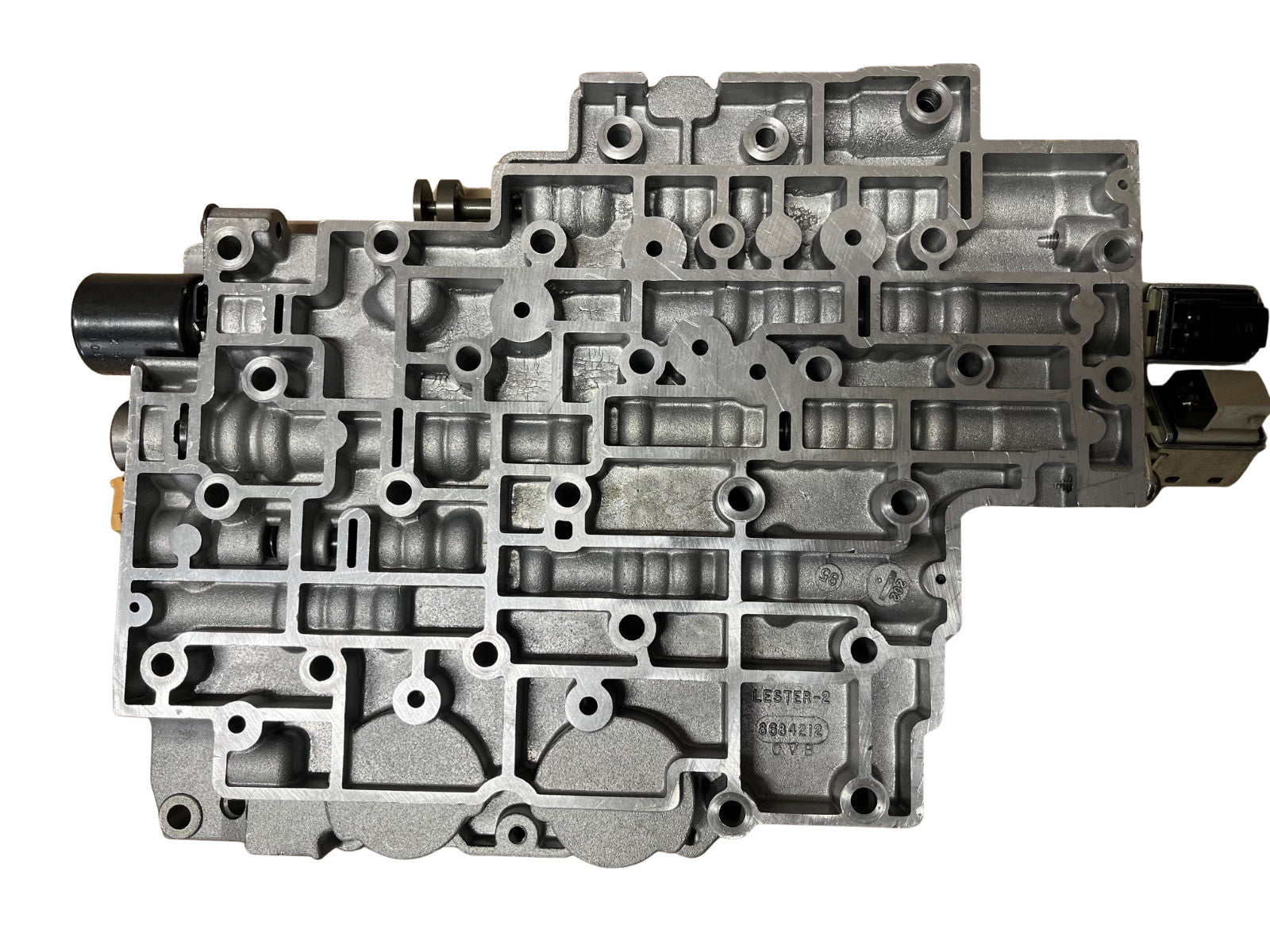
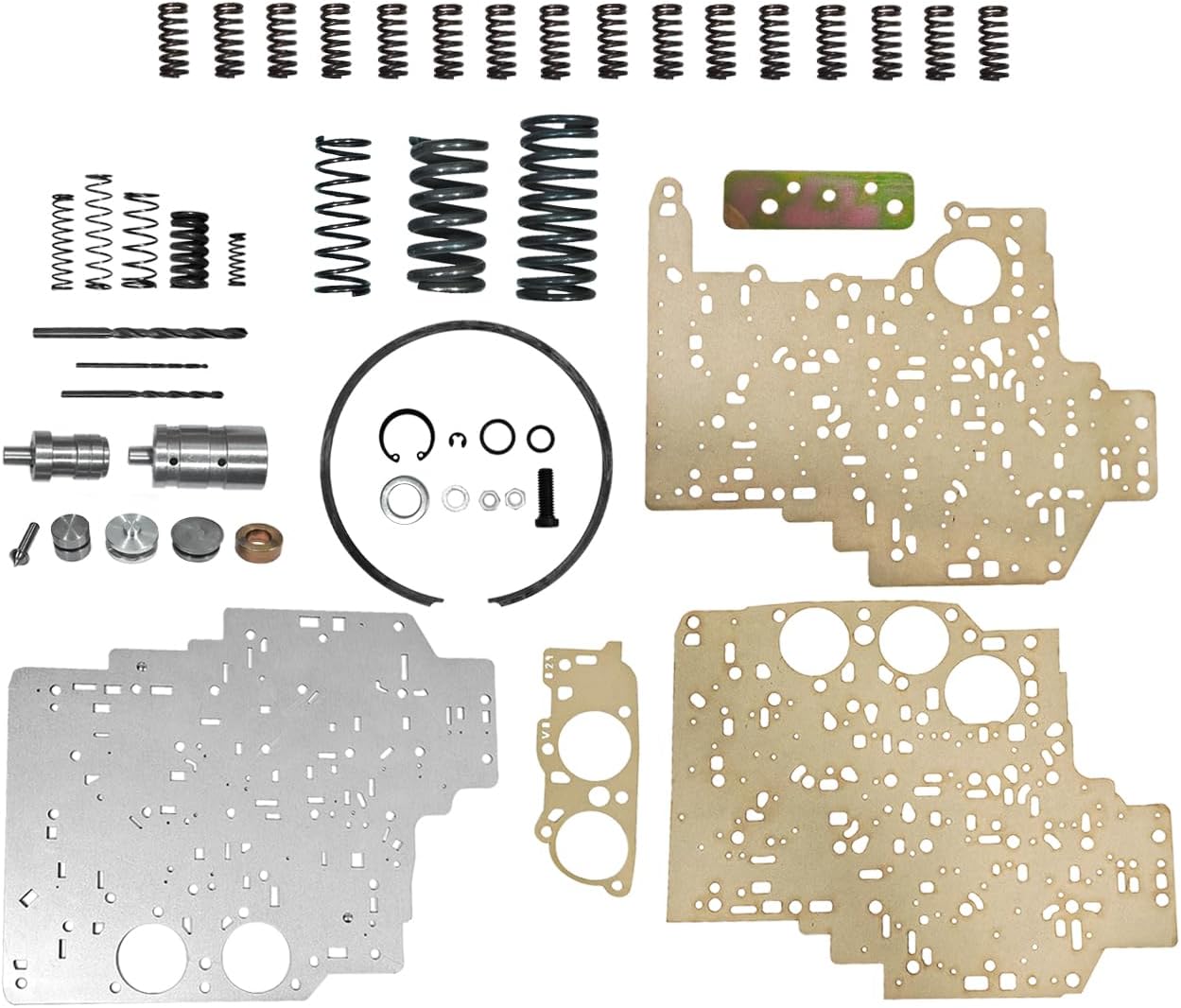
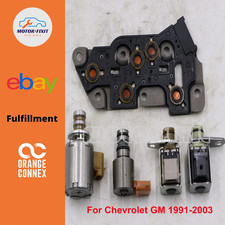
A 1993-1996 4L80E that flares on the 1-2 shift, burns clutches behind otherwise normal driving, drops out of 3rd or 4th gear, or shudders during torque converter lockup usually has a specific set of worn bores inside the valve body rather than a random electrical fault. This is a remanufactured 4L80E valve body for 1993-1996 applications, rebuilt with updated valves in the bores that wear first on this unit, then bench-verified before it ships.
Which bores wear and what they do in a 1993-1996 4L80E
On this generation of 4L80E, four circuits inside the valve body take the brunt of the wear: the pressure regulator and boost valve bore that sets base line pressure, the actuator feed limit (AFL) valve that regulates the solenoid feed circuit for every shift and TCC event, the TCC regulator and apply valve, and the 1-2 and 2-3 shift valve bores. The AFL valve bore in particular sees heavy side-loading from the EPC solenoid's constant on and off oscillation, and that side-loading opens the bore faster than straight axial wear would. Once any of these bores opens up, pressure that should go to a clutch pack leaks past the valve instead, and the clutch applies late, slips, or never gets full holding pressure - which is what burns friction material off a plate even though the computer commanded the correct apply.
Symptoms tied to each worn circuit
- Pressure regulator or boost valve wear: low overall line pressure, or a buzz and high line pressure from a leaking balance plug
- AFL valve wear: inconsistent shift feel that tracks with EPC solenoid duty cycle rather than a clean on or off fault
- TCC regulator wear: converter shudder or slip specifically during lockup, not during normal gear changes
- 1-2 or 2-3 shift valve bore wear: flare or no-upshift on one specific gear change rather than all of them
Confirm which bore is worn before you order
A vacuum test on the removed valve body pinpoints which bore is actually leaking instead of guessing from drive symptoms alone. Our valve body wear and bench-fix guide walks through that bore-by-bore test, and the pressure control solenoid symptom guide helps separate an EPC solenoid problem from a valve body problem when the symptom pattern overlaps.
Fitment
This unit fits the 4L80E as installed in 1993-1996 GM trucks and vans. The 4L80E changed internally more than once across its run, so match your core unit's casting number and connector count against this listing before ordering, or send your year, make, and model and we will confirm the correct version for your application.
Install notes
Install with fresh Dexron VI ATF and a new filter so none of the debris that came off the old worn bores reaches this one. Pair it with a filter and gasket kit if yours is still the original, and if the pump on your unit is original too, have it checked at the same time - a worn pump bore can reproduce some of the same low-pressure symptoms this valve body is built to fix. Torque the bolts to spec in the published sequence and run the adaptive relearn after the swap.