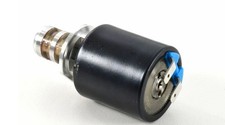
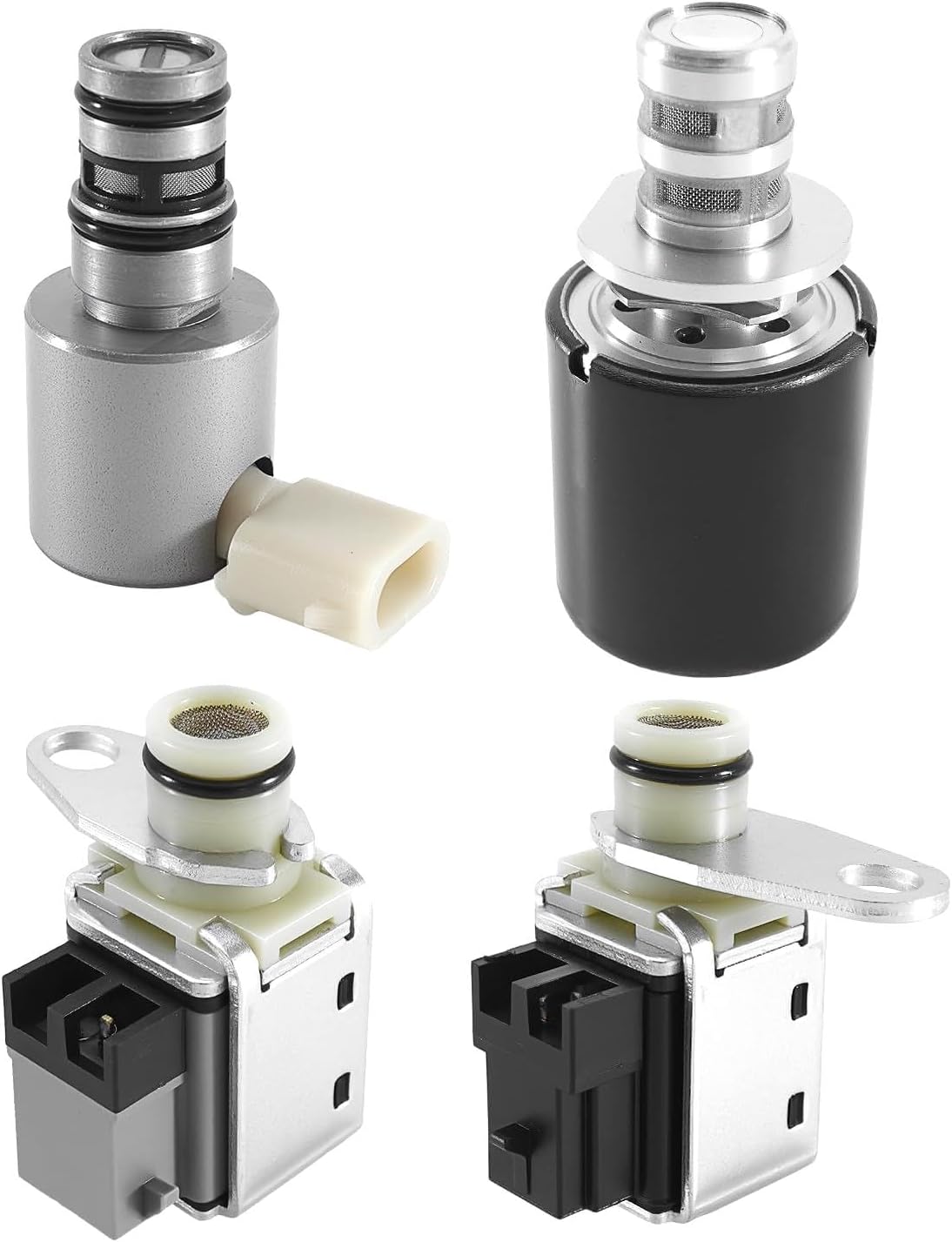
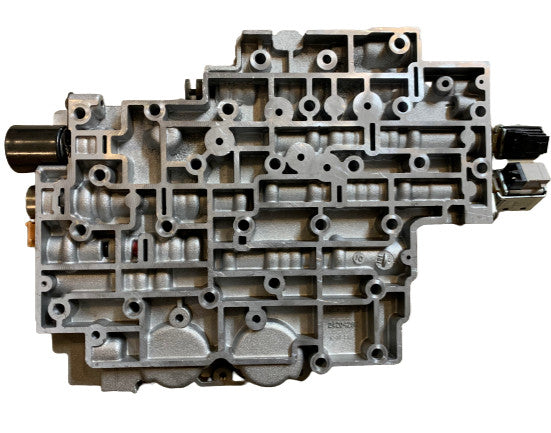
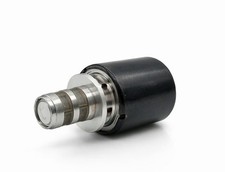
This new pressure control solenoid is listed for the GM 4L80E from 1993 to 2002, and it is the most budget-friendly force motor we carry for those years. It suits the Chevrolet and GMC 2500 and 3500 trucks, Suburban 2500s and full-size vans of the period, including the many 6.5L turbo diesel trucks that run this transmission. Buyers searching for it are usually dealing with banging gear changes, a slipping 2-3 shift under load, or a P0748 code that will not stay cleared.
What the pressure control solenoid does in a 4L80E
Every clutch and band apply in the 4L80E is only as firm as line pressure allows, and the force motor is how the module sets it. The module applies a variable current, from about a tenth of an amp to a little over one amp, and the solenoid responds by venting signal oil that moves the pressure regulator. Current up, pressure down. Lose the circuit entirely and the module defaults to full pressure. That is why a dead coil feels harsh, while a solenoid that is sticking or being fed a bad load signal feels soft and slips.
Symptoms and related 4L80E failures
- Hard shifts and a thump into gear at all throttle openings, with P0748 or the older code 73
- Long, flared upshifts when loaded and dark, burnt-smelling fluid
- Line pressure low in every range, which is often worn pump bushings rather than this solenoid
- On 6.5L diesels, soft shifts and repeated clutch burn-ups with a solenoid that tests good
How to confirm it, especially on a 6.5L diesel
A GM line pressure test sets the limits: in Park, Neutral and the Drive ranges, at least 35 psi at idle and up to 171 psi at greater throttle; in Reverse, 67 psi at idle and up to 324 psi. High pressure that will not come down points at this solenoid, its connector or the module ground. Low pressure across the board points at the pump. Diesel owners have one more check. Gregg Nader of the Sonnax TASC Force explains in Transmission Digest that a worn 6.5L injection pump can over-fuel, so the truck pulls away on 2 to 10 percent pedal instead of the normal 50 to 100 percent. The module reads that as a light load and commands too little pressure, and clutches burn with a perfectly good solenoid. Hold a hot engine at 2,000 rpm in Park; if it keeps climbing on a steady pedal, look at the pump first. Our low line pressure guide walks through that test, and the Silverado 2500 shift problems guide covers the other common causes.
Fitment
The listing names 1993-2002, but the pictured solenoid has the black body GM introduced with 1994 production, replacing the silver Bosch unit used in 1991-1993 transmissions. ATRA notes the valve body oil passages changed at the same time and that the two designs do not interchange. If you own a 1994-2002 truck this is a direct match. If you own a 1993, remove your solenoid and look at its color and connector before you order; a silver original or an untouched early valve body needs confirmation, so send us your year and VIN. For other year ranges see the 4L80E shop page.
Install notes
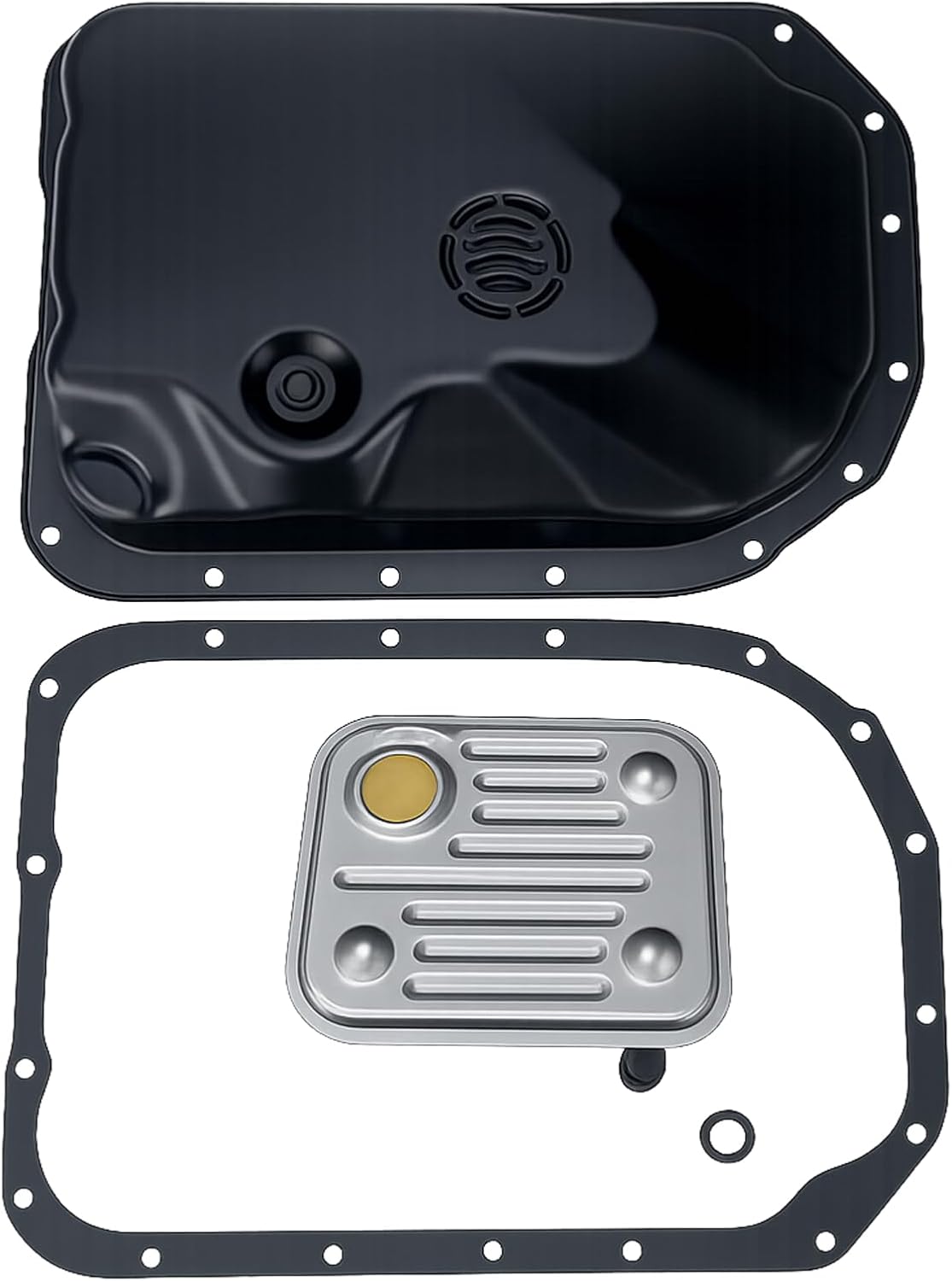
This is an in-truck, pan-off repair. Drain the pan, remove the filter, unplug and unclip the solenoid and slide it out of the valve body. Clean the bore and look for wear; a scored bore will bleed off pressure no matter what part is in it. Fit the new solenoid with fresh O-rings coated in ATF. Always put in a new filter and gasket while the pan is off, such as the ATP TF-174 4L80E filter kit. If the valve body itself is worn or varnished, a remanufactured 1997-2002 4L80E valve body with solenoids is an option for those years once you match the casting number. Refill with Dexron VI, which is back-serviceable for the Dexron III the factory specified, and set the level with the fluid hot.