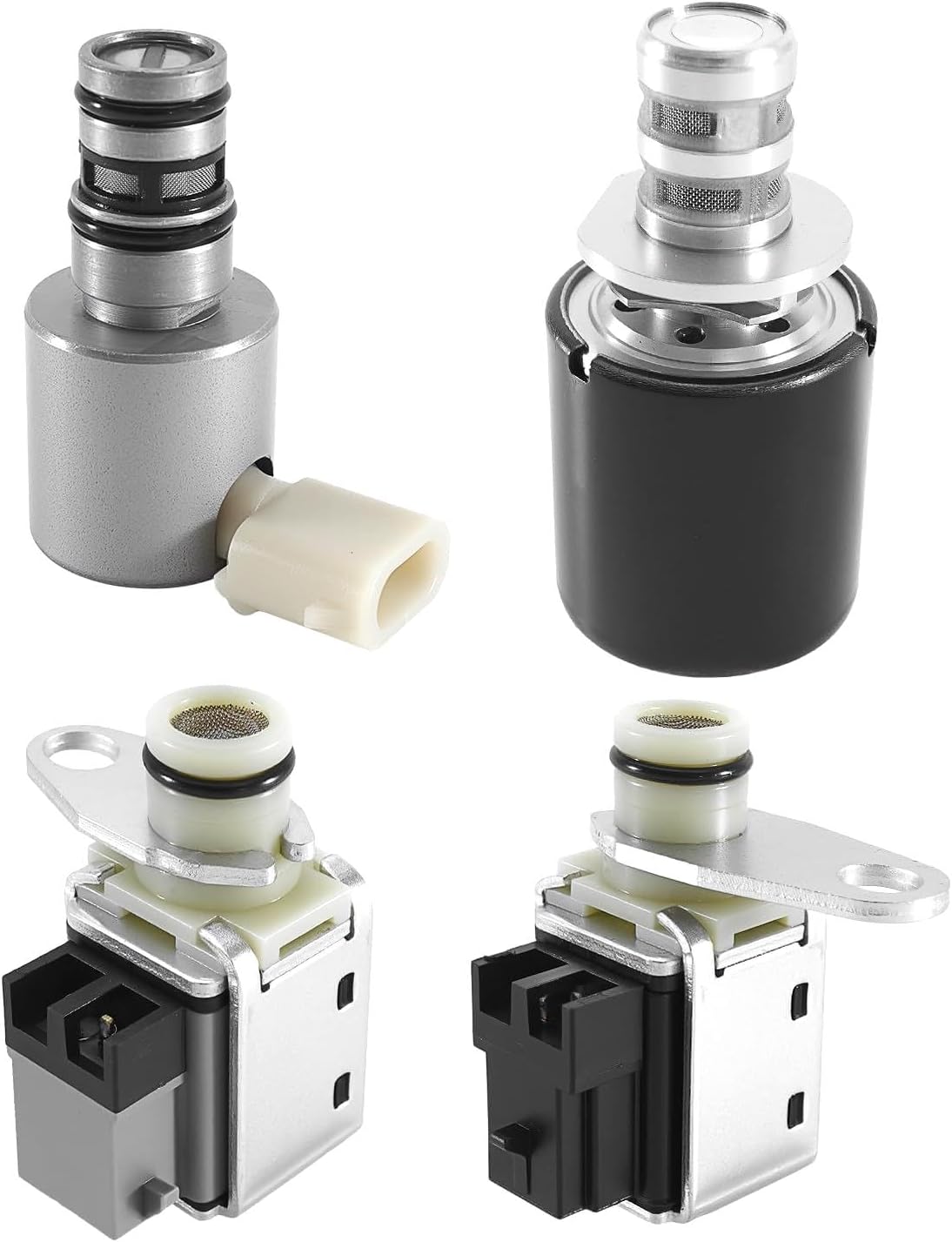
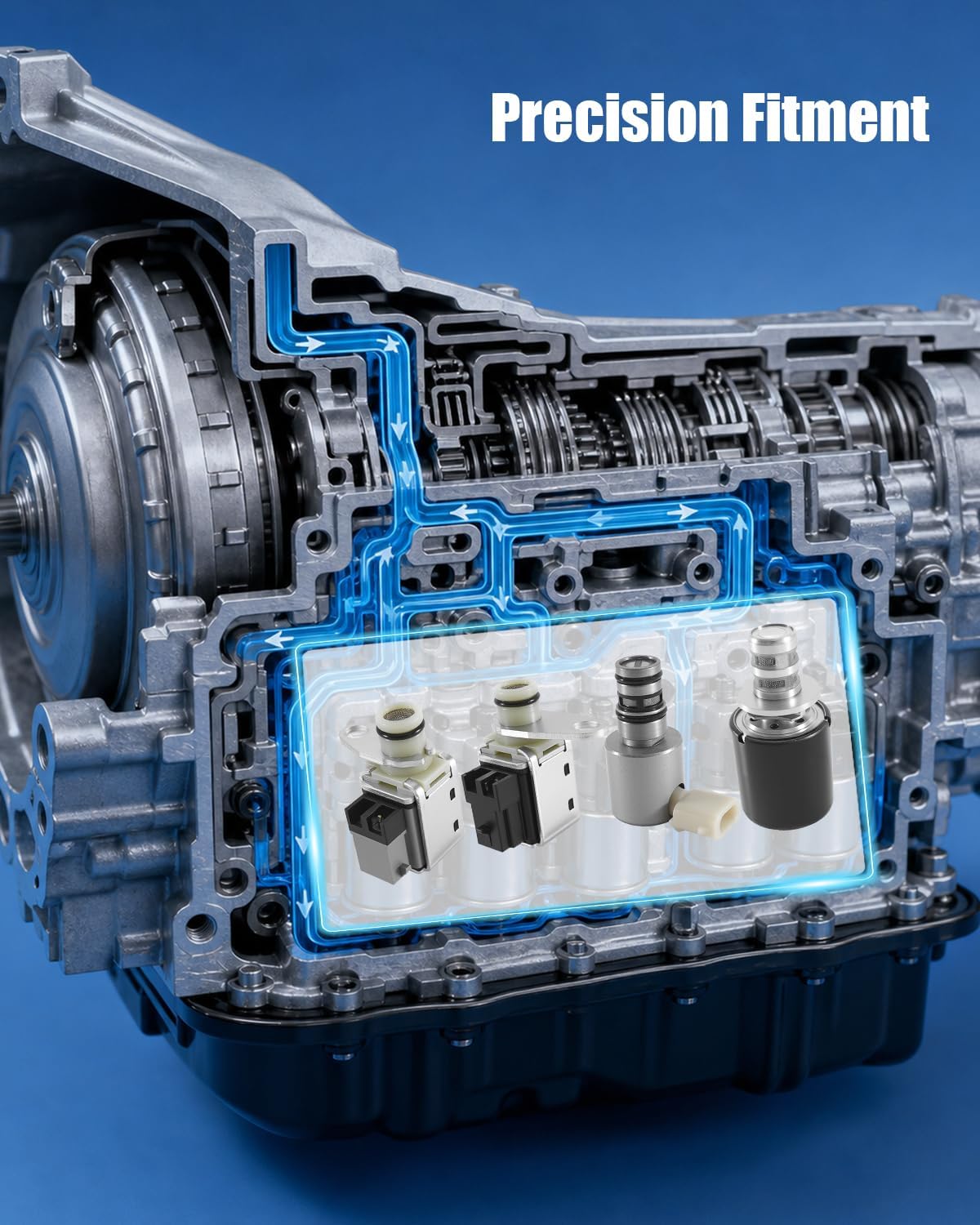
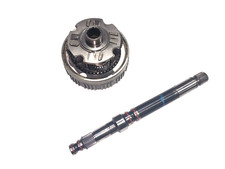
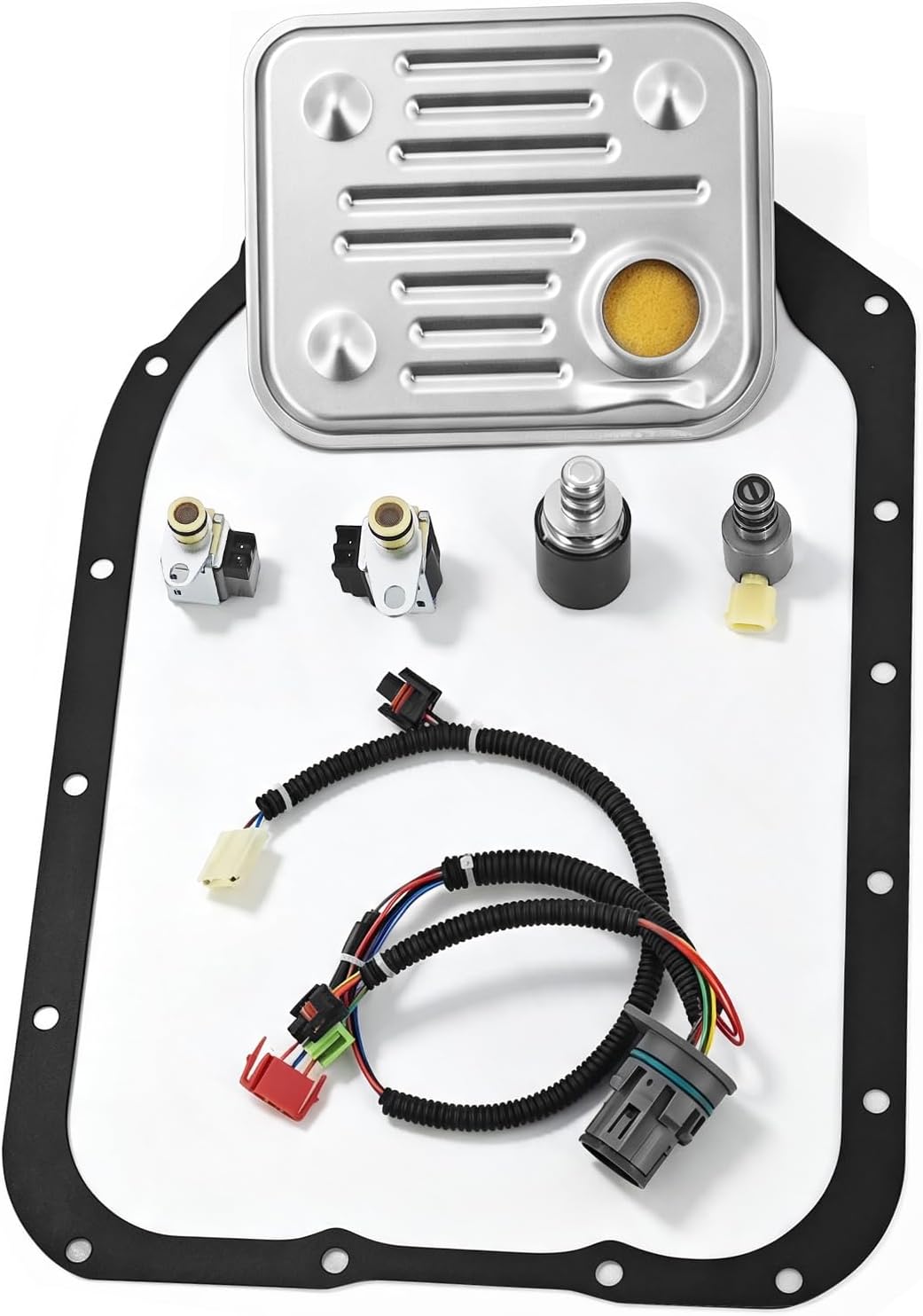
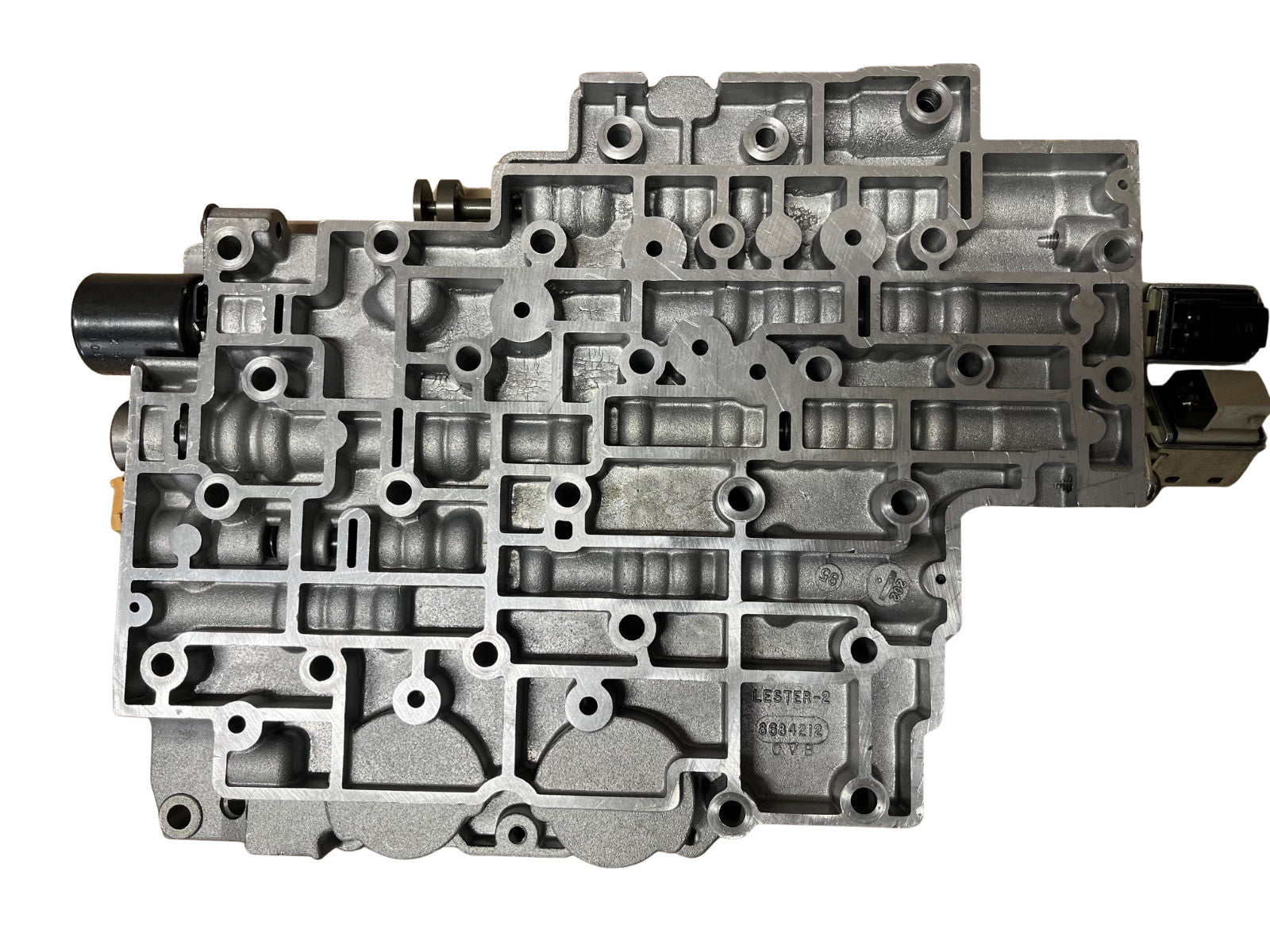
A 1991-2003 4L80E that has started holding one gear, banging every shift, or running down the interstate with the converter unlocked is usually telling you something about the four solenoids on its valve body. This kit replaces all of them in one pan drop: the EPC force motor (24243101), shift solenoid A (24230288), shift solenoid B (24230289) and the TCC solenoid (24210864). It suits the Chevrolet and GMC 2500 and 3500 pickups, Suburban 2500, Express and Savana vans and Hummer H1 that carried the RPO MT1 unit through 2003, and it is priced for the owner who would rather do the job once than pull the pan three times over three years.
What the four solenoids do in a 4L80E
The 4L80E has no throttle cable and no governor, so the computer runs everything through these four parts. Shift solenoids A and B are on/off valves, and their on/off combination picks the gear: both off is 2nd, which is why a unit that loses solenoid power pulls away in 2nd. The TCC solenoid applies the converter clutch at cruise. The EPC solenoid is the odd one out. It takes a varying current from the module, about 0.1 to 1.1 amp in the GM service data, and converts it into line pressure, with more current meaning less pressure. If the module cannot verify that current it sets a pressure control code and drives line pressure to maximum on purpose to protect the clutches.
Symptoms this set covers
- Stuck in odd gear pairs such as 2nd and 3rd only, or 1st and 4th only, from a failed A solenoid; 1st and 2nd only from a dead B solenoid
- Hard, slamming shifts at every throttle opening with P0748 (code 73 on early trucks): the max-pressure failsafe
- Soft, flaring upshifts and dark fluid when the EPC leaks and pressure stays low
- No lockup, high cruise RPM and hot fluid, often with P0740
- P0753 or P0758 shift solenoid circuit codes that return after clearing
How to confirm before you order
Start at the case pass-through connector, not at the solenoids. Both shift solenoids and the TCC share one ignition feed, so codes on several solenoids at once often trace back to that feed, a fuse or the connector rather than to every coil failing together. With the harness unplugged, the published windows are 18-24 ohms for each shift solenoid, 10-14 ohms for TCC and 3.5-5.2 ohms for the EPC. Then hang a 325 psi gauge on the line pressure tap; pressure that is wrong with a good solenoid points at the pump regulator or a worn AFL valve bore instead. Our EPC solenoid guide has the line pressure chart, and the shift solenoid A and B guide walks the gear-pair logic and connector tests.
Fitment
The listing covers the GM 4L80E (RPO MT1) from 1991 through 2003. Two cautions before you install. First, the 1991-1993 units left the factory with a silver Bosch-built force motor, and GM changed both the solenoid and the valve body oil routing for 1994; ATRA warns that mixing the two designs causes high line pressure, so compare the EPC in this kit with the one you pull before it goes in. Second, the shift solenoids went through three color-coded designs, and the later design is the one to run in any year. Match the connectors and the part numbers above, or send us your year and VIN and we will check it. Everything else for this unit is on the 4L80E parts page.
Install notes
Drain and drop the pan, pull the filter, and unplug the internal harness at each solenoid. Look hard at that harness: if the insulation is brittle or a connector body is cracked from heat, replace it now. Remove the retainers, pull the old solenoids, and check every bore and screen for debris. Lube each new O-ring with clean ATF and seat the solenoid by hand; never draw it in with the retainer bolt. Refill with Dexron VI, clear codes, and drive through all four gears and lockup with a scan tool connected. If the old fluid smelled burnt or the truck tows heavy, this is the time to add a cooler bypass kit and look at a 4L80E shift kit while the valve body is accessible.