A 3/4-ton Suburban with a 6L90 lives a harder life than most of the trucks that share its transmission. It is a 6,000-plus pound wagon with a 6.0L V8, it usually tows something, it idles in school pickup lines with the rear A/C running, and it gets driven by people who will never look at a scan tool. When one starts shifting badly, the owner hears "it needs a transmission." Most of the time that is not the right first answer. The 6L90 is a clutch-to-clutch six-speed run by a TEHCM (the TCM and solenoid body bolted to the valve body inside the pan), and its shift complaints fall into a short list of known causes that GM and the valve body specialists have already written up.
This guide covers shift quality on the Suburban 2500 and its Yukon XL 2500 twin: harsh shifts, flares, firm downshifts, and shifts that change character when the truck is hot or loaded. If your Suburban is slipping or will not move, start with 6L90 Suburban slipping: causes and fix instead.
The short version: First rule out normal behavior: Tow/Haul with Grade Braking holds gears and downshifts on hills by design, and Range Selection (M with the +/- buttons) caps top gear. A harsh 2-3, harsh 4-5, or slip in 3rd or Reverse on a 2008-2009 truck points at GM bulletin 09-07-30-004J: one-piece pump cover seal rings or a cracked 1-2-3-4 / 3-5-R housing weld. Shifts that get worse hot or while towing point at the cooler and thermal bypass valve. Harsh, bumpy or erratic shifts on a high-mileage unit are usually valve body bore wear, with the compensator feed regulator and pressure regulator circuits at the top of the list. Fix the cause before resetting adapts.


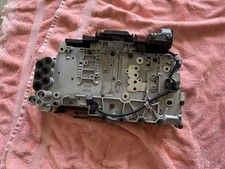
Which Suburbans have the 6L90
The 6L90 (GM RPO MYD) is the heavy-duty version of the 6L80, with a longer case and wider gear sets for 2500/3500 torque loads. In the Suburban it was paired with the 6.0L V8 in the 2500 Series of the late GMT900 run; the 1500 Suburban used the lighter 6L80 or the older 4-speeds. GM's 2011 Tahoe/Suburban owner manual shows the "Heavy Duty 6-Speed Automatic Transmission" shift lever for the 2500 and rates a 2500 4WD long-wheelbase 6.0L with 3.73 gears at 9,400 lb maximum trailer and a 16,000 lb gross combined weight. The specified fluid is DEXRON-VI, the same fluid the manual calls for in the transfer case.
Those towing numbers matter for diagnosis. A Suburban 2500 that spends its weekends near GCWR runs hotter, shifts with more line pressure, and loads the clutch packs harder than the same transmission in a work van. Ask the owner what it pulls before you chase a shift complaint.
Step one: rule out the features that feel like faults
A surprising number of "shift problem" Suburbans are doing exactly what GM programmed them to do. Three features change shift behavior on these trucks, and all three are described in the 2011 owner manual:
- Tow/Haul mode. The button on the end of the shift lever turns it on, and a cluster light confirms it. GM says Tow/Haul is designed to be most effective when the truck and trailer together weigh at least 75 percent of GCWR. With it on, upshifts come later and firmer. An empty Suburban driven in Tow/Haul every day will feel like it is hanging gears.
- Grade Braking. This only works when Tow/Haul is selected. On a downgrade the transmission will downshift on its own to hold speed. Drivers report it as "it downshifts by itself on hills." That is the feature, not a valve body.
- Range Selection Mode. Moving the column lever to M and using the +/- buttons sets the highest gear the transmission will use. Grade Braking is disabled while Range Selection is active. A truck left in M with a low range selected, or one with a faulty +/- switch, will look like it "won't shift into 6th."
Check the cluster for the Tow/Haul light and the range indicator before you hook up anything. If the complaint goes away with Tow/Haul off and the lever in D, you are done.
Harsh 2-3 or 4-5, slip in 3rd or Reverse: GM bulletin 09-07-30-004J
GM Service Bulletin 09-07-30-004J (revision J, February 2014) covers 6L80 and 6L90 units (RPOs MYC and MYD) and its model list includes the 2008 Suburban and Yukon XL, along with the Silverado, Sierra, Escalade and others. The condition list reads like a Suburban shift complaint sheet: slip or no Reverse, delayed Reverse engagement, harsh 2-3 shifts, harsh 4-5 shifts or slip in 5th, slip on acceleration when passing, and DTCs P0776, P2715 or P2723.
The bulletin gives two causes:
1. One-piece pump cover seal rings (2006 to early 2009 build)
The 1-2-3-4 and 3-5-R clutch fluid seal rings ride on the pump cover. Units built in 2006, 2007, 2008 and early 2009 used a one-piece ring. GM switched to a two-piece ring starting in December 2008. Per the bulletin, the one-piece ring can leak and cause a harsh 2-3 shift, typically as a low-mileage issue. If the rings are one-piece, replace them with new one-piece rings (ring kit 24248581); the pump cover does not need replacing. GM warns that installing the rings in the wrong orientation can cause a repeat harsh 2-3, so follow the SI installation procedure. Do not install one-piece rings on a two-piece cover; the two-piece cover is identified by a notch in the ring grooves that accepts the tab on the ring.
2. Cracked 1-2-3-4 / 3-5-R clutch housing weld (2006-2008)
The test is simple and conclusive. Apply soap solution to the weld area, hold your thumb over the air bleed passage, and blow regulated shop air into the 3-5-R feed hole (assembled housing) or into the housing (disassembled). Bubbles at the weld mean a new housing. For MYD applications GM lists complete assembled housing 24238695, which comes with pistons, seals, clutches and bearing installed. The GEARS article on 6L80/90 clutch failure backs this up from the rebuilder side: early 3-5-R drums crack at the weld, and the updated drum is identified by a dot-matrix QR label.
Firm downshifts and calibration updates
GM has rewritten 6L90 shift calibrations more than once. The clearest example is bulletin 16-NA-182 (June 2016): on 2016 Silverado and Sierra 2500/3500 trucks with the 6.0L L96 and the 6L90, drivers reported a firm 3-2 downshift at light or heavy throttle, typically with fluid below 77 F, and techs found P0777 set in cold ambient temperatures of 23 to 41 F. GM blamed a software anomaly and the fix was a TCM reprogram through SPS. That bulletin is written for the pickups, not the Suburban, but it shows the pattern: a cold-only firm shift with no slip and no clutch debris is a calibration question before it is a parts question.
On any 6L90 Suburban with a firm shift complaint, check the installed TCM calibration against what is current in TIS2Web before replacing hardware. When you program, follow GM's rules in that bulletin: stable battery voltage is critical (GM specifies the EL-49642 SPS programming support tool, or a fully charged 12 V jump pack, never a battery charger), turn off loads like lights, HVAC and radio, and clear DTCs afterward.
Shifts that change when it is hot or towing: check cooling
Heat is the Suburban 2500's natural enemy. The 6L80/6L90 routes fluid through an external thermal bypass valve (TBV) that keeps fluid out of the cooler until it warms up. If the TBV sticks, the fluid never sees the cooler and the clutches start cooking. GEARS notes that a failed cooler bypass valve typically ends in 4-5-6 clutch failure from overheating, and that a converter or pump failure that sends debris downstream calls for replacing or flushing the cooler to prevent a repeat.
GM TechLink's six-speed overheating procedure (written for the later 6L80/6L90 trucks, and the same logic applies here):
- Drive until the scan tool shows about 190 F transmission fluid temperature.
- Shoot the pan with an infrared thermometer. It should be close to the scan tool reading. If the dash or scan tool reads more than 15 F above the pan, suspect the fluid temperature sensor, which lives in the TEHCM.
- Measure the TBV and both cooler lines about 6 inches from the valve. On a healthy system the return line is cooler than the line going out to the cooler.
- If both cooler lines are below pan temperature and the TBV is hotter than the pan, the TBV is not opening.
- If cooler line and TBV temperatures exceed engine coolant temperature, check auxiliary cooler flow and look for airflow restrictions at the cooler.
TechLink also notes that GM released a lower-temperature TBV for later trucks: the old valve fully opens at 194 F, the revised one at 158 F, and it is stamped "70" on the bottom. On an older Suburban that tows, a stuck or lazy TBV is worth replacing or bypassing whether or not it has failed completely.
Harsh, bumpy or erratic shifts on a high-mileage unit: the valve body
Past about 120,000 miles, the most common cause of a 6L90 shift-feel complaint is wear in the aluminum valve body bores and the pump-mounted regulator circuits. Sonnax's 6L80/90 diagnostic notes tie specific symptoms to specific valves:
- Compensator feed regulator valve: stuck or worn, it causes delayed engagement, harsh or chattering shifts, downshift clunks, and erratic line pressure. Sonnax kit 104740-09K restores it.
- Pressure regulator and boost valve: a missing boost valve roll pin can drop idle line pressure below about 30 psi. Bore wear here causes harsh shifts along with high or low line pressure (kits 104520-15K, or oversized 104520-16K).
- Line pressure control solenoid: if the TEHCM line pressure solenoid sticks in exhaust mode, line pressure sits at about 60-68 psi and does not rise with RPM. That reads as soft, slipping shifts under load.
- 3-5-R clutch regulator valve: stuck, it can cause no Reverse and shift complaints with line pressure that looks normal.
- TCC regulator valve: a worn bore causes harsh converter apply, which owners describe as a bump at cruise. Kit 104740-46K.
Two more items from the GEARS clutch-failure article belong on the same list. A leaking stator support gasket in the compensator feed area causes shift feel complaints, and gasket leaks are common on high-mileage units because hot/cold cycling etches the gasket (GM's position is that the support-to-pump bolts should not be removed, and a leaking gasket means a pump). And early valve body checkballs wear and migrate, causing slips and clutch damage; updated balls come in most quality overhaul kits.
A practical diagnostic sequence
- Interview and road test as received. Note which shift, hot or cold, light or heavy throttle, loaded or empty, and whether Tow/Haul was on. Do not top off or clear codes first.
- Pull codes and freeze frame. P0776, P2715 and P2723 point toward the 3-5-R circuit and the 09-07-30-004J inspection. P0777 on a cold truck points at calibration.
- Check fluid level and condition at temperature. Use the check plug procedure with the scan tool showing the specified fluid temperature, and DEXRON-VI only. Burnt fluid or clutch material changes the job from valve body to overhaul.
- Log the shift. Record commanded gear, transmission input speed, output speed and fluid temperature. A flare shows as input speed rising while output speed holds during the shift; a harsh shift shows as a short, abrupt ratio change.
- Gauge line pressure. Compare idle and rise against spec. Stuck at 60-68 psi with no rise suggests the line pressure solenoid; under about 30 psi at idle suggests the pressure regulator or boost valve.
- Check cooling with the TechLink temperature procedure if the complaint changes with heat.
- Check calibration in TIS2Web before replacing any hard parts.
- Repair, then reset adapts. Resetting adapts on a unit with a leaking ring or a worn bore just teaches the TCM to compensate for the leak again, and the complaint comes back.
Shop 6L90 valve body kits, regulator valve kits, valve bodies and rebuild kits for the Suburban 2500 — shipped fast from the USA.
Shop 6L90 parts →Shop the 6L90 compensator feed kit → All 6L90 parts
Keep the numbers at the bench. Our free transmission fluid spec chart lists the correct ATF for the 6L90 and dozens of other units, so nobody tops off a Suburban with the wrong fluid.
FAQ
Why does my Suburban 2500 hold gears and downshift by itself on hills?
Check whether Tow/Haul is on. GM's owner manual says Grade Braking only works when Tow/Haul is selected, and it downshifts automatically on downgrades to help hold speed. Tow/Haul also delays upshifts. That is normal programming, not a fault. Turn Tow/Haul off when the Suburban is empty.
What causes a harsh 2-3 shift on a 6L90 Suburban?
GM bulletin 09-07-30-004J, which lists the 2008 Suburban and Yukon XL, gives two causes: leaking one-piece 1-2-3-4 and 3-5-R seal rings on the pump cover (used until a two-piece ring came in December 2008) and a cracked weld on the 1-2-3-4 / 3-5-R clutch housing. On high-mileage units, worn valve body regulator bores can also cause harsh shifts.
Can overheating cause 6L90 shift problems when towing?
Yes. If the thermal bypass valve sticks, fluid never reaches the cooler, shift quality changes as temperature climbs, and GEARS notes the usual end result is 4-5-6 clutch failure. GM TechLink's test compares pan, TBV and cooler line temperatures at about 190 F fluid temperature to find a TBV that is not opening.
What transmission fluid does a Suburban 2500 6L90 use?
DEXRON-VI, per GM's owner manual, which specifies the same fluid for the transfer case. Set the level at the check plug with the fluid at the specified temperature on a scan tool rather than pouring in a fixed amount.
Sources
- General Motors — Service Bulletin 09-07-30-004J, "Slips in Reverse or Third, Delayed Reverse or Drive Engagement, DTC P0776, P2715, P2723, Harsh 2-3 Shifts," February 2014 (hosted by NHTSA). Backs: the 2008 Suburban and Yukon XL coverage, MYC/MYD, the condition list, the December 2008 one-piece to two-piece seal ring change, ring kit 24248581, the orientation warning, the housing weld air test and MYD housing 24238695. GM 09-07-30-004J (PDF)
- General Motors — Service Bulletin 16-NA-182, "DTC P0777, Firm 3-2 Downshifts (Reprogram TCM)," June 2016 (hosted by NHTSA). Backs: the cold firm 3-2 downshift and P0777 on L96/MYD trucks, the software cause, the SPS reprogram and the EL-49642 voltage requirement. GM 16-NA-182 (PDF)
- GM TechLink — "6-Speed Transmission Overheating Conditions Diagnosis," October 2022. Backs: the 190 F test drive, pan vs scan tool comparison, 15 F sensor threshold, TBV and cooler line temperature checks, and the 194 F vs 158 F TBV with the "70" stamp (bulletin 21-NA-199). gm-techlink.com
- Sonnax — "GM 6L45/50, 6L80/90 No Movement Conditions: Analysis & Repair Tips." Backs: the compensator feed regulator symptoms and kit 104740-09K, the boost valve roll pin and under-30 psi idle pressure, the 60-68 psi stuck line pressure solenoid reading, the 3-5-R regulator valve, and kits 104520-15K, 104520-16K and 104740-46K. sonnax.com/tech_resources/1216
- GEARS Magazine (ATRA) — "Tackling Clutch Failure in the GM 6L80/90." Backs: stator support gasket leaks and shift feel complaints, GM's no-removal position on support bolts, the cracked 3-5-R drum weld and QR-labeled update, cooler bypass valve failure leading to 4-5-6 clutch failure, cooler flushing, and worn checkballs. gearsmagazine.com
- General Motors — 2011 Chevrolet Tahoe/Suburban Owner Manual. Backs: the heavy-duty 6-speed on the 2500, Tow/Haul and its 75 percent of GCWR guidance, Grade Braking only in Tow/Haul, Range Selection Mode behavior, the 2500 6.0L 9,400 lb trailer and 16,000 lb GCWR ratings, and DEXRON-VI. GM 2011 Suburban owner manual (PDF)