By the time a 6R80 crosses 100,000 miles, it has usually earned a reputation. Owners either call it bulletproof because nothing has gone wrong yet, or they are shopping for a rebuild kit because three things went wrong at once. Both reactions skip past what the unit actually needs at that mileage: a specific list of checks, not a generic fluid change. This unit has a known recall part, a known leak history, a solenoid code that gets misdiagnosed constantly, and a bushing that wears out on a predictable schedule.
This is the checklist I run on an F-150, Expedition, Navigator or Mustang with a 6R80 and six figures on the odometer, before I tell anyone what is actually wrong with it. Sources are at the bottom.


1. Pull the pan and read it before you clean it
The pan is the cheapest diagnostic tool you have on this unit. Fine gray fuzz on the magnet is ordinary wear. Chips you can pick up with your fingers are not, and point to planetary or pump damage. Brass or bronze glitter means bushing wear, most commonly the direct (B) clutch bushing, which is a known weak point on this transmission.
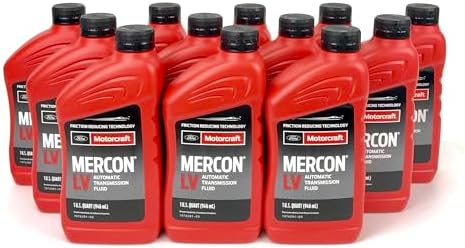
Pay attention to volume, too. Ford's Compliance Recall 12C23 procedure notes that pulling the pan, filter and main control on a 6R80 typically recovers about 5 to 8 quarts, depending on how long the truck has sat. That is well under half of the 13.1-quart dry fill Ford lists for a 2015 F-150, so a single pan and filter service is a partial fluid exchange, not a flush. If the fluid that comes out is dark but not burnt, a second drain-and-fill a few hundred miles later brings the fresh-fluid share up much faster than waiting for the next full interval. MERCON LV (Motorcraft XT-10-QLVC) is the only fluid that belongs in this unit; our 6R80 fluid type and capacity guide covers the hot-check level procedure in detail, and the filter and pan service guide covers the pan-drop and torque specs step by step.
2. Check for the molded lead frame codes
On 2011-2013 F-150 and 2012-2013 Expedition and Navigator trucks, Ford's Customer Satisfaction Program 19N01 extended the warranty on the transmission's molded leadframe (the solenoid connector plate inside the valve body) to 10 years or 150,000 miles from the vehicle's warranty start date. The program ties refund requests to DTCs P0720, P0722, P0731 and/or P1500 stored in the PCM. Ford's 2020 supplement to the program is explicit that vehicles with more than 150,000 miles are excluded from the coverage.
That matters for a high-mileage checklist in a very practical way: most of those trucks are now past the covered mileage, so a failed lead frame is customer pay, but it is still a real, known failure mode to scan for. If any of those four codes are present, or the truck intermittently loses shift or speed-sensor signals, the lead frame (sold separately as a conductor plate kit) is worth inspecting before the valve body gets condemned as a whole.
3. Do not let a P0741 or P1744 send you straight to the solenoid
A torque converter clutch (TCC) that will not lock up shows up as P0741 (TCC stuck off) or P1744 (TCC performance), and on a high-mileage truck both codes tend to get blamed on the solenoid immediately. Transmission Digest's writeup on 6R80 P0741 is a useful check on that instinct: it treats replacing only the TCC solenoid as a common wrong fix when the valve body is the actual problem, and notes that a simple fluid flush will not correct a mechanical fault either.
Before ordering a part, log TCC slip actual versus TCC slip desired on a scan tool capable of reading those PIDs, and confirm fluid condition first, since contaminated or overheated fluid can make a perfectly good solenoid stick in the valve body bore. Symptoms worth noting on the test drive: elevated RPM holding steady at highway speed with no corresponding change in road speed, a flare or shudder under light throttle, and the obvious fuel economy drop that comes with the converter slipping instead of locking. If the fluid is clean and the PIDs confirm a real lockup fault, that is when the solenoid, and possibly the valve body around it, gets replaced.
4. Rule out the known leak points by name
A 6R80 that is "a quart low" at high mileage usually has one of a short list of specific leaks, not a generic seepage problem. Sonnax's writeup on 6R80 leaks is built around a case connector at the driver's side rear of the case that Ford addressed with updated black O-rings in TSB 11-2-25, later revised as TSB 14-0069, replacing the original red/orange ones. The same article describes a pressure "whoosh" test: pull the 19 mm fill plug and listen. If air rushes out loudly, a stuck check valve in the case vent is trapping sump pressure, and that pressure is what is pushing fluid past seals elsewhere on the case, including the case connector, the bulkhead sleeve, and on 4WD trucks, the output shaft seal. Fix the vent before replacing any of those seals, or the new seals will leak too. Our cooler line replacement guide covers the other common leak point, the steel cooler lines, which rust from the outside in and are easy to confuse with a case leak until the lines are traced with dye.
5. If it shudders on takeoff, check the driveshaft angle before the converter
A shudder or vibration at low speed does not always mean a worn torque converter. Ford's TSB for 2015-2018 Ranger 4WD trucks built on the 6R80 platform describes a slight shudder or vibration pulling away from a stop, and attributes it to excessive driveshaft angle rather than anything inside the transmission. The bulletin's procedure has the technician measure the angle of both driveshafts against the Workshop Manual spec, confirm driveshaft orientation against the factory illustration, and then monitor TCM data PIDs, including accelerator pedal position, RPM, vehicle speed, and TCC slip desired and actual, with a Ford scan tool. Lift height changes, worn mounts, and aftermarket suspension work are the usual reasons a driveshaft angle drifts out of spec on a truck that did not come with one from the factory. Check the angle and the PIDs before a torque converter gets condemned for shudder.
6. Watch the direct clutch bushing
This ties back to item one. Brass or bronze glitter in the pan on a 6R80 is most often the direct (B) clutch bushing, and it is common enough that Sonnax sells a dedicated oversized bushing just for this wear point, separate from its broader 6R80 bushing kit that covers the rear stator support, the "A" drum, the input and output shaft, and the sun gear shaft. A worn direct clutch bushing drops pressure to the direct clutch pack and shows up as ratio codes or a burned direct/B clutch down the line. It is not something a fluid service fixes, and it is a strong argument for a full bushing inspection whenever the pan is already down for other reasons at high mileage.
Putting it on a mileage plan
None of this needs to happen on one visit. Spread it out:
- Every pan and filter service (whatever your interval, Ford's normal-use number is 150,000 miles, earlier under severe duty or towing): read the pan for metal before you clean it, check the fluid level the hot way, and scan for the four lead frame codes.
- Any time a shift complaint or shudder shows up: log TCC slip actual versus desired and check driveshaft angle before ordering a solenoid or a converter.
- Any time the truck is "a quart low" with no obvious puddle: do the fill-plug whoosh test, then check the case connector, bulkhead sleeve, output shaft seal and cooler lines in that order.
- Past 150,000 miles, or any time the pan shows bronze glitter: treat the direct clutch bushing as a wear item, not a maybe.
Our 6R80 common problems and fixes guide is the broader reference if one of these items turns into an actual repair, and the Ford 6R80 complete service guide covers the full service procedure start to finish.
6R80 7-Piece Transmission Solenoid Kit (2007-2014, OEM AL3P-7G276-AF)
If the TCC slip data and fluid condition point at the solenoid pack rather than the lead frame or converter, this is the OEM-equivalent 7-piece kit for 2007-2014 trucks. Sold by our sister store, CoreTransmissionParts.
Shop the part for this fix →Ford does not get its own collection page on CoreTransmissionParts yet, but the full 6R80 search results list filters, pan gaskets, valve bodies and rebuild kits.
Need parts for this job?
Our 6R80 parts page carries MERCON LV by the case, filter and pan gasket kits, the lead frame conductor plate, solenoid kits and valve bodies, for whichever item on this checklist turns into a part order. Checkout is on site.
FAQ
What should I check first on a high-mileage 6R80?
Start with the pan. Drop it, read the fluid color and the magnet, and confirm it is MERCON LV and not contaminated. A full pan and filter service only recovers 5 to 8 quarts out of a 13.1-quart dry fill, so this is a diagnostic step as much as a service. Fine gray fuzz on the magnet is normal wear. Chips, or brass and bronze glitter, are not.
Does the 6R80 lead frame recall still matter at high mileage?
The coverage itself has likely expired. Ford's Customer Satisfaction Program 19N01 extended the molded leadframe warranty to 10 years or 150,000 miles on 2011-2013 F-150 and 2012-2013 Expedition/Navigator trucks, and Ford's own supplement excludes vehicles over 150,000 miles from the program. Most of those trucks are now well past that mileage, so the part itself is still worth inspecting for DTCs P0720, P0722, P0731 or P1500, but any failure is customer pay.
Should I replace the TCC solenoid if I have a P0741 or P1744 code on a high-mileage 6R80?
Not automatically. Transmission Digest's writeup on 6R80 P0741 warns against replacing only the TCC solenoid when the valve body or converter is the real cause, and a fluid flush will not fix a mechanical fault either. Log TCC slip actual versus desired with a scan tool before you order a part, and check fluid condition first since contamination can make a good solenoid stick.
Why does my high-mileage 6R80 shudder or vibrate at takeoff?
Ford's TSB for 2015-2018 Ranger 4WD trucks with a 6R80 describes exactly this: a slight shudder or vibration pulling away from a stop, attributed to excessive driveshaft angle rather than the transmission itself. The fix is measuring both driveshaft angles against the Workshop Manual spec and monitoring TCC slip actual and desired on a scan tool before assuming the converter is at fault.
What does bronze or brass glitter in the 6R80 pan mean?
It points to bushing wear, most often the direct (B) clutch bushing. Sonnax sells an oversized bushing specifically for this wear point on the 6R80, which is a sign it is a known high-mileage issue rather than a rare one. Fine gray fuzz on the magnet is normal; metallic glitter in the fluid itself is not.
Related guides
- 6R80 Filter and Pan Service Guide
- 6R80 Fluid Type and Capacity
- 6R80 Cooler Line Replacement
- 6R80 Common Problems and Fixes
- 6R80 Valve Body Problems and Testing
- Ford 6R80 Complete Service Guide
Sources
- Ford Motor Company, Customer Satisfaction Program 19N01 (June 2019), 2011-2013 F-150 and 2012-2013 Expedition/Navigator 6R80 molded leadframe extended coverage. Backs the 10-year/150,000-mile coverage and DTCs P0720, P0722, P0731 and P1500 tied to leadframe refund requests. static.nhtsa.gov (PDF)
- Ford Motor Company, Customer Satisfaction Program 19N01 Supplement #3 (November 2020). Backs vehicles with mileage greater than 150,000 miles being excluded from the program. static.nhtsa.gov (PDF)
- Ford Motor Company, Compliance Recall 12C23 service procedure (May 2012), 6R80 molded lead frame. Backs the approximately 5 to 8 quarts recovered once the pan, filter and main control are removed. static.nhtsa.gov (PDF)
- Ford Motor Company, Technical Service Bulletin (NHTSA document MC-10144936-9999, August 2018), 2015-2018 Ranger 4WD with 6R80 shudder/vibration on takeoff. Backs the excessive driveshaft angle cause, the Workshop Manual driveshaft angle measurement procedure, and monitoring TCC slip desired and actual on a scan tool. static.nhtsa.gov (PDF)
- Transmission Digest, "Ford 6R80 DTC P0741: Cause and Correction." Backs the caution against replacing only the TCC solenoid when the valve body is the actual fault, and that a fluid flush will not correct a mechanical converter lockup problem. transmissiondigest.com
- Sonnax (Ed Lee), "6R80 Transmission: Solving a Leak Mystery." Backs the case connector TSB history (Ford TSB 11-2-25, revised as TSB 14-0069 with black O-rings), and the fill-plug pressure "whoosh" test tied to a stuck check valve in the case vent. sonnax.com