When a Cruze, Malibu, Equinox, Terrain, Sonic, Trax or Encore comes in with a slipping or missing-gear 6T40 or 6T45, the first question the owner asks is what a rebuild will cost. The honest answer is that the base kit is the cheap part. What moves a 6T40 quote up or down is what the teardown finds: a broken 3-5-R wave plate that chewed up the drum, the wrong-generation 4-5-6 drum from a previous repair, worn valve body bores, a TEHCM that has to be replaced and programmed, and how much debris went through the converter and cooler.
This guide breaks a 6T40 rebuild into its real line items, uses current parts prices as reference points, and shows which findings turn a kit-and-labor job into a much bigger bill. The GM bulletins, ATRA/GEARS articles and Sonnax data behind it are cited inline and listed at the bottom. Labor rates vary too much by region to quote one number, so this article shows you how to read a labor quote instead of guessing at one.

Start With the Generation: It Sets the Parts Bill
Every price on a 6T40 job depends on which generation you have, because the internals changed in 2012. GM's Preliminary Information PI0604C lists the Gen 2 updates: the fluid pressure switches came out of the control solenoid valve assembly (TEHCM), the valve body gained actuator feed accumulators and revised clutch regulator valves, one 3-5-R/4-5-6 seal ring was removed from the case, and the 4-5-6 clutch got a revised piston, return spring and fluid dam, with five frictions instead of four. The same bulletin notes that the 2012 Cruze and Sonic 1.8L, the 2012 Captiva Sport 3.0L and the 2012 Orlando stayed Gen 1, and that every 2013 model it covers is Gen 2.
So model year alone can mislead you on a 2012. Before you price anything, confirm the generation from the TEHCM: Sonnax's valve body install sheet gives the eighth digit under the bar code as 1, 2 or 3 on Gen 1 and B, C or D on Gen 2. Order a kit, drum, valve body or TEHCM for the wrong generation and you pay for it twice.
The Baseline: What Every 6T40 Rebuild Needs
A proper overhaul of a 6T40 with no hard-part damage is a master kit, pistons, the parts GM says to replace every time, a filter and fluid. Here is what that looks like with current prices from our own catalog as reference points:
| Line item | Why it is on the list | Reference price |
|---|---|---|
| Master rebuild kit with frictions | Gaskets, seals, frictions and filter. Match Gen 1 or Gen 2. | $300.99 (6T40E/6T45E master kit) |
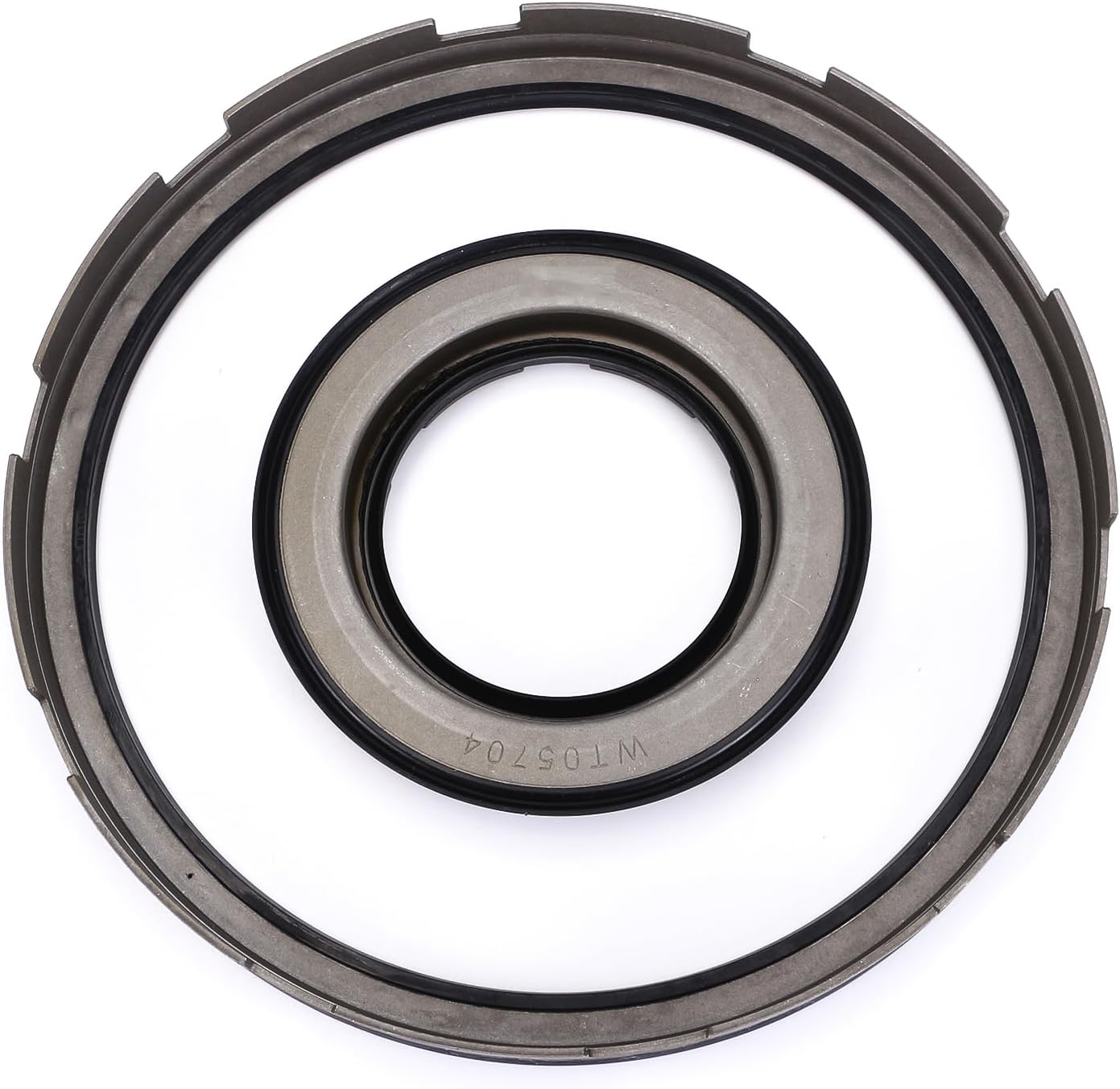
| Bonded piston set | GEARS says to always replace the bonded clutch apply pistons during a rebuild. | $108.99 |
| 3-5-R piston and 3-5-R apply (waved) plate | GM PI0780A recommends both any time the unit is disassembled for any reason. | Varies by generation and supplier |
| Pump fluid filter and control solenoid filter plate | Required by PI0780A after debris; Sonnax warns filter plate seals take a set and leak if reused. | Included in the GM seal kit and most master kits |
| DEXRON-VI | The only fluid GM lists for the 6T40. A fluid change alone is 4.2-6.3 quarts per GM TechLink; a dry unit takes more. | Budget a full case |
That puts the parts side of a clean rebuild in the few-hundred-dollar range. Most of the spread between a reasonable quote and a painful one comes from the next section.
What Drives the Cost Up
1. A broken 3-5-R wave plate and a damaged drum
This is the classic 6T40 failure and the single biggest cost multiplier. GM PI0780A covers 2008-2011 6T30/40/45/50 units built on or before Julian date 11-015 (January 15, 2011) with slip or no reverse, slip or no 3rd, and DTC P0776, and names the broken 3-5-R apply (waved) plate as the cause. The bulletin is blunt about the cleanup: debris must be cleaned from the entire transmission, the pump filter and control solenoid filter plate must be replaced, and it warns that failing to separate the case halves, disassemble and clean the unit could lead to repeat damage. It also says to replace any 3-5-R piston with notches, a design GM dropped during the 2011 model year.
The plate breaking is only half the bill. Sonnax's drum saver article notes that when the plate breaks it usually damages the drum splines, which normally means a new housing plus the time to transfer the shaft and piston over. Sonnax's alternative, kit 144555K for the 6T40/45/50, uses a waved plate with zero teeth that can ride near the damaged spline area, which Sonnax describes as faster and less expensive than buying a new drum. Whether that is an option depends on how bad the splines are. Ask your builder which route they took and why.
Do not expect GM to pick this up on a 6T40. The well-known wave plate special coverage, GM 14404B (10 years or 120,000 miles), covers the 6T70 and 6T75 in vehicles such as the Enclave, Acadia, Traverse and V6 Malibu, not the 6T40.
2. The wrong 4-5-6 drum from a previous repair
Used and rebuilt 6T40s get parts swapped between generations, and that can cost you a second teardown. In GEARS, Dennis Madden explains that the Gen 1 4-5-6 drum (2008-2011) has four sealing rings, four frictions, a wave plate and a fluid dam inner seal, while the Gen 2 drum has three rings, five frictions, no wave plate and no inner seal. A Gen 2 drum in a Gen 1 case may pass a road test, but without the inner seal the compensator feed regulator valve stops regulating. The results he lists are falling out of gear at a stop, low line pressure complaints and clutch failure. If a unit has been apart before, budget for the builder to check this.
3. Valve body wear and the TEHCM
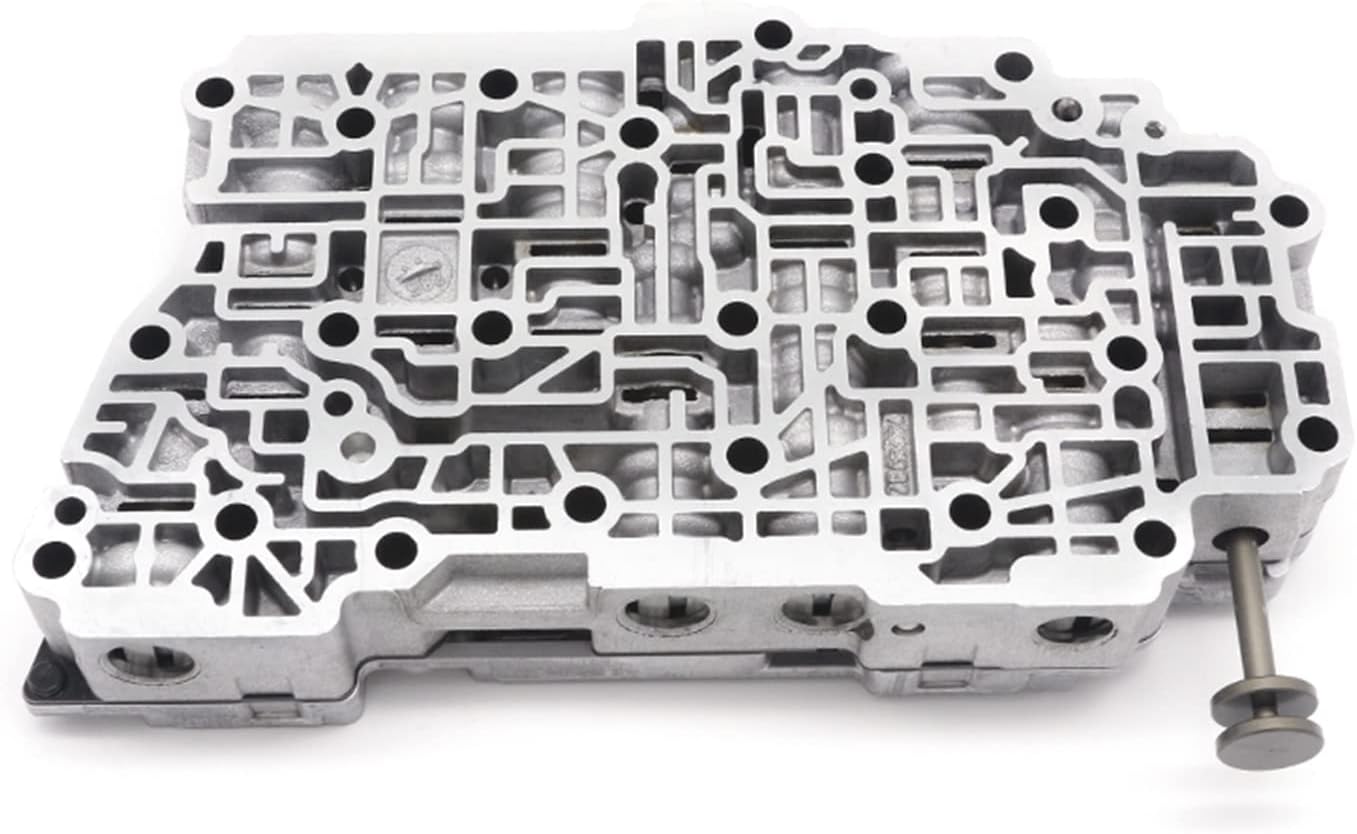
The valve body and TEHCM can add as much as the kit itself. Per GEARS, the Gen 1 TEHCM pressure switches had a high failure rate from loose rivets, which is why GM removed them in 2012, and Sonnax recommends resealing them any time an original Gen 1 TEHCM is reused. Worn actuator feed limit, pressure regulator and TCC regulator bores cause soft shifts, burnt clutches and pressure codes, and rebuilding the clutches without addressing them sends the car back. The options are a bore repair on the bench or a replacement valve body; ours start at $130.18, and the Gen 2 casting is $204.99.
If the TEHCM itself is bad, remember the TCM is built into that assembly, so the fix is a complete TEHCM that has to be programmed to the vehicle. Sonnax's install sheet warns that the TEHCM must carry the correct, latest calibration, and that installing the wrong-generation TEHCM sets P0713 or P06AE. That programming step, done with a scan tool that supports it, is a separate labor charge on most invoices.
4. Converter, cooler and fluid
A wave plate failure or burnt clutch pack sends debris through the converter and cooler. Rebuilding the unit and bolting it back to a contaminated converter or unflushed cooler is the fastest way to a comeback, so a replacement converter and a cooler flush often show up on the invoice. Fluid is a real line item too: GM's 2025 TechLink capacity chart lists 4.0-6.0 liters (4.2-6.3 quarts) of DEXRON VI per fluid change for the current 6T40 (RPO MNH), and a rebuilt unit filled from dry, plus the converter, takes more than that.
5. Level set and relearn
These are short jobs, but they belong on the quote. ATRA technical bulletin #1725 for the 6T35/6T40/6T50 lays out the level check with the engine running and fluid at 85-95°C, and GEARS warns that as little as half a quart overfull can push fluid out of the vent and set P0218. GEARS also notes that the Transmission Adaptive Values Learn has to be run after internal service, valve body repair, solenoid replacement or a software update. Skip it and the rebuilt unit will shift badly until the TCM catches up.
How to Read a 6T40 Rebuild Quote
Labor is the largest single variable, and it depends on your market and the vehicle. GM itself pays dealers for this kind of work by published labor operation time: PI0780A lists labor operation 8467292, "3-5-Reverse and 4-5-6 Clutch Housing Overhaul," at the published time. Independent shops do the same thing with a labor guide. A quote you can compare should break out:
- Remove and install time for your specific vehicle and engine. Front-drive packaging differs between a Sonic, a Malibu and an Equinox.
- Overhaul time for the unit on the bench.
- Parts: the kit, pistons, 3-5-R piston and wave plate, and anything hard-part, listed separately.
- Extras: converter, cooler flush, valve body or TEHCM, programming, and fluid by the quart.
- What happens if the teardown finds more: a drum or valve body. A good shop tells you the call before they order it.
A single number with no breakdown makes it impossible to tell a rebuild that addresses the known failure points from one that just swapped the frictions.
Rebuild, Used Unit or Remanufactured?
A used 6T40 costs less up front, but you inherit its history, including the wave plate risk on units built before the Julian 11-015 cutoff and any generation mix-ups from earlier repairs. A remanufactured unit costs more but should arrive with the updates done. A rebuild on your own core sits in the middle and lets you control the parts. If the car is otherwise solid, a rebuild that follows the GM bulletins, meaning a new 3-5-R piston and wave plate, a correct-generation drum, new bonded pistons, a clean valve body and a clean converter and cooler, is usually the best value.
Keeping the Rebuild From Coming Back
- Confirm Gen 1 or Gen 2 from the TEHCM before ordering parts.
- Replace the 3-5-R piston and waved plate every time the unit is apart, per PI0780A.
- Replace the bonded pistons, per GEARS.
- Split the case and clean all debris; replace the pump filter and control solenoid filter plate.
- Check the 4-5-6 drum matches the case generation.
- Test or replace the valve body; reseal Gen 1 pressure switches if the TEHCM is reused.
- Replace or verify the converter and flush the cooler.
- Fill with DEXRON-VI, set the level at 85-95°C, and run the adaptive learn.
6T40 master rebuild kit at Core Transmission Parts
The base of any 6T40 rebuild: a master kit with frictions, seals and gaskets. Confirm Gen 1 or Gen 2 before you order.
View the 6T40 master rebuild kit →6T40 and 6T45 master rebuild kits, bonded piston sets, drums, valve bodies and solenoid kits — shipped fast from the USA.
Shop 6T40 parts →Related guides
- 6T40 Common Problems and Fixes
- 6T40 No Reverse: Diagnosis and Fix
- GM 6T40/6T45 Wave Plate Failure
- 6T40 Valve Body Symptoms and Testing
- 6T40 Slipping: Causes and Fix
FAQ
How much does it cost to rebuild a 6T40 transmission?
The parts for a clean 6T40 rebuild with no hard-part damage are in the few-hundred-dollar range: a master kit runs about $300, a bonded piston set about $109, plus the 3-5-R piston and wave plate and a case of DEXRON-VI. Labor is the larger and more variable share, and it depends on your shop's rate and the remove-and-install time for your vehicle. A damaged drum, valve body, TEHCM or converter adds to that.
What makes a 6T40 rebuild more expensive?
The biggest multiplier is a broken 3-5-R wave plate that damaged the drum splines, which usually means a new drum or a Sonnax 144555K drum saver kit, plus a full case split and debris cleanup per GM PI0780A. Worn valve body bores, a failed TEHCM that has to be programmed, a wrong-generation 4-5-6 drum from an earlier repair, and a contaminated converter and cooler also add cost.
Does GM cover the 6T40 wave plate failure?
The GM wave plate special coverage, bulletin 14404B, applies to the 6T70 and 6T75 in vehicles such as the Enclave, Acadia and Traverse, for 10 years or 120,000 miles. It does not cover the 6T40. For the 6T40, GM issued PI0780A, which is a repair recommendation, not a coverage extension.
Is it worth rebuilding a 6T40?
If the rest of the car is solid, usually yes, provided the rebuild follows the GM bulletins: a new 3-5-R piston and wave plate, new bonded pistons, the correct-generation drum, a checked valve body and a clean converter and cooler. A used unit costs less up front but may carry the same wave plate risk, especially on units built before Julian date 11-015.
Are Gen 1 and Gen 2 6T40 rebuild parts the same?
No. GM PI0604C documents the 2012 Gen 2 changes, including the removal of the TEHCM pressure switches, revised valve body valves and a revised 4-5-6 clutch with five frictions. Confirm the generation from the eighth digit under the TEHCM bar code (1, 2 or 3 is Gen 1; B, C or D is Gen 2) before ordering a kit, drum, valve body or TEHCM.
Sources
- General Motors — Preliminary Information PI0780A, "Slip or No Reverse or 3rd Gear, No Forward, DTC P0776," June 2015 (via NHTSA). Backs the broken 3-5-R apply (waved) plate cause, the 2008-2011 models and Julian 11-015 cutoff, the recommendation to replace the 3-5-R piston and waved plate any time the unit is disassembled, the case split, debris cleaning, pump filter and filter plate requirement, the notched piston change, and labor operation 8467292 at published time. static.nhtsa.gov (PDF)
- General Motors — Preliminary Information PI0604C, "Information on 6T30/6T40/6T45/6T50 Automatic Transmission Product Updates," May 2013 (via NHTSA). Backs the Gen 2 changes (pressure switches removed, valve body revisions, one seal ring removed, revised 4-5-6 clutch with five frictions) and the 2012 models that stayed Gen 1. static.nhtsa.gov (PDF)
- ATRA / GEARS Magazine — "6T40/45 Diagnosis and Fixes." Backs always replacing the bonded pistons, the Gen 1 pressure switch rivet failures and 2012 removal, the adaptive learn requirement, the 85-95°C level check, and the half-quart overfill vent leak and P0218. gearsmagazine.com
- ATRA / GEARS Magazine — Dennis Madden, "It Worked on the Road Test! The 6T40 4-5-6 Drum Interchange Quandary." Backs the Gen 1 vs Gen 2 4-5-6 drum differences and the symptoms of installing a Gen 2 drum in a Gen 1 unit. gearsmagazine.com
- Sonnax — "GM 6T40 & 6T70 Drum Saver Kits: Protection Against 3-5-R Failures & Comebacks." Backs the 2007-2009 failure pattern, drum spline damage requiring a new housing, and the toothless waved plate kit 144555K as a lower-cost alternative. sonnax.com
- Sonnax — GM6T40-2-3 Remanufactured Valve Body, "Tech & Install Tips." Backs the TEHCM generation ID, the correct-calibration requirement, P0713/P06AE with the wrong-generation TEHCM, and filter plate replacement. sonnax.com (PDF)
Also referenced: GM TechLink, "2025 Transmission Capacities & Fluids," for DEXRON VI and 4.0-6.0 L (4.2-6.3 qt) per fluid change on the 6T40 (RPO MNH), gm-techlink.com (PDF); ATRA Technical Bulletin #1725, "6T35, 6T40, 6T50 Fluid Level and Condition Check Procedures," atracom (PDF); and GM Special Coverage 14404B, "Transmission Clutch Wave Plate," August 2016, for the 6T70/6T75-only coverage of 10 years or 120,000 miles, static.nhtsa.gov (PDF).