A TH350 that bangs into Drive, slams the 1-2, or kicks you in the back on every upshift is not "just a firm shift." Harsh shifts on a Turbo 350 almost always mean one of two things: line pressure is running higher than the throttle opening calls for, or the part that is supposed to cushion the apply has stopped doing its job. Either way the unit is telling you something, and the drivetrain behind it is taking the hit every time.
The good news is that the TH350 is a fully hydraulic three-speed. There is no computer, no pressure control solenoid and no adaptive learning to sort through. Shift feel comes from a short list of parts: the vacuum modulator and its hose, the pressure regulator and boost valve, the 1-2 accumulator, and the oil feeding them. This guide works through that list in the order I check it on a real car, with GM's factory pressure figures and the wear points Sonnax documents for this unit. Sources are at the bottom.
The Quick Answer
| Symptom | Check first |
|---|---|
| Every shift harsh and late, light throttle included | No vacuum at the modulator: disconnected, cracked, collapsed or plugged line; ruptured diaphragm |
| Every shift harsh, shift points normal | Adjustable modulator screwed in too far, wrong modulator, stuck modulator valve, heavy pressure regulator spring |
| Only the 1-2 is harsh | 1-2 accumulator piston broken, spring missing, blocked accumulator feed hole in the separator plate |
| Bangs into Drive and Reverse from Park | Idle speed too high, no modulator vacuum, accumulator spring removed by a shift kit |
| Delayed engagement that then lands hard | Pressure loss, not excess pressure: worn intermediate servo bore, low fluid |
How the TH350 Decides How Hard to Shift
GM's description of the TH350 modulator is short and worth memorizing. In the 1976 light truck service supplement (ST-330-76), the modulator is "a diaphragm and one spring." The spring pushes the modulator valve toward higher modulator pressure. Engine vacuum pulls the diaphragm the other way, toward lower pressure. Low vacuum means high modulator pressure; high vacuum means low modulator pressure. Modulator pressure then acts on the pressure regulator through the boost valve, so it sets line pressure, and line pressure sets how hard every clutch and band applies.
That is a throttle sensor made from a vacuum hose and a spring. At light throttle the engine pulls strong vacuum, line pressure drops, and the shifts are soft. At wide-open throttle vacuum falls toward zero, line pressure climbs, and the shifts get firm on purpose so the clutches do not slip under load.
GM's own pressure figures show how big that swing is. For a 350 V-8, ST-330-76 lists line pressure at 1200 rpm with the modulator vacuum tube disconnected as 167 psi in Drive, 166 psi in L1 or L2 and 254 psi in Reverse. With the tube connected and the engine held at 12 in. Hg absolute manifold pressure, the same unit should read 85 psi in Drive, 105 psi in L1 or L2 and 129 psi in Reverse. Lose the vacuum signal and Drive line pressure roughly doubles. That is the single biggest reason a TH350 starts shifting hard.
Step 1: The Vacuum Signal
If every shift is harsh, and the shifts also happen late at light throttle, the transmission thinks it is at wide-open throttle all the time. Start at the vacuum source and work back to the transmission:
- Is the line connected to full manifold vacuum? Engine swaps, new carburetors and aftermarket intakes are where this goes wrong. A modulator hooked to ported vacuum, or to nothing, sees almost no signal at idle and cruise.
- Is the line sound? Look for a cracked rubber end, a crushed steel line where it runs past the crossmember, and soft hose that collapses when it gets hot. Use proper vacuum hose, not fuel line.
- Does vacuum respond? Tee a vacuum gauge in at the modulator. You want strong, steady vacuum at idle that drops toward zero when you snap the throttle and recovers immediately. A slow recovery points at a restriction or carbon in the vacuum port at the manifold.
- Is there fluid in the line? Pull the hose at the modulator. ATF in the vacuum nipple means the diaphragm is ruptured. A ruptured modulator lets the engine draw transmission fluid, which shows up as a low fluid level and smoke, and it no longer controls pressure properly.
If the hose and diaphragm are sound, pull the modulator and check the modulator valve. It should slide freely in its bore under its own weight. A valve that is stuck or galled will hold line pressure wherever it stopped, and swapping the modulator will not fix that.
Step 2: The Modulator Itself
A modulator that holds vacuum can still be wrong. The spring force is what sets base pressure, and GM's check for it was tool J-2466: put a known-good modulator on one end, the suspect one on the other, push them together, and see which spring gives first. If the suspect unit does not match the known-good one, GM says to replace it. Most shops no longer own a J-2466, but the principle is the same when you compare a new modulator against the old one by hand. A modulator from the wrong application, or one with a stronger spring meant for a heavy truck, will raise pressure across the board.
Adjustable modulators deserve their own warning. The adjusting screw inside the vacuum nipple changes spring preload. Turning it in raises line pressure and firms the shifts; turning it out softens them. A previous owner chasing a firmer shift will often run it all the way in, and the result is a car that slams every gear at part throttle. Back it out in small steps, half a turn at a time, and road test between adjustments. If you are installing a new adjustable modulator, start near the middle of its range and work from there instead of trusting the out-of-box setting.
What about the detent cable?
The TH350 cable is a detent downshift cable, not a throttle valve cable like the one on a 700R4. GM's adjustment is simple: with the snap-lock released, hold the carburetor at wide-open throttle and push the snap-lock down until it is flush, and torque the case-end bolt to 75 in. lb. A cable that is kinked, binding or set wrong can affect when the unit downshifts and upshifts, so set it to spec while you are under the hood. Line pressure on a TH350 still comes back to the modulator, so do not stop at the cable if the shifts are still harsh.
Step 3: Put a Gauge on It
Guessing gets expensive. Tee a line pressure gauge in, and use one rated well above 254 psi, since that is GM's Reverse figure with the vacuum off. Transmission Digest's Sonnax TASC Force article on pressure gauges makes two points that apply here. First, on a modulated unit, disconnecting the vacuum gives you maximum pressure, which is a quick way to check what the pump and regulator can make. Second, take your readings on the road, not on the lift, because a unit on a lift is not loaded the way it is in traffic.
Read the results against GM's numbers. If pressure at idle and light throttle is close to the vacuum-disconnected figure with the hose connected, the modulator is not getting or not using its vacuum signal, and you go back to Step 1 and 2. If pressure is high in every condition, vacuum connected or not, the problem is downstream of the modulator: the pressure regulator valve, its spring, or the boost valve.
Step 4: Pressure Regulator, Boost Valve and Shift Kits
The pressure regulator valve sits in the pump and sets base line pressure against its spring. A valve stuck in its bore, or a spring that is heavier than stock, raises pressure everywhere. This is common on units that have had a "shift kit" thrown at them over the years. Sonnax designs its TH350 Line Pressure Booster Kit (350-LB1) around a pressure regulator spring about 10 percent stronger than OE plus a large-ratio boost valve, and it states the goal is shorter shifts "without creating low-speed harshness." Read that the other way: a much heavier spring, without a matched boost valve, is exactly what creates low-speed harshness. If you find a mystery spring under the regulator, replace it with the correct one before you chase anything else.
The other shift kit casualty is the 1-2 accumulator spring. Some kits have you remove it for a quicker, firmer 1-2. Sonnax sells a billet 1-2 accumulator cover (35988-01K) for the TH350 and TH350C that is built to run with or without the spring, so running without it is a deliberate performance choice. On a street car that makes the 1-2 and the Drive engagement noticeably harder. If a harsh-shifting unit has an empty accumulator bore, that is your answer.
Step 5: Harsh 1-2 Only
If 2-3 feels normal and only the 1-2 is harsh, the accumulator circuit is the suspect. The TH350 troubleshooting chart in Cliff Ruggles' TH350 rebuild book lists exactly two causes for a harsh 1-2: a broken or damaged 1-2 accumulator piston, and a blocked 1-2 accumulator feed hole in the valve body plate, or a blockage in the passages to the accumulator. Either way the accumulator stops absorbing the first part of the intermediate clutch apply, and the clutch applies at full line pressure all at once.
Pull the accumulator cover and inspect the piston, the spring and the bore. Sonnax notes that the OE cover can work out of position and leak, and that the 1-2 accumulator bore in the case wears or scores from the piston oscillating in normal use. A worn bore usually causes the opposite complaint, a 1-2 slip and low line pressure, per Sonnax's 1-2 Accumulator Sleeve Kit (35719-01K) page. That matters for diagnosis: a scored bore and a broken piston can show up on the same unit, and you want to fix both while the cover is off. Then check the separator plate. A plate from the wrong application, or a gasket that is misaligned, can cover the accumulator feed hole.
When "Harsh" Is Really a Delay
Some harsh engagement complaints are actually late engagements. The driver shifts into Drive, nothing happens for a second or two, the idle creeps up, and then the clutch grabs hard. That is a pressure loss problem, not too much pressure. Sonnax identifies the TH350 intermediate servo bore as a wear point: when it scores, leakage drops line pressure in Reverse, Neutral and Drive and causes delayed engagement, and its Intermediate Servo Sleeve Kit (35709-01K) is the fix without replacing the case. Low fluid, checked hot, does the same thing. Raising pressure to hide a delay only adds more wear, so find the leak.
Check the idle speed while you are at it. A carbureted small block with a big cam often gets set to idle high so it will not stall, and a high idle puts more torque through the converter at the moment the clutch applies. Every garage shift will feel harder. Set the idle to the engine's spec in gear before you blame the transmission.
The Fix
Most harsh TH350s are fixed without pulling the transmission. In order of how often it pays off:
- Restore a clean, full manifold vacuum signal to the modulator with new hose.
- Replace a ruptured, wrong or over-adjusted modulator, and confirm the modulator valve is free.
- Set the detent cable and idle speed to spec.
- Drop the pan and check the 1-2 accumulator piston, spring and cover, and look for a heavy pressure regulator spring left behind by an old shift kit.
- If line pressure is still high with a good vacuum signal, the valve body or pump needs attention: a stuck pressure regulator or a worn boost valve.
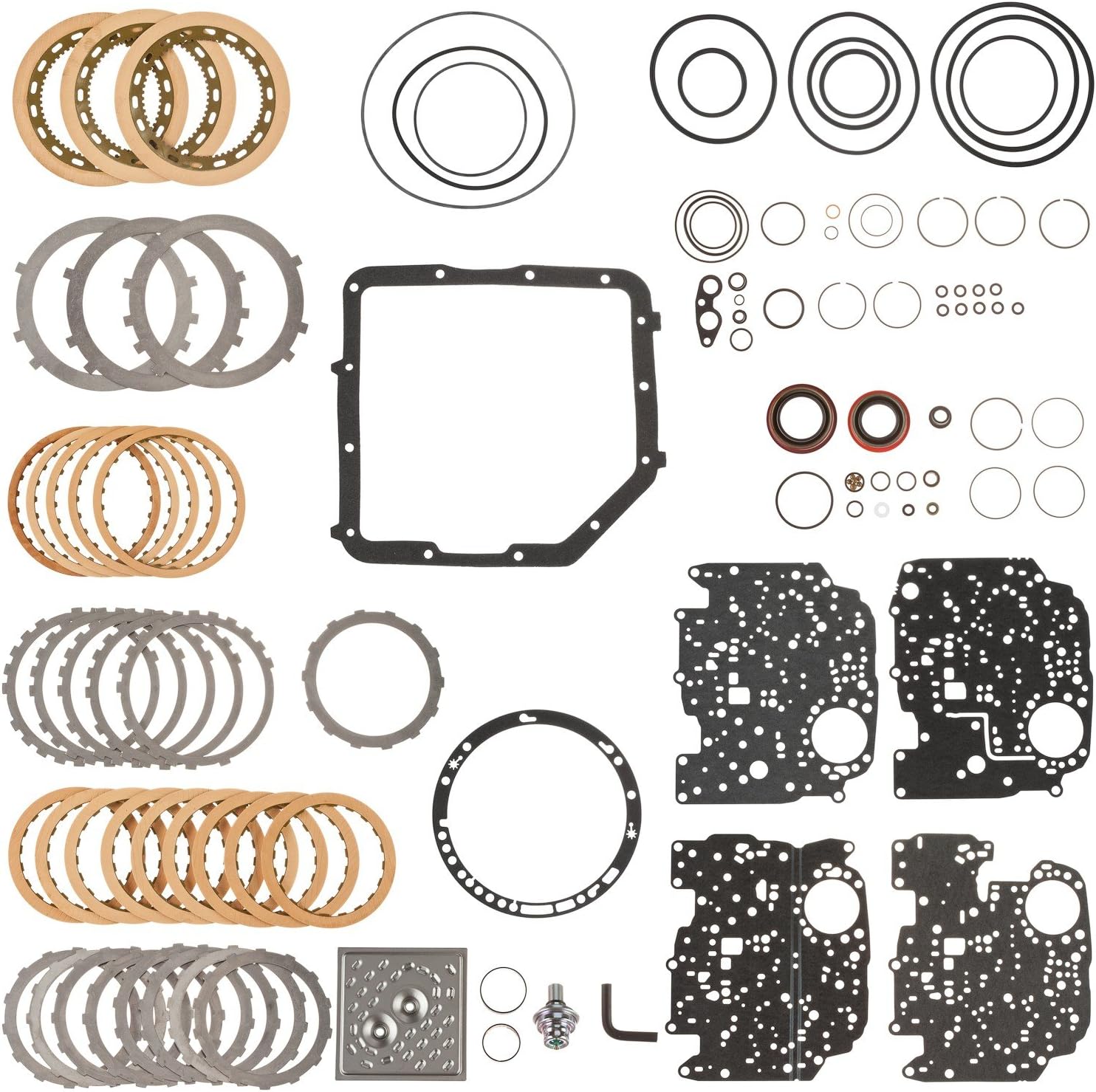
If the unit has been shifting hard for a long time, look at the fluid and pan before you call it fixed. A harsh shift is hard on clutch plates and on the intermediate overrun roller and race, and burned material in the pan means the overhaul is coming whether the shift feel is fixed or not. Our TH350 line pressure testing guide covers the gauge procedure in more detail, and the TH350 valve body guide covers regulator and boost valve wear.
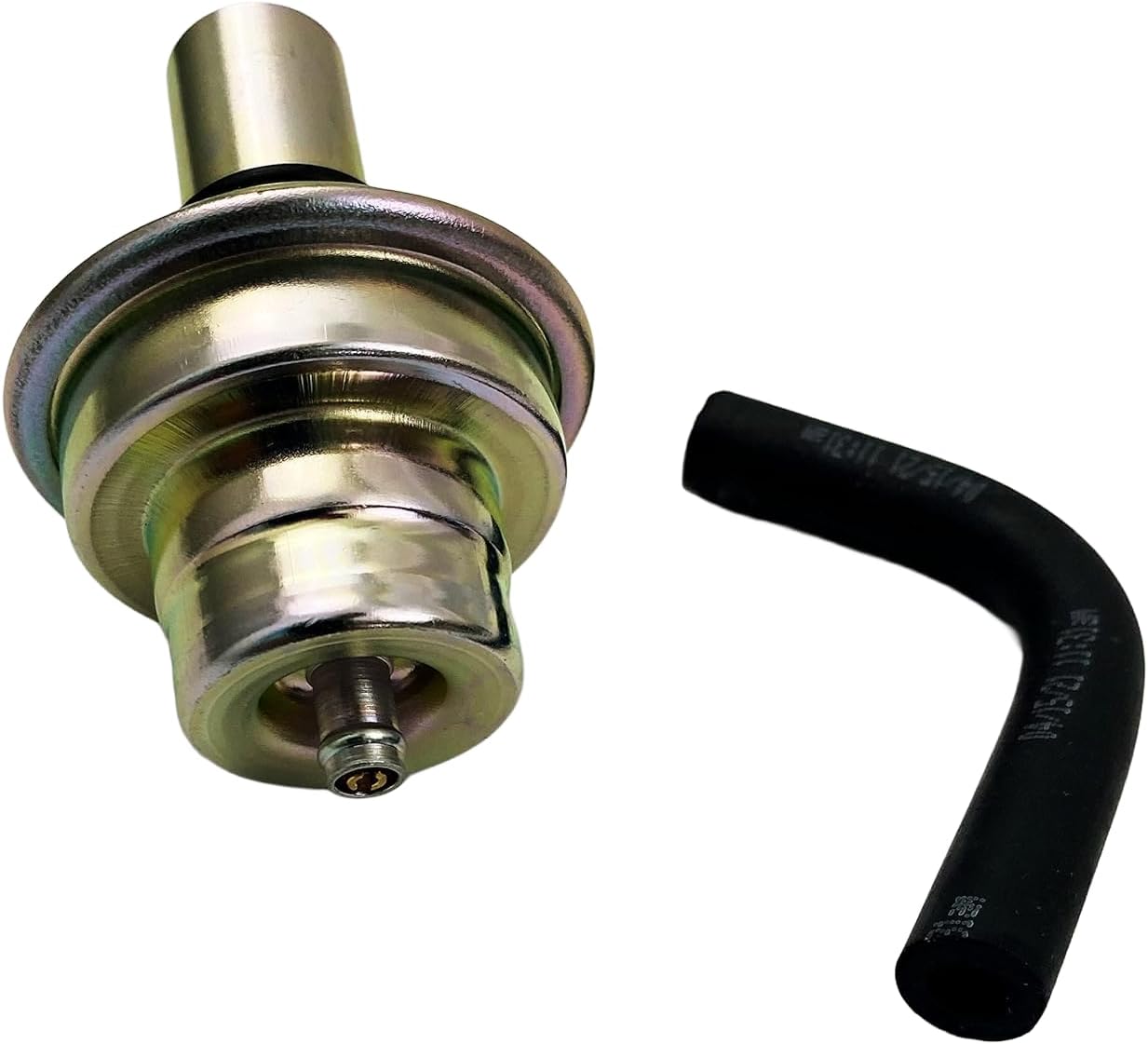
TH350 1-2 Accumulator Spring and Cover O-Ring
If the 1-2 is harsh and the accumulator spring is broken, missing or was pulled by an old shift kit, this restores the stock spring and seals the cover. Modulators, valve bodies and Sonnax accumulator and servo kits are in the full TH350 catalog.
View the accumulator spring kit →FAQ
Why is my TH350 shifting hard?
The most common cause is a lost vacuum signal at the modulator: a disconnected, cracked or collapsed hose, or a ruptured diaphragm. Without vacuum the transmission behaves as if it is at wide-open throttle and runs maximum line pressure, so every shift is late and harsh. If the vacuum signal is good, check for an adjustable modulator turned in too far, a heavy pressure regulator spring from an old shift kit, and a broken or missing 1-2 accumulator piston or spring.
Can a vacuum leak cause harsh shifts on a TH350?
Yes. GM's figures for a 350 V-8 are 167 psi in Drive with the modulator vacuum tube disconnected versus 85 psi with it connected at 12 in. Hg absolute manifold pressure. A vacuum leak or disconnected line pushes the unit toward the higher number, roughly doubling Drive line pressure, which makes every shift firm and late.
How do I make my TH350 shift softer?
Restore full manifold vacuum to the modulator first, then, if you have an adjustable modulator, back the adjusting screw out in small steps and road test between changes. Make sure the 1-2 accumulator spring is installed and the pressure regulator spring is the correct one. Set the idle speed to spec, because a high idle makes garage shifts feel harder.
What causes a harsh 1-2 shift only on a TH350?
A harsh 1-2 with a normal 2-3 points at the 1-2 accumulator circuit. The troubleshooting chart in Cliff Ruggles' TH350 rebuild book lists a broken or damaged 1-2 accumulator piston and a blocked accumulator feed hole in the valve body plate or its passages. A spring removed by a shift kit gives the same result.
Sources
- General Motors / Chevrolet — 1976 Light Truck Service Overhaul Supplement (ST-330-76), Section 7A Turbo Hydra-Matic 350 (PDF). Backs the vacuum modulator description (one diaphragm, one spring; low vacuum gives high modulator pressure, high vacuum gives low modulator pressure); the line pressure figures for a 350 V-8 (167/166/254 psi with the vacuum tube disconnected at 1200 rpm, 85/105/129 psi with it connected at 12 in. Hg absolute); the J-2466 spring tension comparison check; and the detent downshift cable snap-lock adjustment and 75 in. lb. bolt torque. 73-87chevytrucks.com (PDF)
- Cliff Ruggles, GM Turbo 350 Transmissions: How to Rebuild and Modify (CarTech), troubleshooting chart excerpt. Backs the two listed causes of a harsh 1-2 shift: a broken or damaged 1-2 accumulator piston, and a blocked 1-2 accumulator feed hole in the valve body plate or blocked passages to the accumulator. chevydiy.com
- Sonnax — 1-2 Accumulator Piston Cover Kit 35988-01K (GM TH350/TH350C). Backs that the OE cover can leak and fall out of position, and that the billet cover is designed to run with or without the accumulator spring. sonnax.com
- Sonnax — Line Pressure Booster Kit 350-LB1 (GM TH350/TH350C). Backs the pressure regulator spring being about 10 percent stronger than OE, paired with a large-ratio boost valve, with the stated goal of shorter shifts without low-speed harshness. sonnax.com
- Sonnax — 1-2 Accumulator Sleeve Kit 35719-01K and Intermediate Servo Sleeve Kit 35709-01K (GM TH350/TH350C). Backs 1-2 accumulator bore wear from oscillation causing 1-2 slip and low line pressure, and intermediate servo bore wear causing low line pressure in Reverse, Neutral and Drive and delayed engagement. sonnax.com (accumulator) • sonnax.com (servo)
- Transmission Digest — Jeff Parlee, Sonnax TASC Force, "Diagnosis with Pressure Gauges." Backs disconnecting the vacuum on a modulator-controlled unit to read maximum line pressure, using a gauge rated above the highest expected pressure, and taking readings on a road test rather than on a lift. transmissiondigest.com