A TH400 that has crossed 100,000 or 150,000 miles is usually still a strong transmission. The Turbo 400 was built for big-block cars and three-quarter-ton trucks, and the hard parts outlast almost everything bolted to them. What wears out first is the stuff around the edges: a modulator diaphragm, a vacuum hose that has gone hard, a detent switch out of adjustment, a strainer packed with years of friction dust, a cooler that no longer flows. Those are cheap to fix, and every one of them can make a healthy gearbox drive like it needs a rebuild.
This is the checklist I run on a high-mileage Turbo 400 before anyone talks about pulling it. The order is GM's own diagnostic sequence from the 1975 Buick chassis service manual, Section 7D, with the specs from that manual and the 1976 Chevrolet light truck supplement. Full source list at the bottom.


Step 1: Fluid Level and Condition
GM's diagnosis sequence for the TH400 starts with oil level for a reason: a surprising share of "transmission problems" are a wrong reading on the dipstick. The 1976 Chevrolet truck supplement (ST-330-76) is specific about how to read it. Check with the engine running, shifter in Park, vehicle level. Then judge the fluid temperature by touching the end of the stick:
- Cool (65-85°F): level 1/8 to 3/8 inch below the ADD mark. The stick has two dimples below ADD to show that range.
- Warm: close to the ADD mark, either side.
- Hot (too hot to hold comfortably): between ADD and FULL.
GM notes the level rises more than 3/4 inch as the fluid goes from 60°F to 180°F, and it takes only one pint to go from ADD to FULL when hot. That is why these units get overfilled: somebody checks it cold, sees it below ADD, and tops it off. Overfill foams the fluid and pushes it out the vent. If the truck just towed or sat in hot traffic, GM says wait about 30 minutes before you trust the reading.
What the fluid itself tells you
The Buick manual makes two checks at the stick that most people skip. Air bubbles in the fluid point to an air leak on the suction side, which GM says causes erratic operation and slipping. On a high-miler that is usually a hardened pickup tube O-ring or a filter grommet. A milky, pink cast means water, which also causes slipping and usually traces to a cooler leak inside the radiator tank. GM also says darker fluid with a stronger smell is not by itself proof the unit needs service or is failing, so do not condemn a transmission on color alone. Burnt smell plus friction material in the pan is a different story.
Step 2: Walk Around for Leaks
A TH400 that slowly loses fluid will eventually slip, and old seals leak. GM's procedure is simple: degrease the underside, road test to about 180°F, look with the engine running, then look again with it off, because the level rises from drain-back once it stops. The factory fluid is dyed red, and a black light helps tell transmission fluid from engine oil. Air moving under the car carries fluid rearward, so a leak at the fill tube O-ring can show up looking like a rear seal leak.
The leak points GM lists for this case, in the order I check them on an old unit:
- Pan gasket and pan bolt torque (12 lb-ft is the GM spec for the 5/16-18 pan bolts)
- Fill tube O-ring, often loaded to one side by a bent bracket
- Modulator O-ring
- Electrical connector O-ring for the detent solenoid
- Governor cover gasket and bolts
- Speedometer gear O-ring
- Manual shaft lip seal
- Extension housing rear seal and gasket
- Front pump seal, pump bolt seals, pump O-ring, and the converter weld seams
Fluid coming out the vent pipe is its own list: overfill, water in the oil, a cut O-ring or grommet on the filter, the wrong dipstick, or a mispositioned pump-to-case gasket. If the level keeps dropping and you can find no external leak at all, go straight to Step 3.
Step 3: Vacuum Modulator and Vacuum Line
The modulator is the TH400's throttle sensor. It reads engine vacuum and sets line pressure and shift timing from it. On a high-mileage unit it is the single most common cause of soft or late shifts, high line pressure, and unexplained fluid loss. The Buick manual gives three checks, and if the modulator fails any one of them it gets replaced:
- Diaphragm leak check. Pull the modulator and point the vacuum stem down. If transmission fluid runs out, the diaphragm is ruptured. GM's diagnosis chart notes a leaking diaphragm will "evacuate oil from unit," meaning the engine is drawing ATF through the vacuum line and burning it. White exhaust smoke and a low dipstick with no drip on the floor is the classic sign. GM also says if the level stays low, there are no external leaks, and you find no oil, a pinhole in the diaphragm is still possible and the modulator should be replaced.
- Bellows comparison check. GM uses gauge J-24466 to compare the suspect modulator against a known-good one of the same part number (stamped on the back of the can). A weak bellows collapses first. Without the gauge, compare it to a new unit by hand.
- External damage. Look for dents or cracks in the can, and roll it on a flat surface to check that the sleeve runs true. A bent sleeve shows visible runout and binds the modulator valve.
One detail from the manual that saves people money: gas or water vapor can settle in the vacuum side of a good modulator. GM says if you find liquid there with no oily feel, the modulator must not be replaced for that reason alone. Only ATF in there means a bad diaphragm.
Then check what the modulator is being fed
A perfect modulator on a bad vacuum signal still shifts wrong. GM's list of causes of improper vacuum at the modulator: engine tune, loose fittings, a leaking vacuum accessory, a restricted exhaust, and on the line itself a leak, a loose fitting, a restricted or wrong-size orifice, carbon at the modulator fitting, a pinched line, or grease in the pipe (which GM notes causes no upshift or a delayed upshift when cold). On an old truck, replace the rubber end hoses as a matter of course. Check vacuum at the transmission end of the line, not at the manifold, since that is where GM says to read it for a shift-point complaint.
Step 4: Detent Switch, Solenoid and Linkage
The TH400 gets its passing downshift electrically. Per GM, a switch on the throttle linkage closes at wide open throttle, energizes the detent solenoid on the valve body, and the transmission downshifts at speeds below about 70 mph. At high mileage the switch gets bent, the connector corrodes, or someone swapped carburetors and never re-set it. GM's chart ties the failures together:
- No detent downshift: switch adjustment, connections or fuse; solenoid inoperative; detent valve train or 3-2 valve sticking.
- 1-2 shift only at full throttle: a sticking detent switch or a detent solenoid that is loose, leaking at its gasket, or stuck open.
- No 2-3 shift (or a very late one): detent solenoid stuck open, so every 2-3 is a detent shift at very high speed.
With the key on and engine off, have a helper floor the pedal and listen at the pan for the solenoid click. No click, put a test light on the connector at the case. Then check the manual linkage: GM lists maladjusted linkage as a cause of drive in neutral and of no drive. A worn column linkage bushing can leave the manual valve between detents, which feels like a slipping clutch.
Step 5: Line Pressure and Shift Points
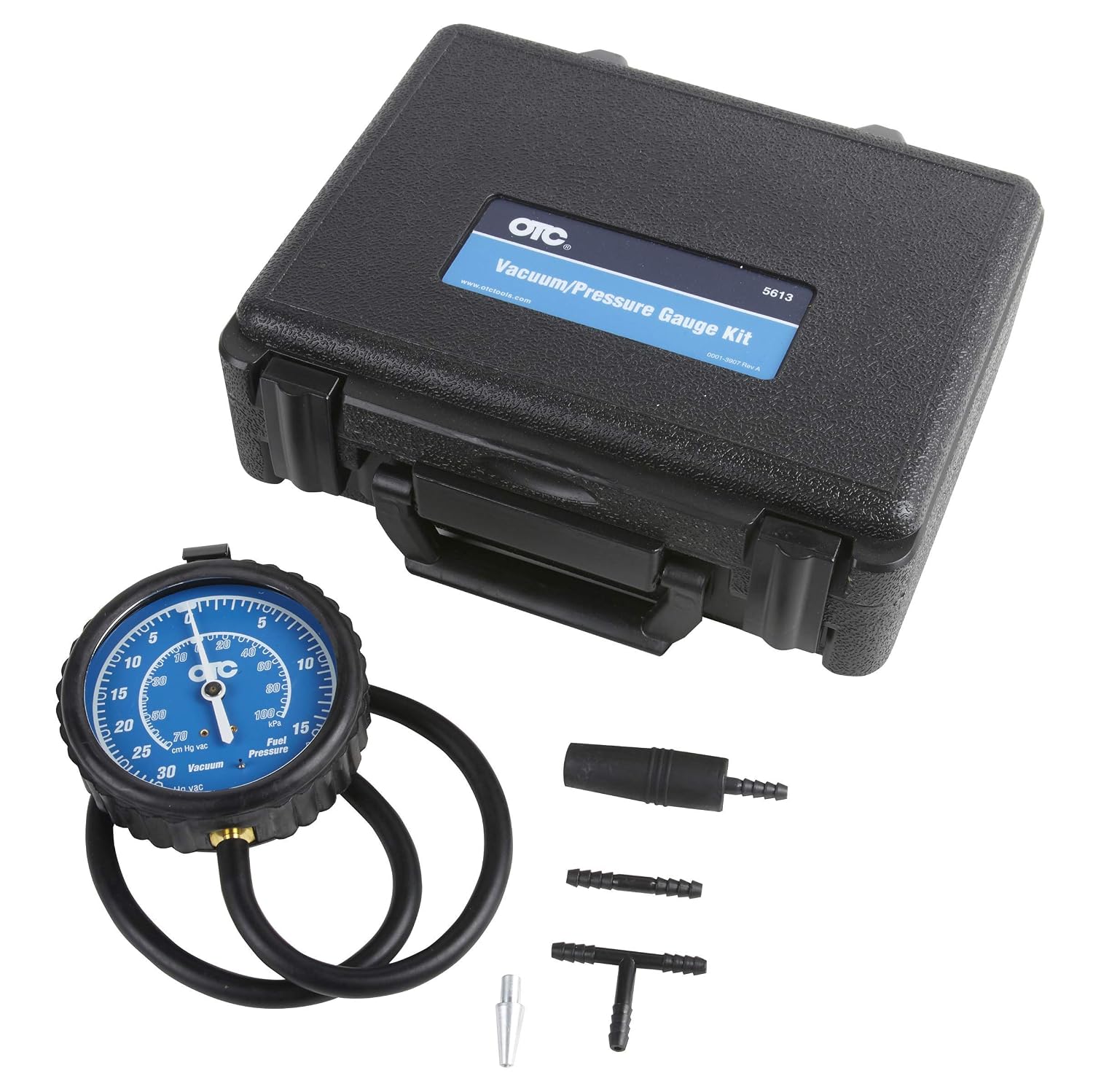
Do not guess at internal wear. Put a gauge on it. GM's road-test numbers for the TH400, with the vacuum line connected, brakes holding and the engine at 1000 rpm, are approximately:
- Drive, Neutral, Park: 60-90 psi
- L2 or L1: 150 psi
- Reverse: 95-150 psi
With the vacuum line disconnected from the modulator, engine at 1200 rpm and zero output speed, GM's sea-level figures are 150 psi in Drive/Neutral/Park, 150 in L2/L1, and 244 in Reverse. Those drop with altitude: Drive reads 138 and Reverse 212 at 6,000 feet, so adjust your expectations if you are not near sea level. Low pressure across every range points at the filter, the pickup O-ring, the pump or the pressure regulator. Pressure that is fine in Drive but low in Reverse points at the reverse circuit. Our TH400 line pressure testing guide walks through hooking up the gauge and reading each range.
GM's approximate shift points, which vary with axle ratio: at minimum throttle the 1-2 comes at 8-18 mph and the 2-3 at 20-35 mph. At maximum throttle, 1-2 at 35-60 mph and 2-3 at 65-90 mph. If your high-miler shifts well outside those ranges, GM's chart sends you first to engine vacuum at the modulator pipe, then the modulator, then the governor. A first-gear-only unit with no 1-2 shift is very often a sticking governor valve or a worn governor driven gear.
Step 6: Cooler Flow
Heat kills TH400s, and an old cooler circuit can be partly blocked with debris from years of wear. A flow test tells you more than a pressure reading. Sonnax publishes a SonnaFlow reference chart for a TH400 with a weak pump or clogged filter: flow holds around 1.8 gallons per minute at a steady 45 mph, then drops in steps as engine speed falls on a coast-down, close to zero at idle. Sonnax's note on that chart says flow "drops off dramatically with lower engine rpm." The fix they list for that condition is a new pump with their boost valve kit 34910-01K and pressure regulator valve 34910-03K, plus a new filter. If a high-mileage unit shows that pattern, the filter is the first and cheapest thing to fix. If flow is low even with a clean filter, look at the cooler, the lines and the pump. See our TH400 overheating prevention guide for cooler sizing.
Step 7: Filter, Pan and Fresh Fluid
GM's 1976 interval for the TH400 is fluid and filter every 15,000 miles under severe service (heavy city traffic, regular 90°F temperatures, hills or mountains, frequent towing, commercial use) or every 60,000 miles otherwise. A high-mileage truck with an unknown history should be treated as severe service. GM's figure for a pan-drain refill is about 7.5 US pints, then bring it to the correct mark on the stick.
The strainer matters more on this transmission than most. Pontiac's 1968 dealer bulletin 68-I-60 says the full-flow strainer (part number 6437741) has no bypass valve, so when it clogs it restricts oil to the pump and causes cavitation noise, slipping or loss of drive. Replace the pickup O-ring every time, torque the pan bolts to 12 lb-ft in a crisscross pattern, and look at what is in the pan before you clean it. Fine gray dust is normal wear. Chunks of friction material or bright metal mean the unit has a mechanical problem the service will not fix. Refill with a licensed DEXRON VI fluid; Valvoline's spec page states DEXRON VI is fully back-serviceable wherever DEXRON II or III was called for. The full procedure is in our TH400 filter and pan service guide.
Step 8: Converter Stator, If It Feels Lazy
One last check before you blame the transmission for poor performance. GM's manual describes two stator failures. A stator that freewheels both ways gives poor acceleration from a stop but feels normal above 30-35 mph. A stator that stays locked limits top speed and can overheat the engine, and the converter may show blue discoloration. Before chasing either, GM says confirm the engine tune is good, the exhaust is not restricted, and the transmission is actually starting in first gear.
Service It or Rebuild It?
If the checklist turns up a bad modulator, a hard vacuum hose, a misadjusted detent switch, a packed strainer or overfill, fix those and road test again. Many high-mileage TH400s come back to full health for the price of a modulator and a filter kit. If line pressure is low with a clean filter, the pan is full of friction material or metal, or it slips with pressure in spec, it is time for a rebuild. Our TH400 rebuild wear points article covers what usually needs replacing once it is apart.
Checklist turned up a worn part?
Modulators, filter kits, gauge sets and full overhaul kits for the Turbo 400, in stock and shipped fast.
Shop TH400 parts →FAQ
How do you check the fluid level on a TH400?
Check it with the engine running, the shifter in Park and the vehicle level. Per GM's 1976 truck supplement, cool fluid (65-85 degrees F) should read 1/8 to 3/8 inch below the ADD mark, warm fluid should be near ADD, and hot fluid should be between ADD and FULL. Only one pint separates ADD and FULL on a hot unit, so add fluid slowly.
How do I know if my TH400 vacuum modulator is bad?
Pull it and point the vacuum stem down. If transmission fluid runs out, the diaphragm is ruptured and the engine is drawing ATF through the vacuum line, which shows up as a dropping fluid level and white exhaust smoke. GM also has you compare its bellows against a known-good modulator of the same part number and roll it on a flat surface to check for a bent sleeve. Failing any of the three checks means replacement.
What should TH400 line pressure be?
GM's approximate road-test figures with the vacuum line connected and the engine at 1000 rpm are 60-90 psi in Drive, Neutral and Park, 150 psi in L2 or L1, and 95-150 psi in Reverse. With the modulator vacuum line disconnected at 1200 rpm, sea-level figures are 150 psi in Drive and 244 psi in Reverse, dropping with altitude.
How often should a high-mileage TH400 be serviced?
GM calls for fluid and filter every 15,000 miles under severe service, which includes heavy city traffic, regular 90-degree temperatures, hills, frequent towing and commercial use, and every 60,000 miles otherwise. A high-mileage unit with an unknown history should be serviced on the 15,000-mile schedule, with the pickup O-ring replaced every time.
Can a high-mileage TH400 be fixed without a rebuild?
Often, yes. A bad modulator, a cracked vacuum hose, a misadjusted detent switch, a clogged strainer or an overfilled pan can each cause slipping, late shifts or fluid loss on an otherwise healthy unit. If line pressure is low with a clean filter, the pan is full of friction material or metal, or it slips with pressure in spec, plan on a rebuild.
Sources
- Buick Motor Division — 1975 Buick Chassis Service Manual, Section 7D, Turbo Hydra-matic 400 (PDF). Backs the GM diagnosis sequence, fluid air-bubble and water checks, the external leak point list and vent-pipe causes, the three vacuum modulator checks and causes of improper vacuum, the detent switch and solenoid operation and trouble chart, line pressure tables with altitude correction, approximate shift points, the 12 lb-ft pan bolt torque, and the converter stator diagnosis. teambuick.com (PDF)
- General Motors / Chevrolet — 1976 Light Truck Service Overhaul Supplement (ST-330-76), Section 0, General Information and Lubrication (PDF). Backs the cool/warm/hot dipstick procedure, the 3/4-inch level rise from 60°F to 180°F, the one-pint ADD-to-FULL figure, the 15,000/60,000-mile service intervals with severe-service conditions, and the 7.5-pint TH400 refill. 73-87chevytrucks.com (PDF)
- Pontiac Motor Division — Dealer Service Information Bulletin 68-I-60, "Turbo Hydra-Matic Oil Strainer Replacement," April 1968. Backs the no-bypass design of strainer 6437741 and the pump cavitation, slipping and loss-of-drive symptoms of a contaminated strainer. firstgenfirebird.org (bulletin transcription)
- Sonnax — "SonnaFlow Chart: 400 (Poor)." Backs the weak-pump/clogged-filter cooler flow pattern (about 1.8 GPM at 45 mph, falling toward zero at idle) and the listed correction with boost valve kit 34910-01K, pressure regulator valve 34910-03K and a new filter. sonnax.com
- Valvoline — DEXRON-VI/MERCON LV Full Synthetic ATF product specification page. Backs DEXRON VI being fully back-serviceable wherever DEXRON II or DEXRON III is recommended. valvolineglobal.com