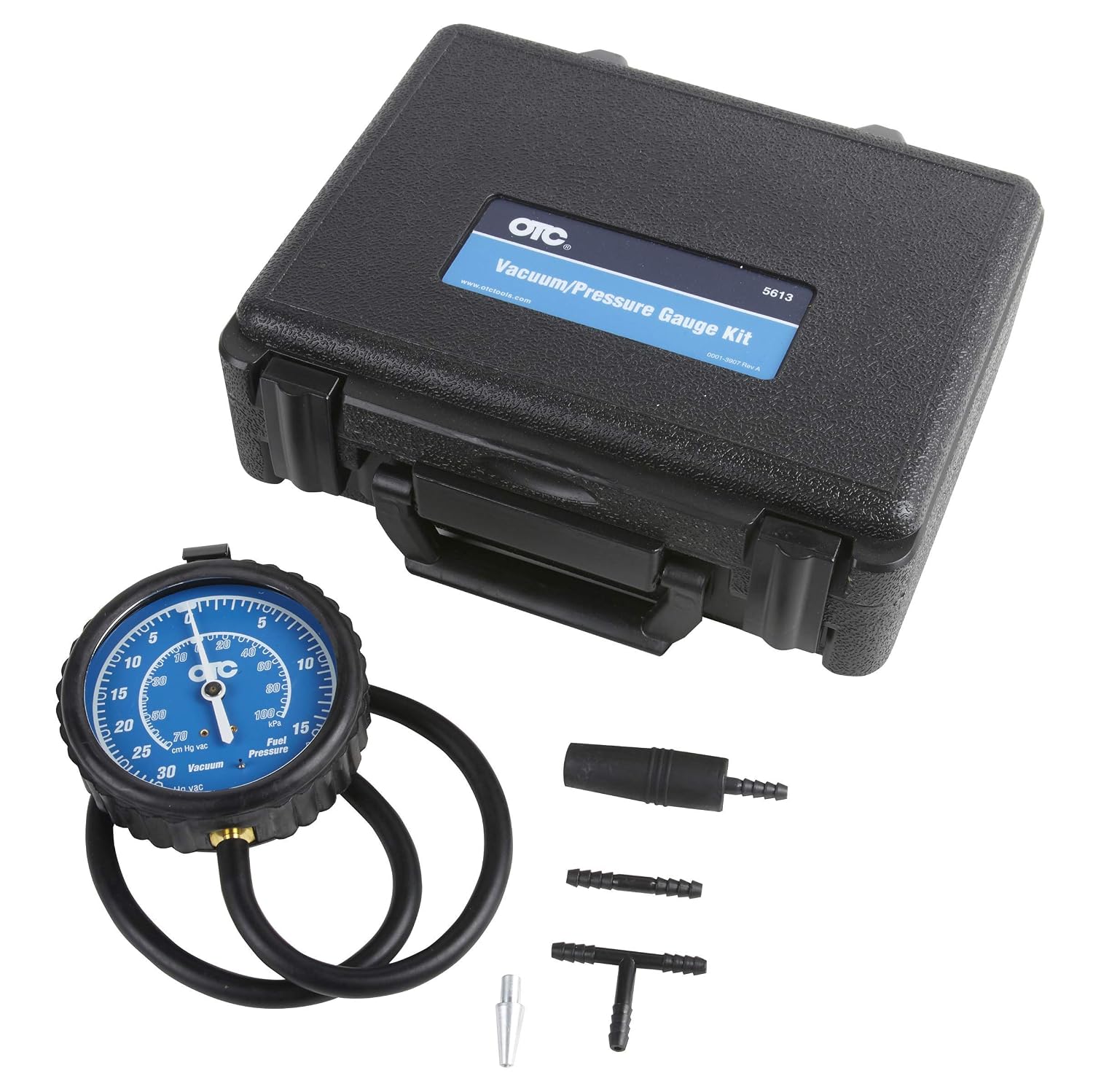
If your Turbo 350 or Turbo 400 shifts late and hard, slips into gears softly, or is losing fluid with white smoke out the tailpipe, the vacuum modulator is the first suspect. Before you buy a modulator or tear into a valve body, find out what the transmission is actually being fed. The OTC 5613 kit reads manifold vacuum right at the modulator line, so you can tell a ruptured diaphragm from a cracked hose, a big-cam engine with weak idle vacuum, or a problem inside the case.
What modulator vacuum does in a TH350
The modulator sits at the right rear of the TH350 case. Inside is a diaphragm and one spring: the spring pushes the modulator valve toward higher pressure, and engine vacuum pulls the other way. High vacuum at light throttle means low modulator pressure, soft line pressure and early shifts; low vacuum under load means high pressure and later, firmer shifts. That hydraulic signal acts on the boost valve and raises line pressure, so a bad vacuum signal changes how hard every clutch and band is held. The TH400, C4 and C6 use the same idea, which is why one gauge covers all of them.
Symptoms that point to a vacuum or modulator problem
- Late, harsh upshifts at light throttle, as if the transmission thinks you are at full load.
- Soft, slipping or early shifts when the signal is wrong in the other direction.
- Fluid level dropping with no puddle, white exhaust smoke after startup or on decel, and fouled plugs on the cylinders nearest the vacuum port.
- Transmission fluid inside the vacuum hose, which means a ruptured diaphragm.
- No part-throttle downshift or poor shift feel after a cam or carburetor change.
How to confirm the cause with this kit
Warm the engine, pull the hose off the modulator nipple and look inside it for ATF. Connect the gauge to the hose with the supplied barbed connector, or tee it into the line, and read idle vacuum. You want a strong, steady reading; a needle that sags or flutters points to a cracked line, a leaking source fitting or an engine that simply does not make much vacuum. Then use a hand vacuum pump on the modulator itself and confirm it holds. The full walk-through is in our TH350 common problems guide, and if vacuum is good but engagement is still slow, move on to the delayed engagement guide.
One detail trips people up during a line pressure test: GM lists the connected test at a manifold pressure in inches of mercury absolute, not inches of vacuum. At sea level, 12 in. Hg absolute is roughly 18 in. Hg on a vacuum gauge like this one. The 5613 reads 0 to 15 psi on the pressure side, so it is not a line pressure gauge; you still need a high-range gauge on the case tap for that test. The 5613 is what tells you the vacuum half of the test is right.
Fitment and what is in the kit
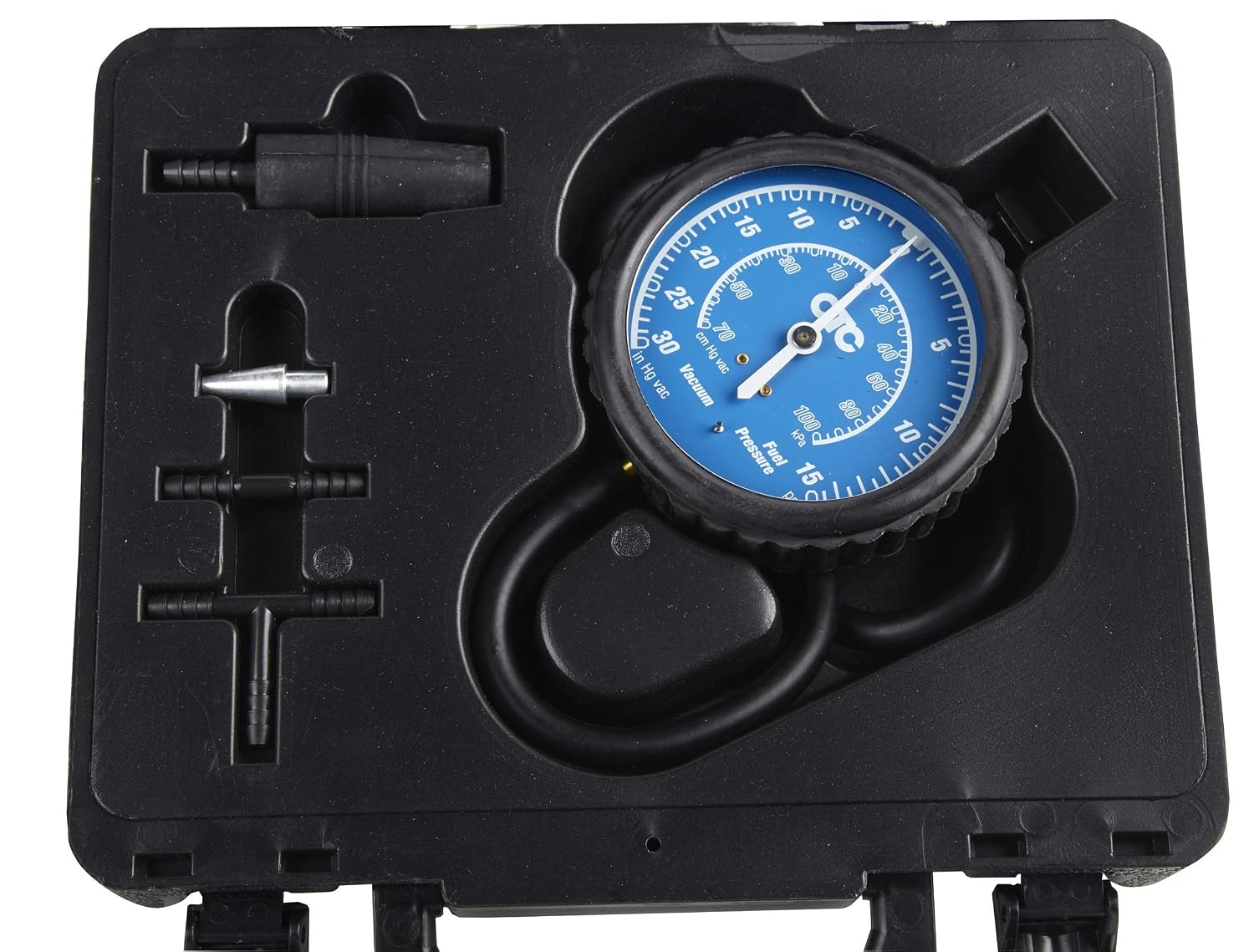
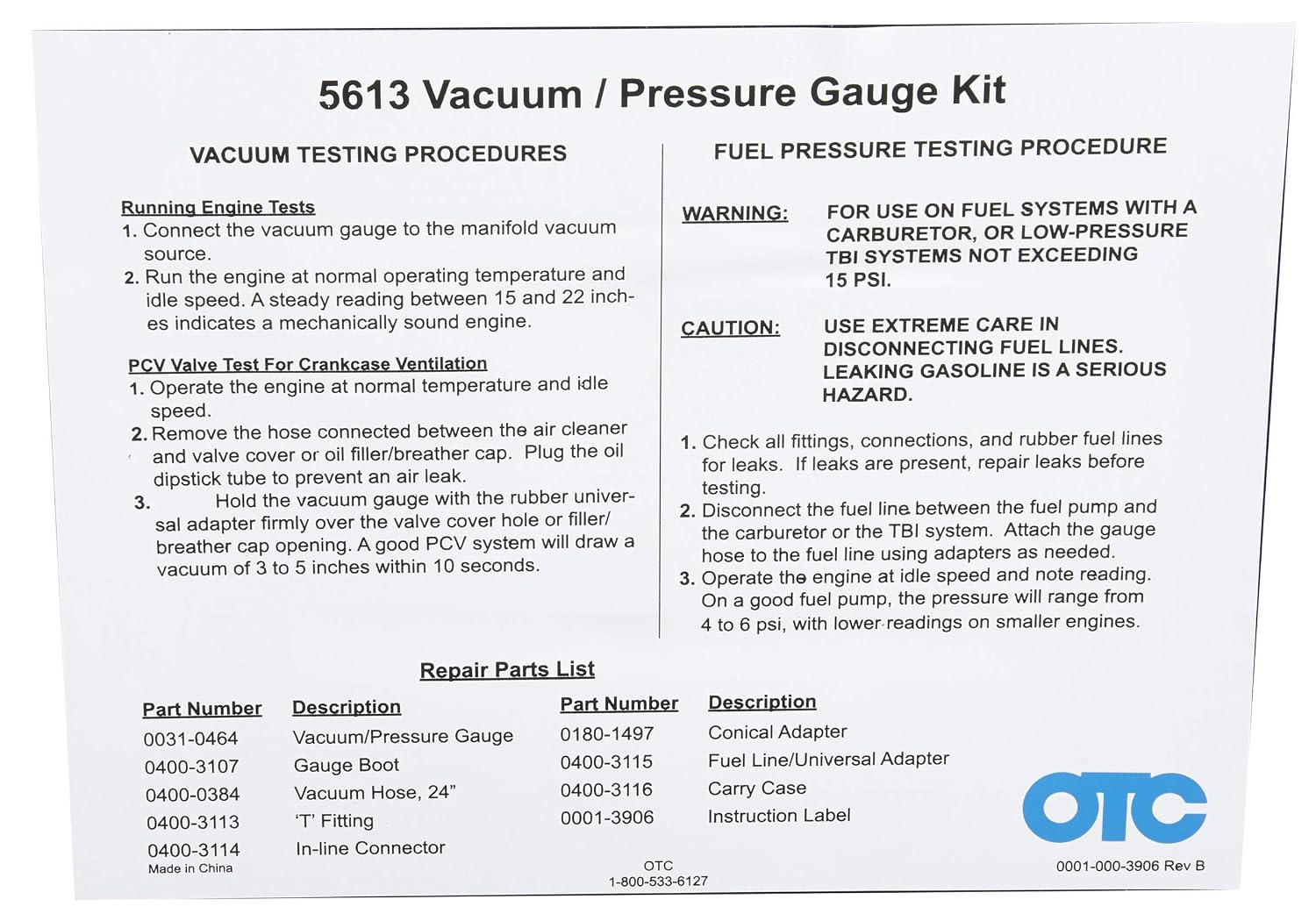
The gauge works on any vacuum-modulated automatic, including the TH350, TH400, Ford C4 and C6, plus general engine vacuum and low-pressure fuel testing. It has a 3-1/2 inch face with a chrome bezel and rubber boot, scales of 0-30 in. Hg and 0-70 cm Hg vacuum and 0-15 psi and 0-100 kPa pressure, a 24 inch hose, an in-line barbed connector, a tee, a conical nozzle adapter and a universal fuel line adapter, all in a hard case with a reading chart under the lid. See the full TH350 parts collection for what you may need after the diagnosis.
After the test
- Good vacuum, wet hose: replace the modulator and check the modulator valve in the case for scoring before installing it. The fluid leak guide covers the modulator O-ring.
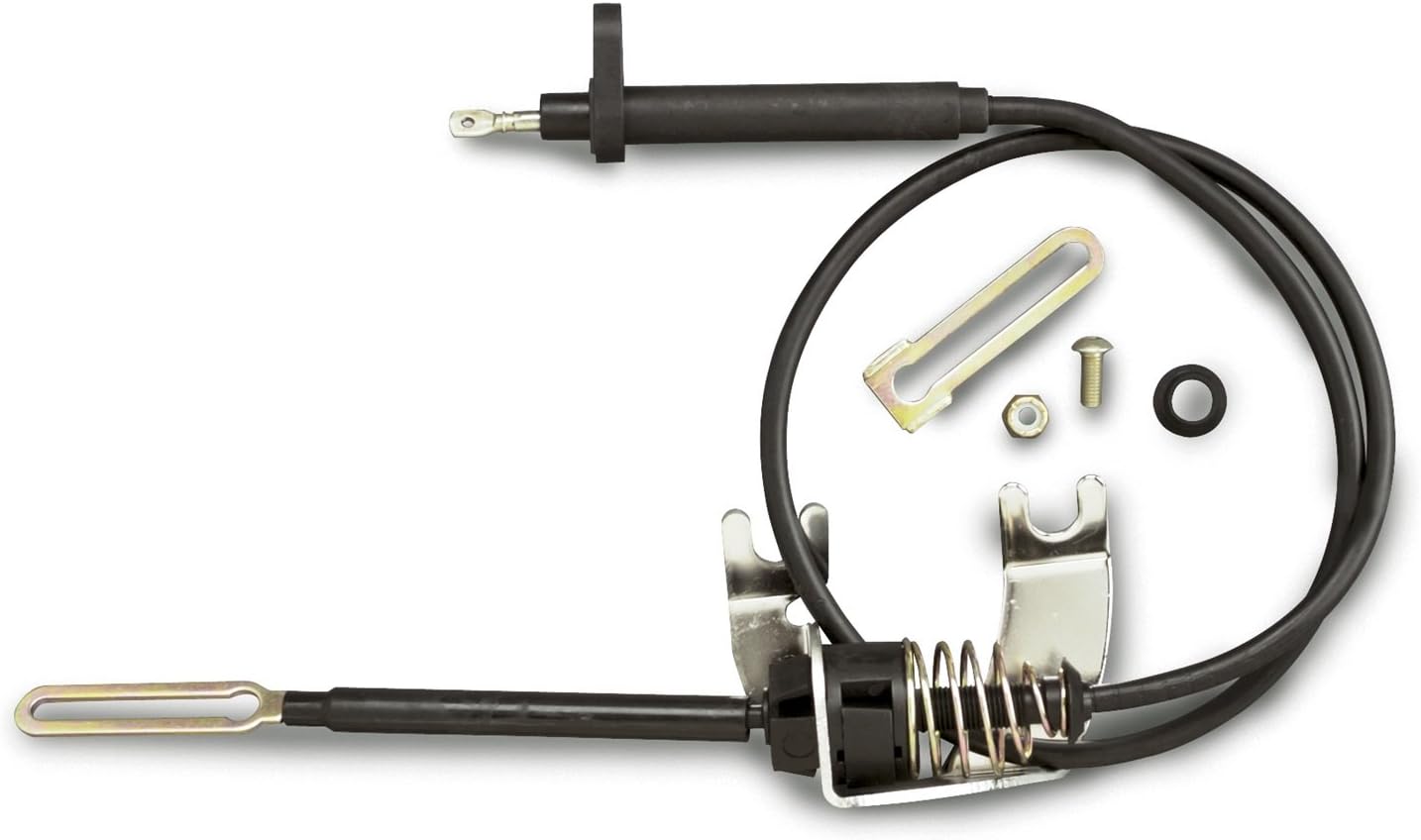
- Good vacuum, dry hose, shifts still wrong: check the detent cable adjustment; a TH350 kickdown cable and bracket kit replaces a stretched or kinked one.
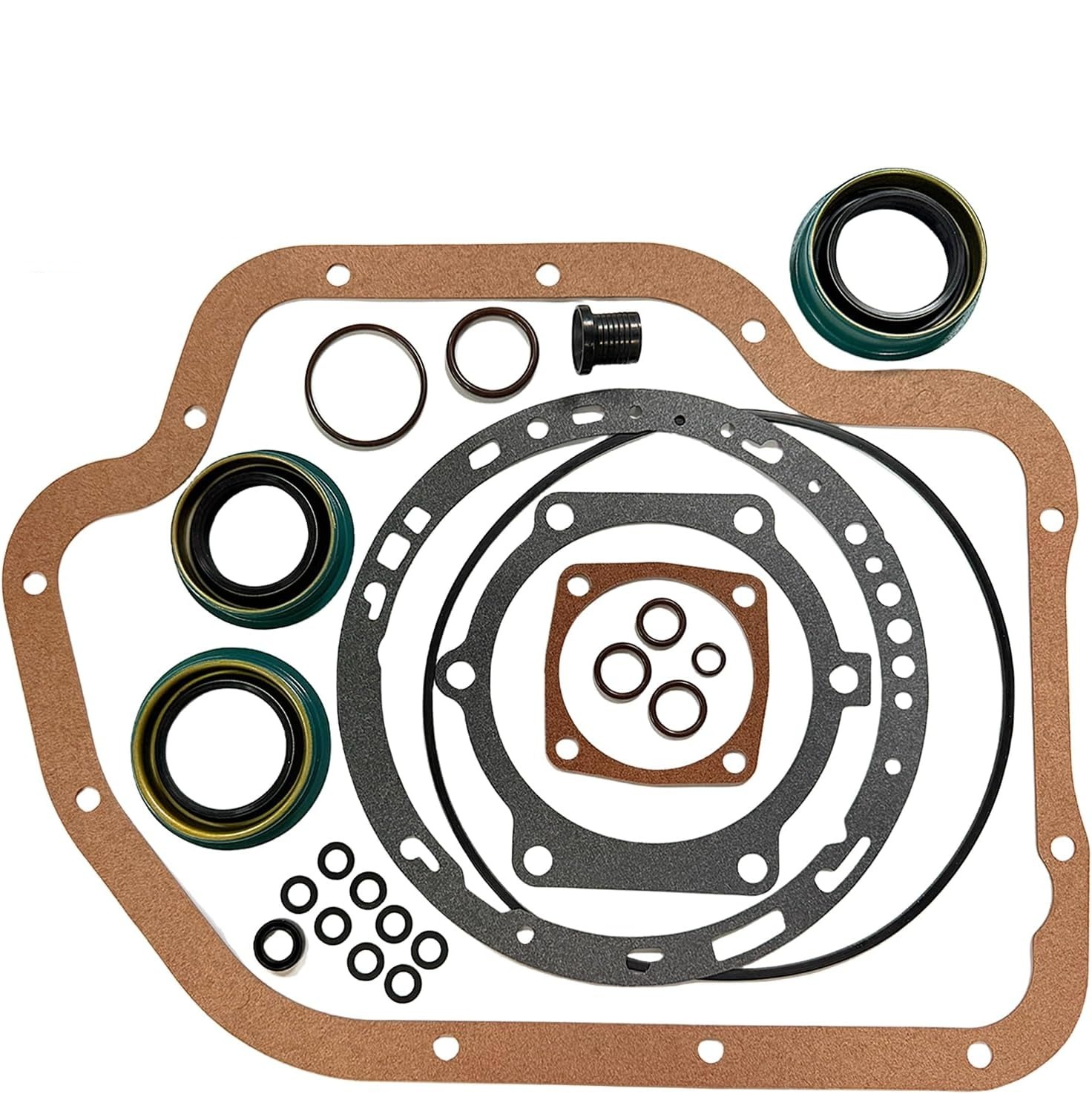
- Good vacuum and a good modulator but soft shifts in every range: worn valve body bores, covered in the valve body testing guide, or a replacement TH350 valve body.
- Top off with Dexron ATF after any modulator replacement, since a failed diaphragm may have pulled a quart or more into the engine.