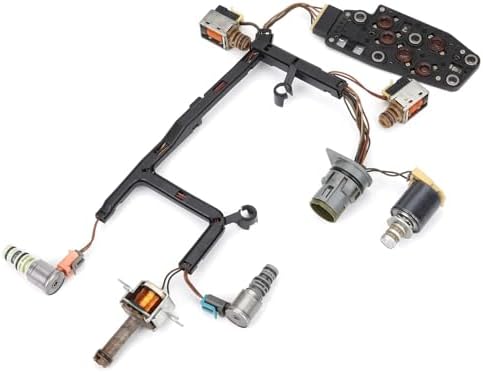
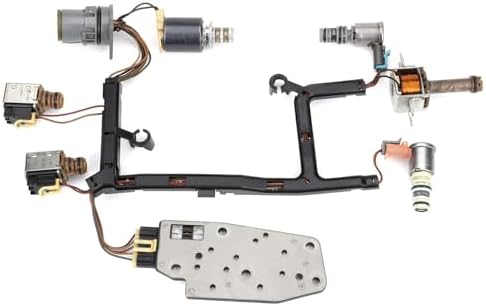
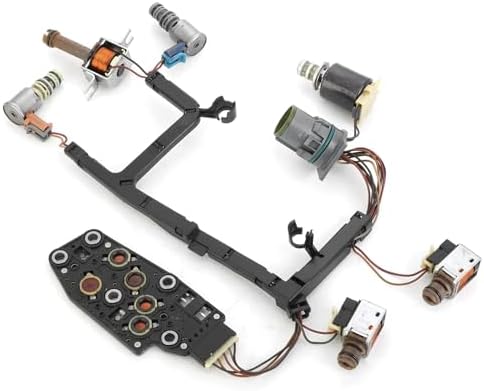
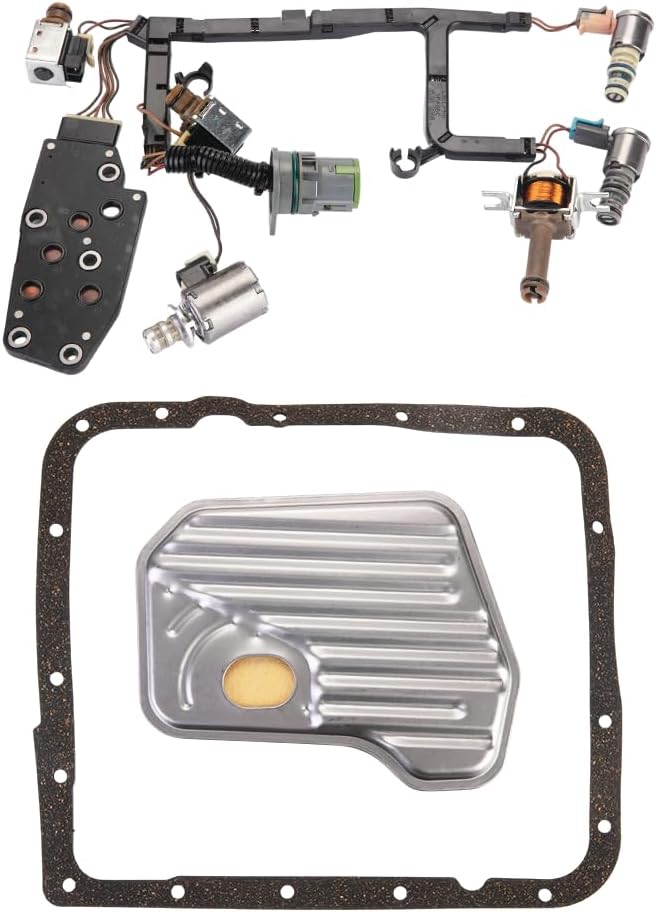
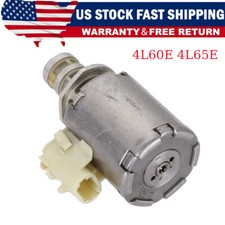
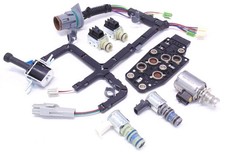
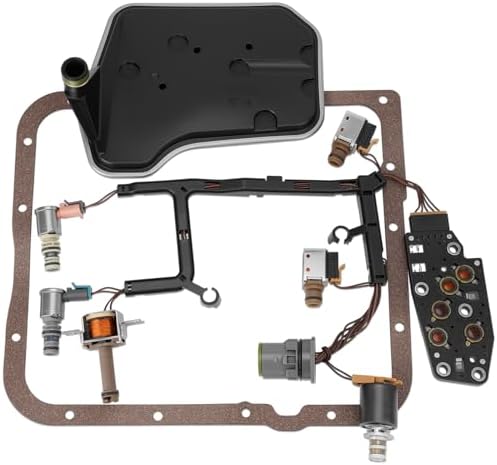
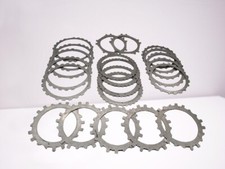
For a 1996-2002 Silverado, Sierra, Suburban, Tahoe, Blazer, S-10 or Camaro on a budget, this refurbished set replaces all five solenoids that bolt to the 4L60E valve body for less than a new master kit. It is aimed at the owner who has codes for one or two solenoids, knows the others are the same age, and would rather not drop the pan twice. These are used, reconditioned parts rather than new ones, and the listing references part numbers 24230298, 10478112, 10478120 and 10478131.
What these five solenoids do in a 1996-2002 4L60E
In these model years the PCM controls the 4L60E through five valve body solenoids. Shift solenoid A (the 1-2/3-4 solenoid) and shift solenoid B (the 2-3 solenoid) work as a pair to select each of the four gears. The EPC solenoid sets main line pressure, which is what makes a shift feel firm or soft. The TCC PWM solenoid ramps converter clutch apply so lockup feels smooth instead of abrupt, and the 3-2 downshift control solenoid manages the release of the 3-4 clutch and band apply on a part-throttle or forced downshift. Weakness in any one of them shows up as a specific drivability complaint, which helps narrow down the cause.
Symptoms in this year range
- Stuck in second or third gear, with P0751 or P0756 (solenoid A) or P0753 or P0758 (solenoid B)
- Harsh, soft or inconsistent shifts, often with P0748 for the pressure control circuit
- No converter lockup or a lockup shudder at highway cruise, with P0740 stored
- A flare or bang on the 3-2 downshift when passing
- Intermittent codes that clear and return as the fluid heats up
How to confirm it before you buy
Check that the fluid is not burnt and the pan is free of heavy friction material first; solenoids will not cure a slipping clutch pack. Then read resistance through the case connector. The GM diagnostic chart cited by Transmission Digest gives 19-31 ohms for the shift solenoids, and that same article shows a solenoid that measured fine but responded slowly, so a road test with a scan tool watching commanded versus actual gear is the real proof. Our EPC solenoid function and failure guide and 3-2 downshift solenoid guide cover the two solenoids people most often overlook.
Fitment: 1996-2002 4L60E only
This set is specific to the 1996-2002 4L60E. The 1993-1995 units used a different EPC and harness arrangement, and 2003-up units changed the TCC and pressure switch setup, so a set from the wrong range will not plug in or behave correctly. Confirm your model year and, if possible, match the part numbers on your old solenoids to the references above. Send your year and VIN if you need a second check. Kits for the other year ranges, new and refurbished, are on the 4L60E parts page.
Install notes
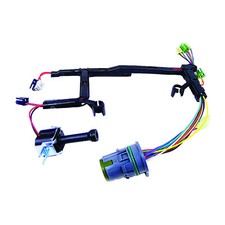
Drain and drop the pan, remove the filter, and unplug the internal harness connectors at each solenoid. Pull the retaining clips on shift solenoids A and B and slide them out of their bores, then unbolt the EPC, 3-2 and TCC PWM solenoids. Put a thin film of clean ATF on every O-ring so the seals do not roll on the way in, torque the bracket bolts to spec, reconnect the harness, and refill with Dexron VI after fitting a new filter and pan gasket. Clear codes and road test through all four gears and lockup. Inspect the harness while it is exposed: if the insulation is cracking, add the 1993-2002 internal wiring harness, and if line pressure complaints persist on a high-mileage unit, the 4L60E pressure control solenoid is listed separately.