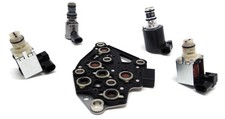
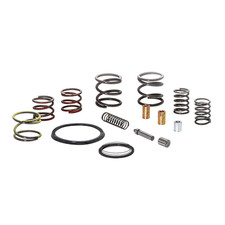
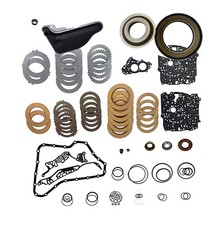
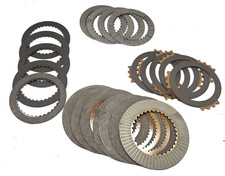
This listing is titled as a shift kit, but what you get is the electrical side of shifting: a complete master solenoid set for the first-generation 1997-2002 GM 4T65E. If your Buick Century, Regal or LeSabre, Chevrolet Impala, Monte Carlo or Venture, Pontiac Grand Prix or Oldsmobile Intrigue from those years is stuck in one gear, shifting late and soft, flaring into 3rd or not locking the converter on the highway, a tired solenoid is a common cause. Per the listing the set contains two new shift solenoids, one new EPC (pressure control) solenoid and one new TCC lockup solenoid, and it states that everything pictured is included, which shows the pressure switch assembly alongside the four solenoids. It is sold as fitting GM and Volvo applications of the 4T65E for 1997-2002.
What these solenoids do in a 1997-2002 4T65E
GM's SAE paper on the 4T65E describes it as the 1997 evolution of the 4T60-E with the powertrain computer in charge of shifts and line pressure. The two shift solenoids are simple on/off valves; the computer switches them in combinations to select first through fourth, so one weak solenoid usually shows up as a missing gear or a wrong-gear start. The EPC solenoid is the one doing constant work: it is pulsed to set line pressure, and line pressure sets how hard each clutch and band clamps. The TCC solenoid applies and releases the converter clutch at cruise. All of them take oil from the actuator feed limit (AFL) valve in the channel plate, which Sonnax lists at a 115 psi maximum, so a worn AFL bore can starve every solenoid at once.
Symptoms that point to this set
- Stuck in 2nd or 3rd (limp mode), or starts from a stop in 2nd
- Long, soft 1-2 or 2-3 shift with P1811 and shift adapts at maximum
- Harsh engagement or banging shifts from a sticking EPC solenoid
- Converter never locks, or P0741 converter clutch slip
- Falls out of 4th, or wrong range shown when the pressure switch leaks
How to confirm before you buy
Scan for codes and check fluid level and condition first. GEARS magazine's P1811 article traces long shifts through the chain of EPC solenoid, AFL valve, torque signal regulator and boost valve, so a new EPC solenoid fixes the code only when the bores behind it are healthy. Electrical codes for a solenoid circuit point straight at the part or its harness, while a code with no circuit fault needs a pressure test. Our 4T65E shift solenoid symptoms guide and 4T65E limp mode guide lay out the test order. If the fluid is black and full of lining, solenoids will not save it.
Fitment
This set is catalogued for 1997-2002 4T65E transaxles only. The 4T65E was built through 2011 with running changes, so later cars should use parts listed for their years. Confirm the model year on the transaxle ID tag and compare connector shapes against your old parts before installing, or send us your year and VIN to check. See every early and late listing on our 4T65E parts page.
Install notes
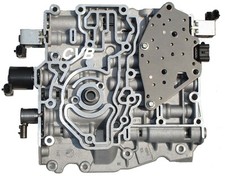
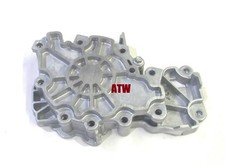
The solenoids mount on the valve body behind the side cover, so on most of these cars the job means draining the fluid, supporting the engine or lowering the cradle as needed, and removing the side cover. Mark which solenoid came from which location, lubricate the new O-rings with a film of fresh fluid, and torque the valve body bolts in sequence to the factory value. While the cover is off, check the AFL and boost valve bores; if they are worn, a 1997-2002 4T65E valve body is a better fix than solenoids alone. A unit with soft shifts and a weak pump may also need the 1997-2001 4T65E pump. Refill with DEXRON-VI, which GM's spec paper notes is back-serviceable into older DEXRON III units, then clear codes and let the computer relearn shifts over a few drives.