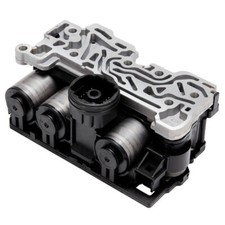
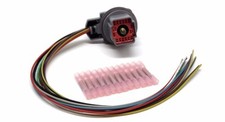
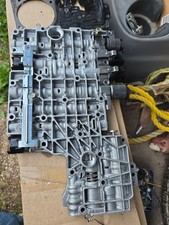
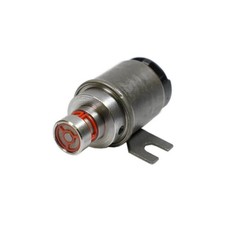
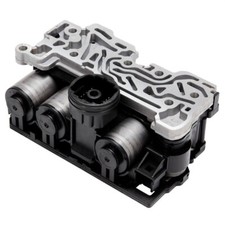
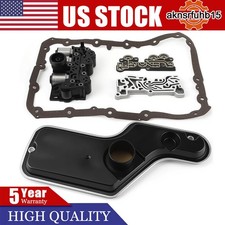
A 5R55W Explorer or Mountaineer that shudders as it settles into cruise, runs a few hundred RPM higher than it used to on the highway, or sets P0741 or P0743 has a lockup problem, and on this transmission the TCC solenoid cannot be bought or bolted in by itself. It is one of eight coils built into the solenoid pack that sits on top of the valve body. That is what this listing is: a genuine Ford 5R55W/5R55S solenoid pack, pulled from a working unit and function-tested, referenced to Ford 9L2Z-7G391-AA and 4L2P-7G391-AA. Every solenoid on it, including the TCC unit, is checked before it ships.
What the TCC solenoid does in a 5R55W
Transmission Digest describes the 5R55S/W control layout as four on/off shift solenoids, three variable force solenoids and one pulse-width-modulated solenoid dedicated to the torque converter clutch. The PCM ramps the duty cycle of that PWM coil up to apply the converter clutch smoothly and holds it there at steady speed, which locks the engine directly to the input shaft. When the coil weakens, its internal valve sticks, or the pack leaks oil between circuits, apply pressure wanders. The PCM sees converter slip that does not match its command, keeps trying, and eventually logs a performance code and gives up on lockup.
Symptoms that point at the TCC circuit
- Shudder, like driving over rumble strips, at roughly 40 to 60 mph under light throttle
- Lockup that engages and drops out repeatedly on a steady highway grade
- Higher cruise RPM, fluid running hotter and fuel economy falling off
- P0741 (TCC performance) or P0743 (TCC electrical)
- TCC codes together with pressure control or shift solenoid codes, which suggests the whole pack rather than one coil
Not every lockup complaint is the pack. A converter with a worn clutch lining shudders no matter what the solenoid does, and the 5R55W's well-known servo pin bore wear causes slipping and P0735 that a new pack will not cure.
How to confirm it before you order
Check the fluid level and smell first; burnt fluid and friction debris mean the converter or bands are already damaged. Pull every stored code, then watch commanded versus actual TCC slip on a scan tool at a steady 50 mph. A TCC electrical code with a matching bad resistance reading through the case connector is a clean diagnosis. A slip reading that never comes down while the command is high can be the pack, the converter or a worn bore, so work through our 5R55S TCC lockup guide and the lockup shudder fix, which apply equally to the W.
Fitment
ATRA's seminar notes split these packs by year. 2002-2003 Ford 5R55W and S units, plus the 2003 Lincoln, take the early pack, Ford 1L2Z-7G391-AG. 2004-and-later Ford units and 2004-2006 Lincolns take the later pack, originally 4L2Z-7G391-AA and updated to 9L2Z-7G391-A, which Ford says to use on those later transmissions. The part numbers on this listing match the later design, so it is meant for 2004-on 5R55W trucks: Explorer, Explorer Sport Trac and Mountaineer. Owners of a 2002 or 2003 should check the number on their old pack first. It does not fit the Ranger, which uses the 5R55E. Send us the year and VIN if you are unsure, and browse the rest of the family on the 5R55 parts page. Mustang and Lincoln owners with a 5R55S can use the matching 5R55S listing.
Install notes
- Drain the pan, remove the filter and unplug the internal connector from the pack before pulling its bolts.
- Sonnax warns that the aluminum base plate and the filter under it, which is molded into the gasket, are specific to the W/S. Mixing in an N-style plate or filter costs reverse, TCC apply and solenoid oil pressure, and solvents ruin the silicone bead if you reuse it.
- Torque the eight pack bolts to 71 lb-in (8 Nm) in the Ford sequence; overtightening distorts the pack.
- Refill with Mercon V, set the level hot, clear codes and drive through several gentle lockup cycles so the PCM relearns apply pressure.
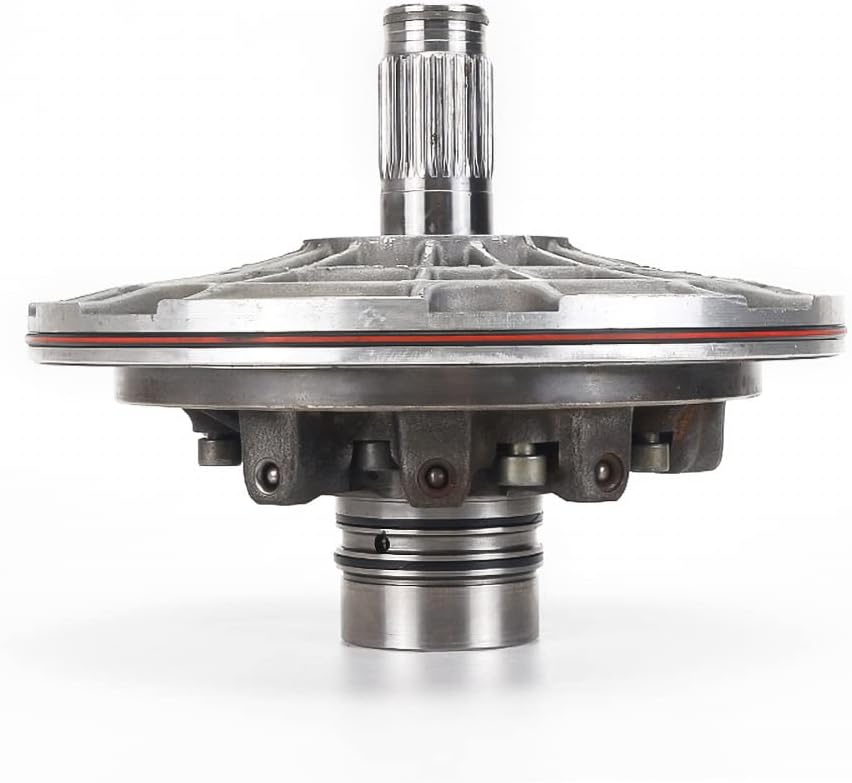
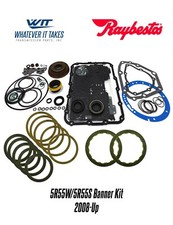
If the trans is getting a full freshen-up at the same time, a 5R55S/W shift kit is the usual companion, and a tired pump can be swapped for the 5R55W front pump assembly while the unit is out.