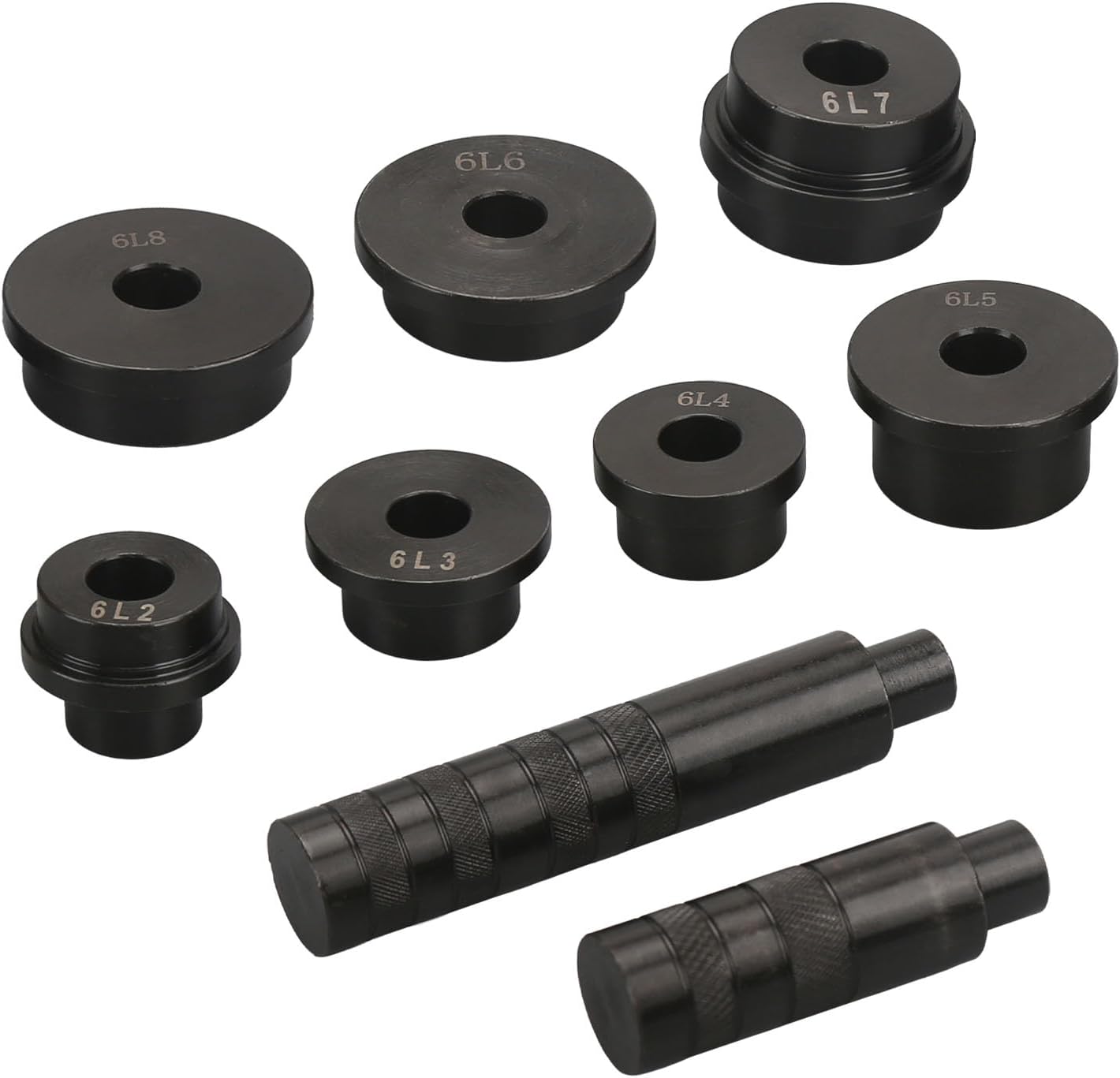
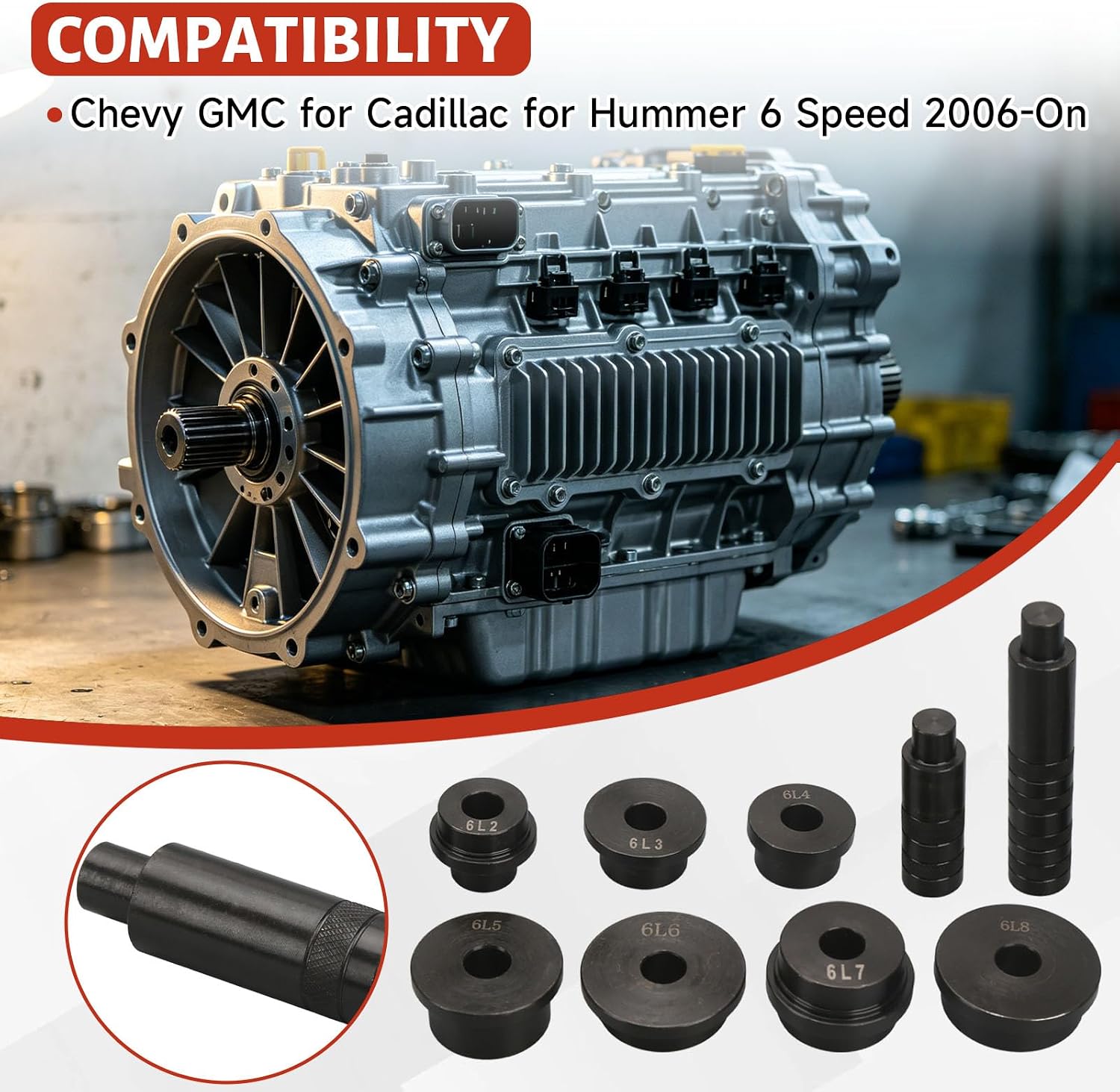
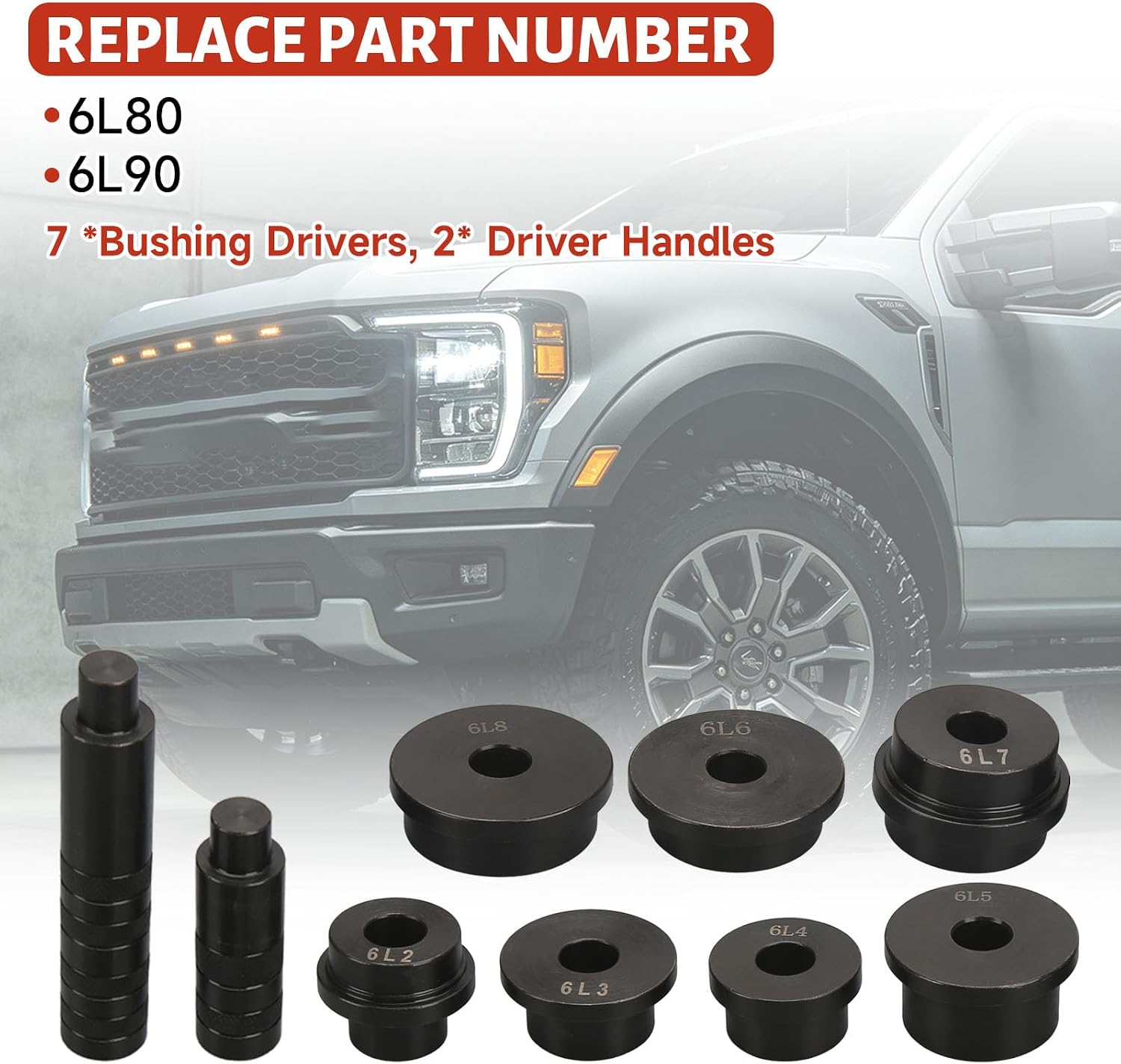
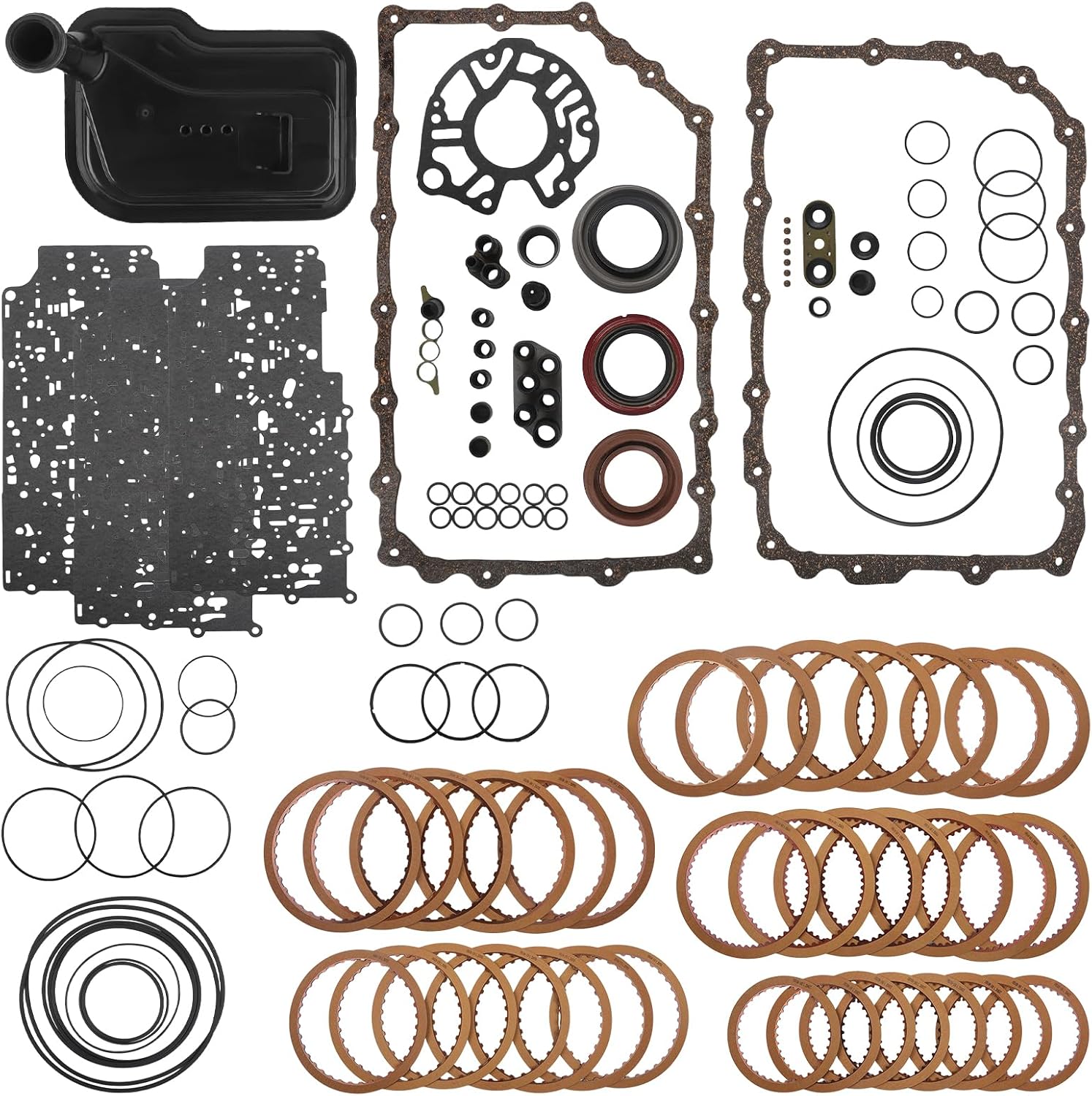
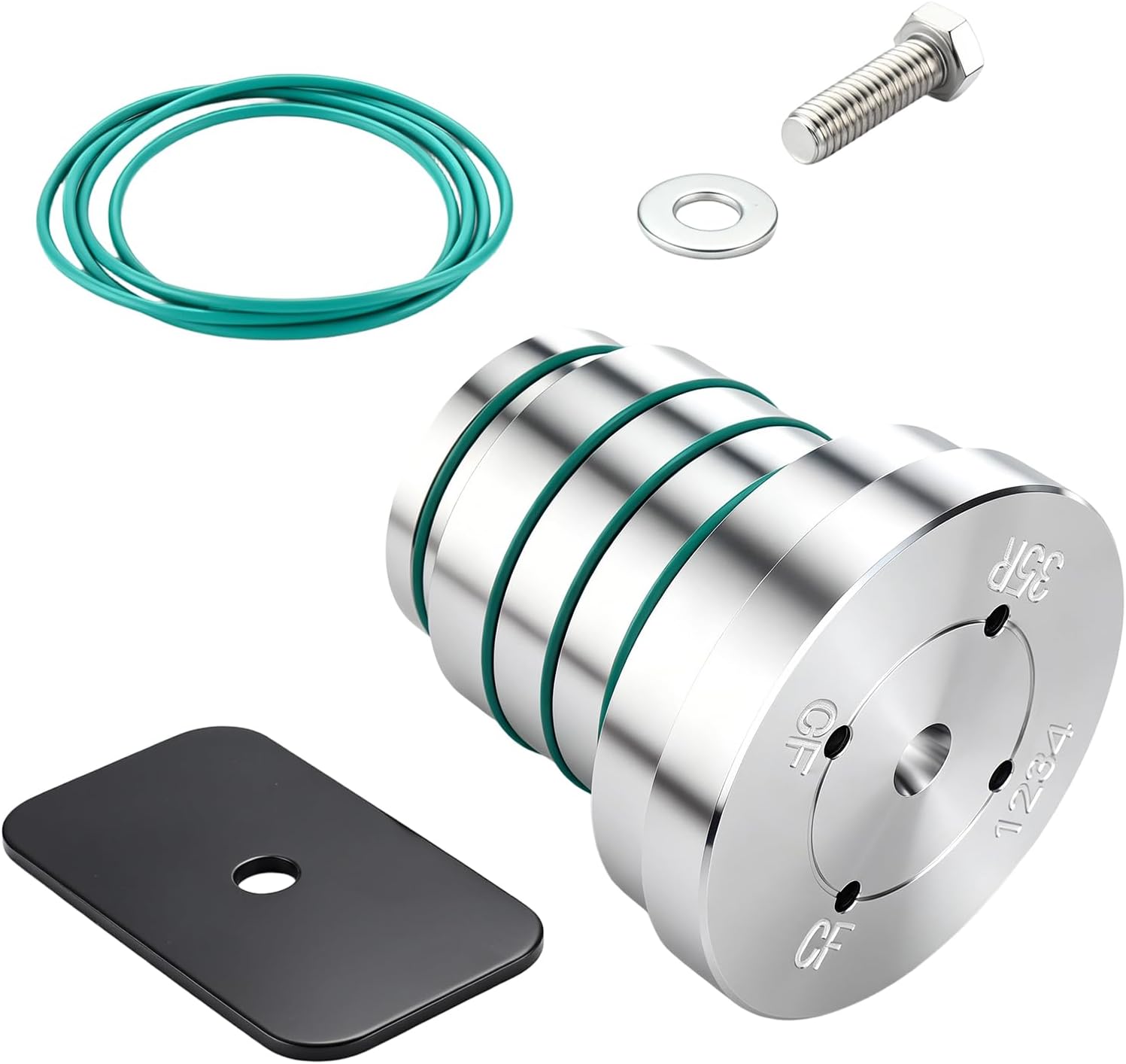
A 6L80 that came out of a Silverado, Sierra, Tahoe, Yukon, Suburban, Escalade, Camaro or Corvette with brass glitter on the magnet, a converter clutch code, or a pump hub that wobbles is almost always getting a full set of new bushings during the rebuild. This set is what puts them in: seven stepped drivers and two handles sized for the bushing bores in the GM 6L80 and 6L90 family. It is a tool, not a parts kit, so plan on buying the bushings separately.
What the bushing driver set does in a 6L80
Most rotating joints in the 6L80 ride on thin steel-backed bushings instead of needle bearings, and several of them also seal a clutch feed circuit, so the bushing has to finish round, square and at its original depth. The bores are small and close together in size. Sonnax publishes the housing bores for its 6L80/6L90 replacement bushings: about 2.346 inches for the 1-2-3-4/3-5-R drum, 2.199 inches for the case, 2.018 inches for the front center support, 1.994 inches for the pump, 1.590 to 1.600 inches for the 2-6/3-5-R hub, 1.562 inches for the output shaft and only 0.819 inches for the 4-5-6 clutch drum. A socket that is close is not close enough at those tolerances. Each driver here has a pilot that centers inside the new bushing and a shoulder that loads only its edge, so the press force goes in evenly around the whole circumference.
Symptoms that send you looking for bushing tools
- Converter clutch slip or shudder with P0741, which Sonnax lists among the results of worn 6L80 bushings
- Harsh shifts, burnt clutches, or gear ratio and solenoid codes that return after a valve body repair
- Low line pressure on a unit whose pump checks good, because a worn bushing bleeds feed oil
- A front seal that keeps leaking because the pump bushing lets the converter hub move
- Bronze-colored debris in the pan and a polished stripe on one side of a shaft journal
- A previously replaced bushing that sits crooked, mushroomed, or below an oil hole
How to confirm the bushings need replacing
Bushing wear shows up as lost pressure, so test before teardown. Compare actual mainline pressure at the test port against commanded pressure; a unit that cannot hold what the computer asks for is leaking somewhere between the pump and the clutches. Our 6L80 pump failure symptoms guide helps separate a tired pump from leakage further back. With the unit apart, measure every journal and bore. Any bushing that is over clearance, scored or loose in its bore gets replaced, and the 6L80 common problems and fixes guide covers the failures that usually ride along with worn bushings.
Fitment
The set is listed for the GM 6L80 and 6L90 six-speed rear-wheel-drive automatics from 2006 on, in Chevrolet, GMC, Cadillac and Hummer trucks and SUVs plus the Camaro and Corvette. The 6L90 has a longer case and heavier internals, but the bushing positions this set targets are shared. The 6L45 and 6L50 use some different bushings, so check each driver against the new bushing before using it on those units, and it does not apply to the 6T70 or 6T75 front-drive transaxles. If you are unsure which unit you have, the RPO label in the glovebox reads MYC for a 6L80 and MYD for a 6L90, or send us your year and VIN. Parts for this transmission are on our 6L80 parts page.
Install notes
Before removing any bushing, write down its depth from a machined face and which way its oil hole or seam points. Collapse or drive the old one out, then clean the bore and break any burr on the lead-in edge. Sonnax specifically warns that its 6L80 bushings should go in with an arbor press, not a hammer and driver or a hydraulic press, because impact and excess force distort the bushing. Use these drivers in an arbor press: pick the driver whose pilot fits snugly inside the new bushing, start it square, and press in one smooth stroke to the depth you recorded. Check the shaft or hub turns freely afterward. Replace the drum seal rings at the same time, and size the input shaft rings with an input shaft seal ring expander. Air-check the drums with the 6L80 drum air check tester before the unit goes back together, then refill with Dexron VI.