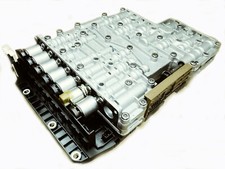
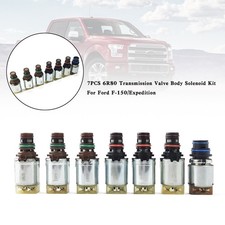
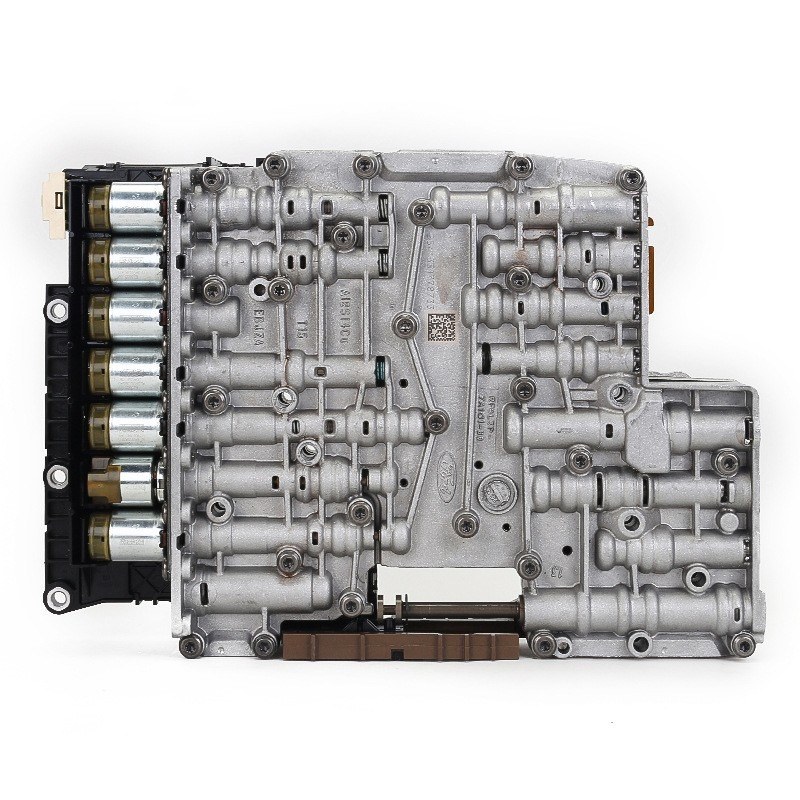
This listing is for one model year only: the 2010 6R80, referenced to the F-150. If your 2010 F-150 with the 4.6L or 5.4L V8 has developed a shudder at steady 45 mph cruise, the tach sits a few hundred RPM higher on the highway than it used to, or the scan tool shows a P0741 or P0742 torque converter clutch code, this is the part that controls lockup. It is remanufactured, and the listing photo shows a complete solenoid body with the TCC solenoid, the rest of the solenoid pack and the lead frame installed.
How the TCC solenoid works in the 2010 6R80
On the 6R80, Ford mounts all seven control solenoids and the speed, range and temperature sensors on a single assembly it calls the solenoid body. The PCM varies current to the TCC solenoid to apply the converter clutch smoothly once the truck is in a higher gear at cruise, then releases it when you brake or slow down. That controlled, partial apply is what keeps lockup from feeling like a bump. A solenoid with a worn seat or debris under it cannot hold a steady pressure, so the clutch cycles between slip and grab and you feel it as shudder through the floor. Each solenoid on the body is calibrated with a band number from 1 to 5, and the PCM is told how the whole body is calibrated through its 12-digit ID and 13-digit strategy.
Symptoms on a 2010 truck
- Light-throttle shudder between roughly 40 and 60 mph, often when towing or climbing a grade
- Engine RPM rising and falling at a steady highway speed
- Lower fuel economy and hotter transmission fluid temperature readings
- P0741 or P0742, sometimes with shift complaints if the lead frame is also failing
- Engine wanting to stall at a stop when lockup does not release
Check these before you order
Start with fluid level and condition; worn Mercon LV can produce shudder by itself. On the scan tool, compare the commanded TCC pressure with converter slip RPM. If slip will not drop when the PCM commands full apply and the solenoid tests good, the converter clutch lining is the problem, not the solenoid. If you also have a start in 5th gear or random shift codes, inspect the lead frame, which Ford addresses separately in TSB 13-6-8. Our 6R80 F-150 common problems guide lists the full sequence, and F-150 shift problems covers the shift side.
Fitment for 2010 only
A 2010 model year truck was built before Ford's late-2010 solenoid change, which Transmission Digest dates to units built after November 3, 2010. That puts 2010 trucks on the earlier, tan-snout shift solenoid E design, and a replacement body needs to match. The 2010 6R80 went in the F-150, Expedition and Lincoln Navigator; the Mustang did not get the 6R80 until 2011. Before installing, read the build date on the case identification tag and compare your solenoid body strategy with the replacement tag. If you have a cracked lead frame rather than a solenoid fault, the 926-149 lead frame kit is the cheaper fix. When in doubt, send us your year and VIN. More parts for this transmission are on the 6R80 collection page.
Install notes
Drain and drop the pan, remove the filter, disconnect the case connector and take the solenoid body out with its bolts loosened evenly. Bolt the replacement in, fit a new filter and connector seal, and refill with fresh Motorcraft Mercon LV, checking the level hot. Place the new solenoid body tag over the original, then use module programming to enter the 12-digit ID and 13-digit strategy so the PCM uses the correct calibration. Clear codes, reset adaptive tables, and drive the transmission drive cycle: accelerate to 50 mph in 6th, hold steady 15 seconds, tap the brake, stop for 20 seconds, and repeat five times. Recheck for codes afterwards.