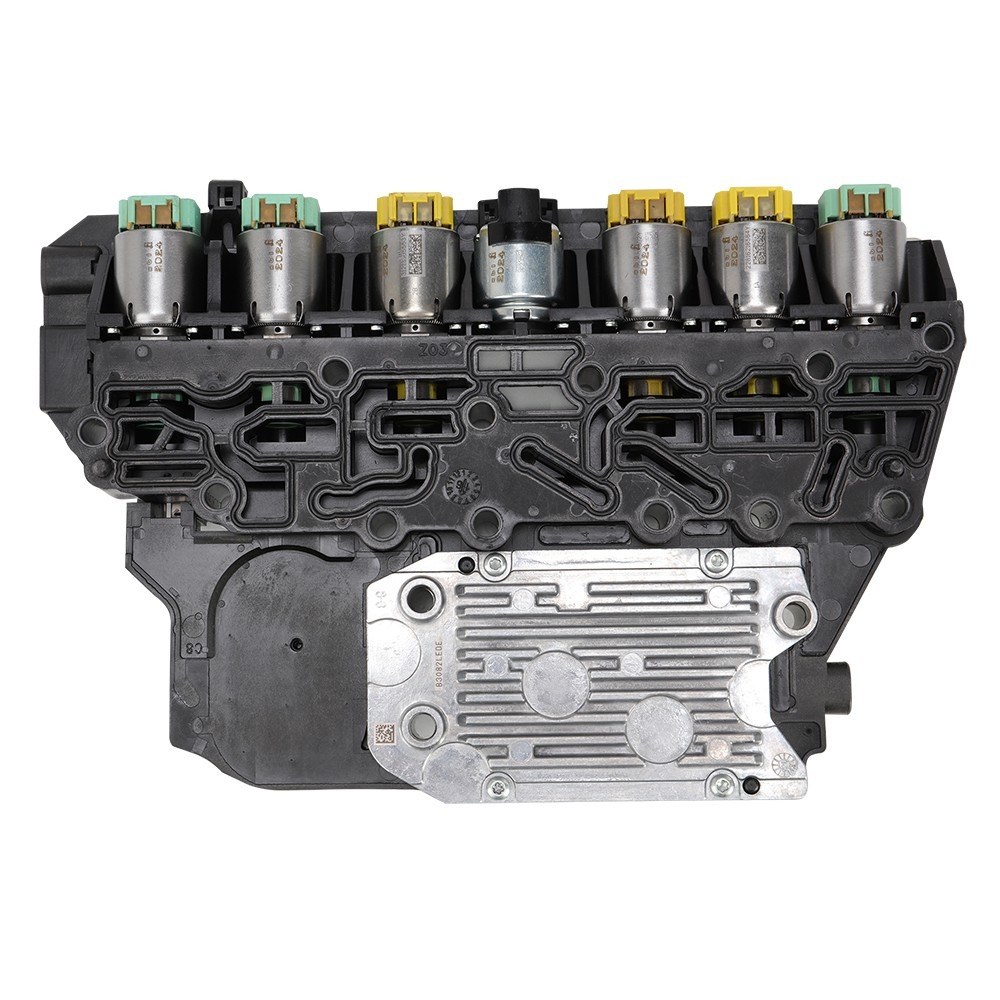
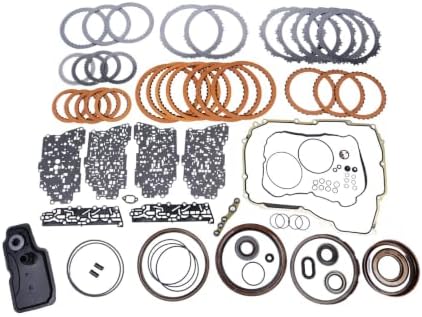
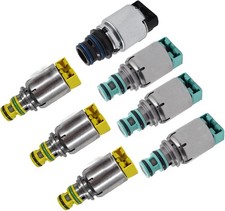
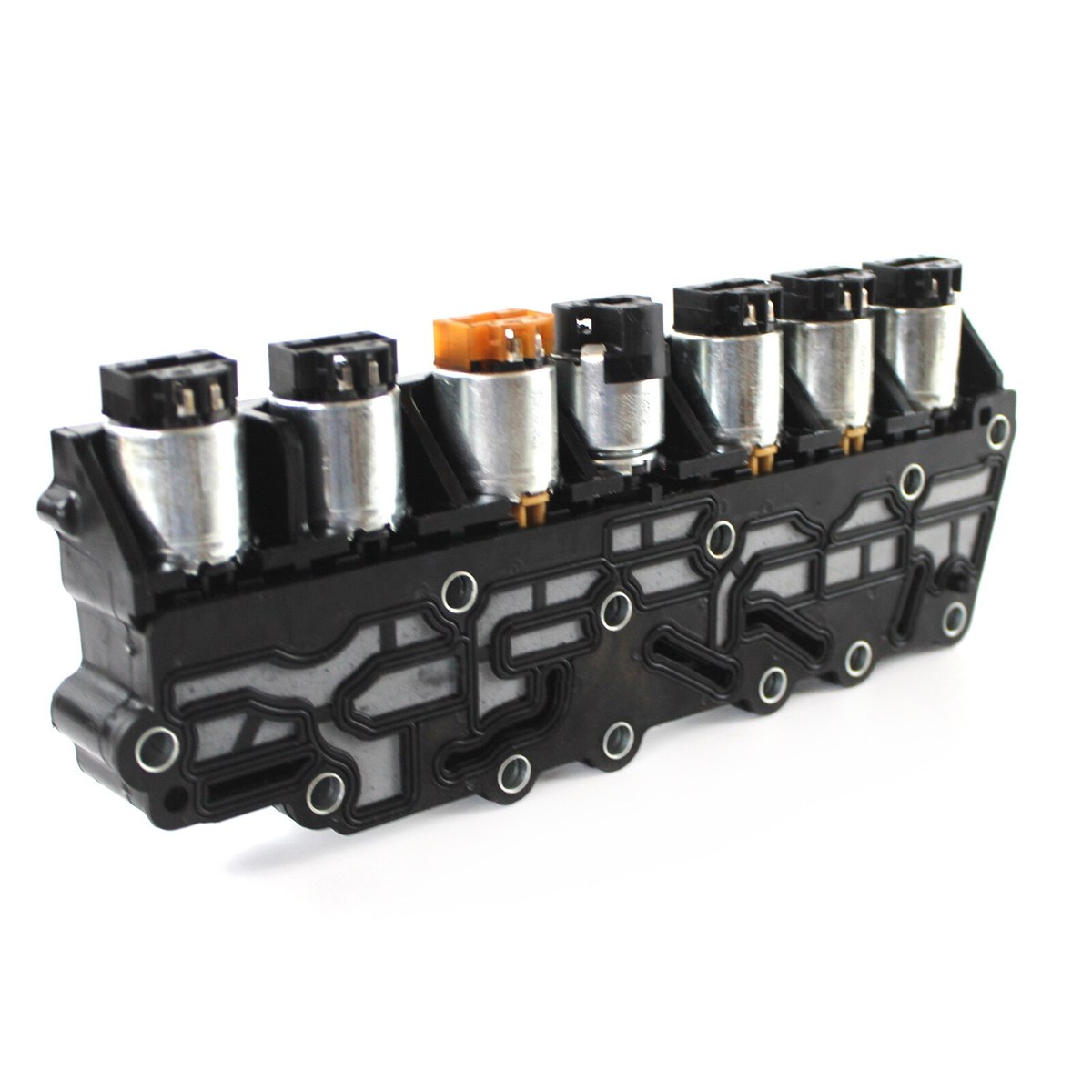
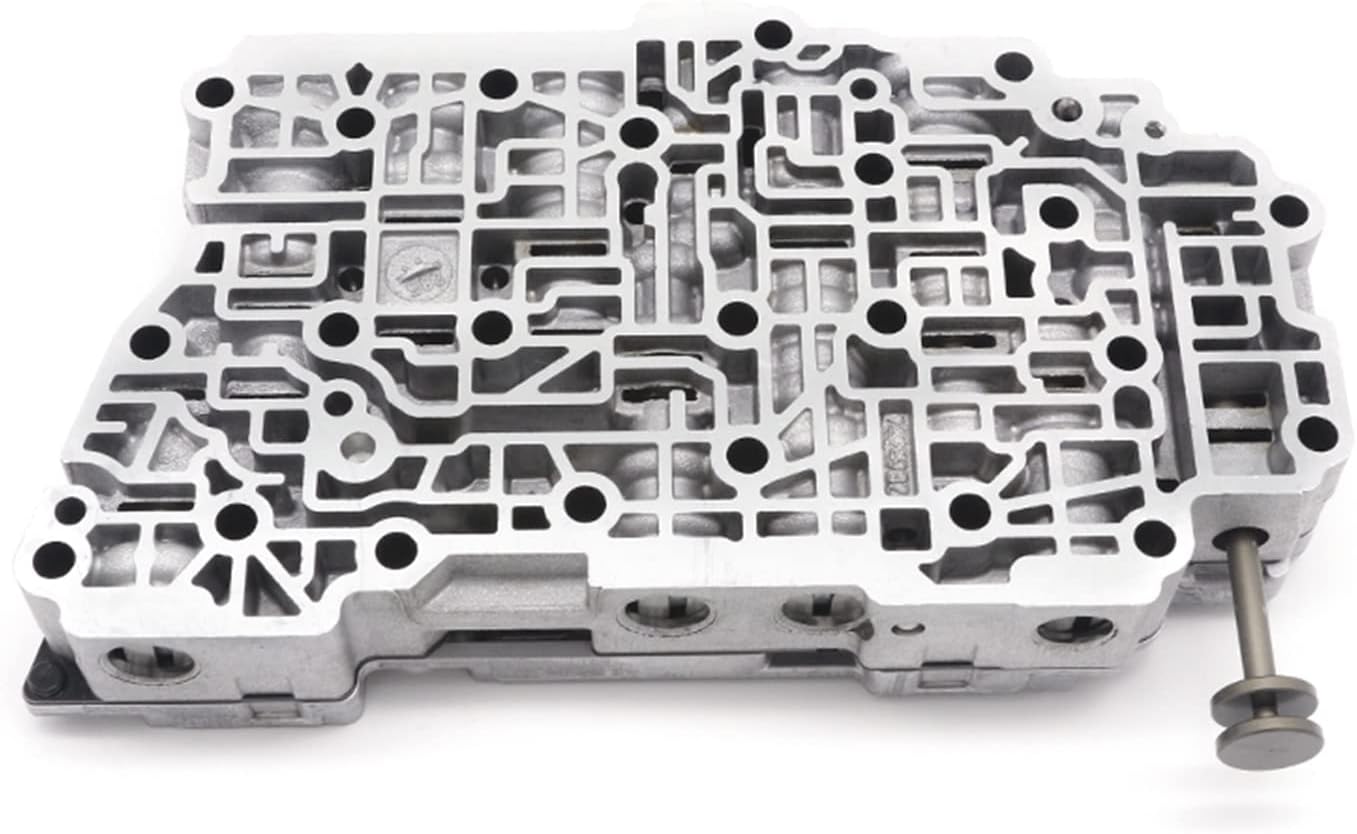
A 2013-2018 Chevrolet Cruze, Malibu, Sonic, Buick Verano, Encore or similar GM front-driver with a 6T40 that flares on the upshift, loses 4th through 6th, bangs into gear, or keeps setting pressure control solenoid performance codes such as P0776, P0796, P2714 or P2723 very often has worn bores in the valve body rather than a dead solenoid. This remanufactured unit is built for the 2013-2018 window, after GM moved the family off the original Gen 1 controls, so you are replacing the hydraulic half of the control system with a tested assembly instead of chasing one leaking bore at a time.
What the valve body does in a 6T40
The 6T40 has no stand-alone TCM under the dash. The TEHCM, the combined solenoid body and control module, bolts straight onto the valve body. Its five clutch pressure control solenoids only send a signal; the valve body turns that signal into apply pressure through a clutch regulator valve for each circuit (3-5-R, Low/Reverse and 4-5-6, 2-6, and 1-2-3-4). Upstream of all of them sit the pressure regulator valve, which sets line pressure, and the actuator feed limit (AFL) valve, which trims line pressure down to the feed oil every solenoid works from. When the AFL or regulator bores wear, every clutch circuit loses pressure at once, which is why one tired valve body can look like three separate failures on a scan tool.
Symptoms on 2013-2018 units
- Flared or soft upshifts, often worst on the 2-3 and 3-4 once the fluid is hot
- Missing 4th, 5th and 6th with low clutch feed pressure
- Harsh engagements or shifts that get worse as adapts max out
- TCC slip, no lockup or P0741/P0742 from TCC regulator bore wear
- More than one PCS performance code stored at the same time
- Fluid overheating from low cooler flow
How to confirm it before ordering
Rule out the cheaper causes first. Check for a calibration update and reflash, set the fluid level hot at the check plug, and measure the solenoids: pressure control solenoids should read 3-5 ohms and the shift solenoid 16-20 ohms, and none of them should ever see 12 volts. A hard shift with P0776 alone can be the 3-5-R wave plate, not the valve body. If the solenoids test good and you still have several pressure complaints, vacuum testing the AFL, pressure regulator and TCC regulator bores is what proves it. Our 6T40 valve body symptoms and testing guide lays out that order step by step, and the shift solenoid guide helps separate a TEHCM fault from a hydraulic one.
Fitment
This listing covers 6T40 transaxles built 2013-2018. GM switched most applications to Gen 2 controls in 2012, and later units that Sonnax groups as Gen 3 arrived partway through this window on some vehicles, so the year alone does not settle it. Gen 1 valve bodies do not interchange with Gen 2 or Gen 3 at all. Before you order, read the eighth digit under the TEHCM bar code (B, C or D means Gen 2), count the filter plate screens (three on Gen 2), and compare your casting and connector to the photos, or send us your year and VIN and we will confirm. If your car is a Gen 2 build and you only need the casting, the bare Gen 2 valve body casting is an option. If the RPO label shows MH7 or MHC, your car has the heavier-duty unit and needs the 6T45 valve body for 2013-2018 instead.
Install notes
- Snug every bolt finger tight, align the manual valve with the detent lever as the body goes up, then torque in sequence: Sonnax lists 97 in-lb for the Gen 2/Gen 3 valve body to case bolts, 106 in-lb for the long TEHCM bolts and 71 in-lb for the three 40.5 mm TEHCM bolts.
- Use a new TEHCM filter plate; the seals take a set and leak if reused. A fresh 6T40/6T45 filter and pan gasket kit covers the rest of the service.
- Make sure the 20-pin connector seal sits inside the cover and the TEHCM carries the correct, latest calibration.
- Fill with Dexron VI only and set the level hot (185-203 F) at the check plug; half a quart over can push fluid out the vent.
- Run Service Fast Learn Adapts with a scan tool. A 2-3 flare or light downshift clunk during the first 10-15 shift cycles is normal while it learns.
If the car tows or runs hot, adding an auxiliary 6T40 transmission cooler keeps fluid temperature, and bore wear, down on the new unit.