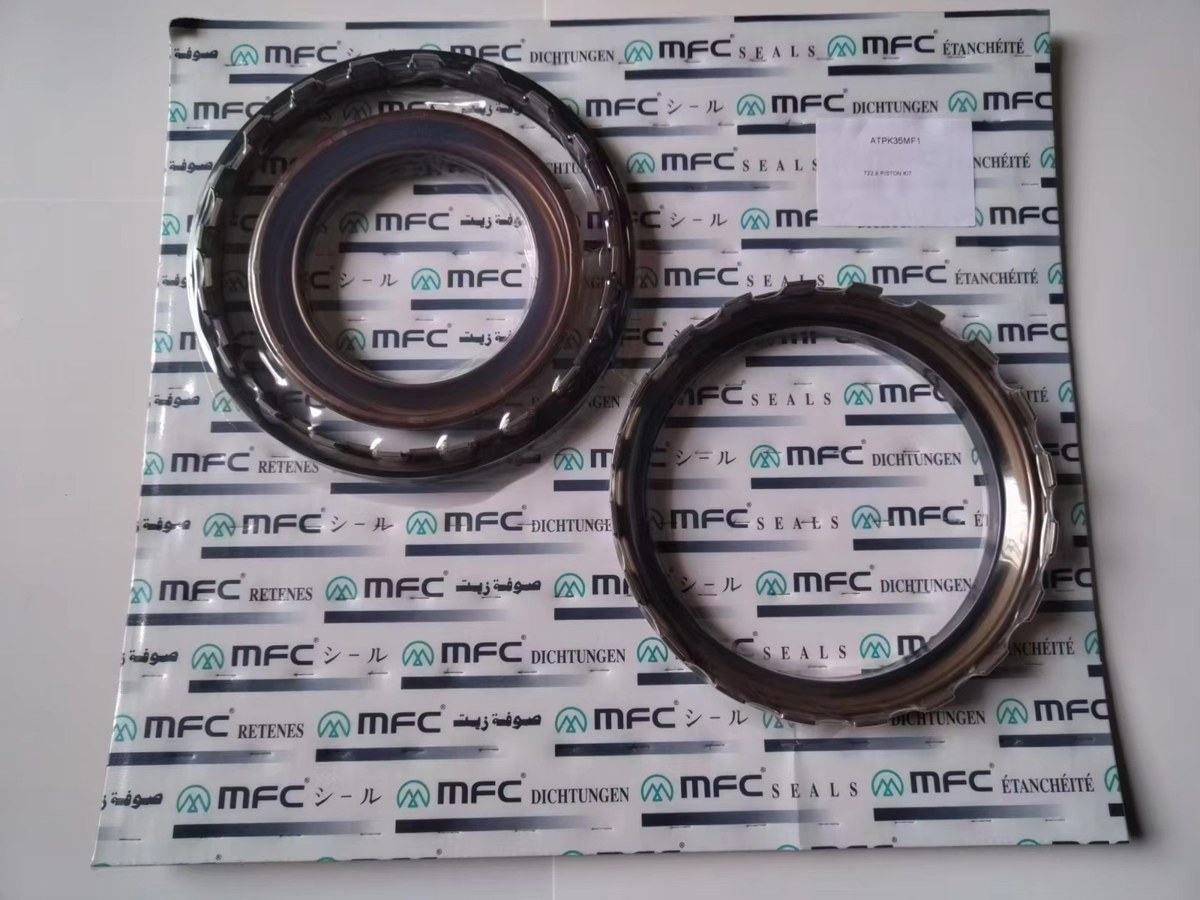
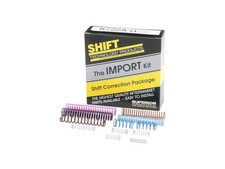
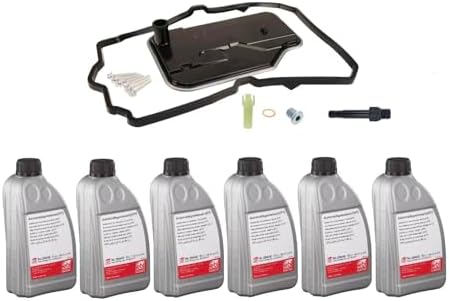
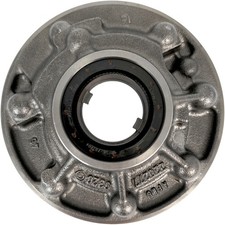
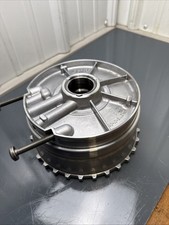
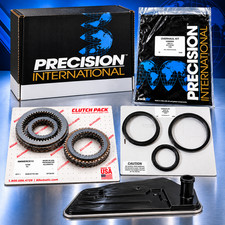
If your Mercedes with the seven-speed 722.9 automatic drops into neutral as it should be shifting into third, flares on certain upshifts, or came apart on the bench with a piston seal torn away from its metal carrier, this is the part that rebuild needs. Although it is filed under our banner kits, this listing is a new 722.9 clutch piston kit: a set of bonded (molded-rubber) apply pistons, packaged as kit ATPK35MF1. It does not include friction plates, gaskets or a filter, so pair it with the soft parts your teardown calls for.
What the clutch pistons do in a 722.9
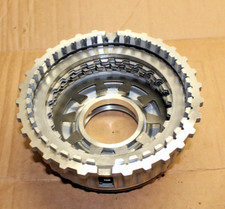
The 722.9, sold as 7G-Tronic, makes seven forward gears from three rotating clutches (K1, K2, K3) and four brakes (B1, B2, BR, B3) acting on its planetary sets. Each of those is applied by a piston: the valve body sends regulated oil behind it, and the piston squeezes the friction and steel plates together. On a bonded piston the sealing lip is molded directly onto a steel ring, so there is no separate seal to replace. When that rubber hardens, cracks or peels away from the steel, oil escapes past it, the clutch is under-applied, and it slips and burns. Because you cannot reseal a molded piston, the fix is a new one.
Symptoms of a failed piston
- Drops into neutral on the 2-3 shift, the classic sign of a failed molded piston in the K1 drum
- Engine flare or slip on one or two specific shifts while other gears feel normal
- Delayed or soft engagement that gets worse as the fluid warms up
- Burnt fluid and friction debris in the pan from a clutch that has been slipping
- Ratio or slip fault codes stored by the transmission control unit along with limp mode
How to confirm it before you buy
A slipping 722.9 is not always a piston. ATRA's Gears magazine notes that leaking solenoid O-rings in the valve body are a frequent root cause, since a solenoid that bleeds off pressure starves its clutch the same way a torn piston does. Mercedes diagnostic bulletin LI27.00-P-051451 also tells technicians to read out the control unit's stored data before resetting adaptations, so do a full scan first and note which gear changes the module flags. If the complaint is neutral going into third, or the pan shows friction material, the unit is coming apart anyway, and inspecting every piston is part of that job. Our 722.9 rebuild cost guide walks through what drives the price of that repair and when a reseal is enough.
Fitment
The kit is listed for the Mercedes-Benz 722.9 seven-speed in 2004-2010 applications, rear-drive and 4MATIC, including the C230, C280, C300 and C350; CLK350, CLK500 and CLK550; E320 diesel, E350, E500 and E550; CLS500 and CLS550; S430, S500 and S550; CL500 and CL550; SL500 and SL550; SLK280, SLK300, SLK350 and SLK55 AMG; ML320 diesel, ML350, ML500 and ML550; GL320 diesel, GL450 and GL550; R320 diesel, R350 and R500; G500; and the 63 AMG models of that period. The 722.9 changed during production and later 7G-Tronic Plus units differ in places, so lay your old pistons beside the new ones and compare diameter and lip profile before you assemble anything. Read the full 722.9 number from the case label (our 722.9 identification guide shows where), or send us your year and VIN to confirm. More parts for this unit are on the 722.6 and 722.9 collection page.
Install notes
- Lubricate each lip with clean ATF or assembly lube and work it into the bore evenly; a lip that rolls or nicks on a snap-ring groove will leak from the first drive.
- Air-check every clutch and brake after assembly. A good piston applies with a firm thump and holds without hissing.
- Gears magazine recommends replacing all the molded pistons during a rebuild, not just the one that failed, and fully disassembling and inspecting the valve body at the same time.
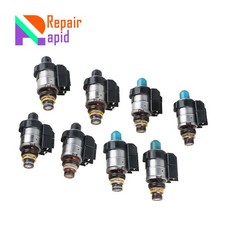
- Set clutch pack clearances with the new pistons installed, and replace the solenoid O-rings while the valve body is out. Our 722.9 solenoid kit covers that if the solenoids are suspect.
- Refill with the Mercedes-approved ATF your build calls for, MB 236.14 or 236.15, such as our 236.15 ATF, then check the level at the specified temperature and run the adaptation reset with a capable scan tool.
If you need frictions and seals as well, the 722.9 banner rebuild kit for 4MATIC units bundles those soft parts with pistons in one box.