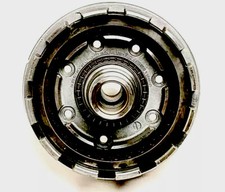
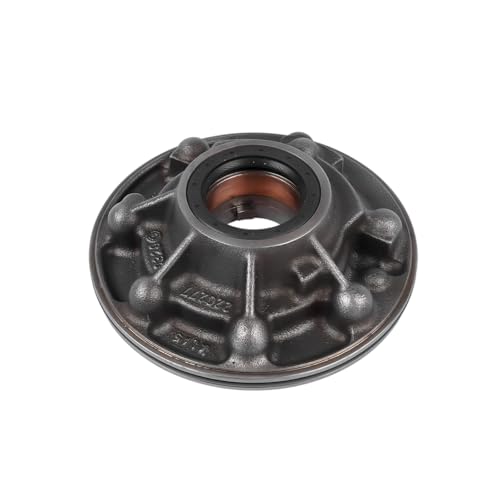
If your Mercedes with the seven-speed 7G-Tronic is slow to pick up Drive or Reverse, slips once it is warm, or came apart with a scored converter neck and metal in the pan, the front oil pump belongs at the top of the parts list. This is a remanufactured 722.9 transmission oil pump, Mercedes part number 221 277 01 20 (also written A221 277 0120), for 2004-and-later 722.9 units. It is a complete pump assembly, so you are not reusing a worn housing or gear set.
What the oil pump does in a 722.9
The 722.9 is an electronically controlled seven-speed. Every shift is made by solenoids on the valve body metering oil to the clutches, and all of that oil starts at this pump. It is a crescent-style gear pump at the front of the case, turned by the torque converter neck whenever the engine runs. It feeds working pressure to the valve body, charges the converter and lockup clutch, and supplies cooler flow and lubrication. The electronics can only shape pressure that the pump has already made, so a worn pump shows up as soft, late or slipping shifts across the whole range rather than in one gear.
The 722.9 also has a well documented pump weakness. Transmission Digest and ATSG describe the original pump bushing seizing to the converter neck. Once that happens the drive gear can move off center, catch the crescent and destroy the pump, and the damage often reaches the converter housing as well. Mercedes later released a revised pump with a needle bearing in place of the bushing, listed under number 722 270 01 97.
Symptoms of a failing 722.9 pump
- Delayed engagement into Drive or Reverse, worst after the car sits or once the fluid is hot
- Slipping or flared shifts in every gear, not just one
- A whine or grinding that follows engine speed, even in Park
- Fine metal or aluminum glitter in the pan and on the filter
- ATF leaking at the bellhousing from the front seal or pump O-ring
- The transmission dropping into limp-home after logging ratio or slip faults
How to confirm before you buy
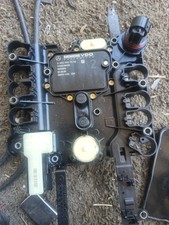
Check the fluid level the factory way first, at operating temperature with the engine running and the car level, because a low level mimics a weak pump on this unit. Scan the transmission control module for stored faults; a solenoid or conductor plate fault points at the valve body, not the pump. If the pan holds metal and the converter neck shows galling or a blue heat mark, the pump has almost certainly been damaged. Our Mercedes pump failure guide walks through the pressure and noise checks, and the common problems and fixes guide covers the valve body faults that can look like pump trouble.
Fitment
This pump is listed for 2004-and-later Mercedes 722.9 seven-speed automatics, with the listing also naming late 722.6 five-speed units. The 722.9 went into most rear- and all-wheel-drive Mercedes models from that era, including the C, E, S, CLS, ML and GL. Mercedes revised the pump during the 722.9 run, so compare the number cast or stamped on your old pump with 221 277 01 20, and read the transmission number from the case tag. If you are unsure, send us your year, model and VIN before you order. You can browse all of our Mercedes 722 transmission parts, and the 722.6 and NAG1 oil pump is listed separately for earlier five-speed units.
Install notes
- The transmission has to come out, and the converter must be off before the pump can be removed from the front of the case.
- Fit a new front seal and pump O-ring, draw the pump down evenly and tighten the bolts in a crossing pattern.
- Inspect the converter neck closely. A scored or galled neck will ruin a new pump, so replace or repair the converter if it is damaged.
- If the old pump failed, flush the cooler and lines and clean the case thoroughly; debris left behind will reach the valve body.
- Prime the pump with fresh fluid. Mercedes specifies 236.14 fluid for 722.9 units built up to June 21, 2010, and 236.15 or 236.16 for later units depending on engine, and the oils must not be mixed.
- Clear and relearn the transmission adaptations with a Mercedes-capable scan tool after the repair.
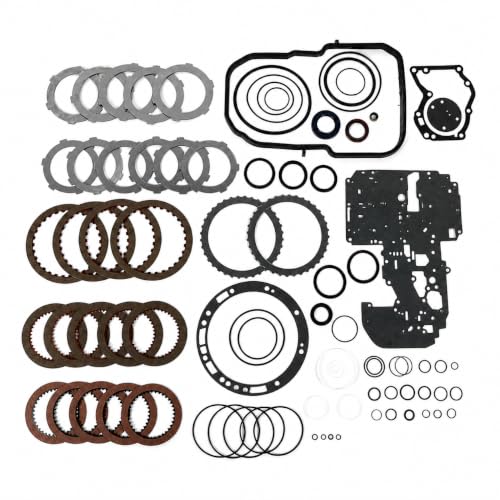
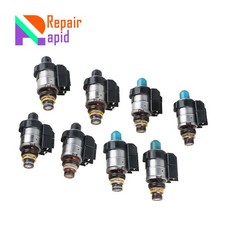
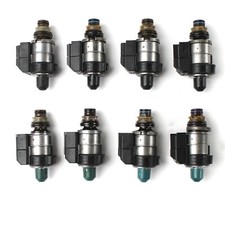
A pump that failed from debris usually means the valve body took a hit too. The 722.9 solenoid kit and 722.9 pressure control solenoid are worth having on hand when you open it up.