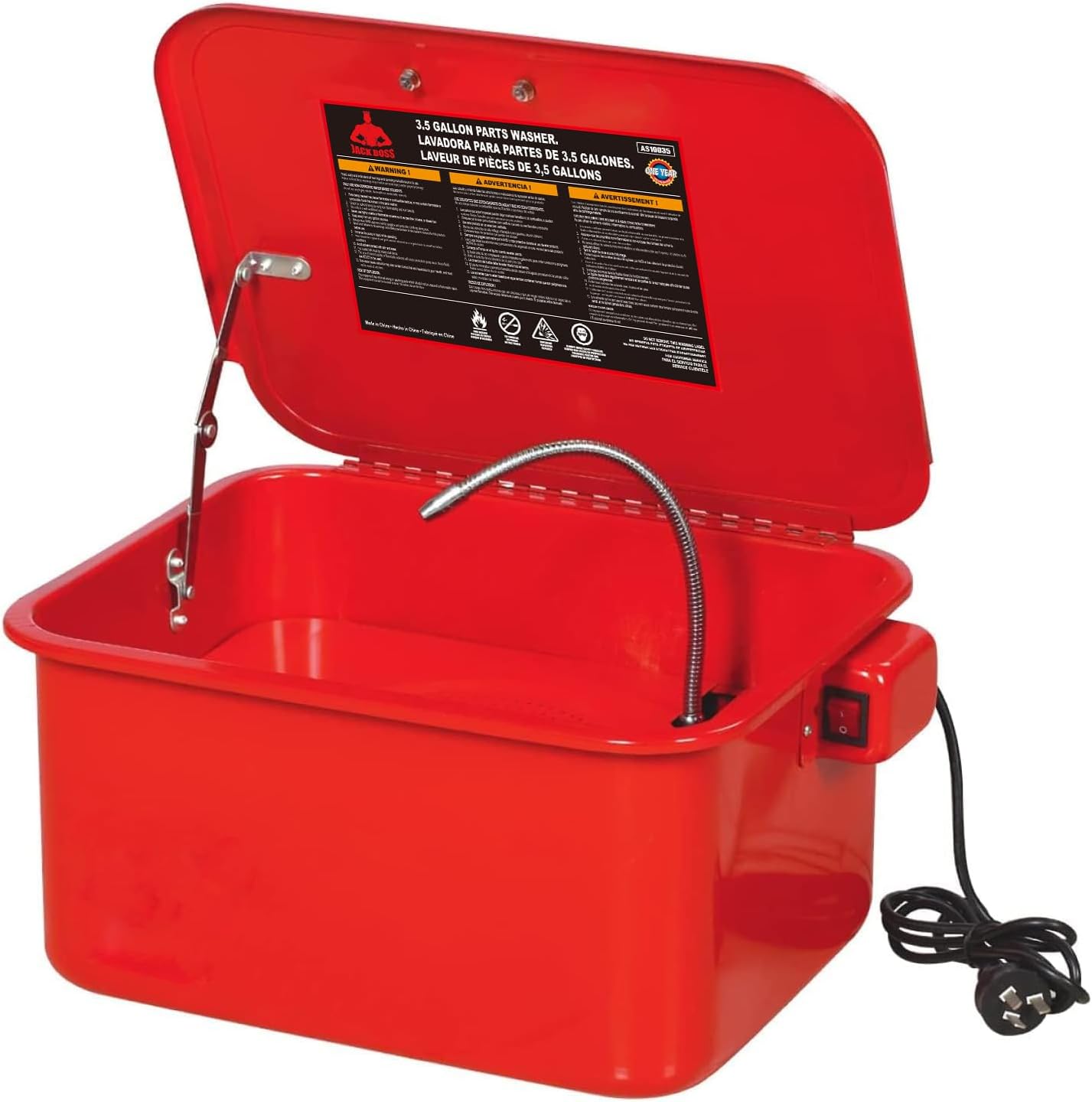
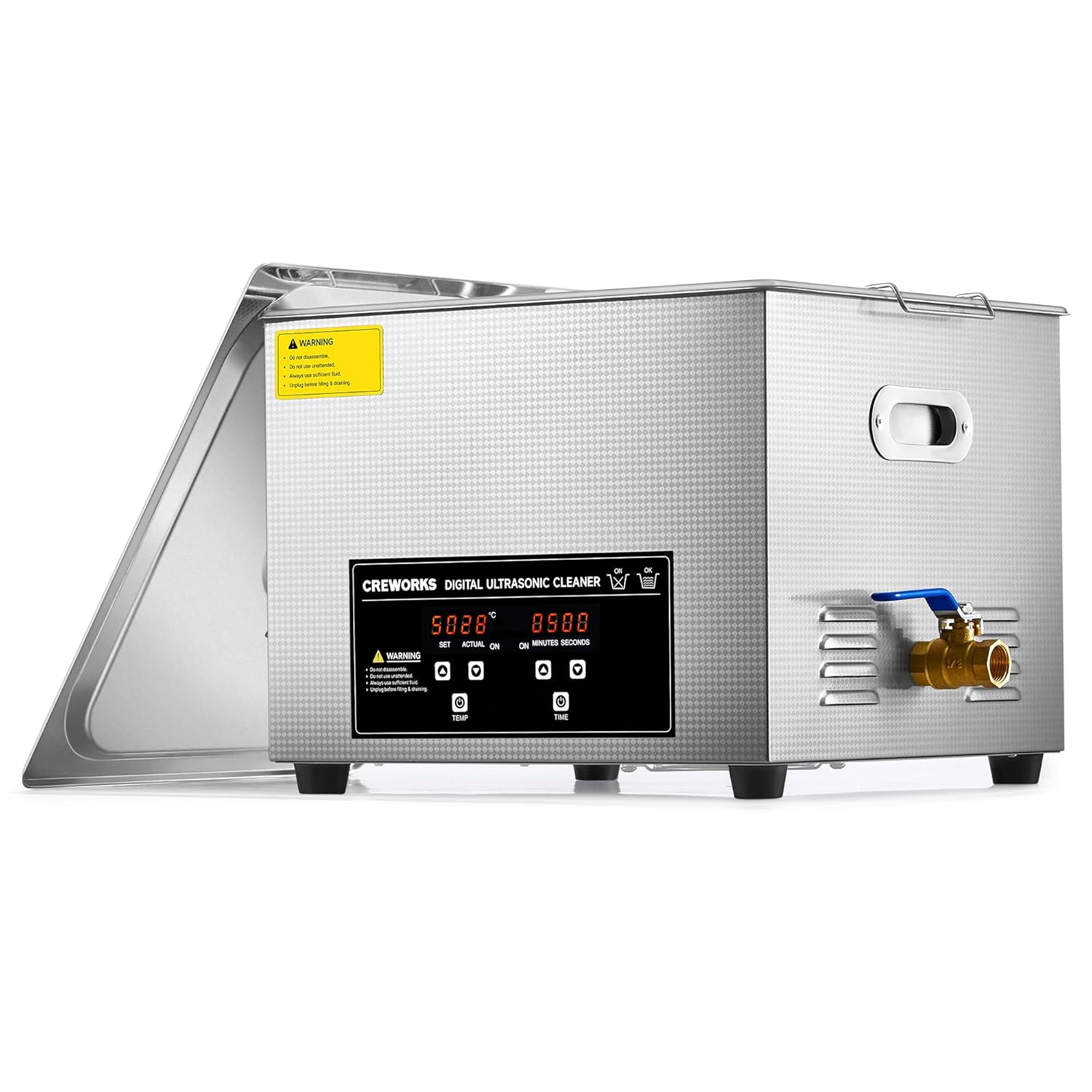
A rebuild that comes back with a sticking shift valve or a scored pump gear often started with parts that were never truly clean. This bench-mount washer, model ASG4001, gives a home builder or small transmission shop a dedicated place to wash valve bodies, separator plates, pump halves, planetary carriers and drums, with a 110V pump feeding a steel gooseneck spout so both hands stay on the part and the brush.
What a parts washer does in a transmission rebuild
Every teardown leaves varnish, clutch lining dust and fine metal in bores, passages and pockets. Sonnax's valve body rebuilding guidance puts cleaning first: clean the valve body, dry it and test it before you take it apart, and wash and rewash every part after any bore work, because contamination left behind is what makes valves hang. Their 4L60E build tips make the same point about the fluid side, warning that micron-sized debris undermines sprag engagement and that the EPC solenoid is one of the parts most affected by hard contaminants.
The 110V pump in this unit moves about half a gallon per minute from the 3.5 gallon reservoir up through the spout. That is a gentle, steady stream rather than a pressure wash, which is what you want around a valve body: enough to carry debris out of a bore or a cooler passage without blasting checkballs and springs across the bench. Bend the spout where you need it and it stays there. Many builders fit a flow-through brush to the spout so the stream becomes a scrub and splashing drops off.
Jobs it handles on the bench
- Valve body castings and separator plates before you inspect bores for wear
- Front pump bodies, covers and gears before you measure clearances and bushings
- Clutch drums, hubs and planetary carriers after the frictions come out
- Case passages and servo bores where clutch material and casting debris collect
- Pans, magnets and the loose bolts and snap rings from a teardown
How to tell your parts are not clean enough
If you can still feel a film on a valve, see dark residue in a bore, or a valve will not fall freely under its own weight once clean and oiled, keep washing. Our 4L60E valve body rebuild walkthrough shows where debris hides, and 4L60E pump rotor and bushing wear covers what to measure on the pump once it is clean. If you are setting up a bench from scratch, see the bench tools you actually need.
Size and fitment
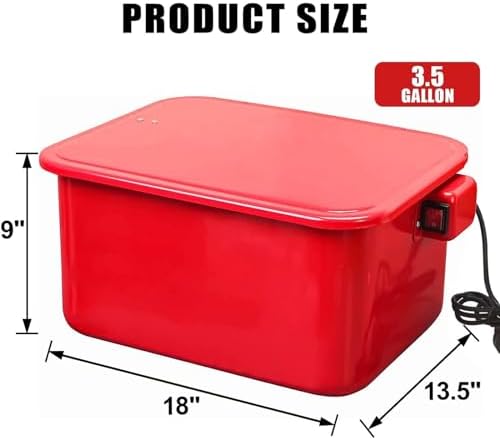
The basin measures 18 in wide by 13.5 in deep by 9 in high, large enough to lay a 4L60E or 6L80 valve body or a pump assembly flat. It is a universal shop tool, not tied to one transmission. Steel construction keeps it light enough to carry to the job.
Cleaner rules and setup
- Water-based cleaners only. Do not fill it with mineral spirits, lacquer thinner, brake cleaner or any flammable or combustible solvent.
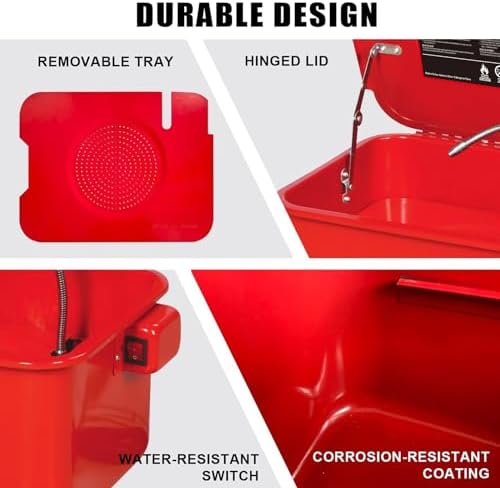
- The hinged lid is held by a fusible link and drops closed on its own in a fire. Treat that as a last line of defense, not permission to use solvent.
- Water-based degreaser leaves parts wet. Blow them dry with compressed air right away, especially steel parts, and coat them with clean ATF if they will sit.
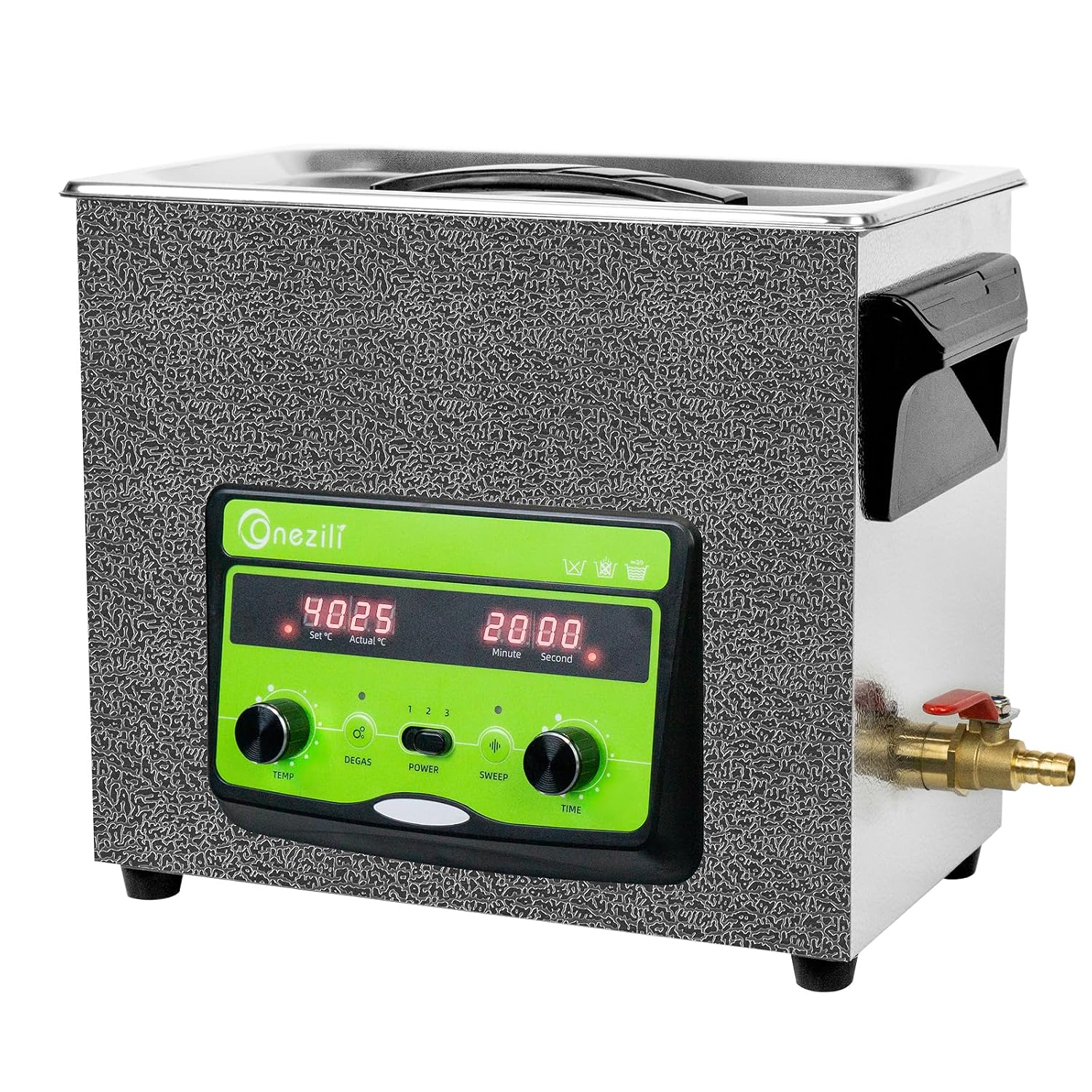
- Keep solenoids out of a dirty tank and clean them on their own. For a final pass on a valve body, many builders follow the washer with an ultrasonic tank such as our 6L ultrasonic cleaner.
- Change the cleaner when it turns dark and stops cutting oil.
New parts need washing too. Transmission Digest reports that on 2006-2015 GM 6L80 and 6L90 units, rust inhibitor left on a service pump cover can stick the pressure regulator or isolator valve and plug a small orifice, causing low line pressure that damages clutches. Wash a new cover before it goes in, and if the regulator bore is worn, a 6L80/6L90 pressure regulator valve kit is the fix. The pump and hose are the wear items on the washer itself; plan on those being the first parts you replace if you run it hard. It carries a one year limited warranty from the manufacturer.