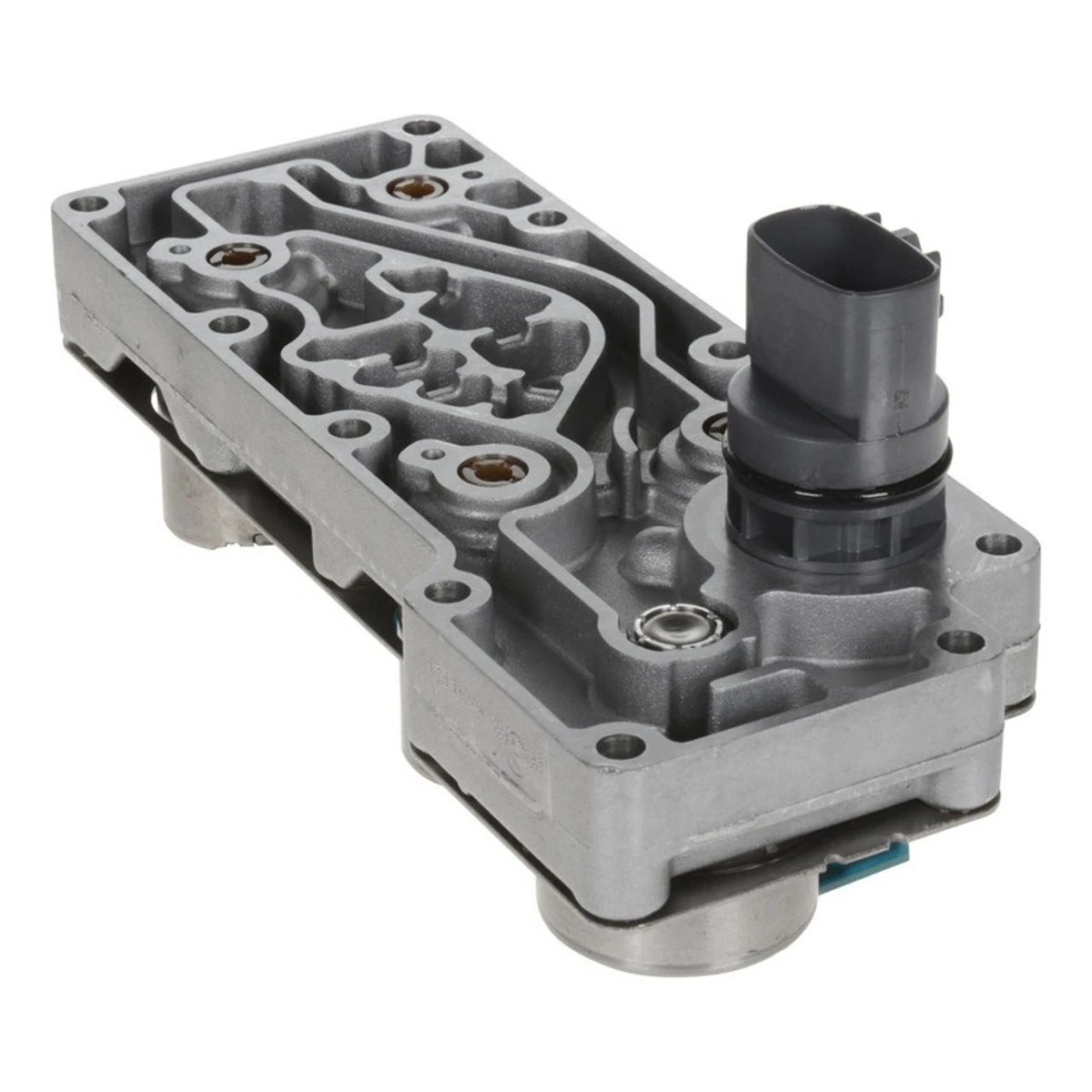
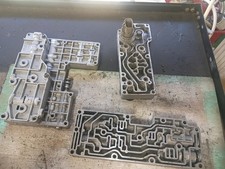
If your Ford truck or van with the E4OD automatic is launching in 4th, refusing to leave 2nd, jumping from 1st straight to 4th, or setting shift solenoid codes, the solenoid body bolted to the bottom of the valve body is the first assembly to test. This is a used OEM E4OD solenoid kit: the complete solenoid body as Ford built it, pulled and ready to bolt in. Because it is a whole assembly rather than loose solenoids, it replaces every electrical shift control part in the pan at once.
What the solenoid kit does in an E4OD
The E4OD gets four forward gears out of just two shift solenoids. Both receive battery power with the key on, and the computer completes each circuit by switching the ground. In Drive, 1st is solenoid 1 on, 2nd is both on, 3rd is solenoid 2 on, and 4th is both off. The same body also carries the coast clutch solenoid (engine braking in manual ranges and with overdrive cancelled), the converter clutch solenoid, and the EPC solenoid that sets line pressure. None of these solenoids makes pressure on its own; each one holds or exhausts oil fed to it by the solenoid regulator valve, which moves a shift valve. Because every solenoid works in two gears, one stuck part swaps pairs of gears rather than killing a single one.
Symptoms of a failing E4OD solenoid body
- Soft 4th-gear launch with no 1st even in manual 1 (solenoid 1 stuck off)
- Tops out in 2nd, then falls back to 1st at cruise (solenoid 1 stuck on)
- Holds 1st then shifts straight to 4th (solenoid 2 stuck off)
- 2nd-gear starts and no overdrive (solenoid 2 stuck on)
- Only 4th in Drive and 2nd in the manual ranges: failsafe, usually an electrical feed or connector fault
- Harsh engagements from an open EPC circuit, or codes that come and go with heat as the internal ribbon cable fatigues
- Three-digit EEC-IV codes on 1989-1995 trucks; P0750, P0755, P1714 or P1715 on 1996-1997 OBD-II trucks
How to confirm the solenoid body is the problem
Pull both on-demand and continuous-memory codes first. Then unplug the case connector and check the lock tab, the pin fit and any green corrosion; the E4OD connector is notorious for broken tabs that bring codes right back after a new pack goes in. With the key off, ohm the body at its connector: on the late body the shift, coast clutch and on/off converter solenoids should read about 20-30 ohms and the EPC 3.0-5.0 ohms. A truck that starts in 2nd or 3rd only when hot, with a body that ohms good and no circuit codes, usually has a worn solenoid regulator valve bore, and a new pack will not cure that. Our E4OD shift solenoid symptoms guide has the full gear charts and the fused-jumper test that splits inside from outside faults, and the EPC solenoid guide covers the pressure side.
Fitment
This listing is for the E4OD, the electronic four-speed Ford used from 1989 through 1997 behind gas sixes, V8s and the diesel in full-size pickups, Bronco and E-Series vans. The listing does not pin it to a single year, and that matters: Ford built an early solenoid block for 1989-1994 units and a late block for 1995-1997, and the two are not interchangeable. Compare the connector and body shape in the photos with the one on your transmission, or send us your year and VIN before ordering and we will confirm it. If you already know your year, the 1989-94 E4OD solenoid kit and the 1995-1997 version are listed separately. Everything else for this unit is on the E4OD parts page.
Install notes
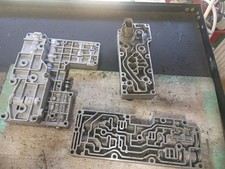
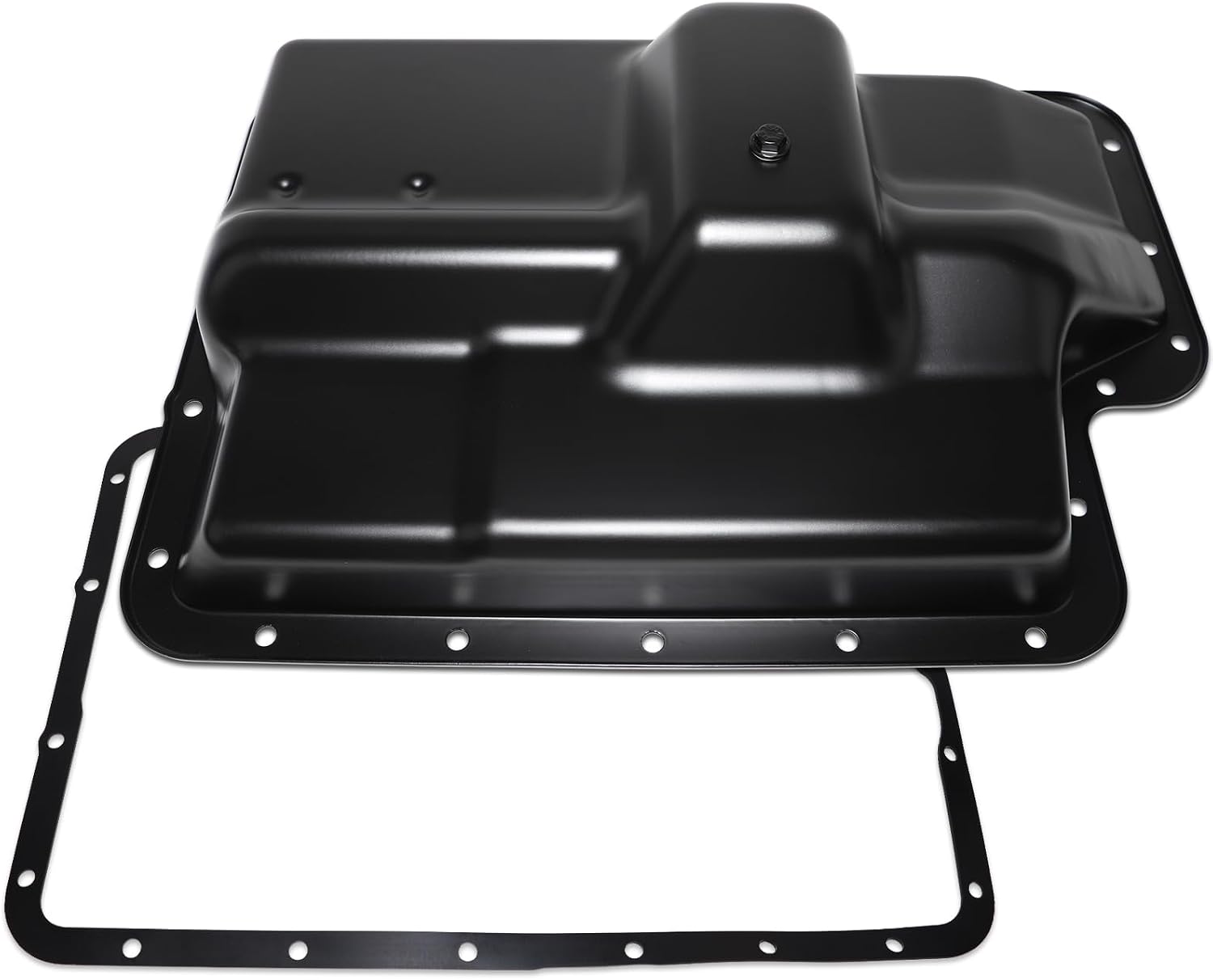
Drain and drop the pan and pull the filter. The solenoid body comes off with one nut and nine bolts; lift it with a slight twist so the connector O-ring frees itself from the case bore. Before the replacement goes in, pull the solenoid screen out of the spacer plate and clean or replace it, because a plugged screen starves even a perfect pack. Fit a new connector O-ring, lube it with assembly gel, start all fasteners by hand and torque to 80-100 inch-pounds (9-11 N-m), not foot-pounds. Repair a cracked harness or broken lock tab now rather than after the code returns. Finish with a new E4OD/4R100 filter and pan gasket kit, refill with MERCON V, clear the codes and road test through every gear, including manual 1 and 2, before the truck goes back to work.