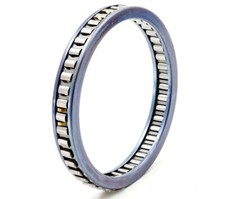
A 1989 Ford truck or van with the E4OD that flares between first and second, slips in second under load, or feels like it falls into neutral for a moment before third catches is a strong candidate for a worn intermediate sprag. This listing is a new sprag element listed for the 1989 E4OD, the first model year Ford put this electronic four-speed behind its F-Series pickups and E-Series vans. If you already have the transmission apart and the old sprag rolls over or binds, this is the piece that goes back in.
What the sprag does in a 1989 E4OD
The E4OD and its later 4R100 version use three one-way clutches. The ATSG 4R100 manual lists an overdrive roller clutch, a low roller clutch and, between them, the intermediate sprag. That sprag is a ring of tilted steel wedges held in a cage. It sits between an inner race on the front of the direct clutch housing and an outer race that the intermediate clutch locks to the case. In second gear the wedges stand up and hold, which gives the gear train its second-gear reaction. When the direct clutch applies for third, the sprag freewheels, so the 2-3 shift happens without the two clutches having to be timed against each other.
The photo shows the element on its own: the cage and wedges, with no inner or outer race. That makes it the right buy when the races in your unit are still smooth and only the sprag itself has worn.
Symptoms that point to the intermediate sprag
- Engine flare or a neutral feel on the 1-2 upshift in Drive
- Second gear slips, or the truck seems to go from first nearly straight to third
- Second holds in manual 2 but slips in Drive
- Slip that gets worse when the fluid is hot or the truck is towing
- Fine steel on the pan magnet with burnt intermediate clutch material
How to confirm it before you buy
On a 1989 unit, rule out the electrical and pressure side first. Early E4OD solenoid packs and case connectors give trouble that feels mechanical, and Sonnax notes that the pre-1995 E9 and F1 pump castings carried an 11-lobe outer gear and were prone to low output, which starves clutches of apply pressure. Our E4OD common problems guide covers both. Next, road test: a slip in Drive that disappears in manual 2 points at the intermediate clutch or the sprag, because manual 2 also brings in the intermediate band. With the unit apart, hold the direct drum and turn the outer race. ATSG specifies that it should freewheel counter-clockwise and lock clockwise. A sprag that locks both ways, spins both ways or feels gritty needs to be replaced.
Fitment
This element is listed for the 1989 E4OD. The listing does not give a Ford part number or a sprag count, so set the new element beside the one you remove and compare the wedge count, cage width and diameter before it goes in. Early 1989-1995 E4OD units differ from later ones in several areas, including the valve body and pump, so stay with parts matched to your era. If you are unsure, send us the year, VIN and a photo of your old sprag before ordering. The same part is also listed as the 4R100 sprag clutch 1989, and the full early-unit lineup is on the E4OD parts page.
Install notes
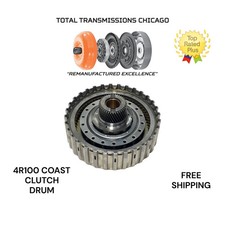
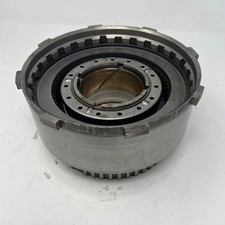
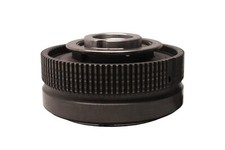
- Inspect both races under good light. Any pitting, flat spots or bluing means the race has to be replaced along with the sprag. If the inner race on the drum is damaged, the E4OD clutch drum for 1989 is listed for the same year.
- Install the sprag with the cage facing the same way as the original, then check rotation on the bench before the drum goes into the case.
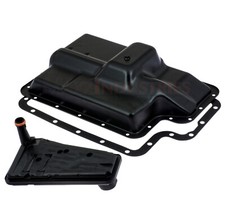
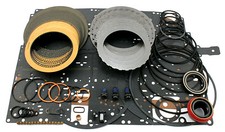
- Replace the intermediate clutch frictions and steels, since a slipping sprag usually burns that pack. The E4OD overhaul kit for 1989-95 covers seals and gaskets for this era.
- Flush the cooler and lines, fit a new filter, and fill with MERCON V, checking the level hot in Park.
If the unit has an E9 or F1 pump, consider upgrading it during the same rebuild so the new sprag and clutches get full apply pressure.