Bolting an LS or LT engine to a 4L60E, 700R4, TH350, TH400 or Powerglide that came from a small-block Chevy is one of the most common swaps there is, and one of the most common ways to wipe out a fresh transmission. The torque converter snout on those older transmissions does not reach or fill the pilot bore in the back of an LS crankshaft. Without something to center it, the converter hangs on the flexplate bolts alone. The ICT Billet 551165 is the steel ring that fixes that: it goes into the rear of the LS or LT crank so the original converter pilots on center.
What the hub adapter does in a 4L60E LS swap
The converter is held at two points: the drive lugs bolt it to the flexplate, and the snout on the front of the converter (the pilot) sits inside the crankshaft hub to hold it on the crank centerline. The back of the converter rides on the 4L60E front pump, turning the pump gears through its drive hub. LS cranks were designed around LS-style converters with a different pilot, so a converter built for a small-block 4L60E or 700R4 sits short of the crank. ICT notes the depth matters because the converter lug rides inside the crankshaft hub to maintain center. If the converter runs off center, it pushes sideways on the pump bushing every revolution, which chews the bushing and the front seal and can damage the pump gears. The 551165 extends that pilot so the converter sits true.
Symptoms of a missing or wrong adapter
- Front pump seal leak soon after the swap, with fluid on the bottom of the bellhousing
- Vibration that follows engine speed rather than road speed
- A worn, scored pump bushing found at teardown on a low-mileage build
- Whine or noise from the front of the transmission that rises with rpm
- Converter that can be pushed around easily before the flexplate bolts are installed
How to confirm before buying
With the transmission bolted up but before the converter bolts go in, slide the converter forward to the flexplate and check that the converter hub is inside the crank hub. ICT also says to make sure the converter pads touch the flexplate without being forced forward, because preloading the converter damages the pump. If you are diagnosing a swapped car that already leaks or slips, the 4L60E common problems guide helps sort pump and converter faults from other failures, and the 4L60E Camaro shift problems guide is a good reference for F-body swap cars.
Fitment
ICT lists the 551165 for converters from non-LS Powerglide, TH350, TH400, 200-4R, 700R4, 4L60, 4L60E and 4L80E transmissions, and for all Gen 3, 4 and 5 LS and LT engines. The one exception is the 1999-2000 6.0L, which has a longer crank and does not need it. A transmission that came factory behind an LS already has the right converter, so it does not need the ring either. Check your converter bolt pattern as well: ICT lists 10.75 in for 700R4, 4L60 and non-LS 4L60E converters and 11.06 in for LS-based 4L60E units, and your flexplate must match. ICT also makes extended 1/8 in and 1/4 in versions for combinations that need more depth. Send us your engine, transmission and year if you are unsure, or see the 4L60E parts collection.
Install notes
- The ring is a slip fit into the rear crank bore. ICT suggests Loctite 680 for a tighter fit.
- Seat it fully and squarely; a cocked ring defeats the purpose.
- Install the flexplate, mount the transmission, then check converter engagement and pad-to-flexplate contact before torquing the converter bolts.
- Fill with Dexron VI ATF and check the level hot.
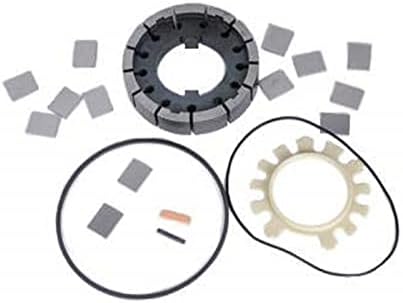
If the pump bushing was already damaged by an off-center converter, rebuild the front of the unit with the 4L60E pump rotor kit and center the pump halves on assembly with the GM front pump alignment band.