You have the pump split on the bench, new gears or vanes in, a fresh seal pressed in, and now comes the part that decides whether the rebuild works: bolting the cover back onto the body. This stainless band is for that moment on GM TH250, TH350, TH400, 3L80, 700-R4, 4L60, 4L60E and Powerglide pumps, the units behind decades of Chevy and GMC trucks, Camaros, Corvettes, Tahoes and S10s. It keeps the two halves centered while you torque them so the pump turns free instead of dragging, whining or bleeding off pressure on the first start.
How the band works on a GM front pump
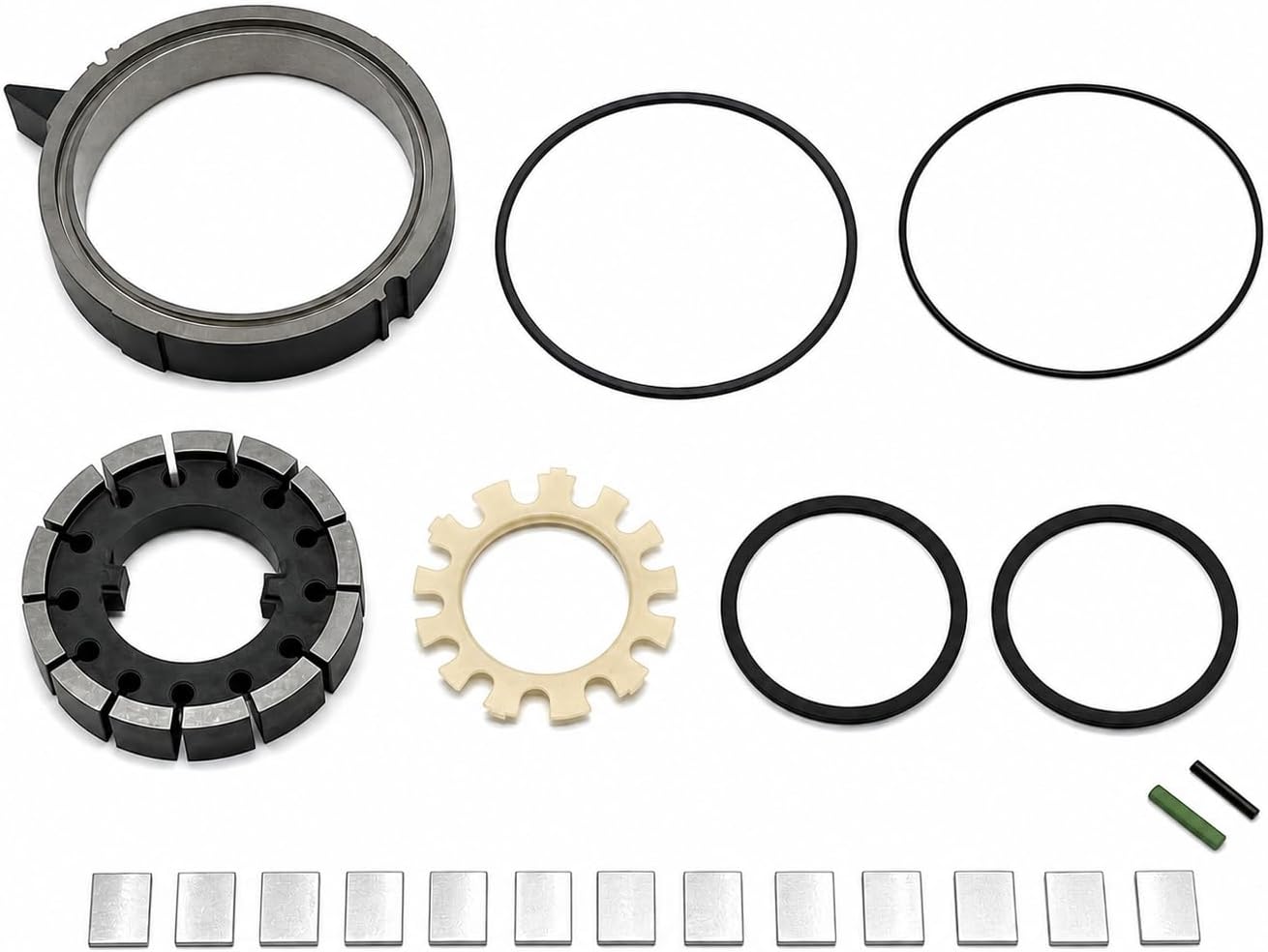
Every one of these pumps is a sandwich. The body carries the pumping element and the cover closes it off and carries the stator support. On a TH350, TH400 or Powerglide the pumping element is a gear set. On a 700-R4 and 4L60E it is a variable-displacement vane pump with a rotor, vanes and a pivoting slide; GM service information describes the 4L60-E unit as a 13-vane variable-displacement design. Either way, the parts inside run on very small clearances to the cover face. If the cover slides off center while the bolts come down, the gears or rotor rub on one side and the slide can bind on its pivot, which shows up as noise and unstable line pressure.
The band slips around the outside diameter of the assembled pump. Turning the wing nut by hand draws the band down evenly so the cover and body are forced into the same circle, then the bolts are torqued with the band still on. Because it is solid metal instead of a hose clamp, it pulls square instead of twisting the cover as it tightens.
Symptoms this step prevents
- Pump whine that tracks engine RPM in every gear and in Park
- Slipping or soft shifts in all gears from low line pressure
- Delayed engagement into Drive and Reverse after the rebuild
- Hard or erratic shifts on a 4L60E when a bound slide swings line pressure around
- A pump that feels tight or notchy when you turn the gears or rotor by hand after torquing
Confirm it is the pump before you tear in
Low or unstable line pressure on a 4L60E is not always the pump. Put a gauge on the line pressure port and compare to spec, and check whether the problem changes with the EPC solenoid commanded. Our 4L60E pump rotor and bushing wear guide explains slide, vane ring and bushing wear and how to measure it. If the complaint is mostly a harsh or flared 1-2 shift, read the 1-2 accumulator and shift feel guide first, because that is often valve body and accumulator, not pump.
Fitment
The band passes over GM 250, 350, 400, 3L80, 700-R4, 4L60, 4L60E and Powerglide pumps. It is a bench tool, so there is no vehicle year range to match, just the pump family. It is not intended for the 4L80E or the newer GM 6-speed and 8-speed units. If you are unsure which transmission is in the vehicle, read the ID tag on the case or send us the year and VIN and we will confirm. More parts for this unit are on our 4L60E parts page.
Install notes
- Clean both pump halves and the gear or rotor pocket, check the faces for scoring, and lube every moving part with clean ATF (Dexron VI for a 4L60E).
- On a 4L60E, set the slide springs with the GM pump slide spring installer before the cover goes on; if the rotor and vanes are worn, the 13 vane pump rotor kit replaces them.
- Fit the cover, run all bolts in finger tight, then wrap the band around the pump and snug the wing nut until the seam between halves is flush all the way around.
- Torque the bolts in a cross pattern to the manual spec, remove the band, and turn the pump by hand. It should spin smooth with no tight spot.
- Install with a new pump to case gasket and O-ring, and fill the converter with fluid before startup so the pump primes right away.