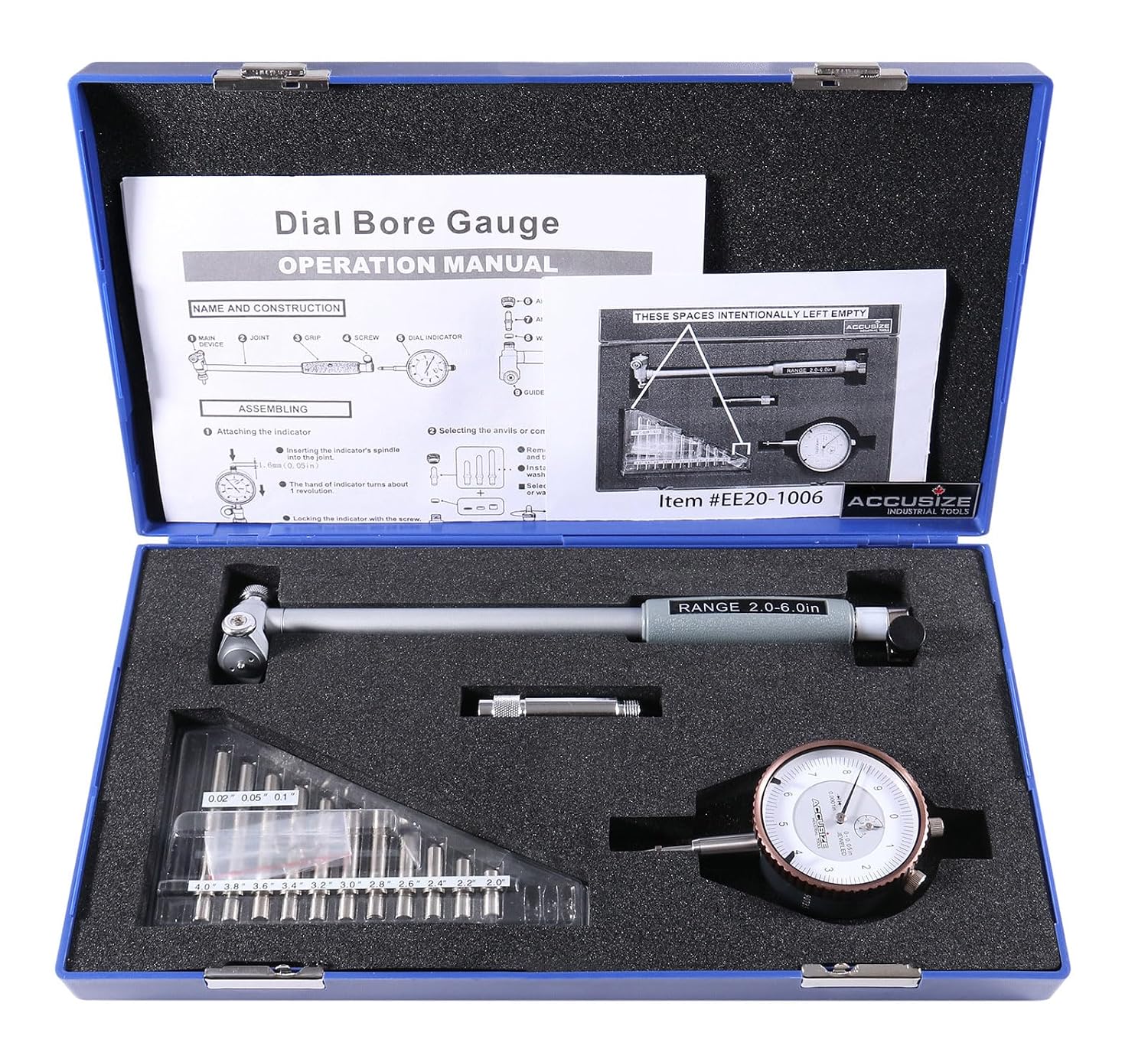
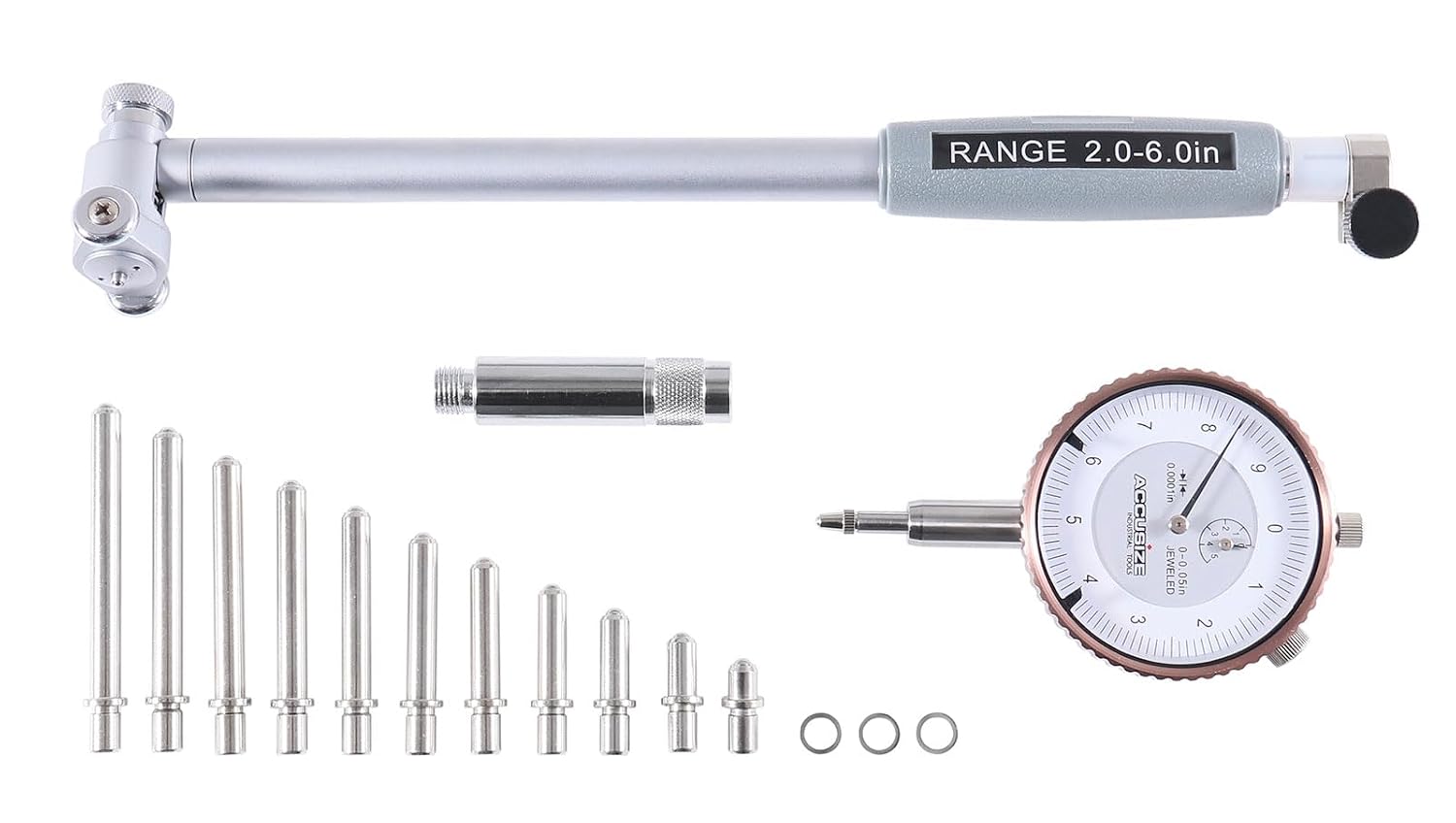
If you rebuild GM 4L60E transmissions, sooner or later a fresh unit comes back with low line pressure and nobody can say why. Often the answer is a bore that looked fine and was not. This Accusize EE20-1006 dial bore gauge set measures inside diameters from 2 to 6 inches in 0.0001 in graduations, so you can put a number on taper and out-of-round in pump, case and drum bores instead of judging them by eye or with a telescoping gauge.
What a bore gauge does on a 4L60E bench
The 4L60E pump is a 13-vane variable-displacement design. The rotor and vanes run inside a slide that pivots in a pocket machined into the pump body, and the pressure regulator moves that slide to set output. Everything depends on fit. A pocket or bore worn oval lets parts cock and leak, and oil that leaks internally is oil that never reaches line pressure. Sonnax points out that even the small slide pivot pin can wear enough to cause low or high line pressure, which gives you an idea how little clearance it takes.
A dial bore gauge reads deviation from a size you set. Its self-centering head, spring-loaded anvil and guide shoes square it in the bore, and as you rock it, the needle reverses at the true diameter. That reversal point is your reading. Repeat it at several depths and angles and you have hard numbers for wear.
Signs you need to measure, not guess
- Low line pressure on a unit that already has a new pump rotor and vanes
- Repeat 3-4 clutch burn-up after a rebuild
- Delayed engagement that a new filter and fluid did not cure
- Visible polish or a step worn into a pump pocket, servo bore or piston bore
- Deciding whether to reuse a core pump body or buy a complete pump
How to take a good reading
Zero the gauge against an outside micrometer or setting ring at the nominal size of the bore, since a bore gauge is a comparator and needs a reference. Clean the bore, insert the head at the top, rock it slowly and note where the needle turns around. Take readings at top, middle and bottom, then rotate 90 degrees and repeat. The difference between the end readings is taper; the difference between the two directions is out-of-round. Compare that to the spec in your service information. Our 4L60E pump rotor and bushing wear guide explains which wear points cause which pressure symptoms, and the 2-4 band and servo guide covers why servo bore leakage matters.
Range and what it covers
The 2 to 6 in range handles the larger bores in a transmission: pump pockets, servo and accumulator bores, clutch piston bores and drum housings, on the 4L60E as well as other GM units on your bench. It also works on engine cylinder bores. Small bushings, such as stator support and drum bushings, run under 2 in and need a smaller gauge like our 0.7-1.5 in dial bore gage set. The set includes the 6 in stem, an extension holder, a chrome handle with insulated grip and a fitted case. More 4L60E tools and parts are on the 4L60E parts page.
Using it in a pump rebuild
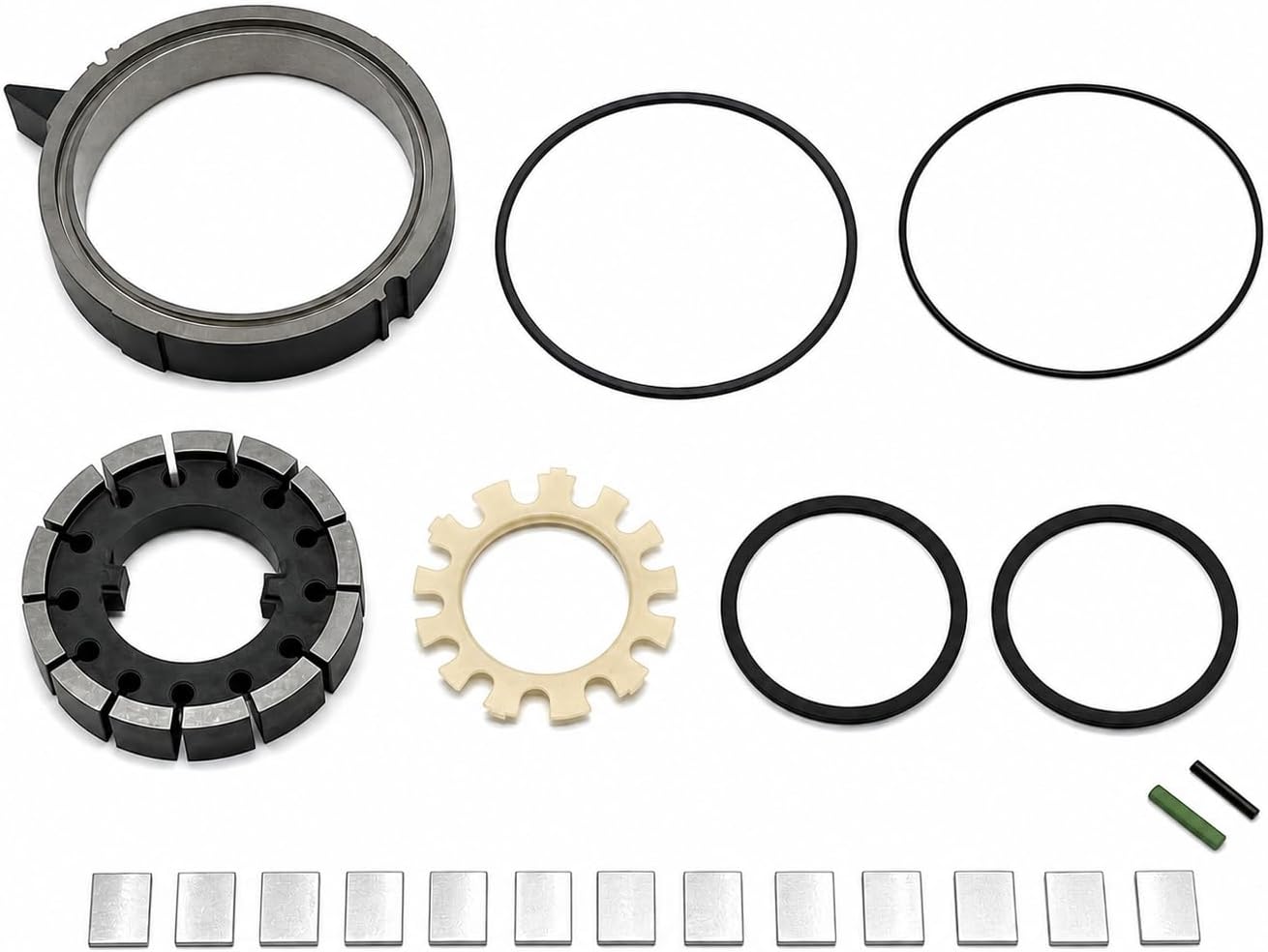
When the gauge says a pump body is still in spec, a heavy duty 13-vane rotor kit and a new pivot pin, seal rings and bushing can restore it. When it shows wear past spec, stop and replace the body with a complete pump such as the 1996-2002 4L60E pump or the matching year for your unit. Pull pumps cleanly with the SST-1055 pump remover so you do not damage the bores you are about to measure.