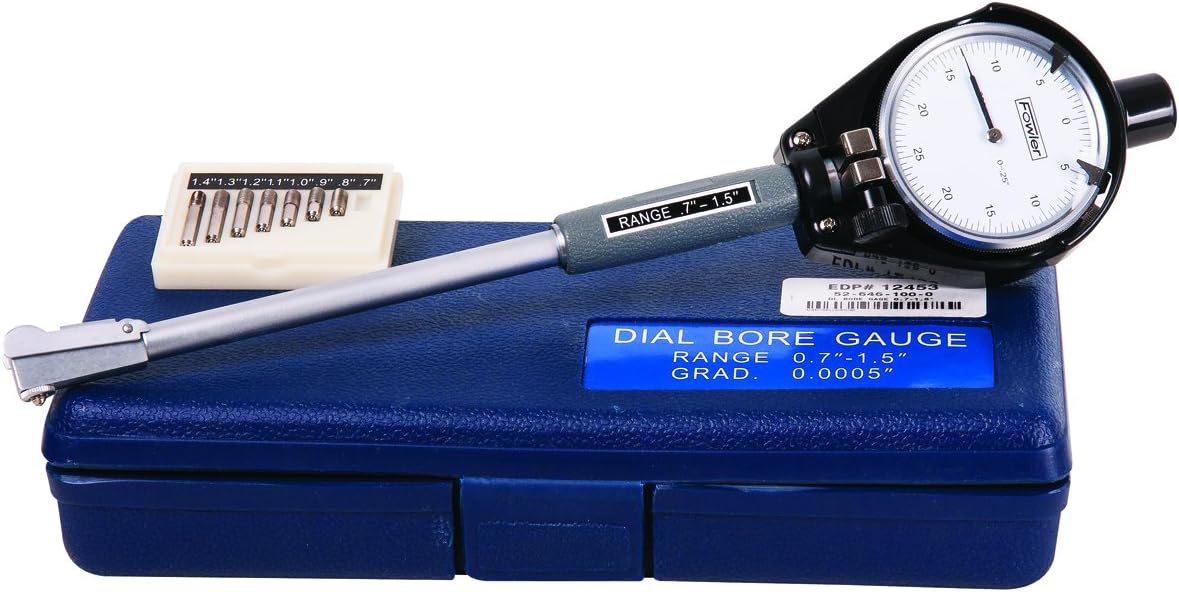
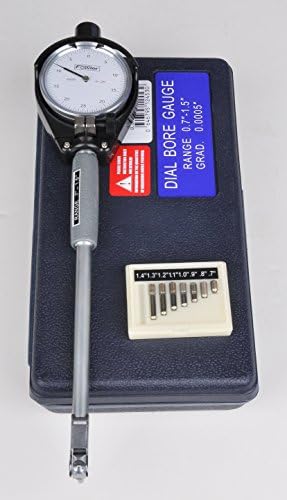
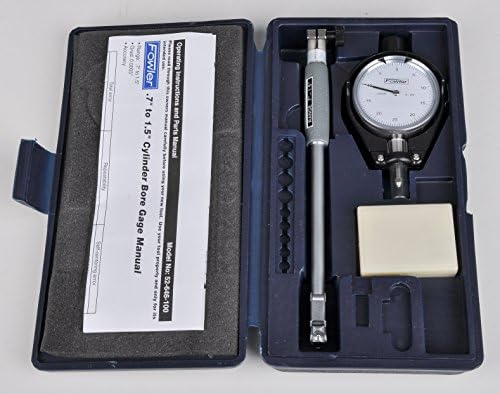
A 4L60E that comes back with low line pressure, a slipping 3-4 clutch or a converter clutch code after a fresh rebuild usually has a leak nobody measured. Worn bushings are one of the most common of those leaks, and you cannot see 0.002 in of wear by eye or feel it with a fingertip. This Fowler 52-646-100-0 dial bore gage reads bores from 0.700 to 1.500 in with 0.0005 in graduations and an 8 in reach, which covers the bushing bores a transmission rebuilder checks on every GM, Ford and Chrysler rear-drive unit that crosses the bench.
What this gage does on a 4L60E rebuild
Inside a 4L60E, bushings are not just bearings. The stator support and pump bushings, the input housing and reaction shell bushings and the case and extension housing bushings all ride on shafts that carry pressurized oil through sealing rings and cross-drilled passages. As a bushing wears, the shaft walks off center, the sealing rings lose their seal and oil that should apply a clutch or feed the converter leaks back to sump. Sonnax notes the OE rear stator support bushing is a common wear item in the 4L60, 4L60E, 4L65E and 4L70E. A two-point self-centering gage with carbide anvils measures the actual bore size, the taper from end to end and the out-of-round, so you know whether the bushing gets reused or replaced before the unit goes back together.
Symptoms that call for measuring bushings
- Low or erratic line pressure that a new pump slide spring and pressure regulator valve did not cure
- Repeat burned 3-4 clutches, which Sonnax ties mostly to low pressure and third-gear oil leaks
- Torque converter clutch slip or overheated converter complaints with codes such as P0741, P0894 or P1870
- Scored or shiny wear on one side of a shaft journal or sealing ring land
- A front pump or stator shaft that shows play when rocked by hand on the bench
How to confirm a bushing is worn before you buy parts
Clean the bore, then set the gage to a known size with a setting ring or an outside micrometer locked at the nominal diameter, and zero the dial. Rock the gage through the bore; the needle reverses at the true diameter. Take readings near each end and again rotated 90 degrees. The spread between the two depths is taper and the spread between the two angles is ovality. Compare against the matching shaft journal measured with a micrometer to get the real running clearance. Our 4L60E pump and bushing wear guide explains how pump-side wear shows up on the road, and the 4L60E common problems guide lists the failures this measurement helps rule in or out.
Fitment
This is a universal bench tool, not a part keyed to one year. The 0.700 to 1.500 in range covers typical bushing bores in the 4L60E and 4L80E, plus case and drum bushings on units like the Ford 4R70W and Chrysler 46RE. It will not reach bores larger than 1.5 in, such as clutch drum or case bores for big pistons. If you are rebuilding a 4L60E, see all 4L60E parts for the hard parts and kits that pair with it.
Use notes
Let the part and the gage sit at room temperature together before measuring; aluminum grows fast with heat and a warm case reads large. Hold the insulated grip, not the shaft, so hand heat does not drift the dial. Measure every new bushing again after it is driven in, because bushings close up when pressed into a housing that is itself out of round. Pair the gage with a 4L60E rebuild tool kit for bushing removal and installation, and with a 4L60E rebuild kit so the measured parts go back in with fresh frictions and seals. Store the gage in its fitted case with the anvils clean and dry.