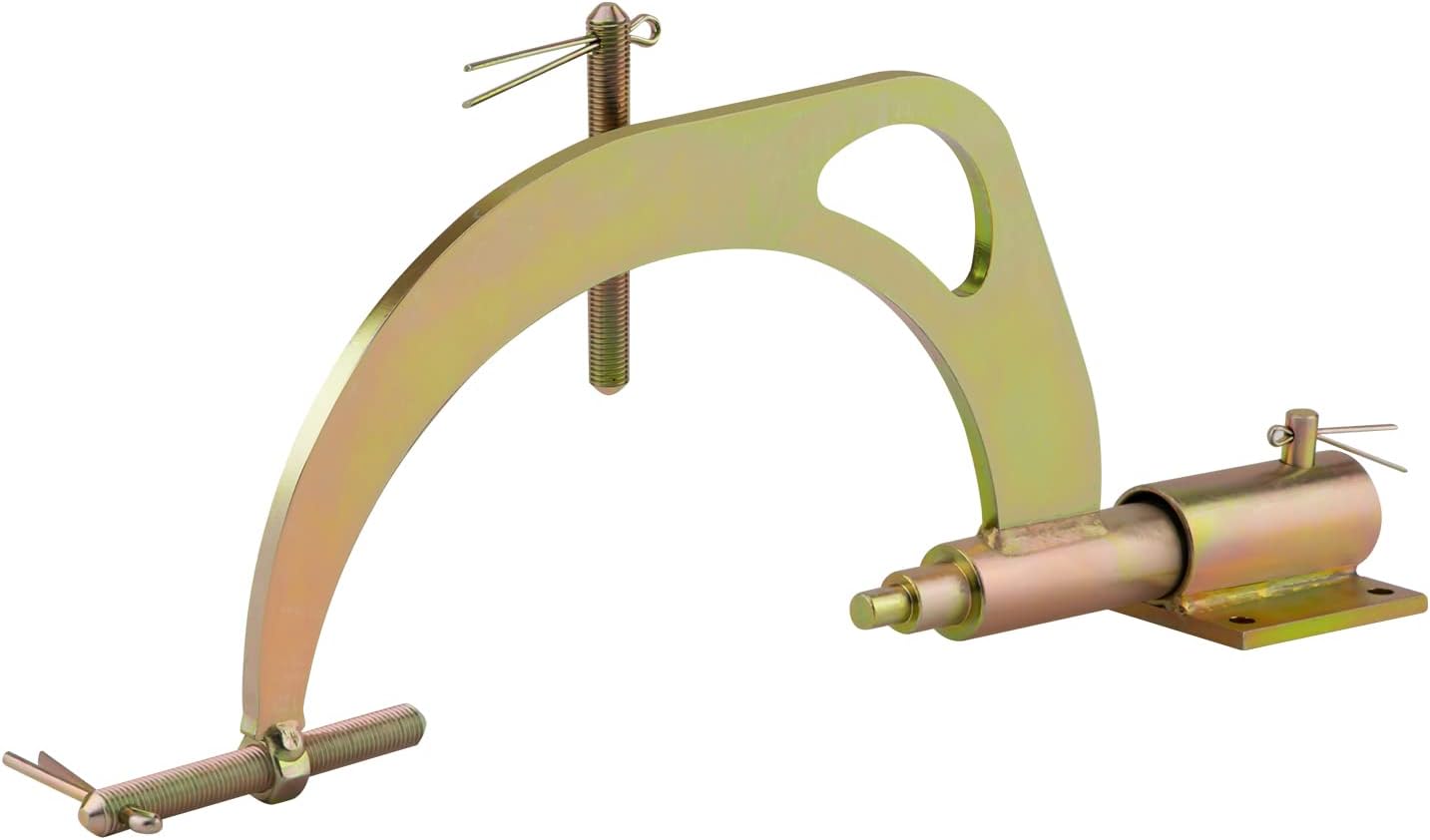
Rebuilding a 700-R4 or 4L60E out of a Silverado, Tahoe, S10, Camaro or Corvette and stuck at the bottom of the case? The low and reverse clutch piston sits at the very rear of the case under a return spring assembly held down by a retaining ring, and you cannot get that ring out or back in until the spring is compressed. This steel, black oxide T-0151 pattern compressor is shaped for that job, so the spring comes down evenly and the ring groove opens up instead of you fighting a loaded spring with screwdrivers.
What the low and reverse clutch does in a 4L60E
The low and reverse clutch holds the reaction carrier for manual low and for reverse. Its piston is the last thing in the case: three seals (outer, center and inner) on a piston that sits in the back of the case, with a spring assembly on top and a retainer ring holding it all in. Above it stack the clutch plates, which in the GM procedure are a waved plate, a selective spacer plate, then five fiber plates alternating with four steels, all under the low and reverse support. A worn or rolled piston seal here means slow or slipping reverse, so any full overhaul replaces those seals, and that means compressing the spring twice: once to get it out and once to put it back.
Why a dedicated compressor matters
- The spring assembly is under real load. Releasing it without control can launch the retainer ring or bend the spring retainer.
- Uneven pressure can cock the piston and cut its new seals as it drops into the case bore, which shows up later as a reverse slip.
- The piston sits deep in the case, where a general drum-style compressor cannot reach straight down.
- Prying the ring out with picks scars the ring groove in the aluminum case.
Where it fits in the rebuild
GM's overhaul procedure tightens a clutch spring compressor bridge over the low and reverse spring to remove the piston, using a disc that depends on case type: J 41420-2 for a one-piece case and J 42628 for a two-piece case. On reassembly it calls for the J 23327-1 forward clutch spring compressor bridge to compress the spring while the retainer ring is installed. This tool does the same compressing job for the rear section. Before you seat the spring, make sure the notch in the piston lines up with the parking pawl window in the case. Our 4L60E bench rebuild tools guide lays out every J-tool in the teardown, and the 4L60E common problems guide explains which failures send a unit to the bench in the first place.
Fitment
The listing covers the GM rear-drive family that shares this rear clutch layout: the 250, 250C, 350, 350C, 700-R4, 4L60, 4L60E, 4L65E, 4L70 and 4L70E, plus the 4T80-E. GM changed the 4L60E case over the years, including one-piece and two-piece designs, so lay the tool over your spring retainer before loading it and confirm it seats evenly. Questions about your unit? Send us the year and VIN. The rest of our 4L60E parts are on the 4L60E collection page.
Using it
- Mount the case on a solid fixture, bell housing up, such as our 4L60E holding fixture and bench base.
- Center the compressor on the spring retainer and bear down evenly until the ring groove is clear. Remove or install the retainer ring with snap ring pliers, then back off slowly.
- On assembly, lube the three new piston seals with assembly gel and start the piston square before the spring goes on.
- Stack the plates in order and check pack height. GM's spec for the low and reverse pack, including the selective spacer, is 29.22-29.90 mm (1.15-1.18 in).
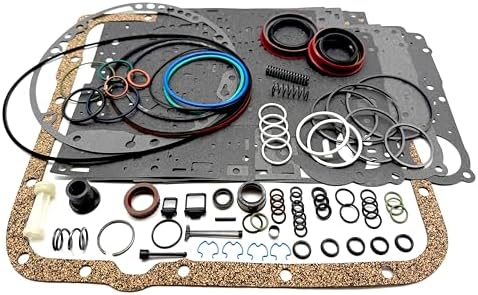
- The new seals, fibers and steels come in a full overhaul kit such as our 4L60E rebuild kit for 2004-2014. Fill the finished unit with Dexron VI ATF.