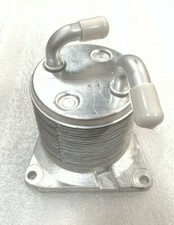
Heat is the quiet killer of the JF011E. Owners of 2007-2012 Nissan Altima 2.5, Rogue and Sentra models usually find this part after a CVT starts to judder or drop into limp mode when it is hot, or after a shop says the cooler is plugged with debris from a failed unit. This is a new JF011E oil warmer/cooler: a stacked-plate heat exchanger with two coolant tubes and a square mounting flange, as shown in the photo.
What the oil warmer/cooler does in a JF011E
The JF011E uses engine coolant to manage CVT fluid temperature in both directions. The warmer/cooler has two closed loops, one carrying CVT fluid and one carrying engine coolant, separated by thin plates. On a cold start the engine heats the fluid so the CVT reaches operating temperature quickly. Once warm, heat moves the other way and the CVT sheds it into the cooling system. Pulley clamping, belt grip and lockup quality depend on fluid that stays inside its range, and NS-2 fluid that is cooked too often loses the friction properties the belt needs.
Symptoms of a failing or restricted cooler
- Judder or slip that appears only after the car is fully warm, worse in summer traffic or on long climbs.
- Dark, burnt-smelling CVT fluid well before the service interval.
- Fluid in the coolant or coolant in the CVT fluid (milky or pink fluid) if the internal plates leak.
- Debris trapped in the cooler after a belt, bearing or clutch failure.
- Overheat or limp-mode warnings on long highway runs.
How to confirm the cooler is the problem
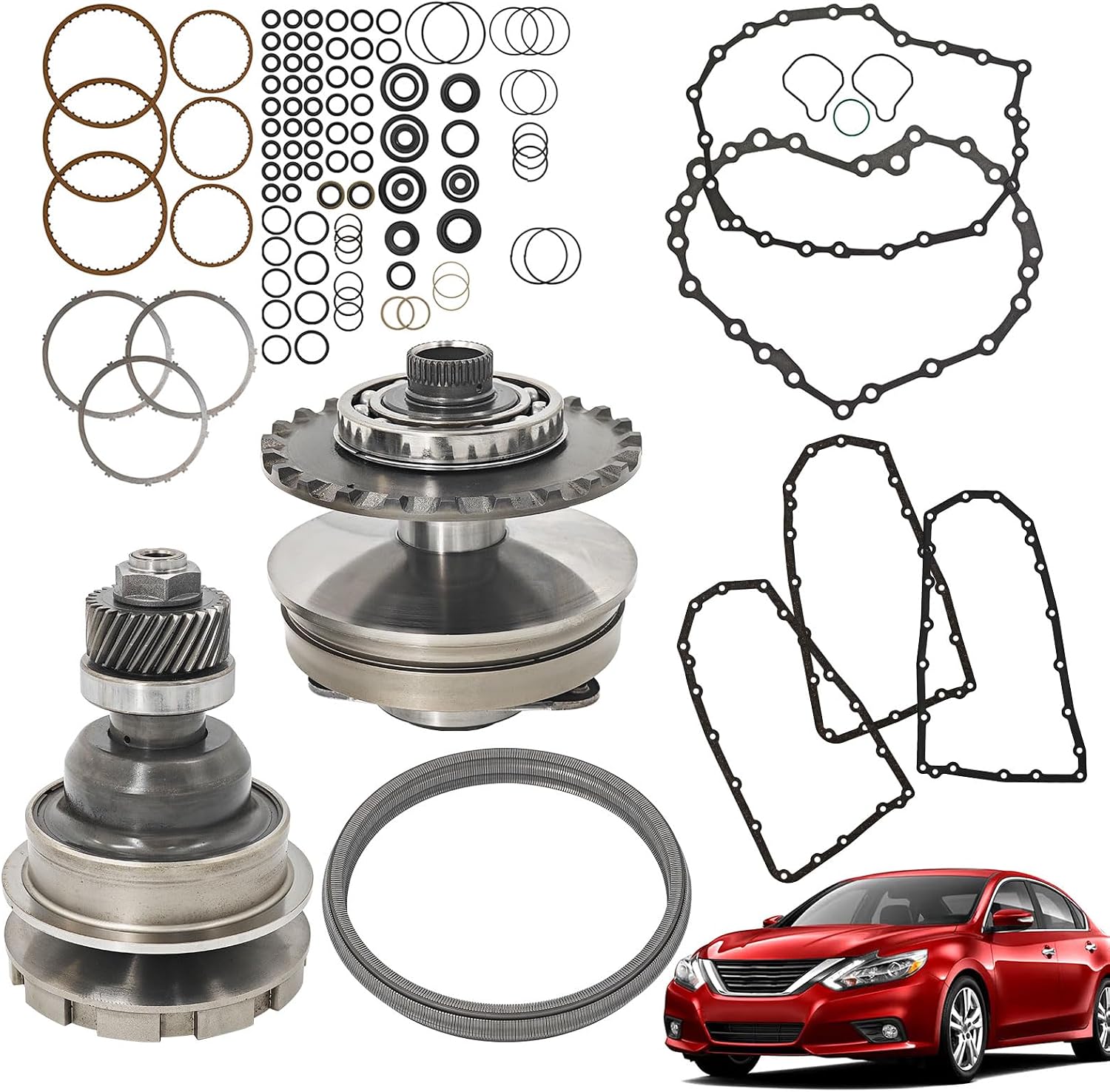
Start on the engine side. Degraded coolant, a restricted coolant hose, a weak radiator or a dirty engine air filter all push heat into the transmission, so check those first. Then check the CVT fluid condition and level at the specified temperature, and look for cross-contamination between the two fluids. After any internal failure, a cooler that cannot be cleaned is a risk to the rebuilt unit. The CVT failure patterns guide explains how heat damage shows up, and the JATCO CVT problems and fixes guide covers JF011E diagnosis from start to finish.
Fitment
This cooler is listed for the JF011E CVT. That unit ran in the 2007-2012 Altima 2.5, 2007-2013 Rogue and 2007-2011 Sentra, plus Dodge, Jeep and Mitsubishi models. The setup differs by brand: Dodge and Jeep JF011E applications use an external 4-pipe cooler, and some come with a bypass plate instead. This part has two tubes, so compare the tube count, tube angles and flange bolt pattern with the part on your car before ordering. If anything is unclear, send us your year and VIN. Every JF011E part we carry is in the CVT parts collection.
Install notes
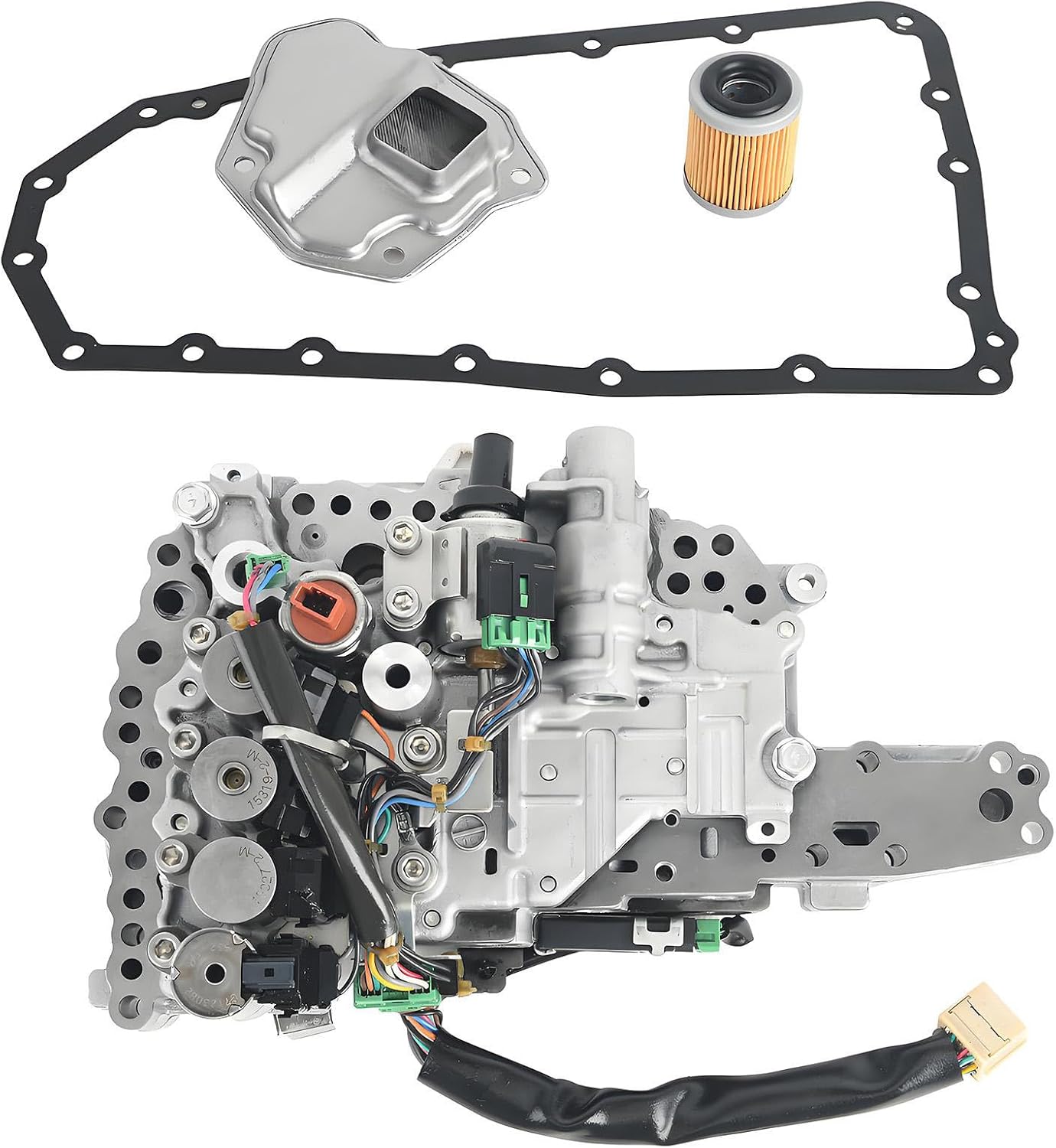
Let the engine cool fully, then drain enough coolant to bring the level below the cooler. Disconnect the coolant hoses, unbolt the flange and fit new seals; never reuse old O-rings on a heat exchanger. Refill and bleed the cooling system so no air pocket sits at the cooler, then top up the CVT with NS-2 rated fluid and check the level after about 10 minutes of idle or light driving, at 122 to 176 F. If debris caused the swap, back-flush the cooler lines to the transmission and replace both filters with the JF011E filter, pan and gasket kit. A unit that overheated long enough to hurt pressure control may also need the JF011E valve body with filter kit.