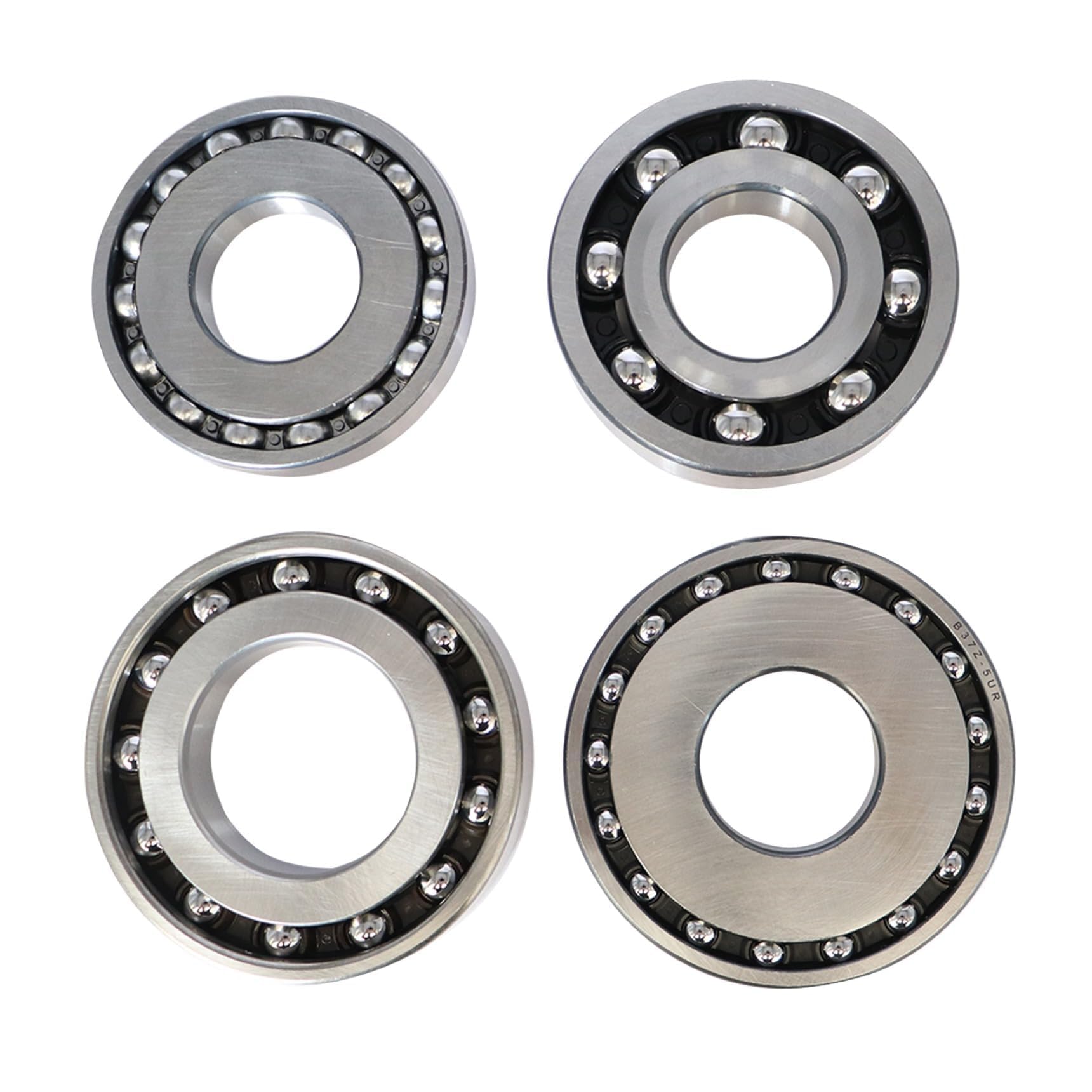
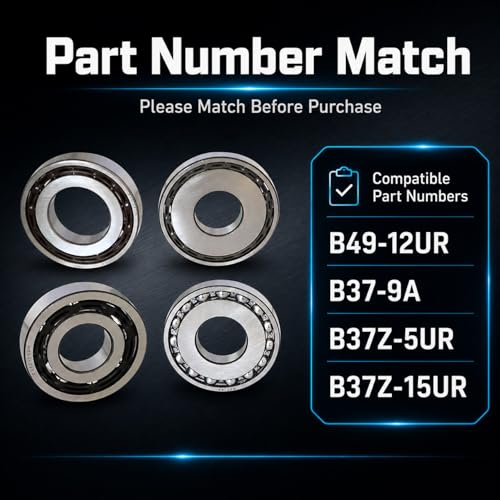
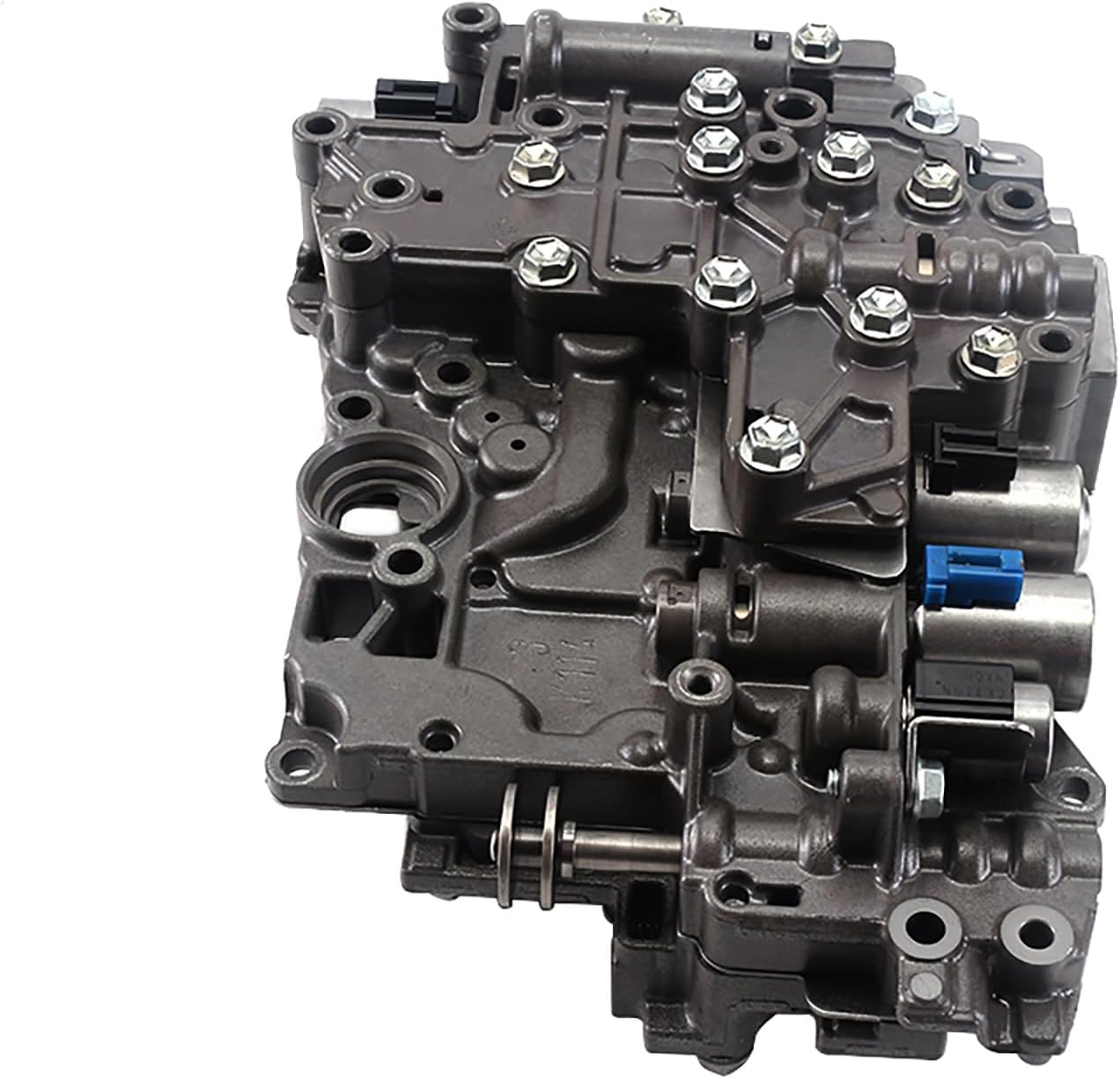
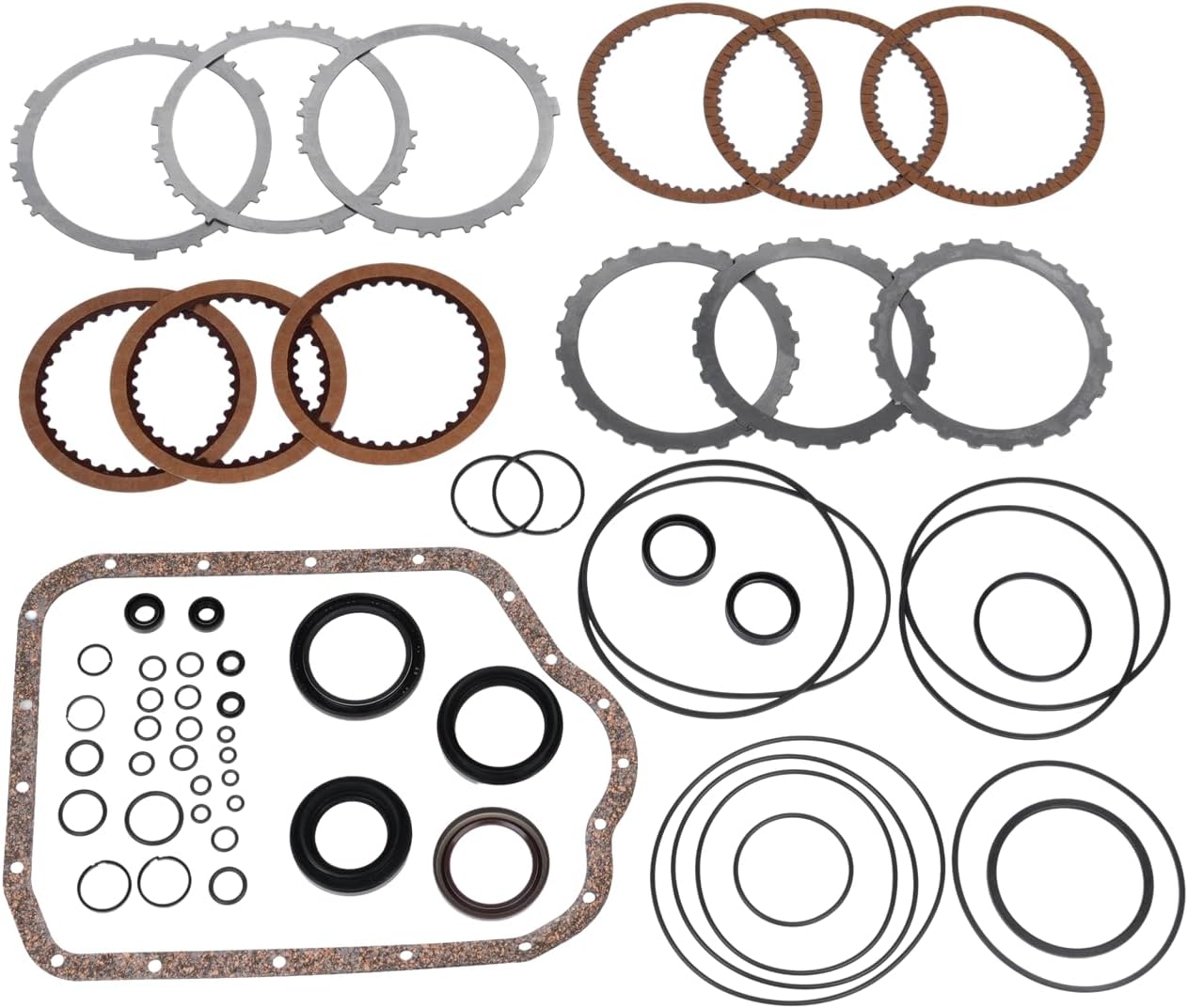
A 2018-2020 Toyota C-HR with a whine that climbs with road speed, or a shudder at a steady cruise, is often telling you the K114 CVT's pulley bearings are going. This four-piece kit replaces the primary and secondary pulley support bearings, part numbers B49-12UR, B37-9A, B37Z-5UR and B37Z-15UR, so a rebuilder can put the pulley set back on true centers before the belt and sheaves are damaged.
What the pulley bearings do in a K114
Toyota's service information describes the K114 as a fully electrohydraulically controlled steel belt CVT. The SLP solenoid sets the oil pressure on the primary pulley and the SLS solenoid sets it on the secondary pulley, while an oil pressure sensor reads the line pressure that clamps the belt. The computer also watches primary and secondary pulley speed sensors to calculate the ratio. All of that assumes the two pulley shafts stay perfectly parallel. The bearings in this kit are what hold them there. When a bearing loses preload or the rollers brinell, the shaft can tip slightly under clamping load, the sheave faces stop running square to the belt, and the belt starts to slip and scuff instead of gripping.
Symptoms of worn K114 pulley bearings
- A whine or growl that follows vehicle speed rather than engine rpm, and does not go away when the ratio changes.
- Shudder or a fine vibration holding light throttle at cruise, the classic belt and pulley wear complaint on CVTs.
- Metallic glitter on the pan magnet or in the fluid at a service.
- Speed sensor or pressure related codes are possible once the shafts wander, but a bearing failure often sets nothing until the belt slips badly.
How to confirm before you buy
Rule out the easy causes first. Low or wrong fluid on a K114 causes slip and shudder on its own, and Toyota's procedure sets the level by overflow at a fluid temperature of 35 to 45 C, not with a dipstick. Wheel bearings and tires can also mimic a speed-related whine, so road test with a chassis ear or stethoscope on the transaxle case. If the noise is clearly inside the CVT and fluid shows metal, the pulley bearings are the likely source. Our CVT failure patterns guide explains how belt, pulley and bearing wear show up across brands, and CVT slipping under load covers the slip side of the diagnosis.
Fitment
Confirmed fitment is the Toyota C-HR 2018-2020 with the K114 CVT. Toyota used more than one CVT family in these years, including the newer K120 in other 2.0 liter models, and those units use different bearings. Before ordering, match the numbers stamped on the bearings you remove to the four in this kit, or send us your year and VIN. More K114 and CVT parts are in our CVT parts collection.
Install notes
- This is a bench job. The case has to be split and the pulley set removed before the bearings can come out.
- Press each bearing off and on through the race being pressed, never through the rolling elements, and inspect every case bore for signs of a spun outer race.
- Check that both pulleys spin without roughness and that shaft endplay is within the service spec after assembly.
- Inspect the belt and the sheave faces. A belt with a glazed or polished edge track, or sheaves with scoring, should be replaced, not reused.
- Replace all four bearings together. They wear as a set, and replacing one leaves the others near the end of their life.
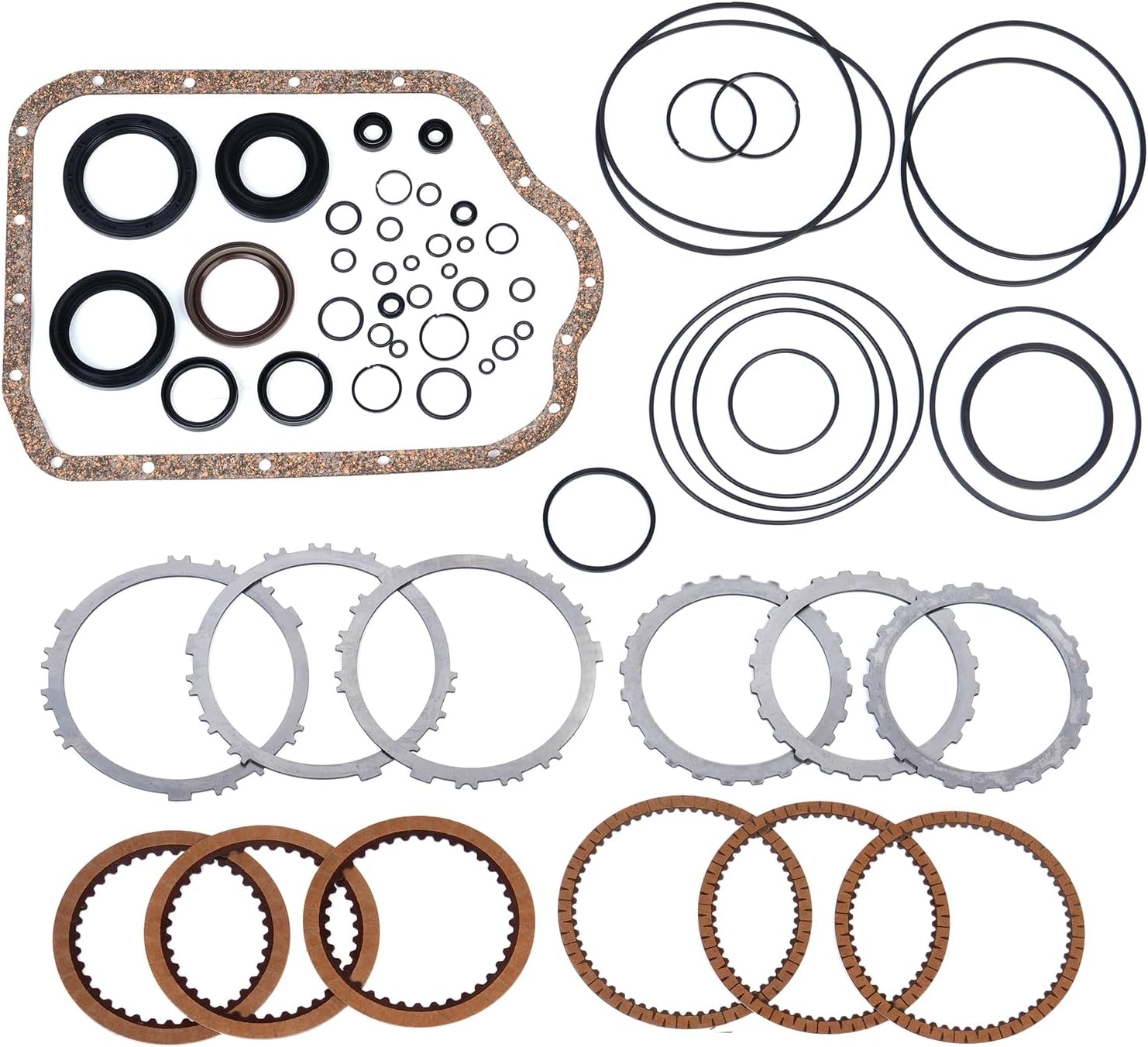
- While the unit is apart, the K114 rebuild kit for the Toyota C-HR supplies the gaskets, seals and clutch parts for the rest of the overhaul.
- Refill only with Toyota Genuine CVT Fluid FE. After a transaxle replacement, Toyota calls for a memory reset and CVT oil pressure calibration with a scan tool.