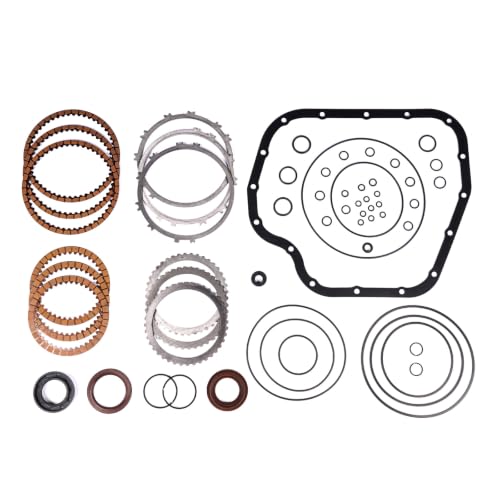
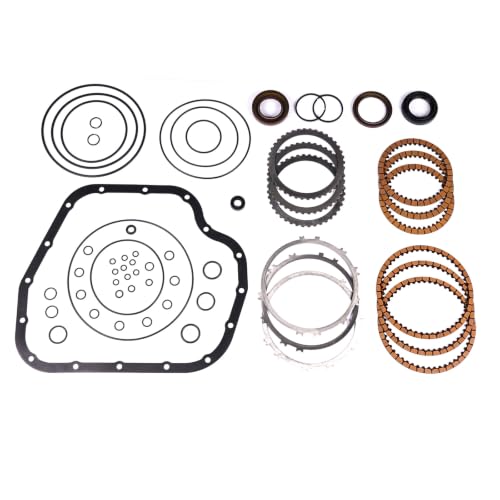
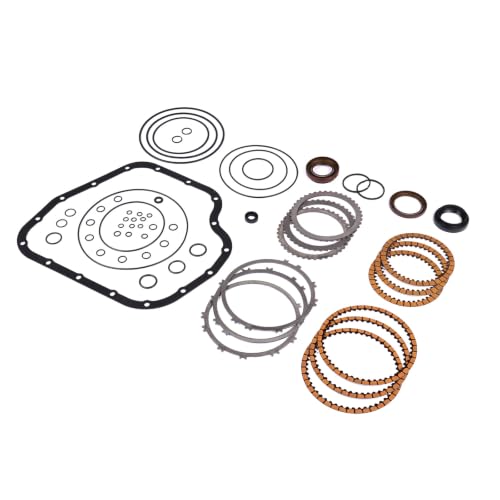
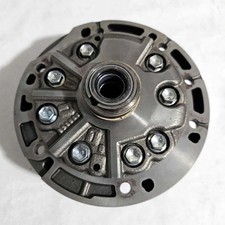
A Toyota Corolla with a K31x CVT that takes a second to pull into Drive, shudders as it rolls away from a light, or flares when you ease onto the throttle is usually telling you the direction clutch pack and its seals are done. This master overhaul kit is built for that rebuild across the K310, K311, K312 and K313 family. It carries clutch friction plates, steel plates, and the O-ring and seal set you need once the case is split, and the listing references Toyota number 35330-12050. Shipping weight is about 2.1 lb.
What the clutch pack and seals do in a K31x CVT
In these Aisin-built CVTs the belt and the two pulleys handle the ratio, but they cannot choose a direction. That job belongs to a small planetary set with a forward clutch and a reverse brake ahead of the primary pulley. Every engagement into Drive or Reverse is hydraulic: line pressure from the pump fills a piston, the piston squeezes the frictions against the steels, and torque passes to the pulley set. The same pump pressure also clamps the pulleys on the belt. If piston seals harden or O-rings flatten, the clutch fills slowly and slips, and the leak steals pressure the pulleys need. Replacing frictions, steels and rubber together restores both.
The K310 and K311 arrived in 2006 for 1.5L and 1.8L cars. The K313 is the later version Toyota put behind the 1.8L Corolla for 2014, and Transmission Digest notes it uses a torque converter and is filled with Toyota CVT Fluid FE.
Symptoms this kit addresses
- Delayed engagement into Drive or Reverse, worst when the fluid is cold
- Shudder or a sawing feel on light acceleration from a stop
- Engine speed that flares without the car picking up speed
- Dark fluid with a burnt smell and clutch material in the pan
- External leaks at the case seals after the unit has run hot
How to confirm before you buy
Check the fluid level and condition first, at the correct temperature, because a low CVT behaves exactly like a slipping one. With a scan tool, compare input (turbine) speed with primary pulley speed after engagement: if they disagree, the direction clutch is slipping and this kit is the right fix. If the speeds match but the car still shudders, the problem is more likely solenoid or pulley related. Our CVT slipping under load guide walks through that split, and the harsh or delayed engagement guide covers cold-engagement complaints.
Fitment
The listing covers Toyota K313, K310, K311 and K312 CVTs, mainly the Corolla. The family code is stamped on the transaxle tag, and it must read one of those four before you order; this kit does not fit the K114 or K120 CVTs used in other Toyotas. Inside the family there are real differences in clutch counts and seal sizes between early K310/K311 units and the K313, so lay the old frictions next to the new ones and count them before you build. If you are unsure, send us the year and VIN. The earlier K310 overhaul kit for 2006-up units is the alternative for first-generation cars, and the full range is on our CVT parts page.
Install notes
- The transaxle has to come out and the case has to be split to reach the clutch pack; photograph each stack as it comes apart.
- Soak the new frictions in fresh fluid for at least 30 minutes, and lubricate O-rings so they do not roll or cut on install.
- Measure clutch pack clearance after stacking rather than trusting the old steels.
- Fill with the fluid your unit calls for: Toyota CVT Fluid FE for the K313, and the fluid listed in the owner's manual for earlier K310/K311 cars. Do not mix them.
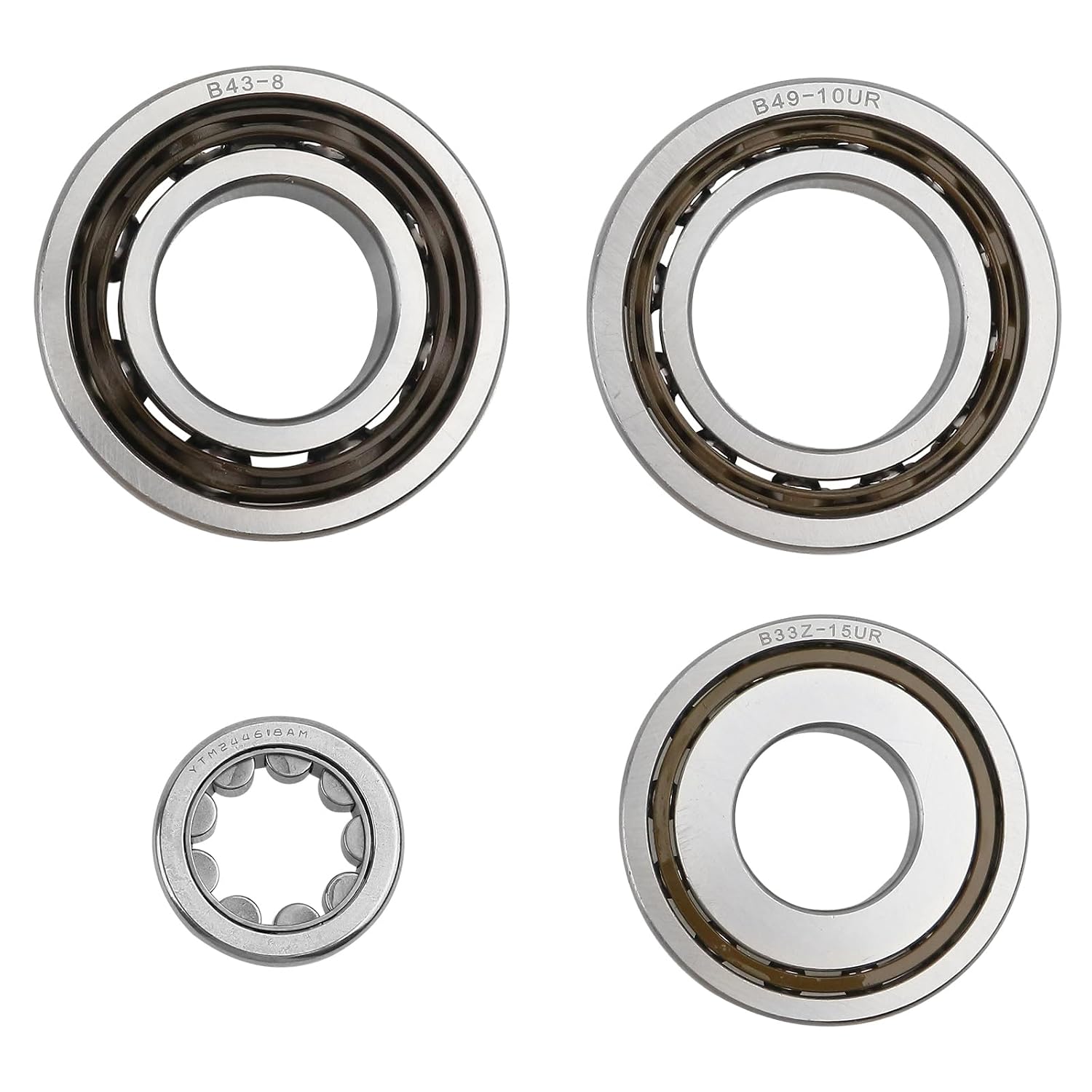
- While it is apart, check the pulley bearings; the K313 bearing kit is worth fitting on a high-mile case.
- If the car had solenoid or pressure codes, replace the solenoids now with the K313 five-piece solenoid kit instead of pulling the unit again later.
This kit does not include the belt, pulleys, pump or valve body. Inspect the belt and pulley faces for scoring before you reassemble; if they are damaged, new clutches alone will not cure a slip.